
After a long day, the tightness shows up in predictable places: the upper back from hunching at a desk, the legs from a hike, the neck that never quite lets go. A foam roller is one of the cheapest, most durable tools for working some of that tension out at home, which is why it has stayed a staple long after fancier gadgets came and went. This guide covers the best foam rollers worth considering in 2026, written mostly in a research voice, with one honest exception: the high-density roller I have used myself for years.
A quick note first. This article is general information, not medical advice. A foam roller is a comfort and mobility tool, not a treatment for an injury or a medical condition. If you have pain that radiates, lingers, or feels sharp rather than like ordinary muscle soreness, see a clinician before rolling.
Disclosure: RestRight is reader-supported. As an Amazon Associate, we earn from qualifying purchases made through links on this page, at no extra cost to you.
Quick Verdict: Foam Rollers Worth Considering
For a do-everything roller, the TriggerPoint GRID is the one most people should start with, since its textured surface over a hollow core balances firmness and comfort. If you want the simplest, most durable option, a smooth high-density roller is hard to beat, and it is the type I have leaned on for years. Beginners and budget shoppers are well served by the 321 STRONG, while experienced rollers chasing deep pressure look at the aggressively textured RumbleRoller. Add the LifePro for built-in vibration, or the OPTP PRO if you want a professional-grade roller that holds up to heavy use. One of these fits almost any body and tolerance.
| Roller | Surface | Density | Best for |
|---|---|---|---|
| TriggerPoint GRID | Textured, hollow core | Medium-firm | All-around use |
| Smooth high-density (what I use) | Smooth | Firm | Durable everyday rolling |
| 321 STRONG | Textured EVA | Medium | Beginners and value |
| RumbleRoller | Aggressively textured | Very firm | Deep, experienced users |
| LifePro Vibrating | Textured, powered | Adjustable feel | Vibration therapy |
| OPTP PRO | Smooth | Firm, pro-grade | Heavy, long-term use |
1. TriggerPoint GRID Foam Roller: Best Overall
The TriggerPoint GRID has become the default recommendation for a reason. Its multi-density surface sits over a rigid hollow core, so it holds its shape under bodyweight while the raised channels mimic the feel of a massage rather than a hard pipe. That makes it firm enough to do real work on the back and legs without the brutal intensity of a fully textured roller. It is a sensible first roller for most people and a comfortable long-term one.
Who it suits: anyone who wants a single, balanced roller. If you also use targeted tools, our guide to massage balls for trigger-point relief pairs well with it.
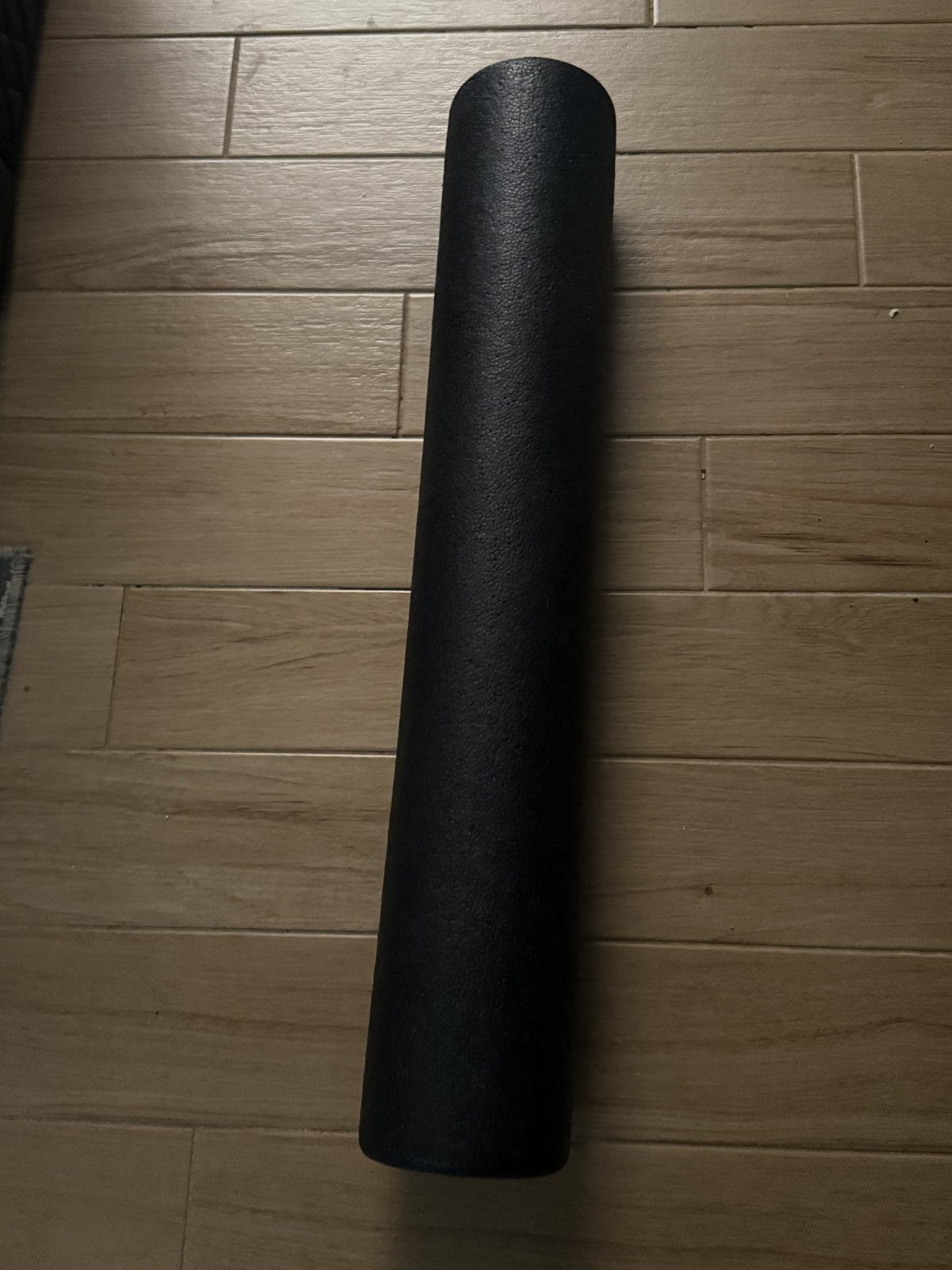
2. What I Use: A Smooth High-Density Foam Roller
This is the one I actually own. It is a plain black, smooth, high-density roller with no special branding, and it has earned its keep. The thing that stands out to me is durability: it is firm and hard, it has held its shape through years and years of heavy use, and I have never had a single complaint about it. No flat spots, no softening, no peeling. It works well for me at easing the everyday knots and soreness that build up in my back and legs, and I keep the pressure gentle when I use it near the neck.
The honest takeaway is that a smooth high-density roller is the workhorse of the category. It does not have texture or tech, but it is simple, cheap, and nearly indestructible, which is exactly why it lasts. Because mine carries no brand, the button below points to high-density rollers generally; well-known examples in this style include the Amazon Basics High-Density roller and the LuxFit version. If firm, no-frills durability is what you want, start here.
3. 321 STRONG Foam Roller: Best for Beginners
The 321 STRONG lands in the value sweet spot. Its medium-density textured EVA surface gives some of the kneading feel of pricier rollers without the steep intensity, which makes it forgiving for people new to rolling or with sensitive muscles. It is a comfortable entry point that still does useful work, and the price makes it easy to keep one at home and one in a gym bag.
Who it suits: first-time rollers and anyone who finds firmer options too aggressive. If you are easing into a recovery habit, our notes on mattresses for athletes and recovery cover the bigger picture of how the body bounces back.
4. RumbleRoller: Best for Deep Pressure
The RumbleRoller is the specialist of the group. Its firm, aggressively textured bumps are designed to dig into tissue more like a thumb than a flat surface, which experienced users love and beginners often find overwhelming. If a standard roller has stopped giving you much feedback, this is the step up, but it deserves respect: start light, keep it off bony areas, and build tolerance slowly.
Who it suits: seasoned rollers who want intensity a smooth roller cannot provide. For stubborn neck and shoulder tension specifically, our guide to neck massagers may be a gentler complement.
5. LifePro Vibrating Foam Roller: Best Vibrating
Adding vibration changes the experience. The LifePro layers powered vibration onto a textured roller, and many people find the buzzing helps muscles relax with less pressure, which can make rolling more tolerable on tight or tender areas. The trade-offs are the usual ones for powered gear: it costs more, needs charging, and is heavier than a plain roller. For some, the comfort is worth it.
Who it suits: people who want a softer-feeling session or like the sensation of vibration. If you are weighing powered options broadly, see how rolling stacks up against our roundup of massage guns.
6. OPTP PRO Foam Roller: Best Professional-Grade
The OPTP PRO is a favorite in physical-therapy clinics, and that pedigree shows in its build. It is a smooth, firm, professional-grade roller made to survive constant use without breaking down, which is why it costs more than a basic roller. If you roll often, share a roller across a household, or simply want something that will outlast everything else in the closet, it is a buy-once option.
Who it suits: heavy users and anyone who wants clinic-level durability. To round out a recovery setup, our guide to back stretchers and lumbar decompression covers a different angle on the same problem.
What Foam Rolling Actually Does
It helps to be clear-eyed about the benefits. The Cleveland Clinic describes foam rolling as generally safe and useful for easing muscle pain and soreness, increasing range of motion, improving blood flow, and aiding relaxation and recovery, much like a self-administered massage. Research backs the soreness and mobility side: a study in the Journal of Athletic Training found that foam rolling after intense exercise reduced perceived muscle soreness and helped preserve performance measures during recovery.
What it is not is a cure. Foam rolling tends to produce short-term relief and looser-feeling muscles rather than fixing the underlying cause of chronic pain, and the evidence is strongest for comfort and mobility, not for structural change. Treat it as one tool in a routine that also includes good sleep, movement, and, when needed, professional care. For the sleep side of recovery, our pieces on sleeping with lower back pain and desk-related back pain go deeper.
How to Choose a Foam Roller
Match density to your tolerance
Softer rollers are gentler and better for beginners or sensitive areas, while firmer, high-density rollers deliver deeper pressure for experienced users. If you are unsure, start softer and work up, since you can always add intensity but cannot un-bruise a muscle you went too hard on. Point work needs a lighter touch than a roller, and how hard to press covers the range that helps rather than bruises.
Smooth or textured
Smooth rollers spread pressure evenly and are forgiving, which makes them great all-rounders and the most durable choice. Textured rollers concentrate pressure into ridges or knobs for a more targeted, massage-like feel. Neither is better in the abstract; it depends on whether you want broad relief or pinpoint work.
Size it to your body and goals
A long roller is stable and good for the back and for lying along the spine, while shorter and travel-sized rollers pack easily and suit legs and arms. Bigger is more versatile at home; smaller is better on the go.
Decide on extras like vibration
Vibration can make rolling feel easier and more relaxing, but it adds cost, weight, and charging. If a plain roller already does the job for you, you do not need it. If tight muscles resist a static roller, it may be worth trying.
How to Foam Roll Safely
Technique matters more than intensity. Roll the muscle, not the bone, and keep the roller off joints like the knees and elbows, where pressure can cause you to hyperextend. Move slowly, spend a short time on each area, and breathe. Begin with light pressure and build gradually rather than diving straight into deep work, since over-rolling can leave you bruised or irritated. Most importantly, learn the difference between the good ache of a tight muscle and a sharp or wrong-feeling pain, and stop immediately if you hit the latter.
One specific caution: avoid rolling directly across your lower back over the spine. Most guidance points you to the upper and mid-back and the muscles around the lower back, such as the glutes and hips, rather than the lumbar spine itself. If neck tension is your issue, keep the pressure gentle there. For targeted relief in those zones, our guides to neck traction devices and heating pads for back and neck offer lower-intensity options.
When to See a Doctor
Foam rolling is self-care, not diagnosis. The Cleveland Clinic notes you should check with a clinician first if you have a broken bone or a torn muscle, and to be cautious with conditions like osteoporosis or during pregnancy. Stop and get evaluated if your pain radiates into a limb, comes with numbness or tingling, lingers beyond a week, or is sharp rather than the ordinary soreness of tight muscles. A roller can sit alongside professional care, but it should never replace it when something feels off. For ongoing comfort, our overview of orthopedic recovery pillows covers another piece of the puzzle.
Related guide: how a back stretcher compares to a foam roller.
Related guide: resistance bands for stretching.
Related: muscle roller sticks.
Related: pilates bars.
Frequently Asked Questions
What is the best foam roller for most people?
A balanced, medium-firm roller like the TriggerPoint GRID suits the widest range of users, while a smooth high-density roller is the most durable simple option. The best one for you depends on your tolerance and whether you prefer texture or a flat surface.
Are firm or soft foam rollers better?
Neither is universally better. Soft rollers are gentler and better for beginners and sensitive areas, while firm, high-density rollers give deeper pressure for experienced users. Starting softer and progressing is the safer path.
How long should I foam roll?
Keep sessions short and spend only a short stretch of time on each muscle group, building up slowly over time. Over-rolling a single area can cause bruising or irritation, so more is not better.
Can I foam roll my lower back?
Avoid rolling directly across the lumbar spine. Most guidance recommends targeting the upper and mid-back and the surrounding muscles like the glutes and hips instead, since direct lumbar pressure can strain the spine.
Does foam rolling actually work?
Research supports short-term benefits for muscle soreness and range of motion, similar to a light massage. It is a comfort and mobility tool rather than a cure for chronic pain, so set expectations accordingly.
How often should I foam roll?
Many people roll several times a week, before activity to warm up or after to ease soreness. Consistency matters more than long single sessions, so a little and often tends to work best.
Does a more expensive foam roller work better?
Not necessarily. A basic smooth high-density roller delivers most of the core benefits cheaply and lasts for years. Extras like aggressive texture, vibration, or pro-grade construction add specific features, not a fundamentally better result for everyone.
Is foam rolling safe for everyone?
It is safe for most people when done with care, but those who are pregnant or have conditions such as osteoporosis, varicose veins, recent injuries, or chronic pain should check with a healthcare provider first.
Related Reading
Explore more: memory foam vs gel memory foam mattress, memory foam vs spring mattress, memory foam mattresses, and foam bed wedge pillows leg elevation. Also explore: massage tables.
- using a foam roller before bed
- If you are deciding between them, how it compares to the other tools.
- what actually matters when picking one
- how to relieve pain better sleep
- back stretcher versus neck traction
- acupressure mats for sleep and pain relief
- vibration plates for gentle movement
- compression boots for leg recovery
Foam degrades on a predictable schedule. how long a foam roller lasts covers density and wear.
