
The evidence points to heat exposure helping sleep through body temperature, though most of it comes from traditional saunas and hot baths rather than portable tents. The mechanism is well understood and the research on portable units specifically is thin.
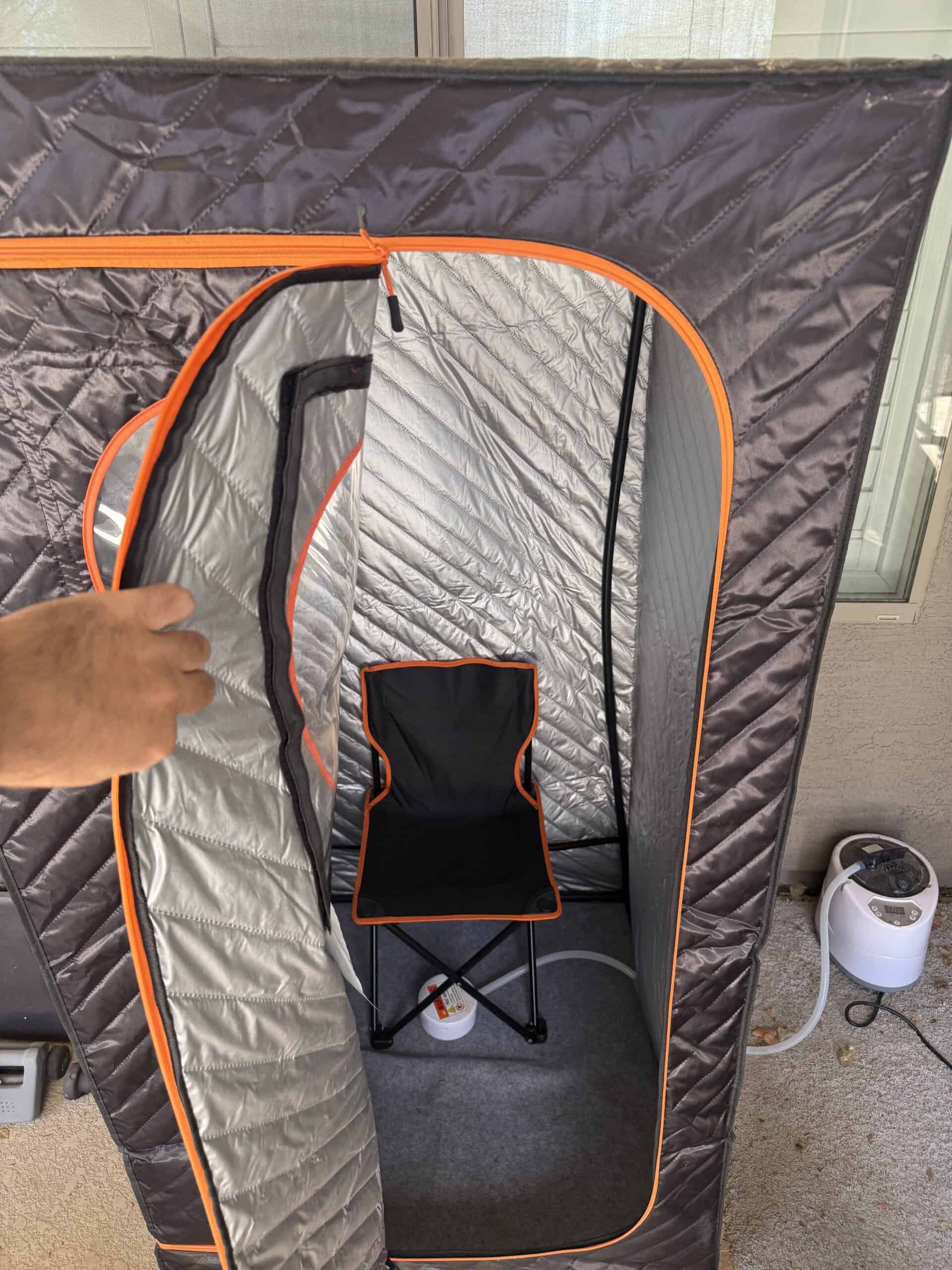
I use a tent-style portable sauna with a frame and a viewing window, and sleep was one of the two reasons I bought it alongside recovery. It helps me sleep, and I have had this one for over a year using it multiple times a week.
A Quick Note
This covers sleep environment rather than medical advice. Sauna use is not appropriate for everyone, and anyone with heart conditions, blood pressure issues, or who is pregnant should speak to a doctor before using one. Persistent sleep problems are worth raising with a doctor rather than solved with equipment.
Quick Answer
Heat raises your core temperature, and the drop afterward mimics the natural decline that signals sleep. Finishing a session one to two hours before bed gives that drop time to happen. Using one immediately before bed can work against you, since you are still warm when you lie down.
Why Heat Before Bed Works
| Stage | What happens |
|---|---|
| During the session | Core temperature rises, blood vessels dilate |
| Immediately after | Body sheds heat rapidly through the skin |
| 60 to 120 minutes after | Core temperature drops below baseline |
| At bedtime | That drop mirrors the natural pre-sleep decline |
Your body lowers its core temperature by roughly one to two degrees Fahrenheit as you fall asleep, and that decline is one of the signals that initiates sleep.
Heat exposure exaggerates the effect. Warming the body first produces a steeper drop afterward, which is the basis for the widely cited finding that a warm bath one to two hours before bed helps people fall asleep faster.
The Sleep Foundation describes this warm bath effect, and research on passive body heating has found improvements in sleep onset latency and sleep quality across several studies.
What the Research Actually Covers
Most sauna and sleep research comes from Finland, where traditional sauna use is common and long-running population studies exist. Those look at dry saunas at high temperatures rather than portable tents. If you are weighing which unit to buy, our roundup of portable saunas covers steam and infrared side by side.
The warm bath research is the more directly transferable evidence, since it isolates the temperature mechanism rather than the sauna environment.
Portable infrared and steam tents operate differently from both. They run cooler than a traditional sauna and heat the body more directly, and there is very little published work on them specifically.
So the honest position is that the mechanism is well supported and the specific application is not, which is worth knowing before treating any of it as settled.
A Year With Mine
I bought it for recovery and sleep, and it has done what I hoped on both. Sessions run twenty to thirty minutes and it gets very hot.
I would describe the sleep effect as real for me rather than dramatic. It is one part of a setup that already includes a cooling topper, fans running year-round, and blackout coverage, so I cannot isolate what the sauna contributes.
That is the honest caveat on any single-person account of this. I know my sleep is better on the nights I use it and I cannot tell you the sauna is the reason.
What I can say with more confidence is that it does not disrupt sleep, which is the risk people worry about with heat before bed. Timing matters there, and cooling generally sits in bedroom cooling setups for hot climates.
I have had this unit over a year at multiple sessions a week, which is enough use to say the effect has not faded with familiarity.
Timing Is the Part People Get Wrong
Finishing one to two hours before bed is the window the research supports, since that is roughly how long the temperature drop takes to arrive.
Going straight from a session to bed works against you. You are still shedding heat, your skin is warm, and lying down under bedding traps what you are trying to lose.
A cool shower afterward speeds the drop, which shortens the gap you need to leave.
The bedroom being cool matters as much as the timing, since a warm room prevents the decline regardless of what you did beforehand, covered in cooling a bedroom for better sleep.
Hydration and the Practical Side
You lose fluid in a sauna and dehydration disrupts sleep on its own, so drinking before and after matters more than people expect.
Alcohol before a session is specifically advised against, since it affects blood pressure regulation and impairs the body’s response to heat.
Sessions in the range of fifteen to twenty minutes are commonly recommended for people starting out, with longer sessions once accustomed.
Feeling dizzy, nauseated, or unwell is a reason to stop rather than push through, and that applies regardless of how long you have been using one.
Why the Recovery Claim Is Easier to Believe
I bought mine for recovery and sleep, and the two have different amounts of evidence behind them, which is worth separating.
Recovery claims rest on blood flow and muscle relaxation, both of which heat plainly does. You can feel it happening, and the effect is immediate enough that attribution is straightforward.
Sleep is harder to attribute. It happens hours later, it depends on room temperature and timing and everything else in your evening, and nobody notices the night they would have slept well anyway.
That gap is why sauna and sleep claims should be read carefully. The mechanism is real and the personal accounts are unreliable, including mine.
The useful version is to treat it as one input among several rather than as the thing that fixed your sleep. If your room runs hot, your schedule is irregular, or you are drinking coffee at six, the sauna is not the variable to change first.
Where a Sauna Fits Against Other Sleep Tools
Against a warm bath
A bath produces the same temperature mechanism for far less money and no equipment. If sleep is the only goal, that is the cheaper route.
Against recovery tools
Heat and muscle relaxation overlap with what foam rollers and massage tools do at bedtime, covered in recovery tools for bedtime tension.
Against environment fixes
Room temperature, light, and noise all affect sleep more reliably than any single intervention, and they cost less to address.
As part of a routine
The consistency of doing something at the same time each evening may matter as much as the heat, covered in creating a bedtime routine.
Who Should Not Use One
Heat places real load on the cardiovascular system, which is why the contraindications are specific rather than general caution.
Anyone with heart disease, unstable blood pressure, or a history of fainting should speak to a doctor first. The same applies during pregnancy, where raised core temperature carries recognized risks.
Alcohol and sauna use together are a documented hazard, and several health authorities advise against combining them.
Children and older adults regulate temperature less effectively, which warrants shorter sessions and supervision, and none of this is advice that substitutes for a doctor who knows your history.
Related Reading
- cooling a bedroom
- bedtime routines
- recovery tools for bedtime
- falling asleep faster
- bedroom cooling setups
- improving sleep quality
Frequently Asked Questions
Do portable saunas help you sleep?
The heat mechanism is well supported and most research covers traditional saunas and warm baths rather than portable tents. Raising core temperature produces a drop afterward that supports sleep onset.
How long before bed should I use one?
One to two hours, which is roughly how long the temperature drop takes to arrive. Going straight from a session to bed leaves you still shedding heat.
Is a sauna better than a warm bath for sleep?
Not necessarily. A bath produces the same temperature mechanism with no equipment, and the bath research is more directly applicable than sauna research is.
How long should a session be?
Fifteen to twenty minutes is commonly recommended for people starting out, extending with familiarity. Stop if you feel dizzy or unwell regardless of duration.
Can a sauna make sleep worse?
If used immediately before bed, it can, since you lie down while still warm. Dehydration also disrupts sleep, so drinking afterward matters.
Does infrared work the same as traditional?
They heat the body differently and infrared runs cooler. The research base for traditional saunas is much larger, and portable units specifically have very little published work.
Who should avoid saunas?
Anyone with heart conditions, unstable blood pressure, or a fainting history, and anyone pregnant, should speak to a doctor first. Alcohol and sauna use should not be combined.
Sources
- Sleep Foundation. Bathing Before Bed. https://www.sleepfoundation.org/sleep-hygiene/bathing-before-bed
- American Academy of Sleep Medicine. Healthy Sleep Habits. https://sleepeducation.org/healthy-sleep/healthy-sleep-habits/
- National Institute of General Medical Sciences. Circadian Rhythms. https://www.nigms.nih.gov/education/fact-sheets/Pages/circadian-rhythms.aspx
