
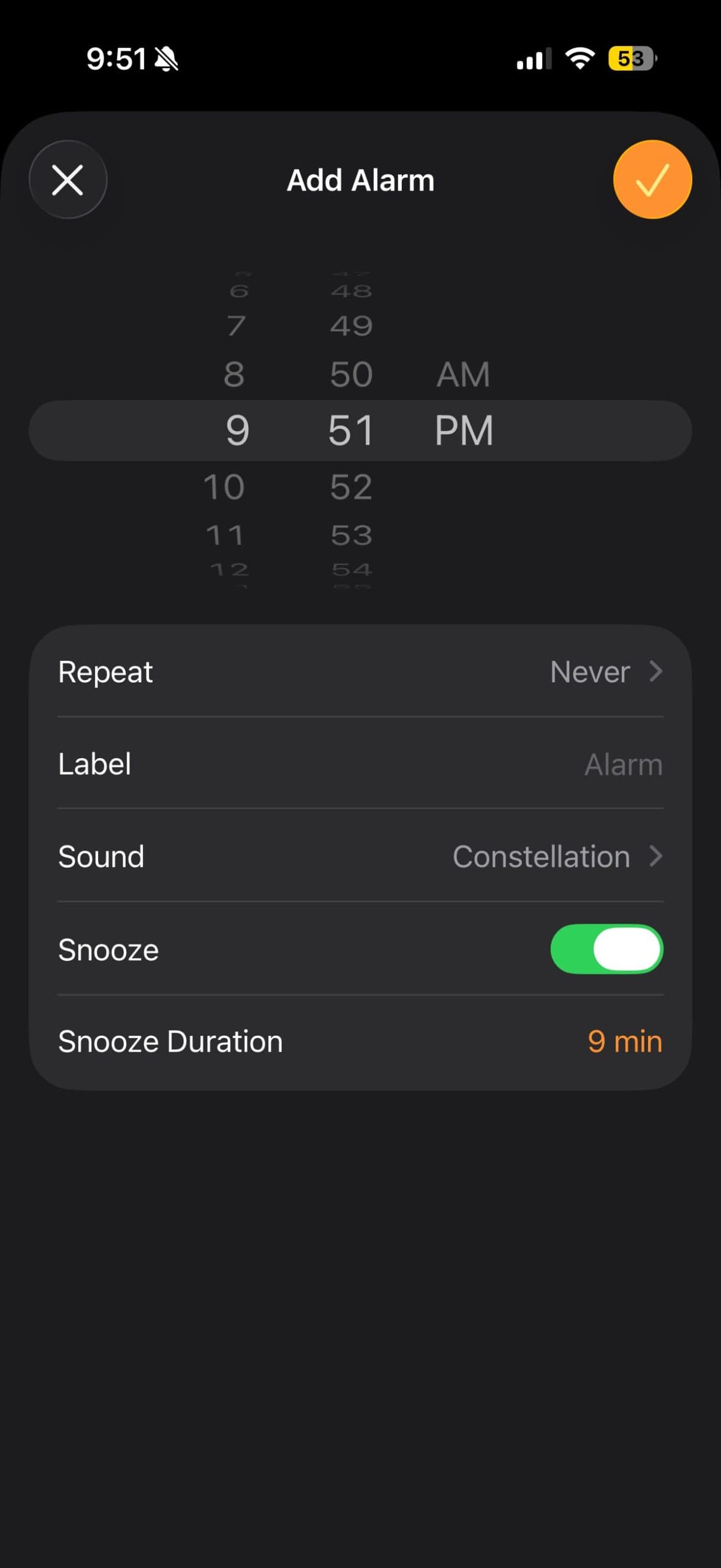
The advice around nap alarms leans heavily on gentle waking, and for a lot of people that is solving a problem they do not have. A phone alarm on the default sound wakes them cleanly and the nap works.
That is what I use. An alarm, twenty to thirty minutes, phone a couple of feet to the side rather than right beside me, default sound, and I wake cleanly and rarely snooze. Our note on how long a nap should be covers the duration.
Options at a Glance
| Type | Best for | Limitation |
|---|---|---|
| Phone alarm | Most people, no purchase | Screen light, notifications |
| Vibrating wearable | Waking without noise | Charging, worn on body |
| Gradual-volume clock | People who wake badly | Can be slept through |
| Light alarm | Naps in a dark room | Useless in daylight |
| Under-pillow pad | Shared rooms, silent | Only works lying down |
| Kitchen timer | Portability, cost | Single harsh volume |
How We Picked
Selections are grouped by waking method, and the honest starting point is that most people need nothing beyond what they already own.
Descriptions come from documented specifications rather than hands-on evaluation of every option.
1. The Phone You Already Have, Best Overall
Why It Stands Out
Free, always with you, adjustable in every respect, and it works in a chair, a bed, or an office without any adaptation.
Mine handles this without complaint. An alarm on the default sound, twenty to thirty minutes, and I wake cleanly.
Worth Knowing
Screen light is the real drawback, and checking the time before a nap is enough to be annoying.
Notifications need silencing separately. Our note on why you feel worse after a nap covers waking.
This suits almost everyone. Skip it only if you genuinely wake badly to sound.
Check Price on Amazon2. A Vibrating Wearable, Best for Silence
Why It Stands Out
Wakes only the person wearing it, which matters for napping in offices, shared rooms, or anywhere a sound alarm is unwelcome.
Works in a chair as well as a bed, unlike pillow-based alternatives.
Worth Knowing
Needs charging, and a flat battery means no alarm at all.
Some people find wearing something disrupts falling asleep. Our roundup of sleep trackers covers wearables generally.
This suits napping around other people. Skip it if you nap alone at home.
Check Price on Amazon3. A Gradual Volume Alarm Clock, Best for Rough Wakers
Why It Stands Out
Starting quiet and building over a minute avoids the jolt of a full-volume alarm, which genuinely helps people who find abrupt waking unpleasant.
Keeps the phone out of the equation entirely, which addresses the screen light problem.
Worth Knowing
A deep sleeper can sleep through the quiet portion, which defeats the purpose.
Fixed in one place rather than portable. Our roundup of alarm clocks for heavy sleepers covers the opposite need.
This suits people who wake badly to sound. Skip it if a default alarm already works.
Check Price on Amazon4. A Light Alarm, Best in a Dark Room
Why It Stands Out
Bright light on waking is one of the more consistently suggested interventions for sleep inertia, since light signals the circadian system toward alertness.
Delivers that at the moment of waking rather than requiring you to go find it.
Worth Knowing
Substantially less effective for a daytime nap in an already bright room.
Costs considerably more than a basic alarm. Our roundup of wake-up light alarm clocks covers the category.
This suits naps in a darkened room. Skip it for daylight napping.
Check Price on Amazon5. An Under-Pillow Vibrating Pad, Best for Shared Bedrooms
Why It Stands Out
Vibrates strongly enough to wake without any sound, and generally stronger than a wrist device, which suits people who sleep through subtler alarms.
Nothing worn on the body, which some people prefer.
Worth Knowing
Only functions with your head on the pillow, so it does nothing in a chair.
Another device and cable at the bedside. Our roundup of nap pillows covers what it sits under.
This suits shared bedrooms. Skip it if you nap in a recliner.
Check Price on Amazon6. A Simple Kitchen Timer, Best Portability
Why It Stands Out
Costs very little, needs no charging or setup, and moves between a chair, a sofa, and a bed without thinking about it.
Does one thing, which is occasionally the point.
Worth Knowing
Single harsh volume with no adjustment.
Mechanical versions tick, which some people find keeps them awake. Our roundup of recliners for napping covers napping away from a bed.
This suits napping in multiple places. Skip it if a harsh alarm ruins the nap.
Check Price on AmazonThe Gentle Waking Advice Is Overstated
Sleep inertia is real, and the grogginess after a nap comes mostly from which stage you woke out of rather than from how loud the alarm was.
A twenty minute nap is designed to keep you in light sleep, and waking from light sleep is not difficult regardless of the sound used.
The default alarm works fine for me at that duration, which is what the mechanism would predict rather than a surprise.
Where gentle waking genuinely matters is longer naps, people who wake badly generally, and anyone napping around others. For a short nap in your own space, the standard alarm is not the problem. Our note on napping with insomnia covers when to skip naps entirely.
Setting the Right Length
Twenty to thirty is the practical range
Long enough to allow for falling asleep, short enough to usually stay out of deep sleep.
The target is twenty minutes asleep
Someone taking ten minutes to drop off needs a thirty minute alarm.
Thirty carries some risk
If you fall asleep immediately, thirty minutes can reach slow-wave sleep.
Know your own drop-off time
It is the variable that decides where in that range to set it.
Where to Put the Phone
Directly beside your head means screen light in your face and a phone within reach for checking.
Across the room means getting up to silence it, which some people use deliberately and which works against going back to a chair afterward.
A couple of feet to the side is the arrangement I use, and it is far enough not to be in your face while still being audible and reachable.
That middle position is worth trying before buying a dedicated clock, since it addresses most of the phone objection at no cost. Our roundup of blackout curtains covers the light in the room.
The Screen Light Problem
Screen light is the most legitimate objection to phone alarms and the easiest to reduce.
Setting the alarm and then turning the screen face down removes the glow entirely without moving the phone.
Night shift or reduced blue light settings lower the intensity, though the screen still lights up when it wakes.
Do not disturb prevents notifications lighting the screen during the nap, which is the version of the problem people actually notice.
Alarm Versus Timer
Phones offer both and people use them differently, which is worth a moment because the choice affects the arithmetic.
A timer counts down from the moment you start it, so a twenty-five minute timer gives you twenty-five minutes from lying down regardless of when you actually fall asleep.
An alarm is set to a clock time, which means glancing at the clock and doing the addition, and it stays fixed if you take longer to settle than expected.
I use an alarm rather than a timer, which is the more common choice and the one that requires the small mental calculation.
Neither is better in principle. A timer suits anyone who wants a fixed amount of lying-down time; an alarm suits anyone who wants to be up by a particular moment regardless. Our note on fixing your sleep schedule covers timing generally.
Stage Detection Alarms Are a Poor Fit
Some wearables and apps claim to wake you at an optimal point in a sleep cycle, which sounds ideal for exactly this.
They work by waking you within a window, typically twenty or thirty minutes wide, once they detect light sleep.
For overnight sleep that window is a small fraction of the total. For a twenty minute nap it is the entire nap.
They also estimate sleep stages from movement and heart rate rather than measuring brain activity, so accuracy varies. For short naps they solve nothing.
What to Look For
Something you will actually use
A phone in your pocket beats a clock in another room.
Reliable enough to wake you
The gentlest alarm is worthless if you sleep through it.
Portable if you nap in different places
A bedside clock does nothing for a nap in a chair.
Silent options only if you need them
Napping alone at home does not require a vibrating wearable.
Common Mistakes to Avoid
Not setting one at all
The most common reason naps go wrong, since unplanned naps run into the worst duration window.
Timing from lying down
Falling asleep takes time, and twenty minutes asleep is the target.
Buying hardware you do not need
If a phone alarm wakes you cleanly, a gentle alarm clock solves nothing.
Leaving notifications on
Screen light during the nap is the phone problem people actually experience.
Recommended Reading
See our roundup of sleep products for daytime nappers, our note on how naps affect night sleep, our roundup of white noise machines, and a note on why alarms fail to wake you.
Nap Alarm FAQ
Do I need a special nap alarm?
Most people do not. A phone alarm on the default sound works fine for a short nap, since waking from light sleep is not difficult.
What do you use?
An alarm on my phone, set for twenty to thirty minutes, on the default sound. I wake cleanly and rarely snooze.
Is a gentle alarm better?
For longer naps and people who wake badly, yes. For a twenty minute nap in your own space, a standard alarm is not the problem.
How long should I set it?
Twenty to thirty minutes. The target is twenty minutes of sleep, so allow for however long you take to fall asleep.
Where should the phone go?
A couple of feet to the side works well. Far enough not to be in your face, close enough to hear and reach.
What about screen light?
It is the real drawback. Turning the phone face down after setting the alarm removes it, and do not disturb stops notifications.
Do sleep cycle alarms help?
Not for naps. They wake you within a twenty or thirty minute window, which is the entire length of a short nap.
What if I sleep through the alarm?
Move to something louder or physical. Reliability matters more than gentleness if naps are running long.
