
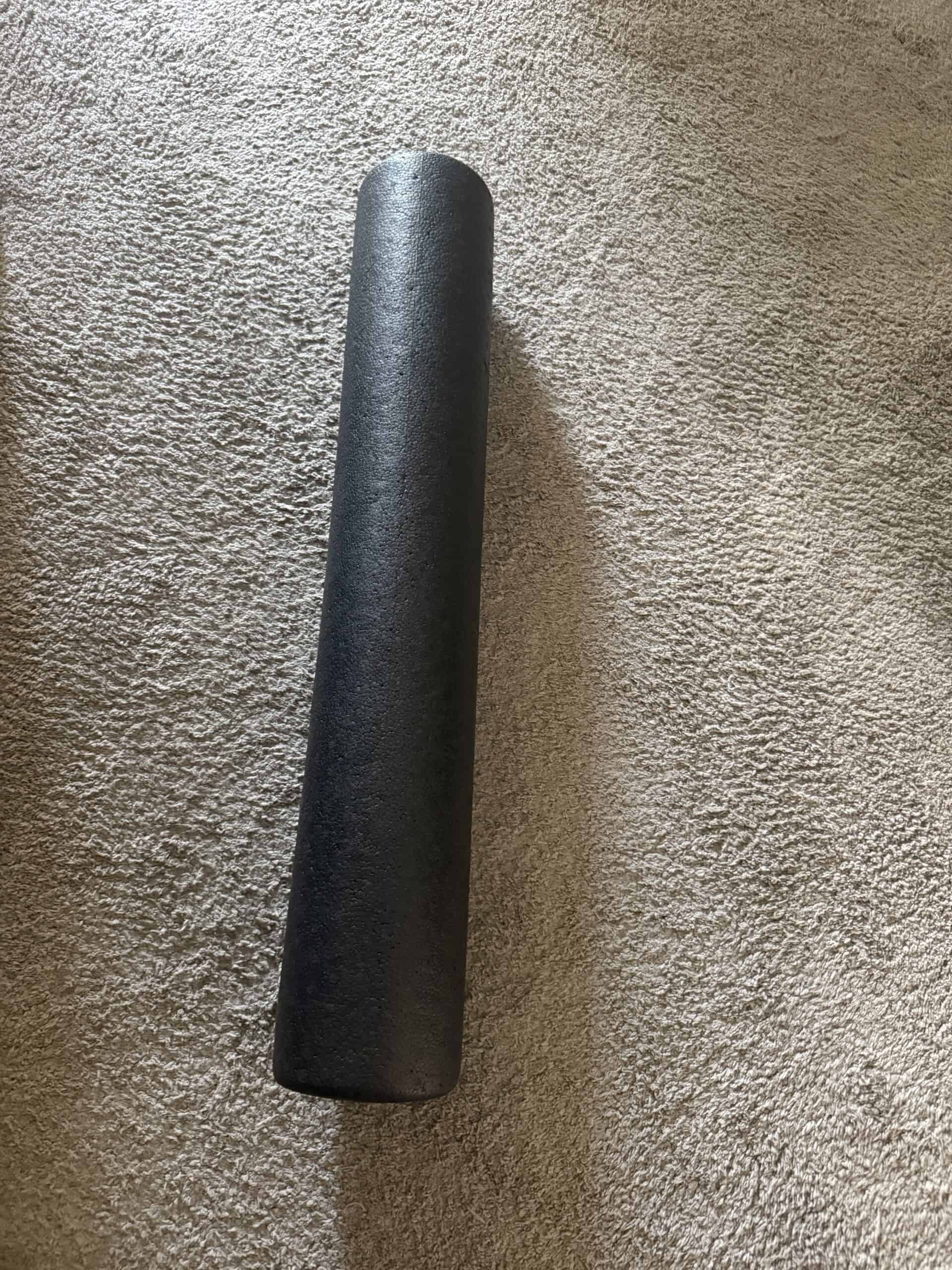
Most foam rolling advice reads like a physical therapy syllabus. The version that survives contact with an actual evening is much smaller: get on the floor, work your legs, move slowly, stop when it stops helping. That is what mine gets used for, and it is enough.
Important
This is general information and my own experience, not medical advice. Do not roll your lower back, over a joint, or on an injury. Sharp pain, radiating pain, or numbness means stop and see a doctor or physical therapist.
Quick Verdict
Slow passes over large muscles, mostly legs. Support your weight with your arms so you control the pressure. Move at a crawl rather than sawing back and forth. A few minutes per muscle is plenty, and going harder is not going better.
Key Takeaways
- Slow is the whole technique. Fast sawing does nothing.
- Legs first. They are large, safe, and where tightness actually lives.
- Your arms regulate how much bodyweight goes onto the roller.
- Never your lower back. Upper back over the shoulder blades is fine.
- Discomfort is acceptable. Pain is a stop signal, not a target.
The Short Version
| Muscle | Position | Notes |
|---|---|---|
| Calves | Seated, legs over roller | Easiest place to start |
| Hamstrings | Seated, roller under thighs | Hands behind you take the weight |
| Quads | Face down, forearms on floor | Most people’s tightest area |
| Glutes | Seated on roller, ankle on knee | Awkward, worth it |
| Upper back | On your back, roller across shoulder blades | Stop at the ribs |
| Lower back | Don’t | No bony protection |
Slow Is the Technique
If you get one thing right, this is it, and it is the thing almost everyone gets wrong.
The instinct is to saw back and forth quickly, because it feels like work and it hurts less. Moving fast means the pressure never sits anywhere long enough to do anything. You are essentially giving your leg a brisk rub.
Slow means slow. An inch per second is a reasonable mental model. When you find a spot that feels tight, stay on it and breathe rather than rolling past. That is where the useful part happens, and it is boring, which is why people skip it.
A few minutes per muscle is genuinely enough. This is not an activity with a dose-response curve that rewards heroics. Frequency does more than duration.
Your Arms Are the Dial
Here is the part nobody explains: you control the intensity with your arms, not with the roller.
When you are face down on your quads with your forearms on the floor, how much weight you hold up decides how much goes into the roller. Push harder into the floor, less pressure. Relax, more. Same roller, completely different experience.
That means you do not need a firmer roller to get more intensity. You need to commit more weight. It also means a medium-density roller has a much wider useful range than a firm one, because you can dial it up when you want it and back off when you do not. Density sets your floor, and your arms set everything above it.
Legs, Because That Is What Actually Needs It
Start with calves. Sit down, put the roller under them, hands behind you, lift slightly and move slowly. It is the easiest position to get right and calves take a beating from ordinary walking and standing.
Hamstrings work the same way with the roller further up. Quads mean rolling face down with forearms on the floor, and for most people that is the tightest thing they own, especially if they sit for a living.
Glutes are awkward and worth doing. Sit on the roller, cross one ankle over the opposite knee, lean toward the crossed side. It looks silly and it gets somewhere the other positions do not.
That is my whole routine, such as it is. Legs, slow, a few minutes, mostly when there is soreness or mild tightness to deal with. When it is a specific spot rather than a whole muscle, a massage ball does that better, and the gun handles targeted work.
The Upper Back Exception
Upper back is the one non-leg area worth doing, and it comes with a boundary.
Lie on your back with the roller across your shoulder blades, feet on the floor, and lift your hips slightly. Move slowly, only over the shoulder blade region. Your ribs and scapulae are taking the load, which is why this works.
Stop before your lower back. There is no bony protection down there, and lying across a hard cylinder compresses structures that gain nothing from being compressed. This is the most commonly ignored rule in foam rolling and the one most likely to make things worse.
If your lower back is what hurts, the roller is not the tool. Sleeping with back pain and waking up with it are better places to start, and the answer is often what you sleep on.
Discomfort Versus Pain
There is a line here and it is worth naming.
Rolling a tight muscle is uncomfortable. That is normal and it is not a problem. Sharp pain, pain that shoots somewhere else, numbness, or tingling is different, and it means get off the roller.
The failure mode is treating discomfort as a score to maximize. Harder is not better, and the people who go hardest are frequently the people who quit, because they have turned a five-minute thing into an ordeal. If you are grimacing, back off with your arms.
Before Bed, Go Lighter
If you roll at night, the rules shift slightly.
Aggressive rolling is stimulating. You can genuinely wind yourself up with a foam roller, which is not what you want at that hour. When I use mine before bed it is because there is tension in my legs, and the goal is to take the edge off rather than to accomplish anything.
Slow, moderate, legs, a few minutes, done. Whether this helps you sleep depends entirely on whether tension is what was keeping you up, and the honest answer is that it helps with that and nothing else.
What This Does Not Do
Worth saying plainly, because the category oversells relentlessly.
You are not breaking up scar tissue. You are not releasing fascia in any structural sense. You are not lengthening a muscle. The Cleveland Clinic’s guidance is a reasonable read on what rolling does, and the research supports short-term flexibility and less soreness after exercise. That is a modest set of real benefits.
Which is exactly what I get from it: soreness handled, tension relieved, nothing miraculous. That is worth five minutes, and it is not worth building an identity around.
Recommended Reading
See choosing a roller and how often to roll. For picks, see foam rollers. It also helps to understand using a heat wrap for a tense neck.
Using a Foam Roller FAQ
How slowly should I foam roll?
Roughly an inch per second, which is slower than feels natural. Fast sawing back and forth is the most common mistake and it accomplishes very little, because the pressure never sits anywhere long enough to matter. When you hit a tight spot, stay on it and breathe instead of rolling past it.
How long should I spend on each muscle?
A few minutes is plenty. This is not an activity that rewards more, and there is no dose curve that pays you back for grinding away. Rolling a bit more often does more than rolling much longer.
How do I control the pressure?
With your arms, not the roller. How much weight you hold off the floor decides how much goes into the foam. Push into the floor for less, relax for more. That is why a medium roller covers a wider range than a firm one: you can dial intensity up and down without changing equipment.
Where should I start?
Calves. Sit down, roller underneath, hands behind you, lift slightly, move slowly. It is the easiest position to get right, and calves take a beating from plain walking and standing. Then hamstrings, then quads, which are the tightest thing most people own if they sit for work.
Can I foam roll my lower back?
No. There is no bony protection there, and lying across a hard cylinder compresses things that do not benefit from it. Upper back over the shoulder blades is fine because your ribs and scapulae carry the load. Stop before you get past them.
Should it hurt?
Uncomfortable is normal. Painful is a stop signal. Sharp pain, pain radiating elsewhere, numbness, or tingling all mean get off. The trap is treating discomfort as a score to maximize, which turns five minutes into an ordeal and is why people quit.
Should I roll before or after a workout?
Either works and it matters less than people suggest. Before, it is a brief warm-up for flexibility. After, it is for soreness over the following days. My own use has nothing to do with workouts most of the time, it is just ordinary tightness from a day.
Is rolling before bed different?
Go lighter. Aggressive rolling is stimulating and you can wind yourself up doing it, which defeats the purpose at that hour. Slow, moderate pressure, legs only, a few minutes. Stop while it still feels like relief.
Part of our full guide: the complete guide to easing pain for better sleep.
