
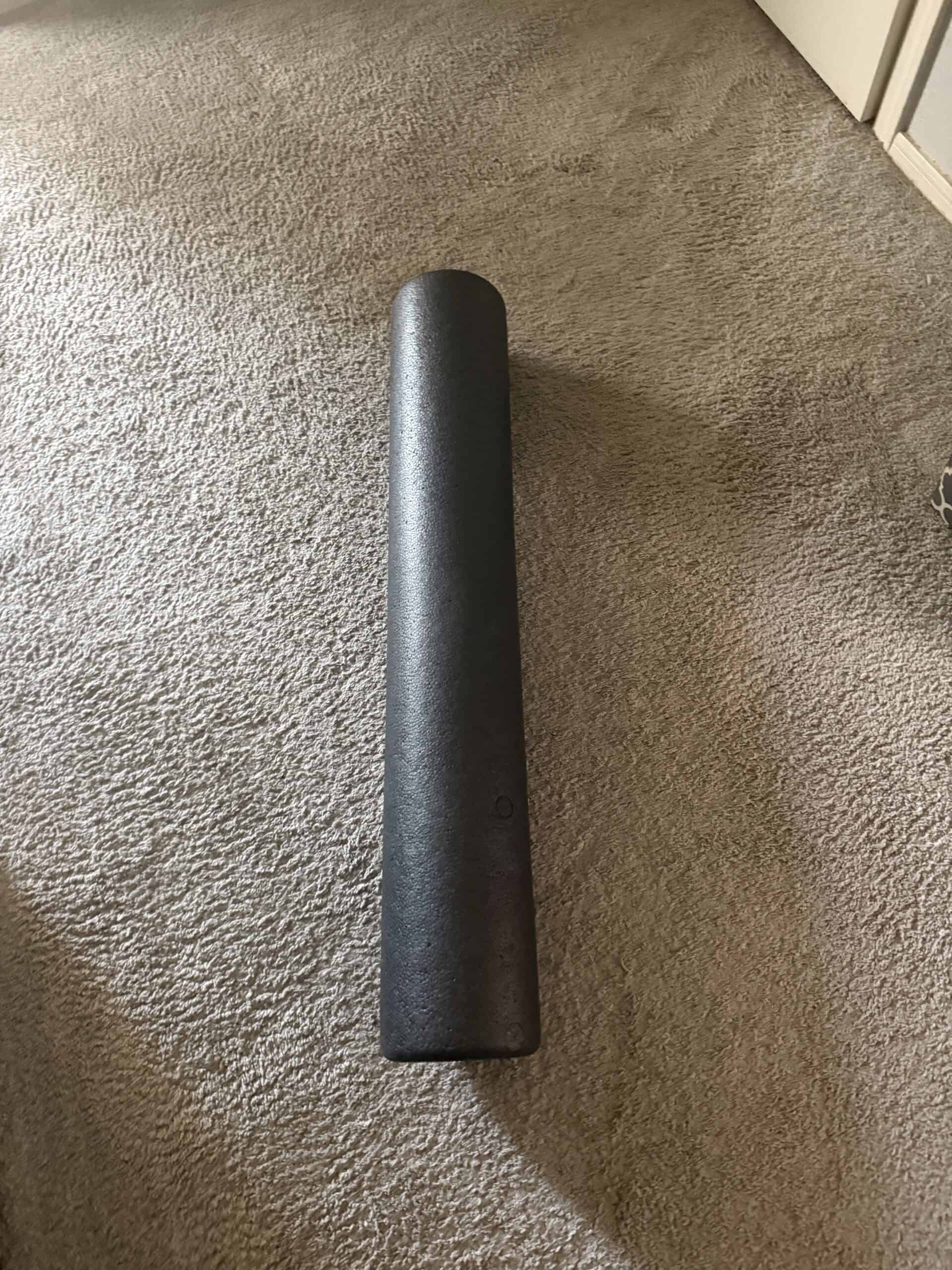
Foam rolling before bed will not fix insomnia, and anyone telling you otherwise is selling something. What it can do is narrower and more useful: if you are lying there aware of tension in your legs, rolling it out removes that particular obstacle. I use mine that way, occasionally, and it helps with exactly that and nothing more.
Important
This is general information and my own experience, not medical advice. Persistent insomnia has causes worth investigating with a doctor, and foam rolling is not a treatment for it. Pain that is keeping you awake is a reason to see someone rather than a reason to roll harder.
Quick Verdict
Rolling before bed helps if physical tension is what is keeping you up. It does nothing for a racing mind, a bad schedule, or a hot room. It is a tool for one specific obstacle, and it is quite good at that one.
Key Takeaways
- Rolling relieves tension. Tension is one of many reasons people cannot sleep.
- If tension is not your problem, this will do nothing for you.
- Legs before bed is the use case that actually works.
- Go gentle at night. Aggressive rolling is stimulating, not settling.
- Insomnia is not a rolling problem. Do not treat it as one.
What Rolling Can and Cannot Touch
| Why you are awake | Will rolling help? |
|---|---|
| Tension or tightness in your legs | Yes. This is the one. |
| Post-exercise soreness | Somewhat, over following days |
| Racing mind, stress, worry | No, beyond the ritual itself |
| Room too hot | No |
| Chronic insomnia | No. See someone. |
| Real pain | No, and it may make things worse |
The Narrow Thing It Actually Does
Here is my honest experience, and I want to keep it small because the claim is small.
Sometimes I get into bed and there is tension in my legs. Not pain, just a low-grade awareness that something is tight and will not settle. On those nights I use the foam roller, and it does relieve that tension. Then I go to bed and the thing that was bothering me is not bothering me.
That is the entire mechanism. It is not sedative. It did not make me sleepy. It removed one specific obstacle that was sitting between me and sleep, and once that obstacle was gone I was left with whatever else was going on.
Which is why the answer to the headline question is genuinely conditional. If tension in your body is the thing keeping you awake, rolling addresses it directly. If something else is keeping you awake, rolling addresses nothing, and you will lie there relaxed and alert.
Why It Is Not a Sleep Aid
Nothing about foam rolling acts on sleep itself.
It does not raise melatonin. It does not slow your nervous system down the way a wind-down routine can. The research on rolling supports short-term flexibility gains and reduced soreness after exercise, and the Cleveland Clinic’s guidance stays within those lines. None of it is about sleep.
Any sleep benefit is indirect and runs through comfort. Less tension, fewer physical distractions, easier to settle. That is real, and it is a long way from the category of things that actually make you sleepy. If you want that, sleep aids is the honest place to look, and a wind-down routine does more for most people than any object.
Legs, Specifically
The bedtime use case that works is legs, and there is a reason it keeps coming up.
Legs carry the day. They are where tightness accumulates if you walked, stood, trained, or sat still for hours. They are also large, easy to roll, and nowhere near your spine, which means you can work on them without the caution that upper body rolling needs.
Calves, quads, hamstrings. Slow passes, nothing heroic. That is all mine ever gets at night, and it takes a few minutes. Technique matters less here than it does in a training context, because the goal is not performance, it is just getting the noise down.
Go Gentler Than You Would in the Morning
If you roll before bed, the instinct to dig in works against you.
Hard rolling is uncomfortable, and discomfort is arousing in the nervous system sense. You can absolutely wind yourself up with a foam roller, which is the opposite of what you came for. That is also an argument for a medium-density roller rather than a firm one, since the roller you choose shapes how aggressive the whole thing is by default.
Slow, moderate pressure, and stop while it still feels like relief. This is the one context where doing less is straightforwardly better.
Where the Other Tools Fit at Night
I have a massage gun and a massage ball as well, and neither is what I reach for at bedtime.
The gun is for targeted relief, and it is loud and percussive and feels like a piece of equipment. The ball relieves pressure on specific areas, which means finding a spot and leaning into it, which is a project. Neither is restful. The roller and the gun genuinely differ here, and it is one of the clearer distinctions between them.
The roller is passive by comparison. You lie on it and move slowly. That suits the hour.
The Honest Problem With Doing This Nightly
I should admit something, since it bears on whether you should build a routine around this.
I go in phases with the roller. I use it often for a while, then not at all for a while. That is not discipline and I am not going to pretend otherwise. It also means I cannot tell you that nightly rolling transformed my sleep, because I have never rolled nightly for long enough to find out.
What I can tell you is that on the nights I use it for leg tension, it works for that. Which is a smaller claim than most articles on this subject make, and I would rather give you the small true one. How often to roll covers why consistency is the hard part.
When Sleep Is the Real Problem
If you are researching foam rolling because you cannot sleep, the roller is probably not your answer.
Chronic insomnia has causes: schedule, stress, environment, medical issues. None of them respond to a foam roller, and a few weeks of poor sleep is worth raising with a doctor rather than working around. Pain that keeps you awake is its own signal and rolling on it is at best a delay.
The far more likely fixes are boring: how you sleep with back pain, what you are sleeping on, and whether waking up in pain points at your mattress rather than your muscles. A topper has fixed more sleep problems than any recovery tool I own.
Recommended Reading
See choosing a roller and using one. For sleep itself, see winding down and sleep aids.
Foam Rolling and Sleep FAQ
Does foam rolling before bed help you sleep?
It helps if physical tension is what is keeping you awake. That is the whole scope. I use mine when I get into bed and my legs feel tight, and it relieves that tension so it stops being a distraction. It is not sedative and it will not make you sleepy. It removes an obstacle rather than causing sleep.
Is foam rolling a sleep aid?
No. Nothing about it acts on sleep itself. It does not affect melatonin or wind your nervous system down. Any benefit is indirect and runs entirely through being more comfortable. That is real but it is a different category from things that actually make you sleepy.
How long should I foam roll before bed?
A few minutes, and gently. This is not the session where you dig in. Hard rolling is uncomfortable, and discomfort is stimulating, which is the opposite of the point. Slow passes on the legs at moderate pressure. Stop while it still feels like relief.
What should I roll before bed?
Legs. Calves, quads, hamstrings. They are where tension accumulates from a day of walking, standing, training, or sitting, they are large and easy to work, and they are nowhere near your spine, so you do not need the caution that upper body rolling requires.
Will foam rolling help my insomnia?
No, and I would not want you to spend money hoping so. Chronic insomnia comes from schedule, stress, environment, or medical causes, and a foam roller touches none of them. If you have had weeks of bad sleep, that is worth raising with a doctor rather than working around with a recovery tool.
Should I use a massage gun instead before bed?
I would not. I own one and it is not what I reach for at night. It is percussive and loud and feels like operating equipment, which does not suit the hour. The roller is passive by comparison: you lie on it and move slowly. That is a better fit for winding down.
Do I need to roll every night for it to work?
Not for this use. It is situational rather than cumulative: you roll on the nights leg tension is bothering you, and it helps on those nights. I go in phases with mine, using it often and then not at all, so I cannot honestly tell you what nightly rolling does over months. I have never sustained it long enough to find out.
My pain keeps me awake. Should I roll it out?
Not before you know what it is. Pain that keeps you awake is a signal, and rolling on it is at best a delay and at worst makes things worse. Sharp pain, pain radiating down a limb, or anything lasting weeks needs a doctor or physical therapist. It is also worth checking whether your mattress is the cause before your muscles get the blame.
Part of our full guide: the complete guide to easing pain for better sleep.
