
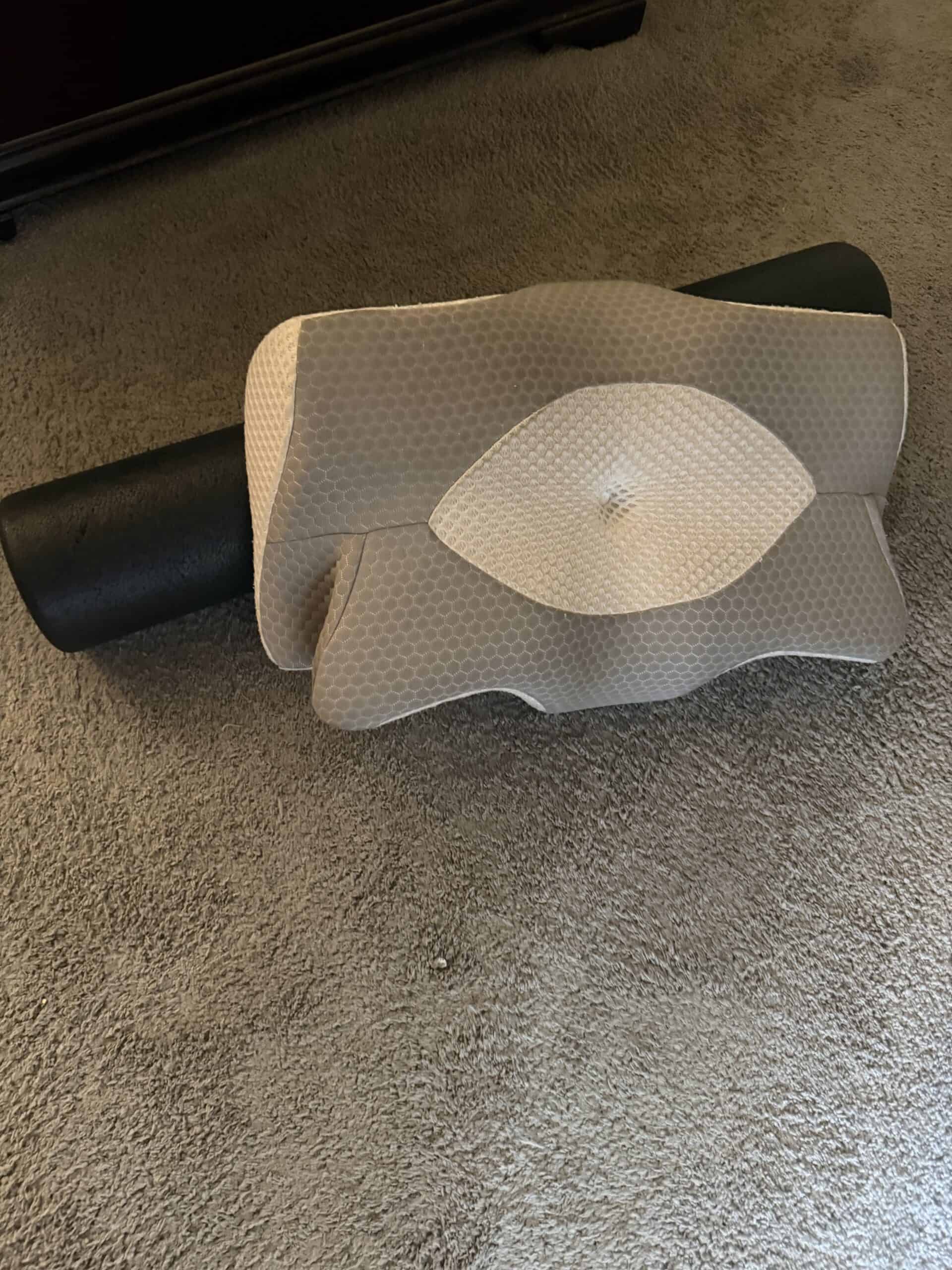
I own a cervical pillow and I do not sleep on it most nights. It helps my neck a lot when I use it, and I only reach for it when things are extremely tense before bed. That is not a criticism of the pillow. It is the most useful thing I can tell you about this category: some of this gear is for every night and some of it is for the bad nights, and buying the second kind expecting the first is how people end up disappointed.
Important
This is general information and my own experience, not medical advice. Neck or back pain that persists, worsens, or comes with numbness or radiating pain is worth raising with a doctor rather than solving with a pillow.
Quick Verdict
A pillow that fits your sleeping position does more than any specialist product. A cervical pillow helps a lot when tension is bad. A wedge changes the angle of everything. A foam roller works on you before you get in.
Key Takeaways
- Your everyday pillow matters more than any of the specialist gear.
- A cervical pillow is a tool for bad nights, not necessarily every night.
- Side sleepers need loft. Getting that wrong causes the problem.
- A roller works before bed, a pillow works during. Different windows.
- Persistent or worsening pain is a doctor question, not a purchase.
1. A Cervical Pillow, Best for Bad Nights
The one I own and the one I want to be honest about.
It helps my neck a lot. It also does not come out most nights. I use it when my neck is extremely tense before bed, and the rest of the time I sleep on an ordinary pillow without thinking about it.
The reason is that a cervical pillow is shaped, and shaped means it holds your head in a particular position rather than letting you find your own. When your neck needs that, it is genuinely effective. When it does not, it is a pillow telling you where to put your head all night, and that is a strange thing to sign up for nightly.
So my honest recommendation is to treat it as a tool rather than a bed fixture. Buy it, keep it near, use it when the tension is there. That is a small purchase doing real work occasionally, which is a better outcome than a nightly compromise. Cervical pillows covers the shapes, cervical vs reading pillow the confusion between them, and sleeping with neck pain the wider question.
Best for: nights when your neck is genuinely tense.
Skip if: you expect to love it every night. Some do. I do not.
Check Price on Amazon2. A Pillow That Fits Your Position, Best Overall
The unglamorous answer and the one that matters most.
Before any specialist product, the pillow you sleep on every night sets your neck angle for eight hours. Get it wrong and you are creating the tension that the rest of this page is trying to relieve, which is an expensive loop to be stuck in.
Position decides loft. Side sleepers need height to fill the gap between shoulder and head, and I am one, so a flat pillow means my neck bends sideways all night. Back sleepers need less. Stomach sleepers need almost nothing and arguably need to stop.
Most people are on a pillow they bought for reasons unrelated to their sleeping position, years ago, that has since compressed. That is the first thing to fix and it is cheaper than everything else here. Pillows for neck pain covers the specifics, choosing one for side sleeping if that is you, and why your neck hurts in the morning is usually this.
Best for: everyone, first, before anything else.
Skip if: yours is recent and matches how you sleep.
Check Price on Amazon3. A Wedge Pillow, Best for Changing the Angle
The one that works on your whole upper body rather than your neck specifically.
A wedge raises your torso, which changes the line of your spine and takes some load off the lower back. It also does things unrelated to tension, like helping with reflux, which is why it is a broader tool than it appears.
Height is the decision and people get it wrong by going big. A steep wedge feels supportive for ten minutes and then you slide down it all night, which produces its own set of complaints. Gentler is usually right.
Mine is a thing I own rather than a nightly habit, which puts it in the same category as the cervical pillow: useful when the situation calls for it. Bed wedge pillows covers the range, what height you need the sizing, and how to stop sliding down it the complaint everyone has.
Best for: lower back load, reflux, anyone who wants elevation.
Skip if: you are a committed side sleeper. Wedges suit backs better.
Check Price on Amazon4. A Foam Roller, Best Before You Get In
The only item here that works on you rather than supporting you, which makes it a different category of solution.
Everything else on this page is passive: you lie on it and it holds you somewhere better. A roller is active. You use it before bed, it relieves tension that is already there, and then you get into a bed that is unchanged.
Mine is smooth and on the larger side and I have had it years. I use it on my legs, which is where my tension actually shows up, and it helps with exactly that. For a back, a roller works too, though it is clumsier and worth reading about before you improvise.
The pairing is the point: roll before, then let the pillow do its job overnight. They address different windows and neither replaces the other. Foam rollers covers the range, how to use one the technique, and bedtime recovery tools the wider kit.
Best for: tension you can feel before bed, legs especially.
Skip if: the problem appears overnight. Then it is a support question.
Check Price on Amazon5. A Knee Pillow, Best for Side Sleepers
Small, cheap, and it addresses a problem most side sleepers do not know they have.
Lying on your side with your top leg dropped forward rotates your pelvis, which twists your lower spine, which it holds for hours. A pillow between the knees keeps the legs stacked and the hips level, and the back stays neutral.
The lower back complaint that appears in the morning and eases through the day is often this. It is not a dramatic intervention and it costs very little to rule out.
As a side sleeper myself, this is the one on the page I would suggest before any of the specialist neck gear, purely on the ratio of cost to plausibility. Knee pillows for side sleepers covers shapes, and why you wake with lower back pain covers the mechanism.
Best for: side sleepers with morning lower back complaints.
Skip if: you sleep on your back, where it does nothing.
Check Price on Amazon6. A Heating Pad, Best Passive Option
Different route, same destination, and it asks nothing of you.
Heat increases blood flow and helps muscles let go. Unlike a roller it requires no effort, which matters at the end of a day when working on yourself is not going to happen. You lie there and it works.
For tension that reads as an ache rather than a knot, this is frequently the better tool, and it pairs with everything else here rather than competing.
The caveat worth knowing is that heat suits chronic tension better than a fresh injury. Something acute and recent may want the opposite. Heating pads for back and neck covers the options, and neck massagers if you want something that works on you without you doing the work.
Best for: aches, stiffness, ends of long days.
Skip if: the pain is acute and new, where heat may be wrong.
Check Price on AmazonEvery Night or Bad Nights
| Item | When | What it does |
|---|---|---|
| Pillow that fits your position | Every night | Sets your neck angle for 8 hours |
| Knee pillow | Every night, side sleepers | Stops the pelvic twist |
| Cervical pillow | Bad nights | Holds the neck when it is tense |
| Wedge pillow | Situational | Changes torso angle |
| Foam roller | Before bed | Works on you, actively |
| Heating pad | Before bed | Passive, no effort |
The Distinction Nobody Makes
This category gets sold as a set of nightly rituals and most of it is not.
Your everyday pillow is a nightly item. It is under your head for eight hours whether you think about it or not, and it is doing more than anything else here. A knee pillow, for a side sleeper, is the same: it is either between your knees all night or it is not helping.
The specialist gear is different. My cervical pillow helps a lot and comes out when my neck is bad, which is not most nights. That is not the pillow underperforming, it is the pillow being a tool for a situation rather than a fixture.
Knowing which kind you are buying changes what you expect. Nobody is disappointed that their heating pad is not on every night. People are disappointed when a cervical pillow they bought as a permanent upgrade turns out to be something they reach for occasionally, and the disappointment is a category error rather than a product failure.
Fix the Cause Before the Symptom
Worth saying on a page listing six purchases.
If your neck hurts every morning, something is causing it, and quite often that something is a pillow that does not match how you sleep, a mattress that has stopped supporting you, or a desk you spend eleven hours at. Buying a cervical pillow to manage tension created by a bad everyday pillow is treating the symptom while paying for the cause.
Start with the boring audit. Does your pillow suit your position? Is it old and compressed? Are you a side sleeper on something flat? Those questions cost nothing and they resolve a lot of this before any specialist purchase.
The same is true of the daytime. Working from home and back pain and office chairs cover the eight hours before bed, which produce more tension than the eight hours in it.
When It Is Not a Gear Problem
The line worth respecting, and worth respecting early.
Tension that eases with heat, rolling, or a decent pillow, and comes back after a long day, is ordinary. That is what this page is for.
Pain that persists regardless, gets worse over weeks, wakes you up, radiates down an arm or a leg, or comes with numbness or weakness is a different thing, and no pillow addresses it. Mayo Clinic’s guidance on back pain is clear about when that line has been crossed, and the honest advice from a page selling pillows is to stop buying pillows at that point.
Buying more gear is a way of not making the appointment, and it is an expensive way. Sleeping with lower back pain covers positioning, and sleep positions the free adjustments worth trying first.
Recommended Reading
See cervical pillows, sleeping with neck pain, and knee pillows for side sleepers, and using a foam roller before bed, when to use a cervical pillow.
Neck and Back Tension FAQ
What is the best thing to buy for neck tension?
A pillow that matches how you sleep, before any specialist product. It sets your neck angle for eight hours a night, and getting it wrong creates the tension everything else is trying to relieve. Most people are on a pillow bought years ago for unrelated reasons.
Is a cervical pillow worth it?
Yes, and possibly not as a nightly pillow. Mine helps my neck a lot and I only use it when things are extremely tense before bed. A shaped pillow holds your head in one position, which is what you want when your neck needs it and a strange thing to commit to every night.
Should I sleep on a cervical pillow every night?
Some people do and like it. I do not. Treating it as a tool for bad nights rather than a fixture is a better fit for how I actually use it, and it is worth buying with that expectation rather than being disappointed when it does not become permanent.
What pillow height do side sleepers need?
Enough loft to fill the gap between shoulder and head, which is more than most people use. A flat pillow leaves a side sleeper’s neck bent sideways all night. I am a side sleeper and this is the single most common cause of the problem this page is about.
Does a knee pillow actually help back pain?
For side sleepers, often. Letting your top leg drop forward rotates the pelvis and twists the lower spine for hours. A pillow between the knees keeps the hips stacked. It is cheap enough to rule out and it explains a lot of morning lower back complaints.
Foam roller or pillow for tension?
Both, at different times. A roller works on you actively before bed and relieves tension that is already there. A pillow works passively overnight and stops new tension forming. They address different windows and neither substitutes for the other.
What wedge pillow height should I get?
Lower than instinct suggests. A steep wedge feels supportive briefly and then you slide down it all night, which creates its own complaints. Gentler is usually right, and sliding is the most common problem people have with them.
When should I see a doctor about it?
When it persists, worsens over weeks, wakes you, radiates into an arm or leg, or comes with numbness or weakness. Ordinary tension eases with heat, rolling, or a better pillow and returns after a long day. Buying more gear past that point is an expensive way of not making the appointment.
Related guides: our picks for sleep gear for light sleepers.
Part of our full guide: the complete guide to easing pain for better sleep.
Recommended Reading
Related: sleep products for back surgery recovery.
Related: sleep gear for camping and van life.
