
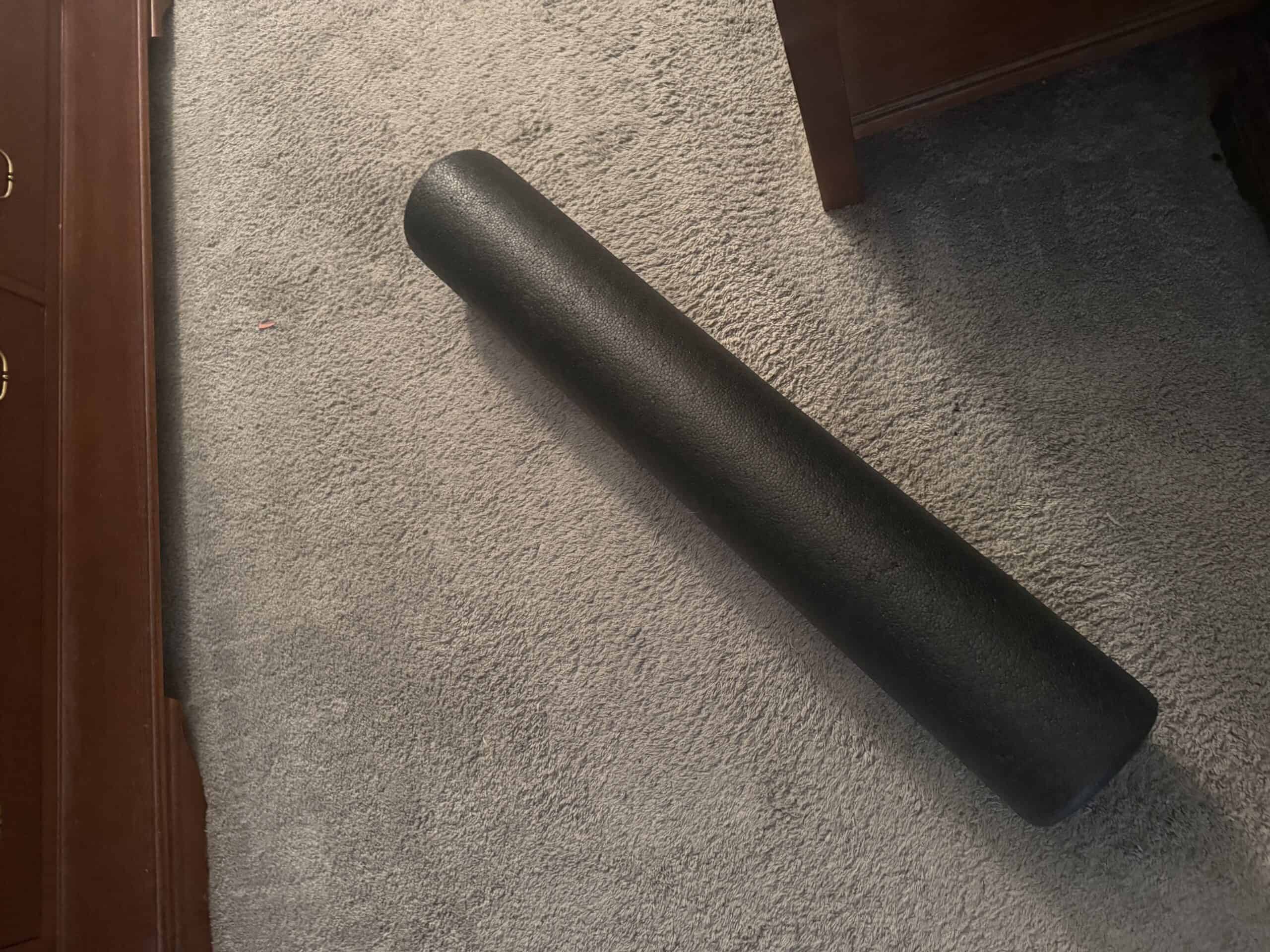
I have used a foam roller for about three years, and rolling before bed has become part of how I unwind. I want to be precise about what it is and is not, because the distinction matters: I do not use it as a sleep aid. I use it to relieve tension before bed, which is a different thing. It is a way to work out the soreness and tightness of the day so I get into bed feeling looser, not a trick to make myself fall asleep. Here is how I actually do it.
Key Takeaways
- I use a foam roller before bed to relieve tension, not as a sleep aid.
- The distinction matters: it loosens the body, it does not induce sleep.
- I roll my back, sides, and neck area to release the day’s tightness.
- It serves both soreness relief and winding down.
- Keep it gentle and unhurried, since this is a wind-down, not a workout.
Tension Relief, Not a Sleep Aid
The distinction I want to make first, because most advice blurs it.
A lot of writing treats foam rolling before bed as a sleep hack, something you do to fall asleep faster. That is not how I use it or how I would describe it. I roll to relieve tension, to work the tightness and soreness out of my body before I lie down. The benefit is a looser, more comfortable body getting into bed, which is worth having on its own terms.
Whether that indirectly helps sleep is a separate question I am not going to overclaim. What I can say honestly is that rolling loosens me up and helps me wind down, and I do it for that, not as a technique to force sleep. Getting this distinction right keeps the expectation honest: you are relieving tension, not taking a sleeping pill made of foam.
That honest framing is the foundation for everything else here. Foam rollers covers the tools themselves.
When I Roll
The timing that makes it a wind-down.
I roll in the evening, before bed, as part of settling down for the night. Doing it late is deliberate: the point is to release the tension the day has built up right before I get into bed, so I am not carrying the day’s tightness into the night. Rolling in the morning would serve a different purpose; rolling at night is about unwinding.
It slots naturally into the end of the day, after everything else is done and I am heading toward bed. That placement is what turns it from exercise into a wind-down ritual. The same rolling done mid-afternoon would just be recovery; done at night it becomes part of shutting the day down.
Making it the last physical thing before bed is what gives it the wind-down character. It is a signal to the body that the day is ending. Electrical stimulation raises a different set of questions, and a TENS unit at bedtime covers whether it belongs in an evening routine.
Where I Roll
The areas that hold the day’s tension for me.
I roll my back and my sides as much as I can, and I work the neck area too, because those are where tension collects over a day. Rolling the back releases the tightness that builds from sitting and moving through the day, and getting into the sides helps with the tension that settles along the body. The neck gets attention because it holds a lot of the day’s stress.
I move through these areas without rushing, spending time where it feels tight rather than following a rigid routine. The goal is to find the tension and ease it, so I let the tight spots guide where I linger. It is responsive rather than prescribed: wherever the day left tightness is where the rolling goes.
Working the back, sides, and neck covers the places that most need releasing before bed, at least for how my body carries a day. Sleep gear for neck and back tension covers the broader set of tools for this.
Keeping It Gentle
Why the before-bed version is not a workout.
Because this is a wind-down and not a training session, I keep it gentle and unhurried. Aggressive, painful rolling would work against the purpose, which is to relax and release, not to push hard. Slow, moderate pressure that eases the tension is the right intensity for the end of the day.
An evening roll is about coming down, so the pace and pressure match that. Rolling too hard right before bed would rev the body up rather than settle it, which defeats the point. The relaxed version, spending unhurried time on the tight areas, is what fits a wind-down.
Treating it as gentle self-care rather than intense recovery is what makes it belong in a bedtime routine. Ease into it, and let it be calming rather than demanding.
Fitting It Into a Routine
How it lives as a habit rather than a one-off.
Over three years, rolling before bed has become a natural part of ending the day. It does not take long, it needs almost no setup, and it slots in among the other small things that signal the day is done. That low friction is why it has stuck: it is easy to keep doing because it asks little and gives a real feeling of release.
Because it is quick and simple, it fits around whatever else the evening holds. I do not need a big block of time or any special conditions, just a few minutes and a bit of floor. That makes it sustainable in a way more elaborate routines are not.
A habit that is easy to maintain and genuinely relieves tension is worth keeping, and that is what this has become for me. Recovery tools for bedtime tension covers what else fits alongside it.
What to Expect From It
Setting an honest expectation.
Expect a looser, more relaxed body getting into bed, with the day’s soreness and tightness eased. That is the real and reliable benefit: you go to bed feeling better in your body than you would have without it. It is tension relief and a wind-down, delivered by a few minutes of gentle rolling.
Do not expect it to knock you out or replace whatever else helps you sleep. I am careful not to sell it as a sleep aid because that is not what it does for me. It is a way to release tension before bed, and taken as that, it earns its place. Judged as a sleep trick, it would disappoint; judged as tension relief, it delivers.
That honest expectation is what makes the habit satisfying rather than a letdown. Use it for what it does, and it does that well.
Recommended Reading
See foam rollers, recovery tools for bedtime tension, and sleep gear for neck and back tension.
Foam Rolling Before Bed FAQ
Should I foam roll before bed?
If you carry tension from the day, it can help you get into bed looser. I have rolled before bed for about three years to relieve tension, not as a sleep aid. The benefit is a more relaxed body at bedtime, which is worth having on its own.
Does foam rolling help you sleep?
I am careful not to overclaim this. I use it to relieve tension and wind down, not as a technique to force sleep. Whether a looser body indirectly helps sleep is a separate question. What it reliably does is ease the day’s tightness before bed.
What areas should I roll before bed?
The ones that hold your day’s tension. For me that is the back, the sides, and the neck area, since those collect tightness from sitting and moving through the day. I let the tight spots guide where I linger rather than following a rigid routine.
How hard should I roll at night?
Gently. This is a wind-down, not a workout, so aggressive painful rolling works against the purpose. Slow, moderate pressure that eases tension is right for the end of the day. Rolling too hard before bed can rev you up instead of settling you.
When in my routine should I do it?
Late, right before bed, as the last physical thing before lying down. That timing is what makes it a wind-down rather than exercise. It releases the day’s tension right before you get into bed, so you are not carrying tightness into the night.
How long does it take?
Only a few minutes, which is part of why it sticks as a habit. It needs almost no setup and slots in among the other small things that end the day. That low friction is what has kept me doing it for years.
Is foam rolling before bed a sleep aid?
Not in how I use it, and I think the distinction matters. It relieves tension and helps me wind down; it does not induce sleep like a sleep aid would. Treating it as tension relief keeps the expectation honest and the practice satisfying.
What should I expect from rolling before bed?
A looser, more relaxed body at bedtime with the day’s soreness eased. That is the reliable benefit. Do not expect it to knock you out or replace what else helps you sleep. Used for tension relief, it delivers; sold as a sleep trick, it would disappoint.
Related in this cluster: our guide: how to relieve pain better sleep, how to use a foam roller.
Stretching lands better as a fixed step than as something occasional. Where physical wind-down fits in an evening covers the sequencing.
