
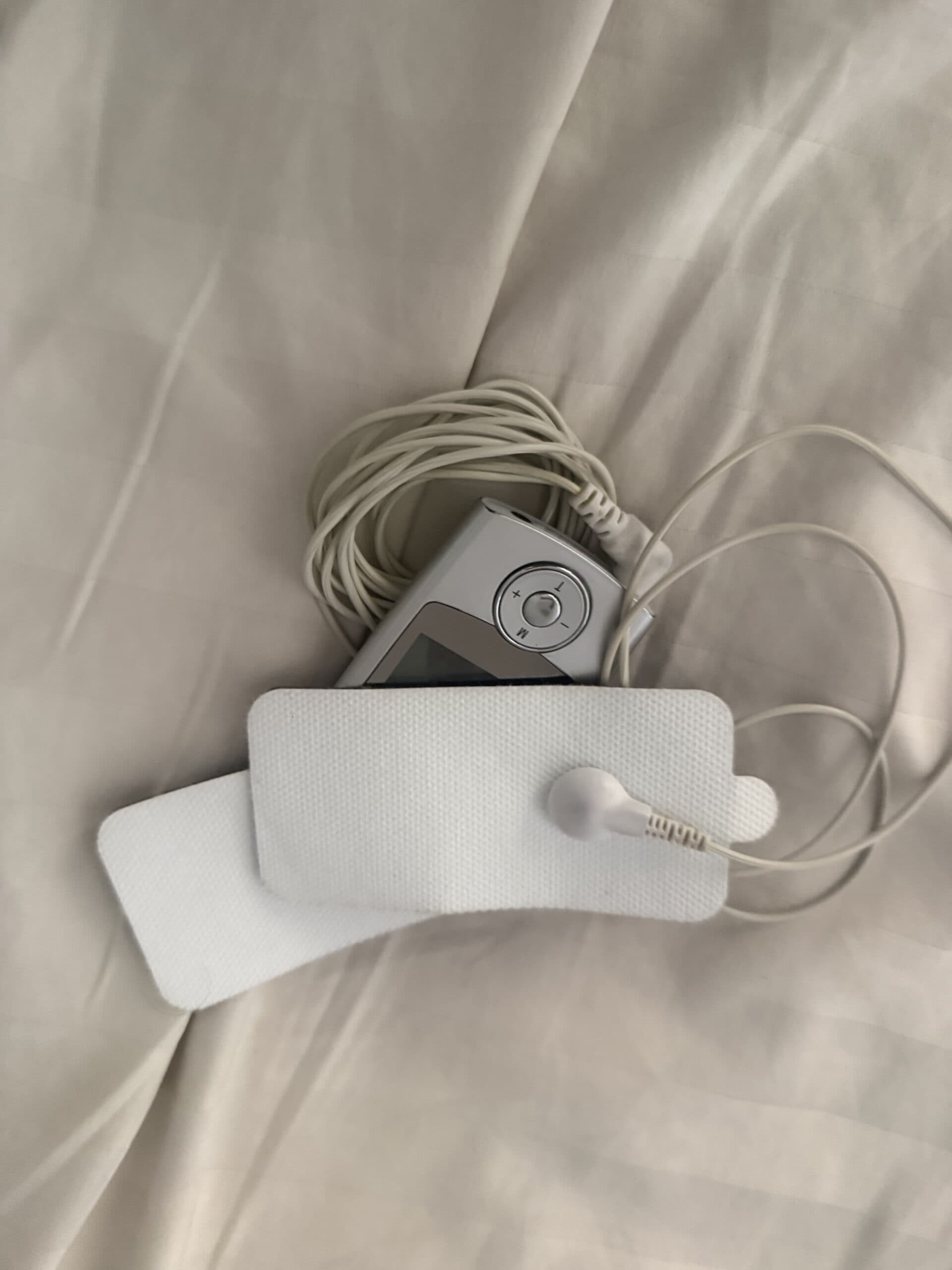
Yes, most people can use a TENS unit before bed, and many find the timing helps because the session ends right as they lie down rather than hours earlier. Whether you can use a TENS unit before bed safely depends far more on where you place the pads and whether you fall asleep with it running than on the hour itself. Our roundup of TENS units for pain relief covers the hardware.
Medical Disclaimer
This describes how people use a comfort device around bedtime and is not medical advice. TENS is not appropriate for everyone, and anyone with a pacemaker or implanted device, epilepsy, a heart condition, or who is pregnant should speak to a doctor before using one at all.
Quick Answer
Run a session of roughly twenty to thirty minutes, finish it before you get into bed, and take the pads off. Never fall asleep with a unit running or with electrodes still attached. The bedtime benefit is that muscle tension is lower when you lie down, not that the device does anything while you sleep.
Key Points
- Finish the session before bed rather than during it.
- Sleeping with pads attached is the thing to avoid, not the evening timing.
- Lower intensity suits an evening session better than a strong one.
- Skin needs a break, so rotate pad placement across days.
- TENS is a comfort tool, not a treatment for the underlying cause.
Evening Sessions Compared
| Timing | What it suits | Watch for |
|---|---|---|
| Thirty to sixty minutes before bed | Winding down, general tension | Nothing particular |
| Immediately before getting in | Specific sore area | Remove pads first |
| While already in bed | Nothing, avoid it | Falling asleep with it on |
| Earlier in the evening | People who find it stimulating | Effect fading before sleep |
| Any time when sore | Acute soreness, post-exercise | Overusing one skin area |
Why Bedtime Works for Some People
Pain and muscle tension both interfere with falling asleep, and both are usually at their most noticeable once you stop moving. Doing something about them in the last hour rather than the first is straightforward logic.
TENS also involves lying still for twenty or thirty minutes with the lights low, which is itself a wind-down routine. Some of what people attribute to the device is the sitting still.
The National Institute of Neurological Disorders and Stroke describes TENS as working by delivering low-voltage current through the skin to interfere with pain signaling, with effects that are generally short-lived. Short-lived is exactly why the timing matters. A session at six in the evening may have faded by eleven.
My Own Routine
I keep a TENS unit on hand for soreness and for recovery after exercise, and it has held up for years without trouble. I put the pads on, let the remote do its thing, and it takes the edge off ordinary back and neck aches.
Most often I use it right before bed, usually in the same session as my massage gun. That is the pattern rather than a rule, and if I am actually sore I will use it at any time of day instead.
What I can tell you is that it fits the end of the evening well. What I cannot tell you is whether that is the device, the twenty minutes of lying still, or both, and I am not going to pretend I can separate them.
My use is for everyday aches from workouts and a stiff back and neck. Anyone using TENS for a diagnosed condition is in a different situation, and nothing here speaks to that.
The One Rule Worth Following
Do not sleep with a TENS unit on. This is the guidance every manufacturer gives and the one most likely to be ignored, because it is tempting to leave it running when it feels good.
Two reasons. Prolonged contact with electrode pads can irritate or burn skin, particularly if a pad lifts and the current concentrates on a small area. And you cannot react to an uncomfortable sensation while asleep.
Take the pads off rather than just switching the unit off. Leaving gel electrodes on skin for hours is the part that causes irritation.
Set a timer if your unit has one. Most do, and a thirty-minute cutoff removes the decision.
Settings for an Evening Session
Lower intensity generally suits bedtime better. A strong session can leave the area feeling worked rather than relaxed, which is the opposite of what you want when lying down.
Aim for a clear tingling sensation without muscle twitching. If the muscle is visibly contracting, that is usually more than an evening session needs.
Twenty to thirty minutes is the common session length, and longer is not obviously better. Manufacturers typically cap continuous use for a reason.
Some people find the sensation alerting rather than relaxing. If that is you, moving the session earlier in the evening solves it without giving up the device.
Where It Fits Alongside Everything Else
TENS handles a narrow job, which is dulling the sensation of a sore area for a while. It pairs with things that do different jobs.
Heat does something else entirely and many people use both. A heating pad warms tissue and loosens it, while TENS interrupts signaling.
Mechanical work is a third category. Our comparison of foam roller versus massage gun covers those, and our guide to recovery tools for bedtime tension puts the whole set side by side.
None of it substitutes for the boring inputs. Our guide on relaxing before bed and our piece on sleeping with lower back pain cover the positioning and routine side, which does more for most people than any device.
What Trips People Up
Falling asleep with it running
The single most common mistake and the one worth being strict about. Finish, remove the pads, then get in bed.
Using the same pad placement every night
Skin under an electrode needs recovery time. Rotating placement slightly avoids the irritation that ends up making people abandon the device.
Turning it up until it feels like something
Higher intensity is not more effective in a straightforward way, and an evening session in particular does not need it.
Expecting it to fix the cause
TENS manages a sensation. Persistent pain that keeps you awake most nights is worth taking to a doctor rather than managing indefinitely with a device.
Related Reading
TENS Before Bed FAQ
Can you use a TENS unit before bed?
Yes, for most people. Run a session of twenty to thirty minutes, finish it before getting into bed, and remove the pads. The timing suits a lot of people because muscle tension is lower when they lie down, though the effect is short-lived rather than lasting through the night.
Can you sleep with a TENS unit on?
No. Manufacturers advise against it, and the reasons are practical: electrode pads left on skin for hours can irritate or burn it, especially if a pad lifts and current concentrates, and you cannot respond to discomfort while asleep. Take the pads off, not just the unit.
How long should an evening TENS session be?
Twenty to thirty minutes is the usual range and longer is not clearly better. Most units have a timer, and setting a cutoff removes the temptation to leave it running while you get comfortable.
Will a TENS unit keep me awake?
Some people find the sensation alerting rather than settling. If that happens, move the session earlier in the evening rather than dropping it. Lower intensity also tends to suit bedtime better than a strong setting.
Where should I put the pads for back pain at night?
Around the sore area rather than directly on the spine, and not over broken skin. Avoid the front of the neck and the chest entirely. Rotate placement across nights so one patch of skin is not under an electrode every single evening.
Can I use a TENS unit and a heating pad together?
Not at the same time on the same area, since heat changes skin sensitivity and makes it harder to judge intensity. Using one and then the other is common, and plenty of people warm up first and then run the TENS session.
Who should not use a TENS unit?
Anyone with a pacemaker or other implanted electrical device, and anyone who is pregnant, has epilepsy, a heart condition, or reduced skin sensation should speak to a doctor first. Pads should never go over the front of the neck, the eyes, or broken skin.
When should I see a doctor about the pain instead?
If pain wakes you regularly, has lasted more than a few weeks, follows an injury, or comes with numbness, weakness or tingling into a limb. A device that makes something bearable can quietly delay finding out what is causing it.
Sources
- National Institute of Neurological Disorders and Stroke, information on transcutaneous electrical nerve stimulation.
- Cleveland Clinic, guidance on TENS use, contraindications and electrode placement.
- Mayo Clinic, guidance on when persistent back and neck pain warrants medical assessment.
