
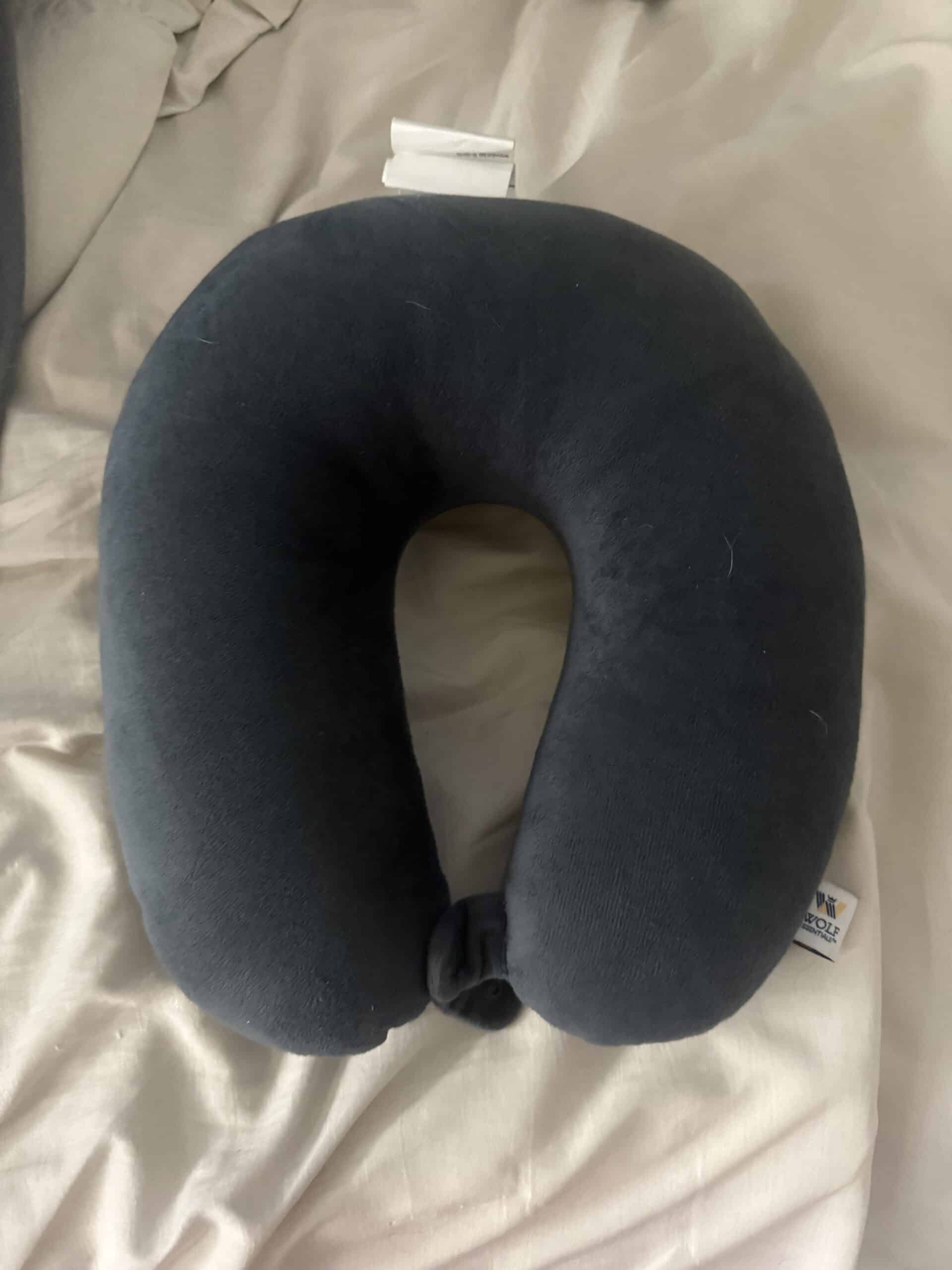
Most travel pillows fail in a predictable way: the head tips forward, the chin drops toward the chest, and the neck holds a position it was never built to hold for hours. A U-shaped ring supports the sides and does almost nothing about that forward drop, which is why so many people arrive stiff despite owning one. The pillows that work either block the chin, brace the head against the shoulder, or hold enough structure to keep the head upright.
I have owned a U-shaped memory foam travel pillow for more than five years, so this guide starts with what living with one is actually like before getting to the picks.
Quick Verdict
A wraparound or chin-supporting design solves forward head drop, which a plain U-shape does not. Memory foam gives the most consistent support and runs hottest. Packed size matters more than most people expect, since a pillow left at home helps nobody. For more on this, see our guide to pillows that clip to luggage. The classic shape still has its place, and our roundup of U-shaped travel pillows covers the fills and closures that hold position.
Key Takeaways
- Forward head drop is the failure a plain U-shape does not prevent.
- Memory foam holds heat against the back of the neck.
- Bulk decides whether the pillow actually gets packed.
- A clip helps and a large foam pillow still swings off a bag.
- Good foam holds its shape for years rather than flattening.
The Travel Pillow I Use
Mine is a U-shaped memory foam pillow and I have had it more than five years. It comes out for road trips sometimes rather than every time, and for the occasional long flight, which is probably the honest usage pattern for most people who own one. See also our guide to travel pillows for road trips.
Two things shape how I would buy another. The first is bulk. Memory foam does not compress, so the pillow is a fixed-size object however you carry it. Mine has a clip for attaching to a bag, which helps, and a U-shaped foam pillow hanging off luggage is still a large thing swinging around and catching on doorways. On a trip where space is tight, that is the reason it sometimes stays home.
The second is heat. Memory foam holds warmth against the back of the neck, and on a long flight in a warm cabin that stops being trivial. It is the first thing I would check reviews for before buying again.
What has held up is the shape. After five years the foam still supports rather than flattening under the weight of a head, which is the failure I would have expected first from something compressed repeatedly against a seat back.
Worth being clear about the limits. I have used one pillow of one type, so wraparound, inflatable, and chin-supporting designs are research here rather than experience. What I can speak to is what years with a U-shaped foam pillow are actually like, which is a different thing from a review written after one trip.
What to Look For in Travel Pillows for Neck Pain
Support geometry decides whether it prevents forward drop
A plain U-shape braces the sides of the neck and leaves the front open, which is where the head actually falls on an upright airplane seat. Chin-supporting designs, wraparound scarves, and pillows with a raised front section all address that directly. If your complaint is waking with your chin on your chest, geometry is the specification that matters and fill material is secondary.
Fill material sets the balance between support and packability
Memory foam gives consistent support, does not deflate, and takes up fixed space in a bag while holding heat. Microbeads conform and offer less structure. Inflatable designs pack to nothing, adjust for firmness, run cooler, and feel less stable to some people because the air moves under the head. There is no correct answer here, only a trade you pick deliberately.
Size and adjustment decide fit across different necks
A pillow sized for an average neck sits too high on a short one and pushes the head forward, which creates the problem it was bought to solve. Adjustable closures, drawstrings, and toggle straps let the same pillow fit a range of people. On a fixed-size foam pillow, that adjustment does not exist, so the fit has to be right out of the box.
The 5 Best Travel Pillows for Neck Pain in 2026
These picks are research-based, drawn from manufacturer specifications and independent reviews. My own experience covers one U-shaped foam pillow rather than these specific products, and that distinction is worth keeping in view.
1. Trtl Pillow Plus
A completely different approach to head support
The Trtl abandons the ring shape entirely, using an internal support structure wrapped in fleece that braces the head against the shoulder. That geometry addresses the sideways lean and the forward drop that a U-shape leaves open, which is the reason it appears at the top of most lists that take neck pain seriously.
It also packs flatter than foam, since the structure is a rigid insert rather than a solid block. The trade is warmth, because fleece wrapped around the neck is exactly as warm as it sounds, and a learning curve in positioning it correctly the first few times.
Check Price on Amazon2. Cabeau Evolution S3
Memory foam with forward drop prevention
The Evolution keeps the familiar memory foam feel while adding a raised front section that supports the chin, which is the specific gap in a standard U-shape. The back is flattened so it does not push the head forward against a seat, a detail that plain ring pillows get wrong more often than not.
It compresses into an included case for packing, which addresses the bulk problem foam usually creates. Being memory foam, it still holds heat, so the same warm-cabin caveat applies as with any foam design.
Check Price on Amazon3. Bcozzy Chin Supporting Travel Pillow
The Bcozzy overlaps its ends at the front rather than leaving a gap, so the chin has somewhere to rest instead of dropping. Overlapping also makes the fit adjustable, since how far the ends cross changes the effective size.
That adjustability is the strongest argument for it, because fixed-size pillows fit some necks and not others. It is bulky, and it does not compress the way a structured design does.
Check Price on Amazon4. Ostrich Pillow Go
Structure plus a genuine packing advantage
The Go uses memory foam in a shape designed to hold the head upright rather than merely cushioning it, with a wide adjustable closure that fits a range of neck sizes. It packs into an included pouch, which matters for anyone whose main complaint about foam is that it never fits in the bag.
The closure also lets you tighten it enough that the head cannot rotate freely, which is what prevents the slow sideways slide that wakes people repeatedly.
Check Price on Amazon5. Tempur-Pedic Travel Pillow
When support matters more than packing
Tempur-Pedic brings the same dense foam used in its mattresses, which gives more support than lighter foams and holds it for years rather than softening. For anyone whose priority is the neck rather than the luggage, that density is the point.
It is also the least packable option here and the warmest, which is the honest trade. Dense foam and heat retention go together, and there is no version of this that packs small.
Check Price on AmazonQuick Comparison
| Pillow | Prevents forward drop | Packs down | Heat |
|---|---|---|---|
| Trtl Pillow Plus | Yes, shoulder brace | Flat | Warm, fleece |
| Cabeau Evolution S3 | Yes, raised front | Into a case | Warm, foam |
| Bcozzy | Yes, overlapping ends | Poorly | Warm |
| Ostrich Pillow Go | Yes, closure | Into a pouch | Warm, foam |
| Tempur-Pedic | Partly | Least | Warmest |
Our Verdict
If your neck pain comes from the head dropping forward, buy for geometry rather than for foam quality. The Trtl and the Bcozzy both address that directly and in different ways, and either beats a denser version of a shape that leaves the front open.
If you already know a U-shape works for you and the problem is support rather than position, the Tempur-Pedic is the most substantial option and the least packable. The Cabeau and the Ostrich sit between those, offering foam support with a real answer to the bulk problem.
Whatever you choose, weigh packed size honestly against how you actually travel. Five years with a foam pillow taught me that the best pillow is the one that goes in the bag rather than the one that stays on a shelf because it is too awkward to carry.
Common Travel Pillow Mistakes to Avoid
Buying a plain U-shape for forward head drop
A ring supports the sides and leaves the front open, which is where the head falls on an upright seat. If your chin ends up on your chest, the shape is the problem rather than the foam.
Ignoring packed size
A pillow that cannot be carried conveniently gets left at home. Bulk is a real specification rather than a minor inconvenience.
Assuming a clip solves bulk
Clipping a foam pillow to a bag keeps it out of your luggage and leaves a large object swinging against doorways and other passengers. It helps and it is not the same as packing small.
Overlooking heat
Memory foam against the back of the neck in a warm cabin is a common reason people stop using an otherwise good pillow. Ventilated foam or a breathable cover is worth seeking out.
Recommended Reading
See our roundup of pillows for neck pain, our cervical pillow picks, our guide to choosing a pillow for your sleep position, and our roundup of memory foam pillows.
Frequently Asked Questions
Why do standard U-shaped pillows cause neck pain rather than prevent it?
They support the sides of the neck and leave the front open, so the head still drops forward as you fall asleep. The neck then holds a flexed position for hours, which is what produces the stiffness on arrival. Designs that block the chin or brace the head against the shoulder address the actual failure.
Can a travel pillow help existing neck pain or only prevent it?
It can make travel more comfortable with existing pain by holding the head in a neutral position rather than letting it fall. It is not a treatment, and persistent or worsening neck pain is worth discussing with a doctor rather than managing with equipment.
Does memory foam get too hot on long flights?
It holds heat against the back of the neck, and in a warm cabin that becomes noticeable over several hours. Ventilated foam and breathable covers reduce it without eliminating it. It is one of the most common reasons a pillow ends up unused.
How long should a travel pillow last?
Good memory foam holds its shape for years rather than flattening, which is longer than people expect from something repeatedly compressed against a seat. Covers wear out first, so a removable washable one extends the useful life considerably.
Is a clip worth having?
Yes, since it keeps the pillow out of your luggage and frees your hands. It does not make a bulky pillow compact, and a U-shaped foam pillow clipped to a bag still catches on doorways and other people in an aisle.
Inflatable or foam for flights?
Inflatable packs to almost nothing, runs cooler, and lets you set firmness, while feeling less stable to some people because the air shifts under the head. Foam gives consistent support and takes up fixed space. Choose based on whether packed size or support consistency matters more to you.
Should the pillow sit high or low on the neck?
High enough to stop the head tipping and no higher, since a pillow that sits too tall pushes the head forward against the seat and creates the problem it was meant to solve. Adjustable designs handle a range of neck lengths; fixed foam ones need to fit out of the box.
Do travel pillows work in cars as well as planes?
Partly. A car seat reclines, so the head tends to fall sideways rather than forward, which is a different failure. Side support matters more in a car and chin support matters more on a plane, so a pillow chosen for one may not solve the other.
