
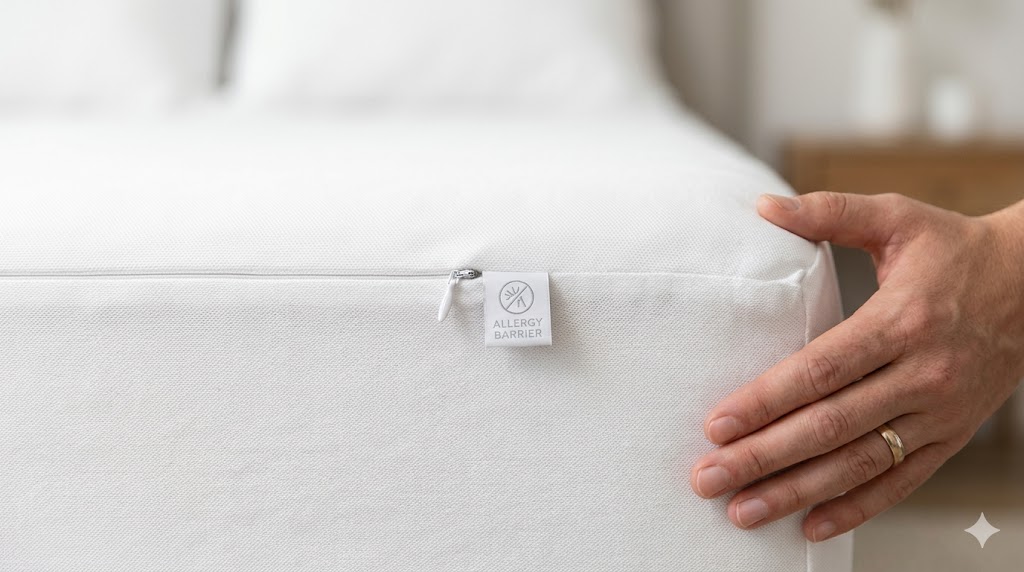
If allergies wreck your sleep, the mattress is a bigger culprit than most people realize. Over years it fills with dust mites, their waste, dead skin, and dander, the exact triggers that leave allergy sufferers congested and itchy at night. A mattress protector is the barrier that keeps those allergens from building up in the mattress and away from you while you sleep. The key for allergy sufferers is a tight, pore-controlled fabric or a full zip-around encasement, because a loose pad does not block microscopic mite allergens. Below are six protectors that genuinely help with allergies, sorted by the level of protection they give, with a plain guide to choosing the right one. For more on this, see our guide to fitted sheets slipping off.
For most allergy sufferers the SafeRest Premium is the best overall, combining waterproofing with a tight, allergen-blocking surface. The AllerZip is the best full encasement for serious dust-mite and bed-bug protection, the Lucid Tencel is the most breathable, the Utopia Bedding is the value pick, the Amazon Basics is the cheapest entry, and the SureGuard encasement is the alternative full-zip option. Decide whether you need surface protection or a full encasement first, because dust-mite sufferers usually need the complete zip-around barrier.
Disclosure: RestRight is reader-supported. As an Amazon Associate, we earn from qualifying purchases made through links on this page, at no extra cost to you.
Independent picks, reader-supported through affiliate links at no cost to you. Selections draw on product research, manufacturer specifications, and the sources cited below. First-person notes appear only where the gear was genuinely used.
- For dust-mite allergies, a full encasement that seals the whole mattress is the most effective protection.
- Surface protectors guard the sleeping surface and are easier to fit, enough for general protection.
- Look for allergen-rated or dust-mite-rated fabric, not just waterproof, since waterproof is not automatically allergen-blocking.
- Regular washing is what keeps a protector effective over time.
Medical Disclaimer
This is general information about consumer products, not medical advice. Products described as hypoallergenic or allergen-reducing may lower exposure and do not treat allergy, asthma, or any other condition. Diagnosis and management belong with a doctor or an allergist.
How We Picked These Allergy Mattress Protectors
Each protector was sorted by the level of protection it gives, since dust-mite sufferers usually need a full encasement while others are served by a surface protector. Fabric, breathability, fit, and price were weighed so allergy sufferers can match protection to their need. Our guide on how encasements differ from protectors covers what each style wraps.
SafeRest Premium: Best Overall
The SafeRest Premium is the best all-around protector for allergy sufferers because it pairs a waterproof membrane with a tight cotton-terry surface that blocks allergens while staying comfortable to sleep on. It fits like a deep-pocket fitted sheet over the top and sides, guarding the sleeping surface against dust mites, sweat, and spills without the warmth or crinkle of cheaper vinyl protectors. For most people, it is the right balance of protection and feel.
Because it covers the top and sides rather than fully enclosing the mattress, severe dust-mite sufferers may still want a full encasement. For everyday allergy and spill protection with a comfortable surface, it is the easy default.
Who it is for: most allergy sufferers wanting waterproof, allergen-blocking surface protection that sleeps comfortably. Who should skip it: those needing a full zip-around barrier against dust mites or bed bugs.
AllerZip Smooth Encasement: Best Full Encasement
When dust mites are the main problem, the AllerZip encasement is the strongest choice because it fully zips around the entire mattress, sealing allergens in and out. The complete enclosure blocks dust mites and bed bugs that a top-only protector cannot, and the fine-pore fabric is rated to stop microscopic mite allergens. For diagnosed dust-mite allergy sufferers, this total barrier is the gold standard.
A full encasement is more involved to fit, since you must lift the mattress to zip it on, and it adds no plushness. For genuine allergen control, that effort is the point.
Who it is for: dust-mite and bed-bug sufferers who need a complete, sealed barrier. Who should skip it: people who only want light surface protection and a softer feel.
Lucid Tencel: Best Breathable
For allergy sufferers who also sleep hot, the Lucid Tencel protector adds allergen and spill protection without the warmth many waterproof protectors bring. Tencel fabric is breathable and moisture-wicking, so it stays cooler and drier than a dense membrane while still shielding the mattress surface. For those who avoided protectors because they slept too hot, this is the comfortable way back.
Its breathability comes with slightly less aggressive waterproofing than a heavy membrane, and like the SafeRest it covers the surface rather than fully encasing. For cooler, comfortable allergy protection, it is the standout.
Who it is for: allergy sufferers who sleep hot and want breathable surface protection. Who should skip it: those needing maximum waterproofing or a full encasement.
Utopia Bedding Protector: Best Value
The Utopia Bedding protector delivers waterproof, allergen-blocking surface protection at a low price, making it the value pick for allergy sufferers outfitting one bed or several. It fits like a fitted sheet with a waterproof backing and a soft top, covering the basics, dust mites, sweat, and spills on the sleeping surface, without a premium price. For budget-conscious buyers who still want real protection, it is the practical choice.
The fabric and durability are more basic than premium protectors, and it covers the surface rather than encasing. As the value option, it covers the essentials affordably.
Who it is for: budget buyers and anyone protecting several beds with waterproof allergen coverage. Who should skip it: those wanting premium fabric, breathability, or full encasement.
Amazon Basics Hypoallergenic: Best Budget
The Amazon Basics hypoallergenic protector is the cheapest way to put a waterproof, allergen-resistant layer on a mattress. It is a no-frills fitted protector that blocks spills and helps keep dust mites out of the sleeping surface, aimed at buyers who just want basic allergy protection without thinking about fabric or features. For a spare bed or the tightest budget, it does the core job.
The membrane is more basic and can feel slightly warmer, and durability is entry-level, so it may need replacing sooner. At this price, it is an easy, low-risk way to start protecting against allergens.
Who it is for: the tightest budgets and guest beds needing basic allergen and spill protection. Who should skip it: those wanting premium breathability, durability, or a full encasement.
SureGuard Encasement: Best Alternative Full Zip
The SureGuard encasement is the second full zip-around option, sealing the entire mattress against dust mites, bed bugs, and liquids with a waterproof, allergen-proof barrier. It pairs the complete enclosure of the AllerZip with a soft, quiet top surface, so allergy sufferers who want total protection have a comfortable alternative. For those choosing between full encasements, it is a strong, well-reviewed pick.
Like any encasement it must match the mattress dimensions closely to zip properly, and it adds no cushioning. For complete allergen control with a comfortable surface, it delivers.
Who it is for: allergy sufferers wanting a full encasement with a soft, quiet surface. Who should skip it: those who only need light surface protection.
Quick Comparison
| Protector | Price | Type | Waterproof | Best for |
|---|---|---|---|---|
| SafeRest Premium | ~$45 | Top and sides | Yes | Best overall |
| AllerZip Smooth | ~$65 | Full encasement | Yes | Full encasement |
| Lucid Tencel | ~$35 | Top and sides | Yes | Breathable |
| Utopia Bedding | ~$25 | Top and sides | Yes | Best value |
| Amazon Basics | ~$22 | Top and sides | Yes | Budget |
| SureGuard Encasement | ~$50 | Full encasement | Yes | Alternative full zip |
How to Choose an Allergy Mattress Protector
A few decisions, in order, get you to the right protector.
Surface protector or full encasement
This is the key decision. A top-and-sides protector guards the sleeping surface against allergens and spills and is easier to fit, while a full encasement zips around the whole mattress to seal in and block dust mites and bed bugs. Diagnosed dust-mite allergy sufferers usually need the full encasement; for general protection, a surface protector is often enough. Protection during a move is a different product, and our mattress bag picks cover it.
Check the allergen rating and pore size
For dust mites, the fabric has to have a tight enough weave to block microscopic allergens, which good allergy encasements specify. Look for protectors described as allergen-proof or dust-mite-rated rather than just waterproof, since a waterproof membrane is not automatically allergen-blocking at the surface.
Balance protection against breathability
Dense waterproof membranes protect well but can sleep warm, while breathable fabrics like Tencel stay cooler at a small cost to maximum waterproofing. If you sleep hot, prioritize a breathable protector; if spill protection is critical, accept a little warmth. Match the choice to which matters more for you.
Fit, care, and replacement
Check the pocket depth or encasement size against your mattress so it fits snugly, and confirm it is machine washable, since regular washing is what keeps allergens down. Wash it every couple of weeks for allergy control, and replace it when the fabric or membrane wears, as a worn protector stops blocking allergens effectively.
Our Verdict
For most allergy sufferers the SafeRest Premium is the best balance of allergen protection and a comfortable surface, with the Utopia and Amazon Basics as cheaper surface-protection options. If dust mites are your real problem, step up to a full encasement, the AllerZip or the SureGuard, for a sealed barrier, and choose the Lucid Tencel if you sleep hot and want breathability. Decide between surface protection and full encasement first, then match the fit to your mattress, and pair any protector with regular washing for the best allergy control.
Surface Protector vs Full Encasement
The key allergy-protector decision is between a top-and-sides protector and a full zip-around encasement.
Surface protectors
Top-and-sides protectors guard the sleeping surface against allergens and spills and are easier to fit. They suit general protection but do not fully seal the mattress against dust mites.
Full encasements
Encasements zip around the whole mattress, sealing allergens in and out and blocking dust mites and bed bugs. They are the gold standard for diagnosed dust-mite allergies but are more involved to fit and add no plushness.
Common Allergy Mattress Protectors Mistakes to Avoid
Assuming waterproof means allergen-proof
A waterproof membrane is not automatically dust-mite-rated at the surface. Look for protectors described as allergen-proof or dust-mite-rated.
Choosing a surface protector for dust-mite allergy
Diagnosed dust-mite sufferers usually need a full encasement, since a top-only protector leaves the rest of the mattress exposed.
Ignoring breathability if you sleep hot
Dense waterproof membranes can sleep warm. Hot sleepers should choose a breathable option like a Tencel-topped protector.
Skipping regular washing
Washing removes the dust-mite allergens the protector has kept off the mattress. Wash it every couple of weeks for allergy control.
Frequently Asked Questions
Do mattress protectors help with allergies?
Yes. A protector keeps dust mites, dander, and other allergens from building up in the mattress and creates a barrier between them and you while you sleep, which can reduce nighttime allergy symptoms. For dust-mite allergies specifically, a full encasement with an allergen-rated fabric is the most effective, since it seals the whole mattress.
Do I need a full encasement or just a protector?
It depends on your allergy. A top-and-sides protector is enough for general protection and is easier to fit, but diagnosed dust-mite sufferers usually need a full encasement that zips around the entire mattress to seal allergens in and out. If dust mites are your main trigger, choose the encasement.
Are waterproof protectors hot to sleep on?
Some waterproof membranes can trap heat, though modern ones are far more breathable than old vinyl. If you sleep hot and need protection, choose a breathable option like a Tencel-topped protector, which stays cooler while still shielding the mattress. Balancing protection and breathability is the main tradeoff to weigh.
How often should I wash an allergy mattress protector?
Every two weeks or so is a good rule for allergy control, and more often during high-symptom periods, following the care label. Regular washing in hot water removes the dust-mite allergens the protector has been keeping off the mattress. Consistent washing is what makes a protector effective over time.
Can a mattress protector get rid of dust mites already in my mattress?
A full encasement seals existing mites inside the mattress, cutting off their food supply and stopping the allergens from reaching you, which over time reduces exposure. A surface protector mainly prevents new buildup. For an existing infestation, a complete encasement is the more effective approach.
Will a protector change how my mattress feels?
A good protector is designed to be barely noticeable, adding no real cushioning and only a thin layer. Cheaper membranes can feel slightly stiff or make a faint crinkle, while quality protectors are quiet and soft. It should protect the mattress without changing how it sleeps.
What size and depth protector should I buy?
Match the protector to your mattress size, then check the pocket depth against your mattress height, including any topper, so it fits snugly. A full encasement must match the mattress dimensions closely so it zips completely. A loose protector shifts and leaves gaps where allergens get through.
Do mattress protectors help with anything besides allergies?
Yes. Waterproof protectors guard against spills, sweat, and accidents, which keeps the mattress cleaner and can protect its warranty, since many are voided by stains. So even beyond allergies, a protector extends the life of the mattress and keeps it more hygienic.
- pillow protectors for allergies and dust mites
- bedroom air purifiers for sleep
- how to sleep with allergies
- trundle bed mattresses
- mattress foundations and bases
- mattresses for kids
- hybrid vs latex mattress
- mattress cleaners
Related: mattress protectors for kids beds.
Recommended Reading
See also our guides to quilts and coverlets for layered bedding.
Start with the complete mattress selection framework.
When should I see a doctor?
If symptoms persist despite reducing exposure, if they worsen seasonally or at night, or if breathing is affected. Allergy testing identifies what you actually react to, which is more useful than guessing at products.
Sources
- Asthma and Allergy Foundation of America. Allergy and asthma resources. https://aafa.org/
- National Institutes of Health. MedlinePlus health topics. https://medlineplus.gov/
