
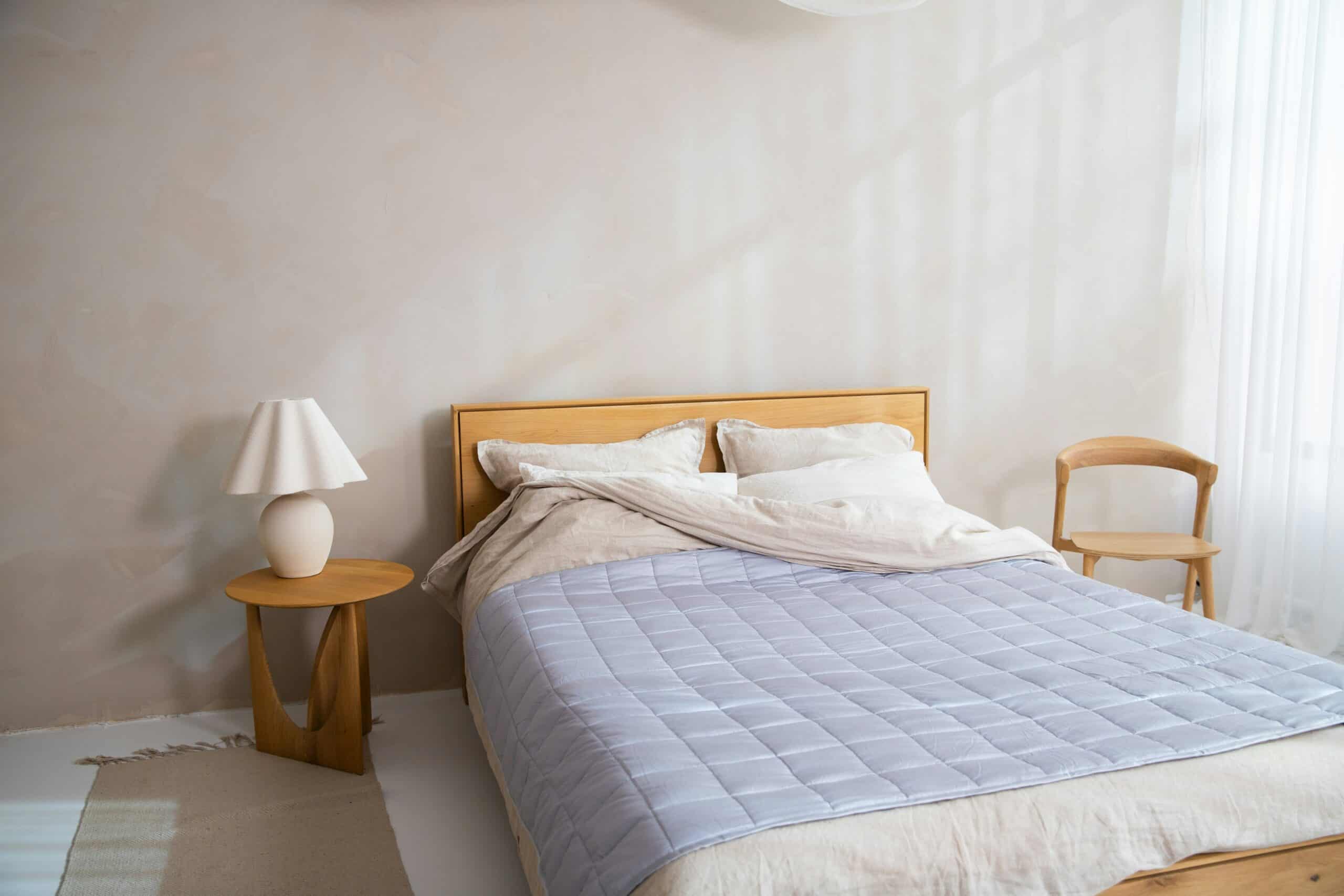
A quilt is three thin layers stitched together, and that stitching is exactly why it sleeps cooler than a comforter of the same weight. Instead of trapping a thick loft of insulation, a quilt holds a compressed, even layer that breathes across its whole surface, which is why quilts have been the summer bedding of hot climates for centuries. The best cooling quilts pair that flat construction with breathable fabric, giving you real coverage without the thermal load. Here is how to choose, and if you are still deciding between formats, our comparison of a cooling blanket and a lightweight blanket covers the neighbors.
Quick Verdict
A lightweight cotton quilt is the right pick for most people, breathable and washable and honest about what it does. Bamboo quilts cool best and cost most, percale gives the crispest, most hotel-like feel, and coverlets are the thinnest option for layering. A quilt suits people who want the substance of real bedding without a comforter’s heat, and it layers under one beautifully when winter comes.
Key Takeaways
- Quilting compresses the fill, so it insulates less than a comforter.
- Stitched construction breathes across the whole surface.
- Cotton is the practical default; bamboo cools best.
- Quilts layer under comforters well in winter.
- Washability is a genuine quilt advantage.
How We Picked
We focused on the properties that decide whether a quilt sleeps cool: fill weight and how densely the stitching compresses it, shell fabric and weave, breathability across the quilted surface, drape, and how the whole thing survives regular washing, which is where quilts have a real edge over comforters. We also looked at how each format layers, since the quilt’s quiet superpower is being useful in July under nothing and in January under a comforter, which makes it one of the few pieces of bedding that earns its space year-round.
Lightweight Cotton Quilt (Best Overall)
The classic: a cotton shell with thin cotton batting, stitched densely enough to stay flat and breathe.
Why It Stands Out
Cotton is breathable, washes without drama, and gets softer over years rather than degrading, which is why this format has outlasted every bedding trend. It gives you the substance and tidiness of proper bedding at a fraction of a comforter’s heat, and it is the version most people should buy first.
Worth Knowing
Not as aggressively cool as bamboo, and cotton holds moisture more. Best for most sleepers who want a versatile all-season layer.
Check Price on AmazonBamboo Quilt (Best Cooling)
A quilt using bamboo viscose in the shell, fill, or both, for the most breathable version of the format.
Why It Stands Out
Stacking bamboo’s moisture movement on top of quilting’s flat construction gives you the coolest option in the category, and it is genuinely noticeable for someone who runs hot. If a quilt is your primary summer bedding and your bedroom is warm, this is where the money goes, as our roundup of bamboo cooling blankets covers on the material side.
Worth Knowing
Expensive, and viscose wants gentle washing. Best for dedicated hot sleepers in warm climates.
Check Price on AmazonPercale Quilt (Best Crisp Feel)
A quilt with a percale-weave shell: matte, crisp, and cool to the touch rather than smooth and silky.
Why It Stands Out
Percale’s open plain weave is why hotel bedding feels the way it does, and on a quilt it delivers a crisp coolness that sateen and microfiber cannot. For people who find silky fabrics clammy, the crisp route is a genuinely different sensation rather than a marketing distinction, and our comparison of percale and sateen covers the weaves.
Worth Knowing
Percale wrinkles and can feel stiff until broken in. Best for people who want the crisp hotel feel.
Check Price on AmazonCooling Coverlet (Best Layering)
The thinnest tier: minimal or no fill, essentially a stitched fabric layer meant to be combined rather than to stand alone.
Why It Stands Out
A coverlet is the most flexible piece of bedding you can own, adding just enough coverage in summer and disappearing under a comforter in winter without adding bulk. For anyone who fine-tunes their bed by season, it is the adjustable layer, covered further in our roundup of quilts and coverlets for layered bedding.
Worth Knowing
Too thin to be enough alone outside genuinely hot weather. Best for layered sleepers and warm bedrooms.
Check Price on AmazonOversized Quilt for Couples (Best for Sharing)
King and oversized quilting, cut generously so two people can share without stripping each other.
Why It Stands Out
Quilts suit couples better than comforters do, because two people under a thick loft is exactly how shared beds overheat, and the flat construction vents the doubled load far better. Add generous sizing and you fix the coverage fight too, which our roundup of cooling blankets for couples covers in full.
Worth Knowing
Large quilts are bulky to wash and slow to dry. Best for couples who both run warm.
Check Price on AmazonMachine-Washable Everyday Quilt (Best Low Maintenance)
Quilts built specifically to survive frequent home washing: durable stitching, pre-shrunk fabric, and no dry-clean requirement.
Why It Stands Out
Washability is where quilts genuinely beat comforters, and this tier maximizes it. A quilt that goes in your machine without ceremony gets washed, and bedding that gets washed keeps performing, which matters more than most spec differences in this category.
Worth Knowing
Durability-focused fabrics are rarely the softest available. Best for households that want bedding they never baby.
Check Price on AmazonCooling Quilts at a Glance
| Type | Best for | Trade-off |
|---|---|---|
| Lightweight cotton | Most sleepers | Less cool than bamboo |
| Bamboo | Hot sleepers | Costly, fussy care |
| Percale | Crisp feel | Wrinkles, stiff at first |
| Coverlet | Layering | Not enough alone |
| Oversized | Couples | Bulky to wash |
| Washable everyday | Low maintenance | Not the softest |
Why Quilting Sleeps Cooler
The mechanism is the stitching, and it is worth understanding because it explains the whole format. A comforter holds a thick loft of fill, and that loft traps a deep pocket of still air, which is precisely how insulation works and precisely why comforters are warm. A quilt takes the same three-layer idea, shell, fill, backing, and stitches through it in a grid, compressing the fill flat and eliminating the loft. What remains is coverage without a meaningful air pocket, plus a stitched surface that lets heat and moisture pass through evenly rather than pooling. That is why quilts are traditional summer bedding across hot regions, and why a quilt and a comforter of similar weight sleep so differently. Our guide on what makes a blanket cooling covers the same principles across formats.
Choosing a Cooling Quilt
Look at fill weight and stitch density
Tighter stitching and lighter fill mean a cooler quilt, since both reduce the trapped air that makes bedding warm. A loosely quilted, heavily filled quilt is drifting toward being a comforter regardless of what the label calls it.
Pick the feel you want
Crisp and matte points you to percale, smooth and silky to bamboo or sateen. This is genuinely personal, and people who find silky fabrics clammy are not imagining it. Buy the sensation you like, since you will be under it every night.
Plan the winter layer
A quilt’s best trick is being useful all year: alone in summer, under a comforter in winter. Our roundup of all-season comforters and guide on layering bedding for every season cover the top layer, and the comparison of a duvet and a comforter covers which to stack.
Check the wash instructions
The whole point of a quilt over a comforter is that you can actually wash it, so a dry-clean-only quilt has surrendered its main advantage. Verify before buying if regular washing matters to you, which it should.
The Verdict
Buy the lightweight cotton quilt. It is breathable, washable, versatile across seasons, and it does the job for the overwhelming majority of people without asking for special treatment. Upgrade to bamboo if you sleep genuinely hot and your bedroom is warm, since that is where the fiber earns its price on top of the format’s advantage. Take percale if you want the crisp hotel feel, a coverlet if you like to tune your bed layer by layer, and oversize it if you share. The quilt’s real argument is not that it is the coolest possible bedding; it is that it is cool enough in summer and useful in winter, which is more than most bedding manages.
Quilt, Blanket, or Comforter?
The three formats sort cleanly once you know what separates them. A comforter is a thick lofted layer built to trap air and keep you warm, which is exactly why it overheats hot sleepers. A cooling blanket is a single engineered fabric layer chosen for breathability, thin and specialized. A quilt sits between them: real bedding with three stitched layers and some substance, but compressed flat so it never develops a comforter’s heat. Choose the comforter if you are cold, the cooling blanket if you are hot and want the least possible material, and the quilt if you want something that looks and feels like proper bedding while sleeping cool, then stacks under a comforter when winter arrives. Our roundup of cooling blankets covers the thinner neighbor, and our comparison of a duvet and a comforter covers the warm end.
Best Cooling Quilts FAQ
Are quilts cooler than comforters?
Yes, meaningfully. Quilting compresses the fill flat and eliminates the lofted air pocket that makes comforters warm, and the stitched surface lets heat pass through evenly. That is why quilts are traditional summer bedding in hot climates and comforters are not.
What is the difference between a quilt and a coverlet?
A quilt has three layers with thin fill stitched through; a coverlet is thinner still, often with minimal or no fill, essentially a stitched fabric layer. Coverlets are for layering rather than standing alone, while a quilt can be your only summer cover.
Can you use a quilt in winter?
Yes, and it is one of the format’s best features. Layer a comforter or duvet over the quilt when it gets cold and remove it in spring. Keeping the cool layer year-round and adding warmth on top beats swapping bedding twice a year.
What is the coolest quilt material?
Bamboo viscose breathes best, with percale-weave cotton close behind for a crisper feel. Both beat sateen and microfiber for heat. Weave and stitch density matter as much as fiber, so a densely stitched bamboo quilt can still outperform a loose cotton one.
Are quilts easy to wash?
Considerably easier than comforters, which is a real advantage since bedding that gets washed keeps performing. Most cotton quilts go in a home machine without issue. Check the label, since bamboo viscose wants gentler treatment and some quilts are dry-clean only.
Is a quilt enough for summer?
For most people in most climates, yes, and that is exactly what quilts were made for. In a genuinely hot bedroom you may prefer a coverlet or a lightweight cooling blanket instead, and our guide on sleeping in hot weather covers the environment side of that decision.
Do quilts work for hot sleepers?
They suit hot sleepers well, since the compressed fill means far less trapped heat than a comforter. Choose a lightweight fill, dense stitching, and a breathable shell like bamboo or percale, and a quilt becomes a genuinely comfortable option for someone who runs warm.
How long do quilts last?
A well-made cotton quilt outlasts most bedding, often by years, because there is no loft to flatten and no down to migrate. The stitching that keeps it cool also keeps its structure, and regular washing tends to soften it rather than wear it out.
Are quilts good for year-round use?
They are one of the few genuinely all-season options. Use the quilt alone through summer, then add a comforter or duvet over it when temperatures drop. That layering approach beats owning separate summer and winter bedding and takes up far less closet space.
Recommended Reading
- cooling blankets, the adjacent format.
- lightweight blankets, the thinnest route.
- sleeping in hot weather without air conditioning, the room side.
- cooling sheets, the layer underneath.
Part of our full guide: the foundation principles of a sleep-cool bedroom.
