
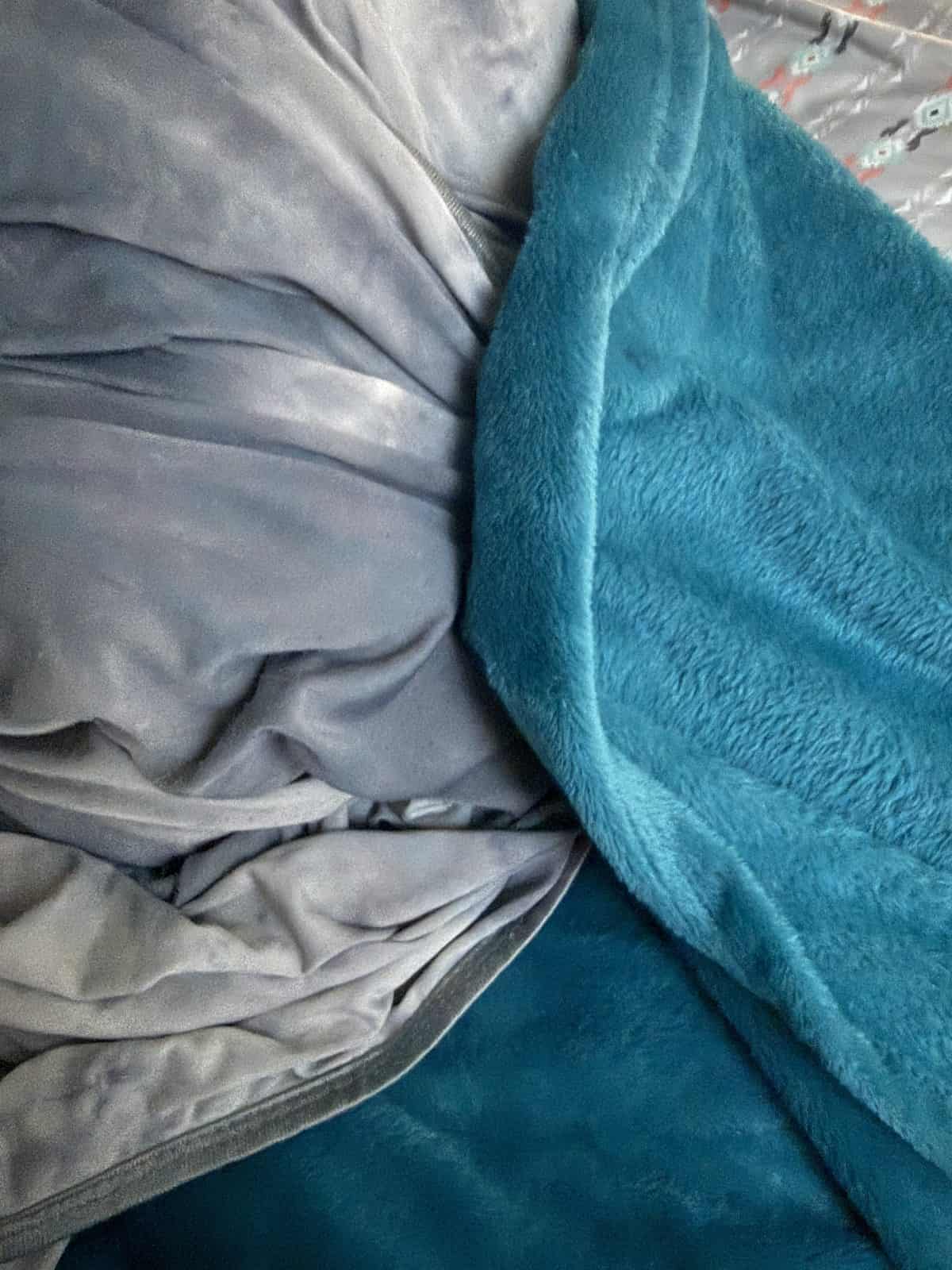
A true cooling blanket keeps a hot sleeper cooler than a lightweight blanket, because it actively pulls heat and moisture away with cool-to-touch fabric, while a lightweight blanket simply traps less heat rather than removing it. In the cooling blanket vs lightweight blanket choice, the cooling blanket wins on outright cooling, but the lightweight blanket wins on breathability, easy layering, and price. If you are still deciding on the covers themselves, our cooling blanket picks are a good place to start.
Quick Verdict
Choose a cooling blanket if you run genuinely hot, sleep on heat-trapping memory foam, and want fabric that feels cool to the touch. Choose a lightweight blanket if you want a breathable, minimal layer with a little warmth, easy washing, and a lower price. Many hot sleepers keep both for different nights.
Why Trust This Guide
I own and use both. My gray dual-sided cooling blanket is on my bed every night as an Arizona hot sleeper, and I keep a lighter blanket for milder nights and summer layering. Living with both across hot desert nights is what informed this head-to-head.
Key Takeaways
- A cooling blanket actively moves heat away; a lightweight one just traps less.
- Cooling fabric feels cool to the touch; lightweight fabric feels neutral.
- A lightweight blanket breathes well and layers easily for mild nights.
- Cooling blankets suit serious hot sleepers and memory foam beds.
- Lightweight blankets cost less and are simpler to wash and store.
How We Compared
We compared these on the things a hot sleeper actually feels: cool-to-touch sensation, warmth, breathability, weight, care, and cost. The reasoning tracks how the body manages heat at night. The Sleep Foundation explains that core temperature drops around one to two degrees to start and maintain sleep, and that a bedroom or bedding that traps heat works against that natural cooling. A cooling blanket and a lightweight blanket both aim to avoid trapping heat, but they get there in different ways. The Sleep Foundation also flags heat-trapping materials, including memory foam and insulating fabrics, as working against that natural cooling, which is the standard both covers are judged against below.
Cooling Blanket vs Lightweight Blanket at a Glance
| Factor | Cooling blanket | Lightweight blanket |
|---|---|---|
| How it cools | Actively wicks and conducts heat away | Traps less heat by being thin |
| Cool to the touch | Yes | Neutral |
| Warmth | Minimal | Light |
| Breathability | Good | Very good |
| Care | May need gentler washing | Usually simple |
| Typical cost | Higher | Lower |
Cooling Blanket, Pros and Cons
- Pros: feels cool to the touch, actively draws heat and moisture away, best for genuine hot sleepers, a dual-sided model adds a warmer side for cooler hours.
- Cons: costs more, the cool feel fades as it warms, some cooling fabrics need gentler care.
A cooling blanket suits the sleeper who runs hot enough that a normal blanket feels stifling. It is less necessary for someone who is already comfortable under a thin layer.
Lightweight Blanket, Pros and Cons
- Pros: breathable, easy to layer and remove, inexpensive, simple to wash, versatile across seasons and rooms.
- Cons: no active cooling, offers a little warmth rather than heat removal, can still feel warm on the hottest nights.
A lightweight blanket suits the sleeper who wants a minimal, breathable cover and easy versatility. It is less suited to someone whose core problem is overheating despite thin bedding.
Which Actually Feels Cooler?
The cooling blanket wins on the feeling of cool. Cooling fabrics are engineered to conduct heat away from your skin, so they register as cool to the touch the moment you slip under them, and they keep pulling warmth and moisture for a while. A lightweight blanket cannot do that. It feels neutral, not cool, because its advantage is only that it traps less heat, not that it removes any. For a sleeper who wants that immediate cool sensation against the skin, especially in a warm bedroom, the cooling blanket is clearly the stronger performer.
Which Is More Versatile?
The lightweight blanket wins on versatility and everyday flexibility. Its thin, breathable build makes it easy to fold into a layered setup, throw over a couch, take traveling, or use as a top sheet in high summer. It works across more situations than a dedicated cooling blanket, which is built for one job. If you want a single cover that adapts to many nights and rooms without much thought, the lightweight blanket is the more flexible everyday tool, even if it does less on the hottest nights.
Which Is Easier to Care For?
The lightweight blanket usually wins on care and upkeep. Most lightweight cotton or bamboo blankets wash and dry easily on normal cycles and shrug off frequent use. Some cooling fabrics, particularly those with special finishes, ask for gentler washing or air drying to protect the cooling treatment. Neither is difficult, but if low-maintenance laundry matters to you, the simpler lightweight blanket edges ahead. Always check the care label on any cooling blanket so its performance lasts.
Which Fits Your Situation
| If this is you | Better choice |
|---|---|
| Run genuinely hot or sleep on memory foam | Cooling blanket |
| Want a breathable, minimal everyday layer | Lightweight blanket |
| Want cool-to-the-touch fabric | Cooling blanket |
| On a budget or want easy washing | Lightweight blanket |
| Need one cover for many seasons and rooms | Lightweight blanket |
How to Choose Between Them
Match the blanket to how hot you actually sleep. If a normal thin blanket still leaves you warm, or your mattress runs hot, the cooling blanket is worth its higher price for the active, cool-to-touch relief. If you are basically comfortable and just want a light, breathable, wash-and-go cover, the lightweight blanket does that beautifully for less. Season matters too: a cooling blanket shines in peak heat, while a lightweight one carries you through spring and fall. I lean on the cooling blanket in the desert heat and keep the lighter one for milder nights.
The Verdict
The cooling blanket is the better pick for keeping a genuine hot sleeper cool, because it actively removes heat and feels cool to the touch rather than merely trapping less warmth. The lightweight blanket wins on breathability, everyday versatility, easy care, and price, making it the smarter buy for milder sleepers and layering. Choose the cooling blanket if overheating is the problem, choose the lightweight blanket for flexible light warmth, and keep both if your nights swing between hot and mild. Compare full options in the roundups below.
Recommended Reading
- cooling sheets for hot sleepers, the layer under you.
- do cooling blankets actually work, if you are still skeptical.
- the best cooling blankets, for active cool-to-touch options.
- the best lightweight blankets, for breathable everyday layers.
- what makes a blanket cooling, if you want the fabric science first.
- cooling comforters for hot sleepers, for a heavier cool option.
Common Misconceptions
A lightweight blanket is the same as a cooling blanket
They are not. A lightweight blanket only traps less heat, while a cooling blanket actively conducts heat away and feels cool to the touch.
Thinner always means cooler
Not exactly. A thin blanket in a dense, non-breathable fabric can still feel warm. Breathability and cooling treatment matter as much as thickness.
A cooling blanket stays cold all night
No. Its cool-to-touch feel fades as it absorbs body heat. A dual-sided design or a flip to a fresh area helps restore it.
You only need one blanket
Many hot sleepers keep both. A cooling blanket handles peak heat, and a lightweight one covers milder nights and layering.
Cooling Blanket vs Lightweight Blanket FAQ
Is a lightweight blanket good for hot sleepers?
A lightweight blanket helps hot sleepers by trapping less heat and breathing well, which is enough for many people. But it does not actively cool, so the hottest sleepers often prefer a cooling blanket that pulls heat away.
Does a cooling blanket really feel cooler than a thin blanket?
Yes, a quality cooling blanket feels cool to the touch because its fabric conducts heat away from your skin. A thin blanket feels neutral, since its only advantage is trapping less heat rather than removing any.
Are cooling blankets worth the extra money over lightweight ones?
For genuine hot sleepers, yes, because the active cooling addresses overheating that a thin blanket cannot. For sleepers who are already comfortable, a lightweight blanket delivers most of the benefit for less.
Which is better for summer, a cooling or lightweight blanket?
A cooling blanket is best for peak summer heat thanks to its cool-to-touch fabric. A lightweight blanket suits milder summer nights and layering, and many people keep both to match the temperature.
Do lightweight blankets breathe better than cooling blankets?
Often yes, since a thin, open weave moves air well. Cooling blankets also breathe, but their edge is active heat conduction rather than airflow alone, so the two cool in different ways.
Can I layer a cooling blanket and a lightweight blanket?
You can, though layering adds warmth, which partly offsets cooling. It is more common to swap between them by night than to stack them, using the cooling blanket when hot and the lightweight one when mild.
