
If you sleep face-down on a fluffy pillow, your neck spends the whole night craned backward, and your morning stiffness is the receipt. The best pillows for stomach sleepers fix that with one quality above all: a low loft that keeps your head close to the mattress so your spine stays in a straighter line. For most stomach sleepers a thin or adjustable pillow like the Coop Home Goods, emptied of some fill, is the safest place to start, because you can dial the height down to almost flat. Loft matters more here than in any other position, so it is worth understanding how thin a stomach-sleeper pillow should be before you buy.
Quick Verdict
The Coop Home Goods pillow is the safest all-round pick because you can remove fill until it is flat enough for stomach sleeping. Choose by how low you need to go. Dedicated ultra-thin foam suits a committed stomach sleeper, an adjustable pillow suits anyone who switches positions, and a soft, compressible pillow suits sleepers who want a little plushness without the height.
Why Trust This Guide
Selections draw on product research and manufacturer specs. First-person notes appear only where the gear was genuinely used. I mostly sleep on my side, but on the nights I end up on my stomach I reach for the thin pillow in pick two, so it carries my own notes.
Key Takeaways
- Loft is everything for stomach sleepers: a low, thin pillow keeps the head from craning back and the neck closer to neutral.
- Aim for a slim profile, generally no more than about three inches, or an adjustable pillow you can empty down to flat.
- A thin pillow usually beats no pillow, since going flat on the mattress can drop the head and strain the neck the other way.
- Soft, compressible fills suit this position better than tall, firm foam that holds a high shape.
- Stomach sleeping is hard on the neck and lower back, so a thin pillow is harm reduction; persistent pain deserves a doctor’s input.
This guide is informational and not a substitute for medical advice. Stomach sleeping can strain the neck and lower back, and a pillow only addresses comfort and alignment, so anyone with persistent or worsening neck or back pain should see a healthcare professional.
Disclosure: RestRight is reader-supported. As an Amazon Associate, we earn from qualifying purchases made through links on this page, at no extra cost to you.
How We Picked the Best Pillows for Stomach Sleepers
The whole job here is keeping loft low. A stomach sleeper’s head should rest almost level with the mattress so the neck is not pushed up and back all night, which is why this list favors thin and adjustable pillows over anything tall. Every pick had to sit low or adjust down to a low profile, stay soft enough to compress under a face-down head, offer a washable cover where possible, and come from a maker whose pillow is current and widely sold.
One pick is the thin pillow I use on stomach nights, so it carries my own notes and a button pointing to the same slim, soft style rather than a guessed brand. Picks that work only when adjusted down are flagged as such.
1. Coop Home Goods Original Pillow: Best Overall and Adjustable
The most flexible answer for a stomach sleeper is a pillow you can hollow out. The Coop is filled with adjustable shredded memory foam and microfiber, and pulling out a good amount of fill takes it low enough to sleep face-down comfortably.
Why It Stands Out
The adjustability is the point: stomach sleepers remove fill until the loft is barely there, and combination sleepers can tune it back up for side or back nights. The cross-cut foam breathes well, the bamboo-blend cover zips off for washing, and the long trial and warranty make it a low-risk buy. It is the rare pillow that grows with how your sleep changes.
Worth Knowing
You have to do the work, scooping out fill until it feels right, and loose shredded foam can be a little messy. Even emptied, some sleepers find it does not go quite as flat as a purpose-built ultra-thin pillow.
Buy it for a stomach sleeper who wants to fine-tune the loft, or a combination sleeper who shifts positions. Skip it if you want the absolute lowest profile straight out of the bag.
2. The Thin Pillow I Use: What I Use
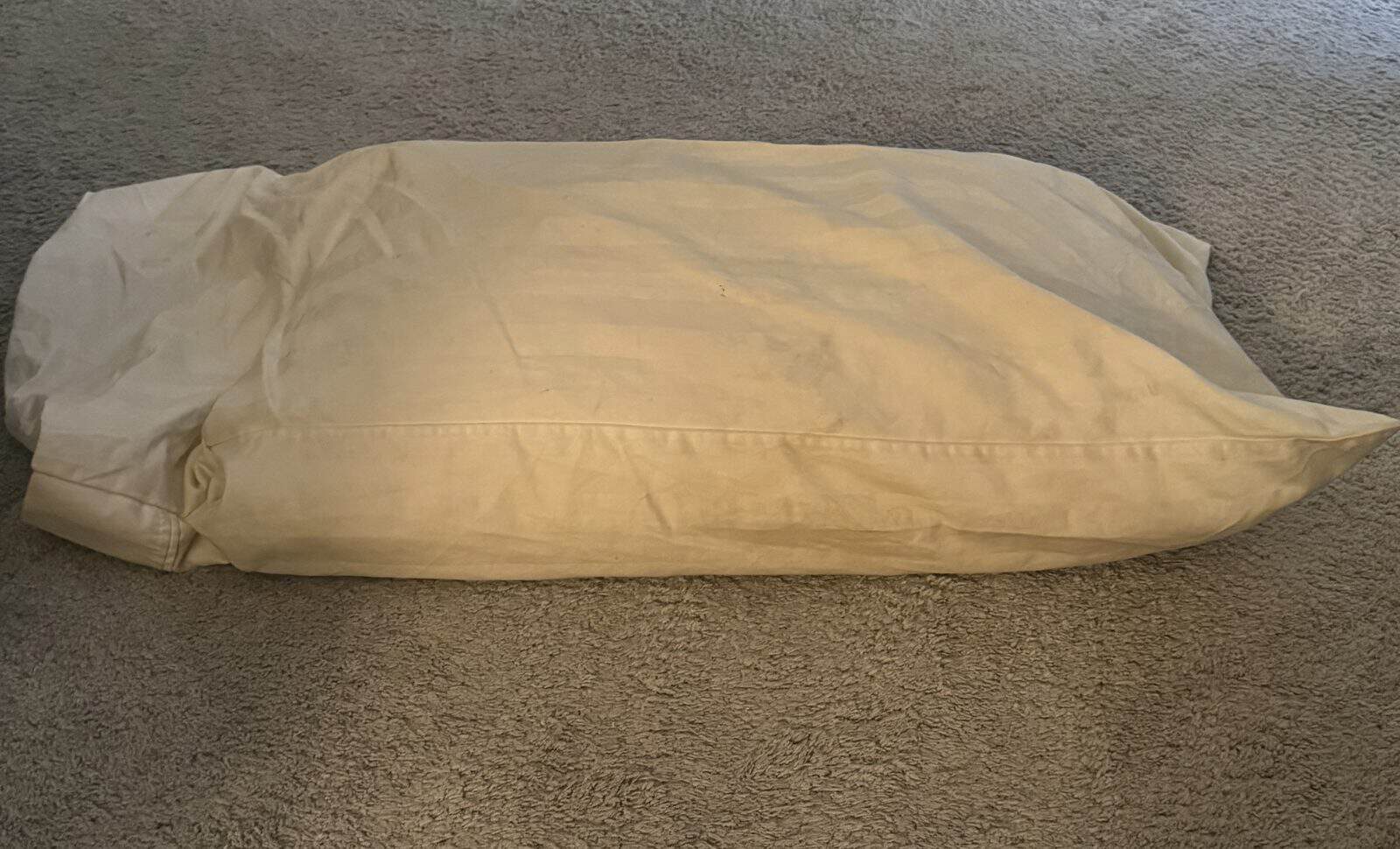
Pick two is the thin pillow on my own bed. I mostly sleep on my side, but I roll onto my stomach some nights, and a normal lofty pillow cranks my neck the moment I do. So I keep this thin, soft one within reach: it is low enough that my head stays close to neutral face-down, and it is genuinely soft and comfortable to lie on.
Why It Stands Out
For me the value is having the right pillow there when I switch. A thick pillow forces my chin up and back when I am on my stomach, and this one simply does not, which is the difference between a stiff morning and a fine one. It gives a little support and comfort without lifting my head, and it stays soft rather than packing into a hard lump. Because I move between positions, it lives alongside the higher pillow I use for side sleeping, the way our guide to pillows for combination sleepers describes.
Worth Knowing
A thin, soft pillow is built for stomach and the occasional back night, not for side sleeping, where it leaves too big a gap under the neck. Mine carries no legible brand, so I have not named it; the button points to the same thin, soft, low-profile style. On strict side nights I want more loft, which is its own category in our side-sleeper pillow guide.
Reach for a thin pillow like this if you sleep on your stomach at all, even part-time. Pass if you only ever sleep on your side and need real height.
3. Bluewave Bedding Ultra Slim Gel Memory Foam Pillow: Best Ultra-Thin
When you want a pillow built from the ground up to be flat, this is the one stomach sleepers keep recommending. The Bluewave comes in a range of slim heights, with the lowest sitting barely above the mattress, and the dense foam holds that thinness instead of flattening further.
Why It Stands Out
The whole design exists to keep a face-down head neutral, and the choice of slim heights lets you match the loft to your build. Gel-infused foam and ventilation channels keep it cooler than typical memory foam, the zip-off cover washes easily, and the dense foam holds its shape over the long haul rather than packing down. For a committed stomach sleeper, it is the purpose-built pick.
Worth Knowing
A fixed-height foam pillow does not adjust, so getting the right loft means choosing the correct height up front. Brand-new memory foam needs a day to expand and air out before it feels right.
Choose it for a dedicated stomach sleeper who wants the lowest purpose-built profile. Skip it if you switch positions often and need to change the loft.
4. Belly Sleep Gel Infused Memory Foam Pillow: Best Low-Profile Foam
Named for the position it serves, the Belly Sleep pillow is a thin slab of gel memory foam shaped to keep a stomach sleeper’s neck in line. It splits the difference between a flat foam pad and a contoured support pillow.
Why It Stands Out
The low, even foam supports the head without lifting it, and the gel infusion takes some of the heat out of the foam for cooler face-down sleep. It holds a consistent shape night after night, and the slim profile means your chin is not pushed toward your chest. It is a simple, single-purpose pillow that does its one job well.
Worth Knowing
A solid foam slab cannot be adjusted, so the fixed loft either suits you or does not. Some sleepers find any foam pillow too firm at first and want a softer feel underneath.
Pick it for a stomach sleeper who wants dedicated low-profile foam. Look elsewhere if you prefer a soft, compressible feel over firm foam.
5. Beckham Hotel Collection Gel Pillow (Soft): Best Soft Budget Pick
Not every stomach sleeper wants foam, and the soft Beckham proves a plush pillow can work if it compresses flat enough. Chosen in the soft version, it squashes down under a face-down head while staying gentle and breathable.
Why It Stands Out
The down-alternative gel fill is soft and light, so it flattens easily and lets your head settle low, and the price makes it an easy first try. For a sleeper who hates the dense, firm feel of memory foam, the airy plushness is a friendlier surface, and it sleeps cool.
Worth Knowing
Buy the soft version specifically, since firmer versions hold too much height for this position. Plush fill compresses over time and needs occasional fluffing, and it offers less consistent support than foam.
Get it for a stomach sleeper who wants a soft, affordable, compressible pillow. Skip it if you need firm, lasting structure that never changes height.
You can see how little height stomach sleeping tolerates before deciding.
6. Pancake Pillow: Best Adjustable Thinness
For sleepers who want to find their exact low loft, the Pancake takes a different route: it stacks several thin pillow layers you add or remove. Pull most of them out and you are left with a barely-there pad for stomach nights.
Why It Stands Out
The layered design lets you experiment until the height feels right, going from a single thin layer for stomach sleeping up to a taller stack for other positions. The plush microfiber fill stays soft even at the lowest setting, so going thin does not mean going hard. It takes the guesswork out of choosing a fixed loft.
Worth Knowing
Managing several inserts is more fiddly than a single pillow, and the stacked layers can shift if you are not using a snug case. It is bulkier to store the spare layers you remove.
Choose it to dial in your perfect low loft or to share one pillow across positions. Pass if you want a single, simple pillow with no assembly.
Stomach Sleeper Pillows at a Glance
| Pillow | Type | Loft | Best for | Adjustable | Price band |
|---|---|---|---|---|---|
| Coop Home Goods | Adjustable shredded foam | Empties to low | Most sleepers, switchers | Yes | $60–$90 |
| Thin soft pillow (what I use) | Soft low-profile | Thin | Part-time stomach nights | No | $20–$45 |
| Bluewave Ultra Slim | Gel memory foam | 1.75″–4″ | Dedicated stomach sleepers | Pick a height | $30–$50 |
| Belly Sleep | Gel memory foam | Low fixed | Low-profile foam fans | No | $40–$70 |
| Beckham (Soft) | Down-alternative gel | Compresses flat | Soft, budget | No | $25–$45 |
| Pancake Pillow | Stacked layers | 0.75″ and up | Dialing in low loft | Yes | $50–$80 |
Prices and exact lofts shift with size and sales, so read the bands as a guide. For this position, the lower and softer the pillow, the happier your neck tends to be.
How to Choose a Pillow for Stomach Sleeping
Three things decide it: how low the pillow sits, how soft it compresses, and whether you ever sleep in another position. Get those right and your neck stops paying for the night.
Keep the loft low
The single most important quality is a thin profile, generally no taller than about three inches, so your head stays close to the mattress and your neck is not craned up and back. If a pillow cannot get that low, it is wrong for this position no matter how comfortable it feels sitting up.
Favor soft, compressible fills
Soft down-alternative, thin gel foam, or an emptied adjustable pillow all let your head settle low. Tall, firm pillows hold a high shape that fights a face-down sleeper, so softness and low loft go together here. A pillow that squashes flat under light pressure is usually a good sign.
Account for your other positions
Few people sleep only on their stomach. If you switch to your side, a single fixed thin pillow leaves a gap under your neck, so an adjustable pillow or a second pillow makes sense, the way our guide to choosing a side-sleeper pillow lays out the higher loft side sleeping needs.
Mind your neck and your mattress
If you wake with a stiff neck, the pillow is usually too tall; if your lower back aches, stomach sleeping itself may be the culprit. A thin pillow helps the neck, and a supportive surface helps the back, which is why some stomach sleepers also look at the right mattress for the position. Persistent pain is worth a closer look at why your neck hurts when you sleep on your stomach.
Thin Pillow vs No Pillow
Plenty of stomach sleepers wonder whether to skip the pillow entirely. It sounds logical, but a thin pillow usually wins, and here is why.
Why a thin pillow usually beats none
Going completely flat can drop your head below the line of your shoulders, which strains the neck in the opposite direction and can leave you just as stiff. A low pillow keeps the head and spine in a gentler, more neutral line, which is the comfort most stomach sleepers are actually after.
When going pillowless makes sense
If even the thinnest pillow tips your head up, or you sleep on a very soft mattress that already cradles your head, sleeping without one can feel better. It comes down to keeping the neck neutral, so experiment with the lowest pillow you have before deciding to ditch it entirely.
Common Stomach Sleeper Pillow Mistakes to Avoid
A few predictable errors keep stomach sleepers stiff. Each is simple to fix.
Using a pillow that is too tall
A standard lofty pillow forces a face-down head up and back all night, which is the most common cause of stomach-sleeper neck pain. When in doubt, go lower than you think you need.
Choosing firm foam that holds its height
A dense pillow that keeps its shape will not compress under your face the way you need. Pick a soft fill or an adjustable pillow you can empty, so the surface gives instead of propping you up.
Forgetting the rest of your body
Stomach sleeping flattens the natural curve of the lower back, so a thin pillow under the hips or pelvis can ease the strain on your spine. The head pillow is only half the alignment picture.
Ignoring ongoing pain
A thin pillow makes stomach sleeping more comfortable, but it does not undo what the position does to the neck and back over time. If stiffness persists, it is worth reading whether sleeping on your stomach is bad for you and talking with a professional.
Recommended Reading
- Best thin pillows for stomach sleepers
- Best pillows for neck pain
- Why does my neck hurt in the morning
- Best pillows for back sleepers
Frequently Asked Questions
What kind of pillow is best for stomach sleepers?
A thin, low-loft pillow, generally no taller than about three inches, or an adjustable pillow you can empty down to flat. The goal is keeping your head close to the mattress so your neck is not craned up and back all night. Soft, compressible fills work better here than tall, firm foam.
How thin should a stomach sleeper pillow be?
As low as keeps your head roughly level with your spine, which for most people means a slim profile rather than a standard fluffy pillow. Dedicated stomach-sleeper pillows often sit barely above the mattress; if your chin is pushed toward your chest or your head tilts up, it is still too thick.
Is it better to sleep with no pillow on your stomach?
Usually a very thin pillow beats none. Going completely flat can let your head drop below your shoulders and strain the neck the other way. A low pillow keeps the head and neck in a gentler line, though on a very soft mattress some people do fine without one.
Why do I wake up with neck pain as a stomach sleeper?
Most often the pillow is too tall, holding your head up and your neck bent backward for hours. Switching to a thin, low-loft pillow is the first fix. If the pain continues even with a flat pillow, the position itself or another issue may be involved, and it is worth a professional’s opinion.
Can I use an adjustable pillow for stomach sleeping?
Yes, and it is one of the best options. Removing fill from an adjustable pillow takes the loft down to a stomach-friendly height, and you can add it back for other positions. That flexibility suits anyone who switches between stomach, back, and side.
What if I sleep on my stomach and my side?
Combination sleepers do best with an adjustable pillow or two pillows of different lofts, since stomach sleeping wants low and side sleeping wants high. Keeping a thin pillow for stomach nights and a taller one for side nights covers both without compromise.
Do stomach sleepers need a special mattress too?
A supportive surface helps, since stomach sleeping can let the hips sink and flatten the lower back. A firmer feel keeps the midsection from sagging, which pairs with a thin pillow to keep the whole spine more neutral.
Is sleeping on my stomach bad for me?
It is the hardest position on the neck and lower back, which is why it tends to need the most careful setup. A thin pillow reduces the neck strain, but if you have ongoing pain, talking with a healthcare professional about position and support is the sensible next step.
Recommended Reading
See also our guides to nap pillows, and pillows for arthritis sufferers.
Related Reading
Explore more: bolster pillows, toddler pillows, alarm clocks for heavy sleepers, euro pillows and shams, mattresses for combination sleepers, buckwheat pillows, fiber pillows, and pillows for fibromyalgia sufferers.
