
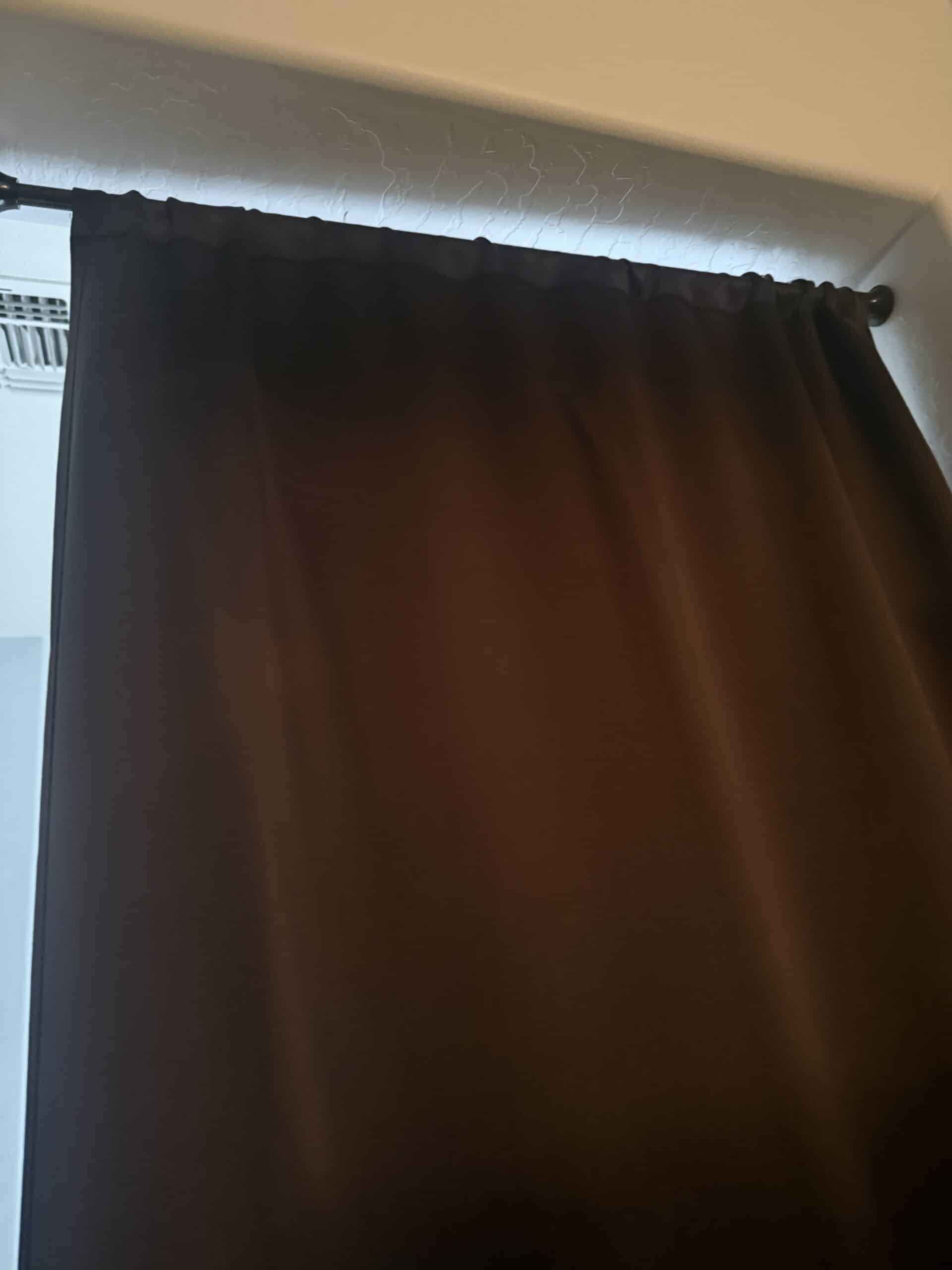
I live in the desert and I run thick blackout curtains year round, and one of the main reasons is heat, not just light. They block the sun from pouring in, and in doing that they cut down the heat that comes with it. So the honest answer is yes, blackout curtains help with heat, with an important distinction: they are very good at stopping the heat the sun brings through a window, and they are not insulation for heat that is already in the room. Understanding that difference is the whole thing. For more on this, see our guide to thermal versus standard blackout.
Key Takeaways
- Blackout curtains do help block heat, especially sun-driven heat.
- I run thick ones year round in the desert for exactly this reason.
- They stop heat coming through the window with the light.
- They are not insulation for heat already in the room.
- Thicker, well-fitted curtains block more heat than thin loose ones.
Related: blackout curtains make a room feel colder.
How Blackout Curtains Block Heat
The mechanism, because it explains what they can and cannot do.
A lot of the heat that builds up in a room during the day comes in through the windows as sunlight. Sun hits the glass, passes through, and warms everything it lands on. Blackout curtains block that sunlight, and by blocking the light they block a large part of the heat that rides in with it. The thick fabric intercepts the sun before it can pour into the room.
This is why they work for heat at all: the same density that makes them block light makes them block solar heat gain through the window. It is one property doing two jobs. In a place like the desert, where the sun is relentless, stopping that solar gain makes a real difference to how hot a room gets during the day.
That is the heat blackout curtains are genuinely good at stopping: the heat arriving with the sunlight. Blackout curtains for sleep covers the light-blocking side that comes with it.
My Desert Experience
Why I run them year round rather than seasonally.
I keep thick blackout curtains up all year, and in the desert the heat reason is as strong as the light reason. During the day, drawing them keeps the sun from turning the room into an oven, which matters when the sun outside is punishing for most of the year. They are not a seasonal thing for me; they earn their place every day the sun is out, which here is most days.
The effect is noticeable. A room with the blackout curtains drawn against midday sun stays meaningfully more comfortable than it would with the sun streaming in. For a bedroom especially, keeping the daytime heat out helps the room be a cooler place to sleep later.
This is the practical case for blackout curtains as a heat tool, from someone who relies on them for exactly that in a hot climate. A desert bedroom setup covers the fuller picture of keeping a hot-climate room cool.
What They Do Not Do
The limit, because overselling them helps no one.
Blackout curtains block heat coming in through the window. They are not air conditioning, and they are not insulation for heat that is already in the room or that comes from other sources. If a room is already hot, closing the curtains does not cool it down; it stops more heat from arriving. The distinction is between prevention and cooling, and curtains are prevention.
They also cannot fully seal a window the way a wall does. Heat still transfers through the glass and around the edges to some degree. What the curtains do is dramatically reduce the direct solar gain, which is the biggest single source of daytime window heat, not eliminate every path heat can take.
So the realistic expectation is a meaningful reduction in sun-driven heat, not a climate-controlled room from fabric alone. Paired with actual cooling, they are a strong helper; on their own, they are a shield rather than a solution.
Thickness and Fit Change the Result
Why not all blackout curtains block heat equally.
The thicker and denser the curtain, the more solar heat it stops. Mine are thick, and that matters; a thin blackout-labeled curtain blocks less heat than a heavy one even if both dim the room. Density is doing the heat work, so heavier fabric generally means better heat performance.
Fit matters just as much. A curtain that covers the whole window generously, extending beyond the frame and hanging close to the wall, traps far less heat behind it than one that leaves gaps around the edges. Sun sneaking in around a poorly fitted curtain undoes much of the benefit. Wider and longer coverage, mounted close to the window, keeps the heat out more effectively.
So if heat blocking is a priority, choose thick curtains and hang them to cover generously. The label alone does not guarantee the heat performance; the fabric weight and the fit do. choosing blackout curtains covers picking for this.
Using Them for Heat in Practice
How to actually get the benefit day to day.
The trick is timing. Draw the curtains during the hottest, sunniest part of the day, especially on windows the sun hits directly, to block the heat before it enters. Leaving them open through a blazing afternoon lets the room heat up, and closing them after the fact does not undo it. Prevention means closing them ahead of the heat, not in response to it.
In my routine, keeping them drawn against direct sun is standard, and it keeps the room from building up the daytime heat it otherwise would. Combined with running the room cooler by other means, the curtains handle the solar side so the cooling does not have to fight the sun as well.
Used this way, blackout curtains are a genuine and low-effort part of keeping a room cooler in a hot climate. They are not the whole answer, but they are a real and effective piece of it.
Recommended Reading
See blackout curtains for sleep, choosing blackout curtains, and a desert bedroom setup, and making a bedroom dark.
Do Blackout Curtains Block Heat FAQ
Do blackout curtains block heat?
Yes, especially heat from the sun. I run thick ones year round in the desert partly for this reason. By blocking the sunlight coming through the window, they block much of the heat that rides in with it. They are very good at stopping sun-driven heat.
How do they block heat?
Most daytime room heat enters through the windows as sunlight. Blackout curtains intercept that sun before it pours in, and the same density that blocks light blocks solar heat gain. It is one property doing two jobs, which is why they help with both.
Will blackout curtains cool down a hot room?
No, they prevent heat rather than remove it. If a room is already hot, closing the curtains stops more heat from arriving but does not cool what is there. They are a shield against incoming solar heat, not air conditioning.
Do they work in a hot climate like the desert?
In my experience, yes. I keep thick blackout curtains drawn against the desert sun year round, and a room with them closed stays meaningfully more comfortable than one with the sun streaming in. The relentless sun is exactly what they are good at blocking.
Do thicker curtains block more heat?
Yes. The denser and heavier the fabric, the more solar heat it stops. A thin blackout-labeled curtain blocks less heat than a heavy one even if both darken the room. Density does the heat work, so heavier fabric performs better.
Does fit affect heat blocking?
A lot. A curtain that covers the window generously and hangs close to the wall traps far less heat behind it than one with gaps around the edges. Sun sneaking around a poorly fitted curtain undoes much of the benefit. Cover wide and long for the best result.
When should I close them for heat?
During the hottest, sunniest part of the day, before the heat builds, especially on windows the sun hits directly. Closing them after the room has heated does not undo it. Prevention means drawing them ahead of the sun, not in response to it.
Are blackout curtains enough to keep a room cool on their own?
They are a strong helper, not a full solution. They dramatically reduce solar heat gain but cannot seal a window like a wall or cool a room by themselves. Paired with actual cooling, they handle the sun so the cooling does not have to.
Related in this cluster: how to choose sleep aids, blackout curtains vs blinds, sleep mask vs blackout curtains.
Renters need a mounting solution too. no-drill curtain rods covers tension and adhesive options.
