
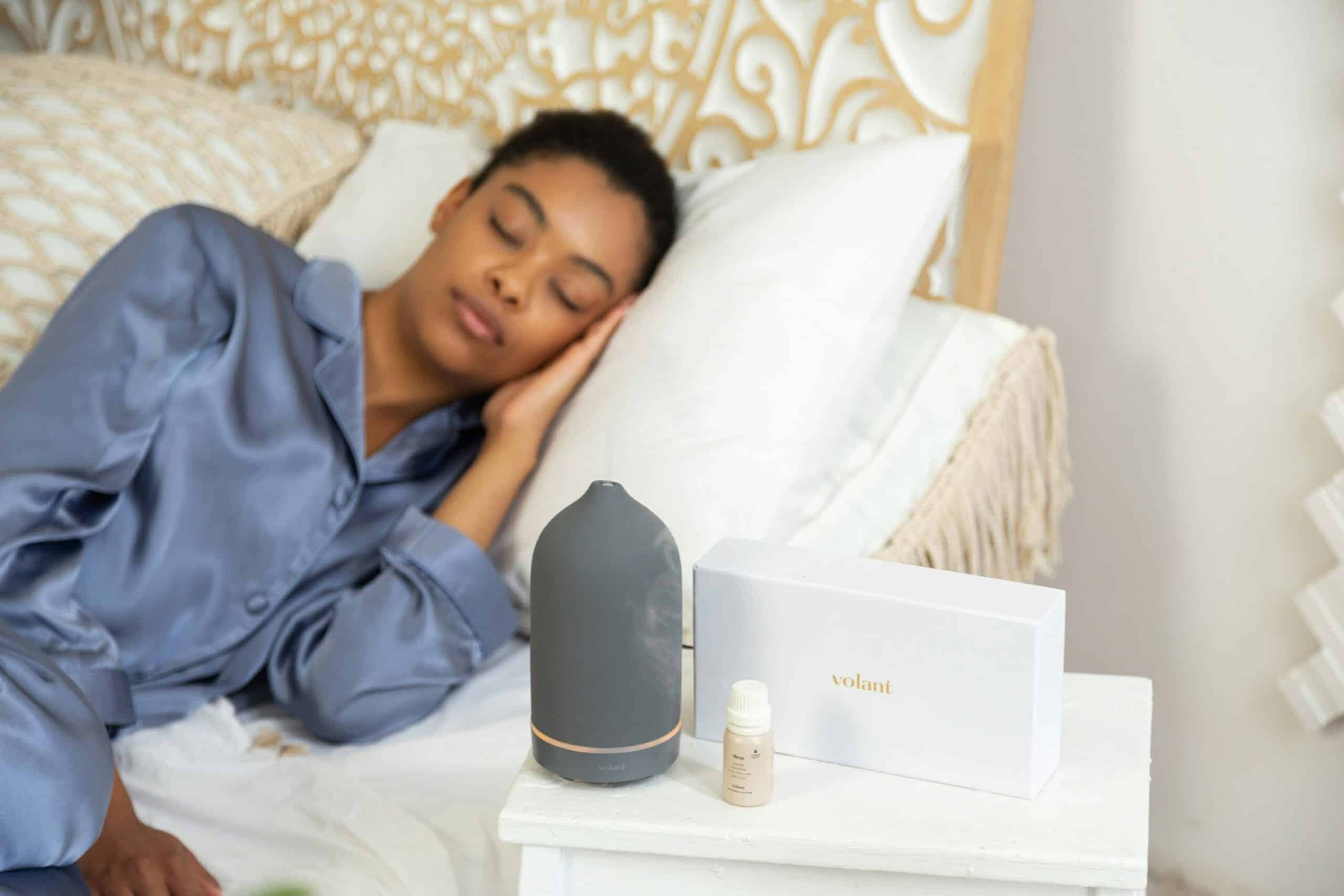
Sleep aids are everything outside the bed itself that helps you sleep. The mask that blocks light. The sound machine that masks the neighbor’s TV. The melatonin that signals to a confused circadian system that it’s nighttime. The mouthguard that stops grinding from waking you up. The blue-light glasses that let you scroll an hour before bed without trashing the next morning. None of these are bed-and-mattress essentials. They’re the second layer: targeted interventions that address specific sleep barriers. Comparing options? See our best sleep aids for adults roundup.
The sleep aid market is large, lightly regulated, and noisy. Many products work; many don’t; and the difference between the two isn’t always obvious from the packaging. What matters is knowing which aid addresses your specific issue. Light sensitivity gets a mask, not a supplement. Snoring gets a mouthguard or anti-snore device, not a sound machine. Insomnia gets professional evaluation first, then targeted aids. The guide below covers each category in turn: what it does, when it helps, the evidence behind it, and what to skip.
This is the broadest sleep-aid framework. For specific behavioral interventions (sleep schedule, routine, bedroom temperature), see the dedicated pillars on those topics.
Key Takeaways
- Sleep aids work best when matched to a specific barrier. Generic “sleep aid” picks rarely outperform targeted choices.
- Sensory aids (masks, earplugs, sound machines) have the strongest evidence base for measurable sleep improvement in normal sleepers.
- Melatonin works for circadian disruption (jet lag, shift work) but is less effective as a general sleep aid. The NIH recommends starting with the lowest possible dose.
- Magnesium has plausible mechanisms for sleep support but the evidence is mixed. Worth trying for people who don’t respond to behavioral changes.
- Snoring that’s loud, persistent, or accompanied by gasping or pauses warrants medical evaluation. Sleep apnea is often missed and can be serious.
- Sleep trackers measure proxies for sleep, not sleep itself. They’re useful for trend awareness but not for diagnosis.
How to Use This Guide
Category order reflects sleep-impact priority. Sensory aids first because they address the most common sleep barriers (light, noise, partner disturbance). Light and circadian tools second because they’re high-leverage interventions when the issue is timing. Supplements third because they’re widely used but the evidence is more variable. Breathing and oral aids fourth because they address specific medical issues. Sleep tracking and aromatherapy round out the lineup.
Each section ends with a link to the dedicated roundup for specific product picks.
Sensory Aids: Masks, Earplugs, and Headphones
Light and noise are the two most common environmental sleep disruptors. The American Academy of Sleep Medicine notes that controlling these inputs is among the highest-impact non-medication interventions for sleep quality[1]. Sensory aids handle this directly: a mask blocks light, earplugs block sound, and sleep headphones replace sound rather than block it.
Sleep masks vary in design and effectiveness. The right mask blocks all visible light without pressing on the eyes (which can interfere with REM sleep). Contoured masks with eye cavities outperform flat masks for both light-blocking and comfort. Adjustable straps prevent the mask from creeping during sleep. See the best sleep masks for better sleep for the picks, and the best smart sleep masks for travel for travel-specific options that include features like vibrating alarms or temperature control.
Earplugs work best for predictable noise sources: snoring partners, urban traffic, building hum. They don’t work for sudden loud noises. Foam earplugs are inexpensive and effective; molded silicone earplugs are reusable and comfortable for side sleepers.
Sleep headphones are an alternative for sleepers who want sound replacement rather than sound blocking. Headband-style sleep headphones play music or audiobooks without the pressure points of traditional earbuds. They suit sleepers who fall asleep more easily with audio. See the best sleep headphones.
Sound and White Noise Machines
Sound machines and white noise machines mask environmental noise by adding consistent background sound. The masking works because the brain processes consistent sound differently from intermittent sound; the consistent sound becomes “audio wallpaper” that lets the brain ignore other noises.
Pure white noise (equal energy across frequencies) works for some people but sounds harsh to others. Pink noise and brown noise have more low-frequency energy, sounding warmer and more natural. Nature sounds (rain, ocean, fan) provide similar masking with less mechanical sound.
For couples with different schedules or sleepers in noisy environments, sound machines often work better than earplugs because they cover the room rather than blocking a specific ear. See the best sound machines for sleep and the best white noise machines.
Light and Circadian Tools
The circadian system runs on light exposure. The American Academy of Sleep Medicine guidelines emphasize that light timing affects sleep onset, sleep quality, and morning alertness more than most owners realize[1]. Evening blue-light exposure delays melatonin production; morning bright light advances the wake signal.
Blue-light blocking glasses filter the high-energy blue light from screens during the evening. The evidence is mixed but suggests measurable melatonin preservation when worn in the hours before bed. They’re a useful adjunct for screen-heavy evenings, not a replacement for reducing screen time. See the best blue-light blocking glasses for better sleep.
Wake-up lights (sunrise alarm clocks) gradually brighten over roughly half an hour before the target wake time, mimicking natural dawn. Particularly useful in winter, for early risers, and for shift workers whose schedule doesn’t align with natural sunlight. See the best wake-up light alarm clocks.
Light therapy lamps (10,000 lux daylight-spectrum lamps used for roughly half an hour in the morning) help shift the circadian rhythm earlier. The intervention is well-studied for seasonal affective disorder and increasingly for delayed sleep phase syndrome.
The Sleep Aids Decision Matrix
Most sleepers don’t need every category equally. The right sleep aid depends on the specific barrier. The matrix below maps common sleep complaints to their first-line aids and the satellite guide for each.
| Your Sleep Issue | First-Line Aid | Approach | Detailed Guide |
|---|---|---|---|
| Light leak from windows or partner’s lamp | Sleep mask | Block at the eye level; cheaper than blackout curtains for a single sleeper | Sleep masks |
| Noisy neighborhood or snoring partner | Earplugs or sound machine | Earplugs for one ear protection; sound machine for full-room masking | Sound machines |
| Trouble winding down before bed | Blue-light glasses, dim bedside lamp, aromatherapy | Reduce evening stimulation across multiple inputs | Blue-light glasses |
| Jet lag or shift work | Melatonin (low dose, timed) + sunrise alarm | Realign the circadian system to the new schedule | Sleep supplements |
| Snoring (own or partner’s) | Mouthguard or anti-snore device | Address the airway mechanism; see doctor if loud/persistent | Snore mouthguards + Anti-snore devices |
| Teeth grinding (bruxism) | Night guard, stress reduction | Protect teeth while addressing underlying cause | Night guards |
| General falling-asleep difficulty | Magnesium or melatonin (trial basis), sleep hygiene first | Start with behavior changes; add supplements if behavior alone isn’t enough | Sleep supplements |
| Want to track sleep quality | Sleep tracker (ring, watch, or under-mattress) | Use for trends, not as a diagnostic | Sleep trackers |
The matrix is a starting point, not a strict rule. Most sleep issues benefit from multiple interventions stacked rather than a single aid.
Supplements: Melatonin, Magnesium, and Sleep Aids
The supplement category is the most marketed and the most variable. Some supplements have plausible mechanisms and modest evidence; others are essentially placebos. The NIH Office of Dietary Supplements provides reasonable evidence summaries for the most-studied compounds[2].
Melatonin is the most-studied sleep supplement. It works best for circadian disruption (jet lag, shift work, delayed sleep phase) rather than general insomnia. The NIH notes that lower doses (0.3 to 1 mg) often work as well as higher doses (3 to 10 mg) and produce fewer side effects. Timing matters: melatonin taken at the right circadian moment (about shortly before target sleep time) is effective; taken at the wrong time, it can disrupt rather than help.
Magnesium has plausible mechanisms (GABA-related muscle relaxation, parasympathetic activation) but the evidence for sleep improvement is mixed. Worth trying for people who are magnesium-deficient or who haven’t responded to behavioral changes. Forms vary: magnesium glycinate is typically better-tolerated than magnesium citrate or oxide. See the best magnesium supplements for sleep, melatonin vs magnesium for sleep, and the best sleep supplements for deep sleep for comparative coverage.
Other supplements (valerian root, L-theanine, chamomile, ashwagandha) have varying evidence. The general recommendation: try behavioral changes first; add supplements only if behavior alone isn’t enough; consult a doctor before starting any supplement regimen.
Important caveat: sleep supplements are not regulated to the same standard as medications. Quality varies widely between brands. Look for third-party tested products (NSF, USP, or ConsumerLab certifications). See the best sleep aids for adults for broader coverage.
📑 Recommended Read: Most sleep supplements are tried in isolation when they work better stacked with behavioral and environmental changes. A supplement plus a sleep mask plus a sound machine plus a bedtime routine outperforms a supplement alone. See the best sleep supplements for deep sleep for tested picks and stack them with the other aids in your toolkit.
Breathing and Oral Aids: Anti-Snore Devices, Mouthguards, Nasal Strips
Snoring affects about half of adults at some point and is the most common sleep disruptor for bed partners. Most snoring is benign mechanical vibration of relaxed airway tissues; some snoring is a sign of obstructive sleep apnea, which is serious and underdiagnosed.
Anti-snore devices work through different mechanisms. Chin straps hold the jaw closed to prevent mouth-breathing snoring. Mandibular advancement devices (custom or boil-and-bite mouthguards) move the lower jaw forward to open the airway. Nasal strips and nasal dilators open nasal passages. Each suits a different snoring cause. See the best anti-snore devices and the best snore mouthguards.
For snoring sleepers specifically, sleep position matters: side-sleeping reduces snoring compared to back-sleeping. See why some people only snore on their back for the anatomy explanation. Anti-snoring pillows that encourage side-sleeping help some snorers. See the best pillows for snoring and the best anti-snoring pillows.
For partner-side accommodations, see how to sleep with a snoring partner for non-product strategies.
Teeth grinding (bruxism) is a related oral issue. Night guards protect tooth surfaces from the grinding force. Cheap boil-and-bite night guards work for occasional grinding; chronic heavy grinders benefit from custom dentist-fitted guards. See how to stop grinding teeth at night for the broader approach and why bruxism happens for causes.
Aromatherapy and Scent
Aromatherapy as a sleep aid has modest evidence. Lavender is the most-studied scent for sleep; evidence suggests improvements in sleep quality and reductions in anxiety with lavender exposure before sleep. The mechanism is uncertain but likely involves both psychological association and direct olfactory pathways.
Practical aromatherapy uses diffusers (essential oils diffused into the air over hours), pillow sprays (lavender or chamomile sprays misted onto pillows), or scented sachets in the bed area. See the best aromatherapy diffusers for sleep and the best pillow sprays for sleep.
Aromatherapy is best treated as a low-stakes adjunct: it costs little, has minimal downside, and may help. It shouldn’t replace evaluation of underlying sleep issues.
Sleep Tracking
Sleep trackers (rings, watches, under-mattress sensors, smart sleep masks) measure proxies for sleep: movement, heart rate, breathing patterns, sometimes blood oxygen. They estimate sleep stages and total sleep time from these signals.
What sleep trackers are good for: spotting trends over weeks and months (am I sleeping less than last quarter?), identifying patterns (do I sleep worse after evening alcohol?), monitoring response to interventions (did the new mattress help?).
What sleep trackers are NOT good for: diagnosing sleep disorders, providing medical-grade data, or replacing professional sleep studies. Some sleepers develop anxiety from over-monitoring tracker data (a phenomenon sometimes called “orthosomnia”). If the tracker is causing more sleep stress than the unmeasured baseline, reduce checking frequency.
See the best sleep trackers for better rest for the picks across form factors and price ranges.
When Sleep Aids Signal Something Deeper
Sleep aids are appropriate for common sleep barriers in otherwise healthy sleepers. Some symptoms warrant medical evaluation before any aid:
Loud, persistent snoring with pauses or gasping. Possible obstructive sleep apnea. Untreated sleep apnea is associated with cardiovascular disease, stroke, and other health risks. Sleep study evaluation is warranted.
Excessive daytime sleepiness despite adequate sleep time. Possible narcolepsy, idiopathic hypersomnia, or sleep apnea. Should be evaluated by a sleep specialist.
Insomnia that persists despite behavioral changes and sleep hygiene. Chronic insomnia often benefits from cognitive behavioral therapy for insomnia (CBT-I), which has stronger long-term evidence than supplements or medications.
Sleep movements that cause injury. REM sleep behavior disorder (acting out dreams) can be serious and warrants evaluation.
Sudden onset sleep issues. Sudden changes in sleep patterns can indicate underlying medical conditions (thyroid, depression, sleep disorders) and should be discussed with a doctor.
Common Sleep Aid Mistakes
High-dose melatonin without dosing knowledge. Most consumer melatonin doses (3 to 10 mg) are far higher than the physiologic dose. Lower doses (0.3 to 1 mg) often work as well with fewer side effects.
Using sleep aids without addressing root cause. Aids work better stacked with sleep hygiene improvements. A supplement alone rarely fixes what behavior could fix.
Treating snoring as cosmetic when it’s loud and persistent. Heavy snoring with pauses or gasping warrants sleep study evaluation for apnea.
Buying cheap mouthguards for severe grinding. Heavy grinders need custom dental-fitted guards; cheap boil-and-bite versions wear through quickly.
Over-monitoring sleep tracker data. Daily checking can create anxiety that itself disrupts sleep. Weekly trend review is more useful than daily score-checking.
Using sleep medications as the first intervention. Behavioral changes, environmental adjustments, and targeted aids (mask, sound machine) typically outperform medications for chronic sleep issues.
Mixing aids without understanding interactions. Some supplements interact with medications. Always check with a doctor or pharmacist before stacking supplements with prescription drugs.
Frequently Asked Questions
What’s the best general sleep aid to try first? A sleep mask if the issue is light, earplugs or sound machine if the issue is noise, melatonin in low dose if the issue is timing (jet lag, shift work). Match the aid to the specific barrier rather than starting with a general supplement.
Are sleep supplements safe? Most well-studied sleep supplements (melatonin, magnesium) are safe for short-term use at appropriate doses. Long-term use, high doses, and interactions with medications warrant medical consultation. Quality varies between brands; look for third-party tested products.
How much melatonin should I take? The NIH suggests starting with 0.3 to 1 mg. Many over-the-counter products contain 5 to 10 mg, which is well above the physiologic range. Lower doses often work as well with fewer side effects.
Does magnesium actually help sleep? Possibly, with mixed evidence. Most likely to help if you’re magnesium-deficient or if behavioral changes haven’t been sufficient. Magnesium glycinate is typically the best-tolerated form for sleep purposes.
Do sleep trackers work? For trend analysis, yes. For medical-grade sleep stage data, no. Treat them as awareness tools, not diagnostic tools.
What about CBD for sleep? The research is early and inconsistent. Evidence is mixed; some trials suggest benefit, others find none. Product quality varies enormously. If you try it, source from third-party tested brands.
Are blue-light glasses really effective? Modest effect, useful as part of evening light reduction. Not a substitute for reducing screen time, but a reasonable adjunct for screen-heavy evenings.
When should I see a doctor about sleep? Loud snoring with pauses, persistent insomnia despite good sleep hygiene, excessive daytime sleepiness, or sudden changes in sleep patterns all warrant medical evaluation. Sleep problems are often treatable but need proper diagnosis first.
Can I combine multiple sleep aids? Yes, with caution. Stacking sensory aids (mask plus sound machine plus warm bedside lamp) is usually safe. Stacking supplements with each other or with prescription drugs warrants medical consultation.
How long should I try a sleep aid before deciding if it works? Sensory aids (masks, earplugs, sound machines) show effect immediately. Supplements need a few weeks of consistent use at the same dose and timing. Behavioral changes (sleep hygiene) need several weeks to show full effect.
This article is for general information and is not medical advice. For persistent sleep problems, consult a doctor or sleep specialist.
References
- American Academy of Sleep Medicine. Clinical Practice Guidelines and Healthy Sleep Recommendations. aasm.org/clinical-resources/practice-standards/practice-guidelines
- National Institutes of Health Office of Dietary Supplements. Melatonin: Fact Sheet for Health Professionals. ods.od.nih.gov/factsheets/Melatonin-HealthProfessional
Recommended Reading
See also our guides to essential oils for sleep, and sleep mask vs blackout curtains.
Related Reading
Explore more: how to choose bedroom essentials, how to choose a weighted blanket, The Side Sleeper’s Guide to Waking Up Without a Kinked Neck, and how to choose the right mattress topper.
More Guides in This Collection
- blackout curtains for sleep
- dehumidifiers for bedroom
- earplugs for sleeping
- red light bulbs evening wind down
- touch control bedside lamps
- blackout curtains vs blinds
- red light and melatonin
Related in this cluster: our night lights for sleep guide, our picks for sunset lamps for sleep, our picks for star projectors for sleep, our bedroom floor lamps guide.
Snoring has its own set of devices, with real caveats. Tongue retaining devices and what the guidance says covers one type.
Two categories are covered separately: what the evidence actually says about bedtime teas, and tongue retaining devices and the guidance around them.
