
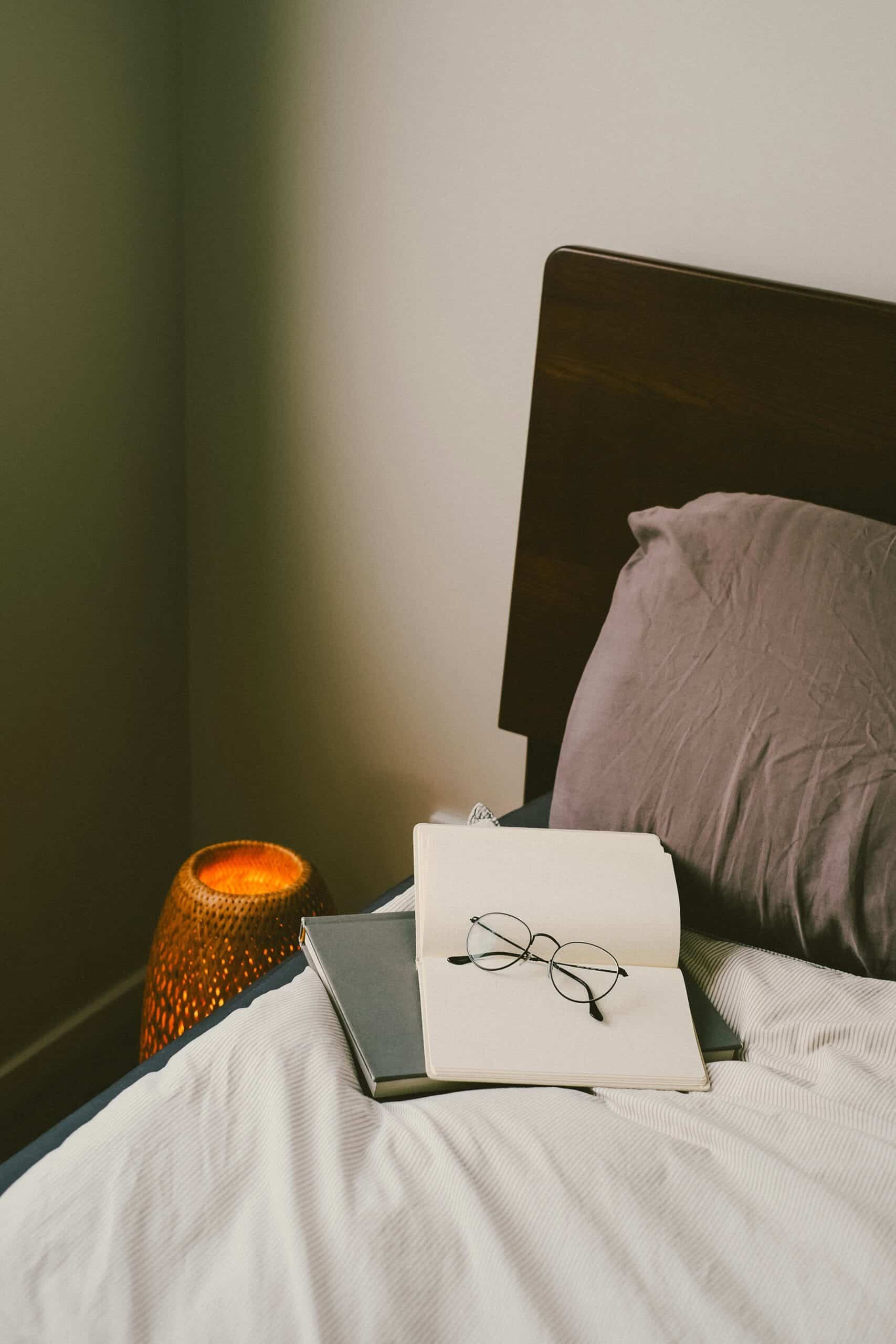
Every hour you spend on a screen after dark is an hour your body’s melatonin production is being suppressed. Blue light, the wavelength that digital screens emit most intensely, is the primary signal the suprachiasmatic nucleus uses to determine whether it is daytime or nighttime. When your brain detects blue light at 9 pm, it responds the same way it responds to morning sunlight: it delays melatonin release, keeps cortisol elevated, and maintains the physiological state of alertness that evolution designed for daylight activity. For more, see our guide on how red and blue light compare for sleep.
The downstream effect is straightforward. You lie down at 11 pm feeling tired but not sleepy, scroll your phone for another 45 minutes without knowing why, and finally fall asleep an hour later than intended. This is not a discipline problem, it is a photobiology problem. Your circadian system is responding correctly to the light signals it is receiving.
Blue light blocking glasses interrupt that signal chain without requiring you to abandon evening screen use entirely. By filtering the specific wavelengths that suppress melatonin, they allow your circadian system to begin the melatonin ramp-up that precedes sleep onset on a normal schedule. For anyone who struggles to fall asleep after evening screen time, they address the mechanism of the problem rather than just the symptom. Our guides to the best wake-up light alarm clocks and best sleep trackers for better rest cover the morning-side and measurement tools that pair well with blue light management for a complete circadian rhythm approach.
Disclosure: RestRight is reader-supported. As an Amazon Associate, we earn from qualifying purchases made through links on this page, at no extra cost to you.
What to Look for in Blue Light-Blocking Glasses for Better Sleep
Lens color determines how much blue light is actually blocked.
Clear or lightly tinted lenses marketed as blue light blocking typically filter 20 to 40 percent of blue light, useful for daytime screen use and eye strain reduction, but insufficient to prevent melatonin suppression in the evening. Amber lenses block 50 to 80 percent of blue light across the relevant wavelength range. Red or dark orange lenses block 95 to 99 percent of blue light, the level required to fully prevent melatonin suppression and produce the strongest sleep onset benefit. For sleep purposes specifically, amber to red lenses are the only options that work at a meaningful level.
The specific wavelength range filtered matters more than the marketing claim.
Melatonin suppression is most strongly driven by blue light in the 480 to 500 nanometer range. Some blue light blocking lenses filter primarily at 450 nanometers, effective for reducing the high-energy visible light that causes eye strain, but less effective at the wavelengths most responsible for melatonin suppression. Look for lenses that specify filtering at 480 to 500 nanometers, or for products that provide an independent spectrophotometry test showing the actual filtering curve across the full blue light range.
Fit affects how much unfiltered light reaches your eyes.
A pair of blue light blocking glasses that fit loosely allows ambient light to enter from the sides, above, and below the lenses, bypassing the filter entirely. For maximum sleep benefit, glasses with closer-fitting frames or wraparound designs that limit light entering around the lens edges produce better results than fashion-forward frames with large gaps between the lens and face.
Wearing comfort during evening use determines whether you actually wear them.
Blue light-blocking glasses only work if you wear them. Glasses that are uncomfortable after 30 minutes, that leave marks on the nose, or that feel heavy during relaxed evening use get abandoned quickly. Lightweight frames with adjustable nose pads and temple tips that suit your face shape are worth prioritizing over marginal improvements in lens filtering percentage.
Best Blue Light Blocking Glasses for Better Sleep in 2026: Our Top 5 Picks
1. Swanwick Sleep Blue Light Blocking Glasses, Best Overall
Best Overall Blue Light Blocking Glasses for Better Sleep | Price: ~$69
The Swanwick Sleep glasses are the most consistently recommended blue light blocking glasses for sleep in both sleep science communities and verified purchaser reviews, a combination that reflects a product engineered specifically around sleep optimization rather than general eye strain reduction. The amber lenses block 98 percent of blue light in the melatonin-suppressing 480 to 500 nanometer range, the specification that separates sleep-effective blue light blocking from daytime eye strain reduction.
Engineered for Sleep, Not Just Eye Strain
The distinction between Swanwick Sleep glasses and general blue light glasses is the lens specification. Most blue light blocking glasses on the consumer market are designed primarily for daytime use, they reduce eye strain from screen exposure without filtering deeply enough in the 480 to 500 nanometer range to meaningfully prevent evening melatonin suppression. The Swanwick Sleep amber lenses filter at the specific wavelength range that the circadian system uses to measure daylight, allowing melatonin production to proceed on a natural schedule despite screen exposure in the two to three hours before sleep. The frames are lightweight acetate with spring hinges that stay comfortable through a full evening of use. The carrying case and lens cloth are included, useful for glasses worn nightly rather than occasionally. Expectations matter here, and our piece on how long blue light glasses take to work covers what a realistic timeline looks like.
Best for: Serious sleep improvers who want the most sleep-effective blue light filtering available in a comfortable everyday frame, anyone who has tried lighter blue light glasses and found them insufficient for evening screen use.
PROS:
- 98% blue light blocking in the melatonin-suppressing 480–500nm range
- Designed specifically for sleep rather than general eye strain
- Lightweight acetate frames comfortable for extended evening wear
- Spring hinges accommodate a range of face widths
- Carrying case and lens cloth included
- Multiple frame style options available
CONS:
- Amber lens tint changes color perception, affects screen and room color accuracy
- Higher price at approximately $69
- Amber tint is conspicuous in social settings for some users
2. Felix Gray Remy Blue Light Glasses, Best Style and Comfort
Best Style and Comfort Blue Light Blocking Glasses | Price: ~$95
Felix Gray positions itself at the intersection of effective blue light filtering and genuinely wearable eyewear design, the Remy frames are attractive enough that users report wearing them throughout the day rather than only at night, and the lens quality produces noticeably reduced eye fatigue during extended screen sessions alongside the sleep onset benefit.
Premium Frames That Get Worn Because They Look Good
The practical challenge with most blue light blocking glasses is behavioral, glasses that look medical or unflattering get left on the nightstand rather than worn during the evening screen time when they matter. The Felix Gray Remy frames use premium acetate in multiple colorways that genuinely function as everyday eyewear, removing the aesthetic barrier that causes lower-quality frames to be abandoned. The lenses filter 90 percent of blue light at the 450 nanometer range and provide meaningful, if not maximum, filtering at the 480 to 500 nanometer sleep-relevant range. For the majority of users whose sleep disruption from evening screens is moderate rather than severe, the Felix Gray filtering level produces a real improvement in sleep onset time. The anti-reflective coating reduces glare alongside the blue light filtering, a practical benefit during evening screen use that pure blue light blocking glasses without anti-reflective coating do not provide.
Best for: Style-conscious users who want blue light blocking glasses they will actually wear consistently, anyone who has abandoned previous pairs because the frames were unattractive or uncomfortable for extended evening use.
PROS:
- Premium acetate frames in multiple colorways, genuinely wearable as everyday eyewear
- Anti-reflective coating adds glare reduction alongside blue light filtering
- Comfortable for extended evening and daytime use
- Meaningful blue light filtering for moderate evening screen users
- High-quality lens construction with low optical distortion
CONS:
- Higher price at approximately $95
- Filtering level below maximum for severe melatonin suppression, clearer lens than amber alternatives
- Not the right choice for users who need maximum blue light filtering for sleep
3. Uvex Skyper Blue Light Blocking Glasses, Best Budget Pick
Best Budget Blue Light Blocking Glasses for Better Sleep | Price: ~$10
The Uvex Skyper is a sleeper hit in the blue light blocking category, an industrial safety glass repurposed for sleep optimization that delivers higher blue light filtering than most consumer sleep glasses at a tenth of the price. The orange-tinted SCT-Orange lens blocks approximately 98 percent of blue light across the full relevant spectrum, including the 480 to 500 nanometer melatonin-suppressing range.
Industrial Lens Quality at a Consumer Price
The Uvex Skyper was not designed for sleep optimization, it was designed to protect industrial workers from high-intensity blue and UV light exposure in workplace settings. That origin means the lens specification is driven by safety requirements rather than marketing claims, and the filtering effectiveness is verified by independent ANSI safety certification rather than brand-generated testing. For users who prioritize filtering effectiveness and cost over aesthetic considerations, the Uvex Skyper delivers the highest filtering percentage on this list at the lowest price. The wraparound frame design limits ambient light entry from the sides, a practical advantage for maximum filtering effectiveness that fashion-forward frames cannot match. For users building a complete sleep hygiene approach, our guide to the best blackout curtains covers the ambient light management that works alongside blue light glasses for full circadian light control.
Best for: Budget-conscious sleep optimizers who prioritize maximum filtering effectiveness over aesthetics, anyone who wants the highest blue light blocking percentage available at the lowest possible price.
PROS:
- 98% blue light blocking across the full relevant spectrum
- ANSI certified safety standard, independent verification of filtering claims
- Wraparound design limits ambient light entry around lens edges
- Lowest price on this list is approximately $10
- Durable construction designed for industrial daily use
CONS:
- Industrial aesthetic, clearly not fashion eyewear
- Orange tint stronger than amber alternatives, more significant color distortion
- Fit may not suit all face shapes
4. TrueDark Twilight Elite Glasses, Best Maximum Blocking
Best Maximum Blocking Blue Light Glasses for Sleep | Price: ~$99
TrueDark built the Twilight Elite specifically around circadian rhythm research, the lens specification targets not just blue light but the full spectrum of wavelengths that suppress melatonin, including green light in the 500 to 560 nanometer range that most blue light blocking glasses leave unfiltered. For sleepers with severe circadian disruption or those who have found standard amber blue light glasses insufficient, the broader spectrum filtering of the Twilight Elite represents a meaningful step up.
Full-Spectrum Filtering That Goes Beyond Blue Light
The research on melatonin suppression shows that green light in the 500 to 560 nanometer range contributes to circadian disruption alongside blue light, a finding that most consumer blue light glasses ignore because filtering green light requires a darker, more red-tinted lens that affects color perception more dramatically. The TrueDark Twilight Elite uses a dark red lens that filters across the full melatonin-suppressing spectrum from 400 to 560 nanometers, the most comprehensive circadian protection available in a consumer eyewear product. The color distortion from the dark red lens is significant, screens appear strongly orange-red, but users who have struggled with standard blue light glasses and found them insufficient frequently report the Twilight Elite as the product that finally produced a noticeable improvement in sleep onset time.
Best for: Sleepers with severe circadian disruption or those who have found standard amber blue light glasses insufficient, shift workers, late-night screen users, and anyone whose melatonin suppression from screens has proven resistant to standard blue light filtering.
PROS:
- Filters blue and green light across the full 400–560nm melatonin-suppressing range
- Most comprehensive circadian protection in consumer eyewear
- Purpose-built around circadian rhythm research
- Comfortable frame for extended evening use
- Meaningful step up for users for whom standard blue light glasses have been insufficient
CONS:
- Dark red lens produces significant color distortion, screens appear strongly orange-red
- Highest price on this list is approximately $99
- Lens darkness is conspicuous in social or family settings
5. Gamma Ray Optics Blue Light Blocking Glasses, Best Value
Best Value Blue Light Blocking Glasses for Better Sleep | Price: ~$17
The Gamma Ray Optics glasses occupy the practical middle ground between the Uvex Skyper’s industrial aesthetic and the premium price of the Felix Gray and Swanwick options, amber lenses with meaningful blue light filtering in a frame design that is casual enough for everyday home evening use without looking like safety equipment.
Practical Amber Filtering at a Fraction of the Premium Price
The Gamma Ray lenses provide approximately 65 to 70 percent blue light filtering across the relevant spectrum, not the 98 percent of the Uvex or Swanwick, but meaningful enough for moderate evening screen users to notice a real difference in sleep onset time and morning grogginess. At approximately $17, they represent the most practical entry point for users who want a wearable amber-tinted option without paying for premium brand pricing. The frames are lightweight and available in multiple styles, and the lenses include a basic anti-reflective coating that reduces screen glare alongside the blue light filtering. For users new to blue light glasses who want to confirm the approach helps their sleep before investing in a premium option, the Gamma Ray is the right test-and-confirm purchase.
Best for: First-time blue light glass buyers who want an amber-tinted option with a wearable frame at a value price, anyone who wants to test the approach before committing to a premium option.
PROS:
- Amber tint provides meaningful blue light filtering for moderate evening screen users
- More wearable frame aesthetic than industrial alternatives
- Anti-reflective coating adds glare reduction
- Accessible price at approximately $17
- Multiple frame styles available
- Good starting point for first-time buyers
CONS:
- Filtering percentage lower than premium amber and red alternatives
- Frame quality is lower than that of premium options under extended daily use
- Insufficient for severe melatonin suppression or heavy late-night screen users
Quick Comparison: Best Blue Light Blocking Glasses for Better Sleep 2026
| Product | Price | Lens Color | Blue Light Blocked | Best For | Score |
|---|---|---|---|---|---|
| Swanwick Sleep | ~$69 | Amber | 98% (480–500nm) | Best overall | 9.2 |
| TrueDark Twilight | ~$99 | Dark red | 400–560nm full spectrum | Maximum blocking | 9.0 |
| Felix Gray Remy | ~$95 | Near-clear | ~90% at 450nm | Style and comfort | 8.9 |
| Gamma Ray Optics | ~$17 | Amber | ~65–70% | Best value | 8.6 |
| Uvex Skyper | ~$10 | Orange | 98% full spectrum | Budget pick | 8.7 |
Our Verdict on the Best Blue Light Blocking Glasses for Better Sleep
The Swanwick Sleep glasses at $69 are the right starting point for most users, the 98 percent filtering at the melatonin-suppressing 480 to 500 nanometer range is the specification that matters for sleep, and the lightweight acetate frames are comfortable enough for consistent nightly use without the industrial aesthetic of the Uvex.
Budget buyers should go straight to the Uvex Skyper at $10, the filtering effectiveness matches or exceeds glasses at ten times the price, and the wraparound design limits ambient light entry in a way that fashion frames cannot. For users whose sleep disruption from screens has proven resistant to standard blue light glasses, the TrueDark Twilight Elite at $99 adds green light filtering across the full melatonin-suppressing spectrum, a meaningful step up for severe cases. Style-focused users who want glasses they will wear consistently should consider the Felix Gray Remy at $95, the premium frames remove the aesthetic barrier that causes most people to abandon blue light glasses. And first-time buyers who want to test the approach before committing should start with the Gamma Ray Optics at $17.
Frequently Asked Questions: Best Blue Light Blocking Glasses for Better Sleep
What are the best blue light blocking glasses for better sleep in 2026?
The Swanwick Sleep glasses are the best overall blue light blocking glasses for sleep, 98 percent filtering at the melatonin-suppressing 480 to 500 nanometer range in a lightweight, comfortable frame at $69. Budget buyers should consider the Uvex Skyper at $10. This delivers equivalent filtering effectiveness at a fraction of the price with an industrial frame design.
Do blue light-blocking glasses actually improve sleep?
Yes, for users who use screens in the two to three hours before sleep, amber to red blue light blocking glasses that filter at the 480 to 500 nanometer range produce measurable improvements in sleep onset time and melatonin production timing. The evidence is strongest for glasses with amber or darker lenses that filter 80 percent or more of blue light in the relevant range. Clear or lightly tinted blue light glasses designed for daytime eye strain reduction do not filter deeply enough to prevent evening melatonin suppression.
When should you start wearing blue light-blocking glasses before bed?
Most sleep researchers recommend putting on blue light-blocking glasses two to three hours before your target sleep time. The window during which melatonin production should begin ramping up naturally. Putting them on earlier than that extends the protective window and may produce slightly faster sleep onset. Putting them on 30 minutes before bed provides some benefit. Although overall is less effective than the full two to three-hour protective window.
Can blue light blocking glasses replace putting down your phone before bed?
Partially, blue light blocking glasses address the photobiological mechanism of screen-related sleep disruption, melatonin suppression from blue light wavelengths. Not the cognitive arousal from engaging content, social media, or news consumption. Glasses that block blue light effectively while you watch stimulating content will improve melatonin timing, but will not address the mental activation that engaging screens produce. For optimal sleep onset, blue light glasses combined with deliberately calm evening content produce better results than blue light glasses alone with unrestricted content consumption.
What is the difference between blue light glasses for sleep and blue light glasses for eye strain?
Blue light glasses for eye strain are typically clear or very lightly tinted, they filter 20 to 40 percent of blue light primarily at the 450 nanometer range, where high-energy visible light causes eye fatigue during extended screen use. Blue light glasses for sleep use amber to red lenses that filter 80 to 99 percent of blue light in the 480 to 500 nanometer range, where melatonin suppression is most strongly driven. They are different products for different purposes, daytime eye strain glasses are generally insufficient for evening sleep protection, and sleep glasses are often too dark for comfortable daytime use.
More Sleep Environment Guides
Recommended Reading
See also our guides to how to sleep better on night shift.
For the bigger picture, see the comprehensive choosing sleep aids guide.
