
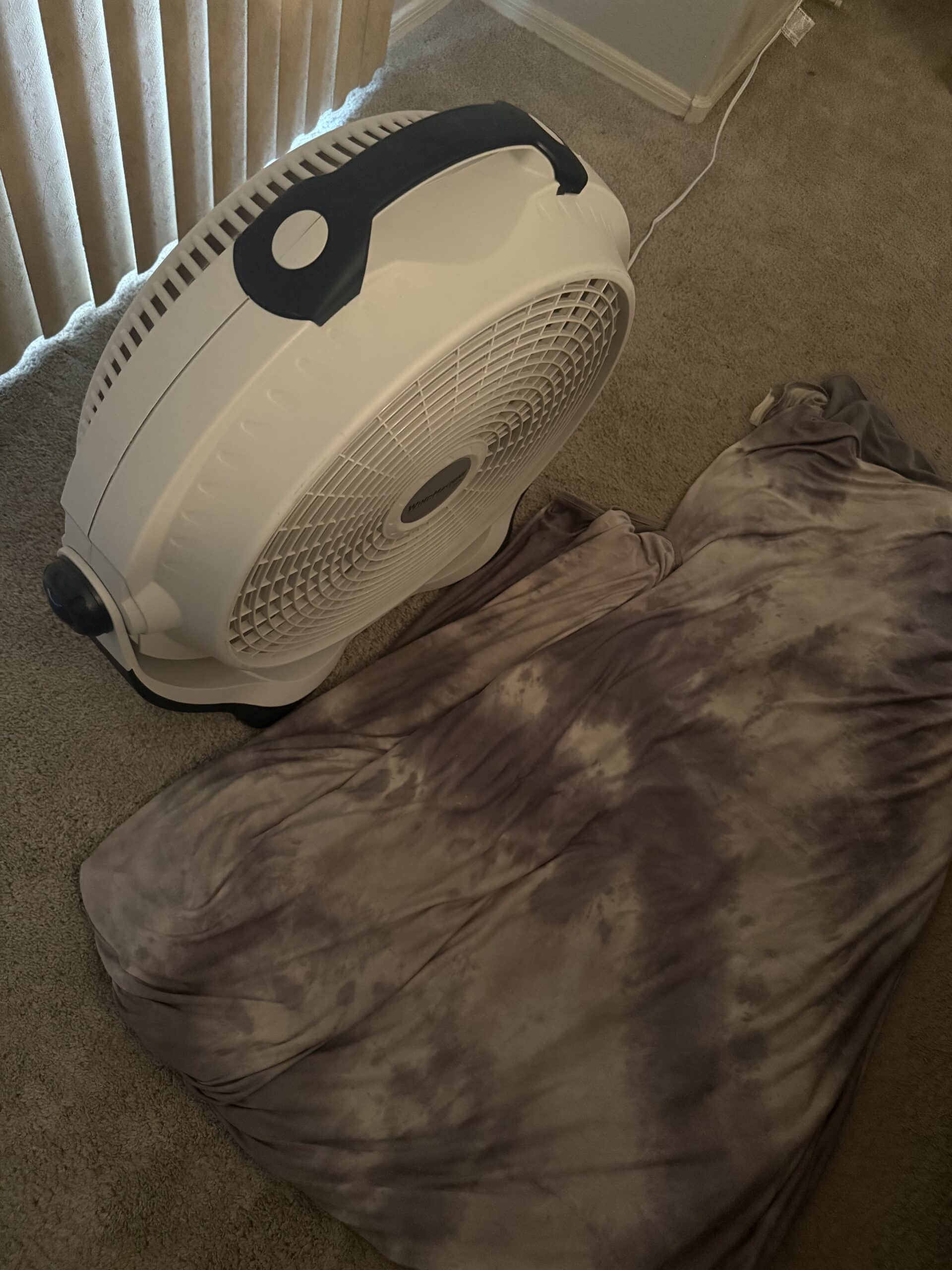
A fan moves air across your skin so sweat evaporates faster. A cooling blanket conducts heat away from your skin into the air around you. Both make you feel cooler without lowering the room temperature, and they fail in different conditions.
Quick Verdict
A fan does more in a hot room, because airflow works when conduction has nowhere to send the heat. A cooling blanket does more in a cool or mild room, and it does it silently. If your bedroom gets genuinely hot, buy the fan first.
Key Takeaways
- Neither lowers room temperature
- A fan works in heat, a blanket needs a cool room
- Fans add noise, which helps some sleepers and disturbs others
- Blankets do nothing for a partner in the same bed
- Direct airflow dries eyes and sinuses overnight
- They work well together and address different failures
How We Compared
We looked at the mechanism each uses, since they cool through different physics and that determines where each stops working.
Room conditions were treated as the main variable, because both are far more sensitive to the starting temperature than to product quality.
Noise counted as both benefit and cost, since consistent sound helps some sleepers and prevents sleep for others.
Shared beds mattered, as one option affects both people and the other does not.
Cooling Blanket and Fan at a Glance
| Criterion | Cooling blanket | Fan |
|---|---|---|
| Mechanism | Conducts heat from skin | Speeds evaporation |
| Works in a hot room | Poorly | Yes |
| Works in a cool room | Yes | Can be too much |
| Noise | Silent | Constant |
| Affects a partner | Only if shared | Yes, whole bed |
| Running cost | None | Low but continuous |
| Dries sinuses | No | If aimed at you |
Cooling Blankets, Pros and Cons
- Silent, which suits light sleepers
- No running cost and no outlet needed
- Provides weight over you, which many people want
- Does not dry eyes or sinuses
- Stops working once the room is genuinely hot
- Often cools on one side only
- Equalizes with body temperature after the first contact
Suits cooled or mild rooms, light sleepers, and anyone who wants covers without the heat. Skip as your main answer to a hot bedroom.
Fans, Pros and Cons
- Works in genuinely hot conditions where a blanket does not
- Provides consistent sound some people sleep better with
- Aimable and adjustable through the night
- Helps a whole bed rather than one person
- Noise prevents sleep for some
- Direct airflow dries eyes and sinuses
- Needs an outlet and takes floor or table space
Suits hot rooms, humid climates, and anyone who likes background noise. Skip if sound keeps you awake or you wake congested.
Which Works Better in Heat?
The fan, decisively. Conduction needs a temperature gap between your skin and the air, and a hot room removes that gap.
Evaporation keeps working at higher temperatures because it depends on moving air rather than on the air being cool. That is why a fan still helps at eighty degrees when a cooling blanket has effectively stopped.
The limit for a fan is humidity rather than heat. In very damp air sweat cannot evaporate, and moving that air does much less.
Winner: fan, and the gap widens the hotter the room gets.
Which Works Better in a Cool Room?
The blanket. Once the air is genuinely cooler than you are, conduction has plenty to work with and the blanket performs as intended.
A fan in a cool room can be too much, producing a draft you end up turning off or pointing away.
This is the case people underestimate. Cooling the room first and then using a cooling blanket works better than either alone.
Winner: blanket, which is also why cooling the room is the step that makes it worth owning.
Which Is Better for Sleep Quality?
Depends entirely on how you feel about noise. Consistent fan sound masks street and household noise, and for people who use it as a sleep cue that is a real benefit.
For others it is the thing keeping them awake, and a silent blanket is the obvious answer.
The other consideration is waking congested. Air blowing at your face all night dries sinuses and eyes, which plenty of people experience without connecting the two.
Winner: a tie, decided by whether noise helps you, and masking generally sits in white noise machines.
Which Suits a Shared Bed?
The blanket, if only one of you runs hot. A cooling blanket on one side affects one person, where a fan changes conditions for both.
That matters because temperature preference is one of the more common bedding disagreements, and a fan turns it into a negotiation.
Separate blankets is the version that works, which is easier with cooling blankets than with a shared duvet.
Winner: blanket, and couples options sit in cooling blankets for couples.
How I Use Both
I run a floor fan and a ceiling fan year-round and use a cooling blanket, which I have had about eighteen months.
If I had to give one up, the fan would go before the blanket. That surprised me a little, since the fan does more work on temperature and I like the sound it makes.
The reason is that the blanket is what I notice when the room is already cool, which in an air-conditioned bedroom is most of the night. The fan matters most in the stretch before the room comes down.
Mine cools on one side only, so I do not flip it looking for a fresh cool surface the way people do with a pillow. That is worth checking before buying.
My floor fan points to the side rather than at me, which avoids the dry sinuses problem while still moving air through the room.
Which Fits Your Situation
| If this is you | Better choice |
|---|---|
| Bedroom gets genuinely hot | Fan |
| Air conditioned or mild room | Cooling blanket |
| Light sleeper, noise wakes you | Cooling blanket |
| Sleep better with background sound | Fan |
| Partner prefers a warmer room | Cooling blanket |
| Wake up congested | Cooling blanket |
| Humid climate | Fan, plus a dehumidifier |
Using Them Together
This works better than either alone and the reason is mechanical rather than additive.
A cooling blanket moves heat off your skin into the air immediately around you. Without airflow, that heat sits there and the temperature gap the blanket depends on shrinks.
A fan clears that layer continuously, so the blanket keeps working rather than equalizing and stopping.
Aiming the fan across the bed rather than at your face gets the airflow without the drying, and full setups sit in bedroom cooling setups for hot climates.
The Verdict
The fan wins for hot rooms, shared beds where both people run warm, and anyone who sleeps better with sound. The blanket wins for cool rooms, light sleepers, mismatched partners, and anyone who wakes up dried out.
If you are buying one and your bedroom gets hot, buy the fan. It works in the conditions where the blanket does not, and it costs less.
If your room is already reasonable and you are looking for the last improvement, the blanket is the better addition, and running both is what most people who own both end up doing.
Recommended Reading
- cooling blankets compared
- quiet fans for sleeping
- do cooling blankets work
- bedside fans
- cooling bedding layers
- waking up hot
- bedroom air conditioners
- sharing a cooling blanket
Part of our guide to cooling a bedroom for better sleep.
Common Misconceptions
That either one cools the room
Neither changes the air temperature. Both change how you feel, which is why a fan running in an empty room accomplishes nothing.
That a cooling blanket beats a fan in summer
The opposite, usually. Heat is exactly the condition where conduction stops working and airflow keeps going.
That fans are always noisier
Many modern fans run quietly on low, and the noise is often the reason people buy them rather than a drawback.
That you have to choose
They address different failures and work better together, since airflow clears the heat the blanket moves off you.
Cooling Blanket vs Fan FAQ
Which cools better?
The fan in a hot room, the blanket in a cool one. Neither lowers temperature, and the room decides which mechanism has anything to work with.
Can I use both?
Yes, and it works better than either alone. Airflow carries away the heat the blanket moves off your skin, so the blanket keeps working rather than equalizing.
Which is better for a hot bedroom?
The fan, clearly. A cooling blanket needs a temperature gap between your skin and the air, and a hot room does not provide one.
Does a cooling blanket help if I share a bed?
More than a fan does, since it affects one person rather than the whole room. Separate blankets suit couples with different temperature preferences.
Why do I wake up congested with a fan?
Direct airflow dries eyes and sinuses over a full night. Aiming it across the bed rather than at your face usually solves it.
Which costs less to run?
The blanket, since it uses no power at all. A fan costs little but runs continuously, and both are far cheaper than air conditioning.
If I buy one, which should it be?
The fan, if your room gets hot. It works in the harder conditions, costs less, and you can add a blanket later once the room is manageable.
