
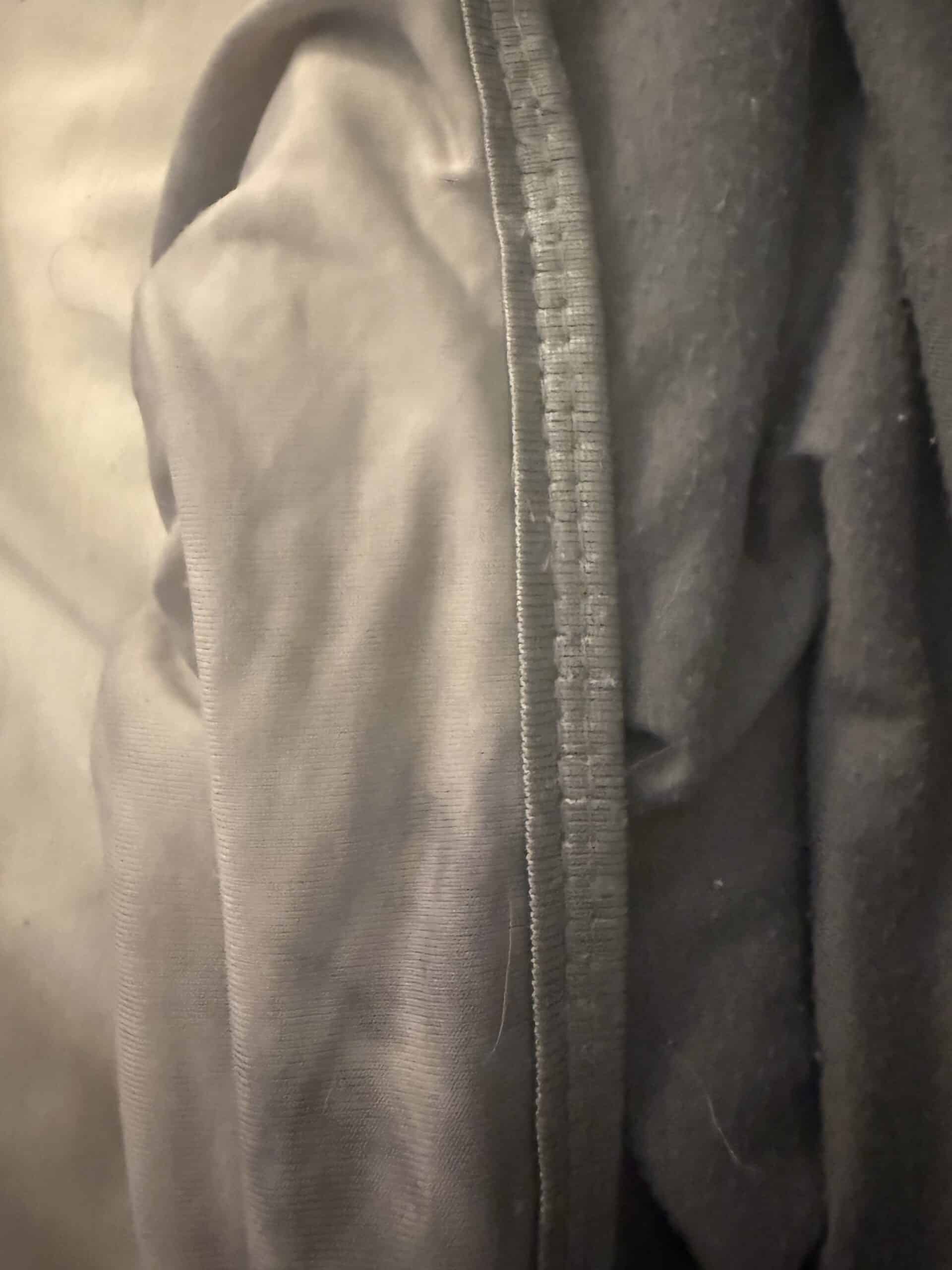
Plenty of cooling blankets are cooling on one side only, with the other side being ordinary fabric. If you have been sleeping under the wrong face, the blanket has not been doing what you bought it for.
Mine is one of those. The two sides are easy to tell apart by look and by touch, and I put the cooling side against my skin. Our roundup of cooling blankets covers the category. Our note on layering over a cooling blanket in cold weather covers that in more detail.
Quick Answer
Touch both sides with the back of your hand. The cooling side pulls heat away and feels cool immediately, while the other side feels neutral like ordinary fabric.
Ways to Tell Them Apart
| Method | What to look for | Reliability |
|---|---|---|
| Touch test | One side feels cool on contact | Highest |
| Appearance | Different weave, sheen, or texture | High on dual-sided blankets |
| Care label | Sometimes names the fabrics | Varies |
| Product listing | States whether one or both sides cool | Good if you still have it |
| Warmth after a while | Wrong side traps rather than moves heat | Slow but definitive |
The Touch Test
Use the back of your hand rather than your palm, since palms are less sensitive to small temperature differences.
Rest it flat on one side for a few seconds, then the other. The cooling side conducts heat away from your skin faster, which registers as a cool feeling almost immediately.
The other side will feel neutral, which is what ordinary fabric does. It is not warm; it simply does not pull heat.
Both sides should be at room temperature before you test, so a blanket that has been slept under needs half an hour to settle first. Our note on what makes a blanket cooling covers the mechanism. Our note on cooling blanket sliding covers that in more detail.
Why the Touch Test Works
The cool feeling is not the fabric being cold. Both sides of a blanket sitting on a bed are at the same room temperature.
What differs is thermal conductivity, meaning how quickly a material moves heat away from something warmer touching it.
Cooling fabrics are chosen because they conduct well, so heat flows out of your hand into the fabric quickly and your skin registers that loss as cool.
Ordinary cotton or fleece conducts poorly, so heat stays in your hand and the fabric feels neutral, which is the comparison the touch test is measuring.
That is also why the effect fades after a few minutes in bed. Once the fabric has warmed to your temperature, the flow slows, which is normal rather than a failure. Our note on why cooling blankets stop feeling cool covers that.
What the Sides Look Like
Different sheen
Cooling fabrics are frequently smoother and reflect light differently, so one side can look slightly glossier under a lamp.
Different weave
A tighter, flatter weave on the cooling face and something looser or brushed on the other is a common construction.
Different color
Many dual-sided blankets use different colors deliberately so you can tell without thinking about it.
Different texture
Running a hand across both usually settles it, since the cooling side tends to feel slicker. Our note on whether cooling blankets actually work covers what to expect.
How Mine Compares
The two sides are different enough that telling them apart takes no effort at all, by look or by touch.
The non-cooling face feels like normal fabric, which is exactly what it is. It is not doing anything special and it is not meant to.
The cooling side goes against my skin, which is the only arrangement that makes sense given that contact is how these work.
That has been consistent for about eighteen months, and nothing about it has become ambiguous with use. Our note on whether you need a top sheet with a cooling blanket covers why contact matters.
Why One Side Only
Cooling fabrics cost more than ordinary ones, so putting the performance material only where it touches you keeps the price down.
It also lets manufacturers offer a two-season blanket, with a cooling face for summer and a plusher one for winter.
Some blankets are genuinely cooling on both sides, which is worth knowing because the touch test on those returns the same answer twice and people conclude the blanket is faulty.
Checking the listing settles which type you have, and the touch test settles it anyway if the listing is long gone. Our note on using a cooling blanket in winter covers the two-season case.
Materials Used on Each Face
Knowing what the two sides are typically made of helps identify them when the touch test is ambiguous.
Cooling faces are commonly bamboo-derived viscose, tencel, cotton with a performance finish, or a synthetic engineered for conductivity. All of them tend to be smooth and flat.
The reverse is frequently plain cotton, microfiber, or something brushed and plush, chosen for softness rather than performance.
Two-season blankets go further, pairing a cooling face with sherpa or fleece so the same blanket serves summer and winter.
Where a care label lists two fabrics, the smoother-sounding technical one is generally the cooling face and the softer-sounding one is the reverse. Our roundup of bamboo cooling blankets covers the fabrics.
If You Cannot Tell
Chill a section briefly against something cold, then compare. The cooling side returns to room temperature faster because it moves heat more readily.
Sleep under it one way for a few nights and then flip it, which is slower and produces a clear answer.
Check the care label, since it sometimes lists two fabrics and the technical-sounding one is the cooling face.
And if both sides genuinely feel the same, the blanket may simply be cooling throughout, in which case there is nothing to get wrong.
Why Getting It Right Matters
Cooling fabric works by conducting heat away from skin, which requires contact. Facing it outward means it is conducting heat from the air rather than from you.
Worse, the ordinary side is then against your skin, insulating you in the way any normal blanket would.
The result is a blanket that feels like it does not work, and people conclude cooling blankets are marketing rather than that theirs is upside down.
It is a small thing to check once and it decides whether the purchase did anything. Our note on cooling blanket vs fan covers the other common disappointment.
Keeping Track After Washing
A blanket comes out of the machine as a bundle and it is easy to put it back on the bed the wrong way round.
The touch test takes a second and settles it every time, which is why it is worth learning rather than relying on remembering which color was which.
Repeated washing can dull the visual difference over time, since the finish on the cooling side changes slightly with each cycle.
The tactile difference persists longer than the visual one, which makes touch the more durable test. Our note on washing a cooling blanket covers doing that properly.
Cooling Blanket Side FAQ
How do I tell which side of a blanket is the cooling side?
Touch both with the back of your hand. The cooling side pulls heat away and feels cool immediately; the other feels neutral like ordinary fabric.
Do all cooling blankets have a cool side and a normal side?
No. Some are cooling throughout. Mine has one cooling face and one that feels like ordinary fabric, which is a common construction.
Which side goes against my skin?
The cooling one. These work by conducting heat away from you through contact, so facing it outward means it is cooling the air instead.
Can I tell by looking?
Usually on a dual-sided blanket. Different sheen, weave, texture, or color are all common, and mine is easy to tell apart by sight.
What if both sides feel the same?
The blanket may be cooling throughout, in which case there is nothing to get wrong. Testing at room temperature rather than after use gives a fairer comparison.
Does the non-cooling side do anything?
On mine it feels like normal fabric and is not meant to do anything special. On two-season blankets it is deliberately plusher for winter use.
Why do manufacturers make only one side cooling?
Cooling fabric costs more, so putting it only where it touches you keeps the price down. It also enables a two-season design.
Does washing change which side is which?
No, and it can dull the visual difference over time. The tactile difference lasts longer, which makes the touch test the more reliable one.
For the wider picture, see our guide to best cooling sheets for hot sleepers.
