
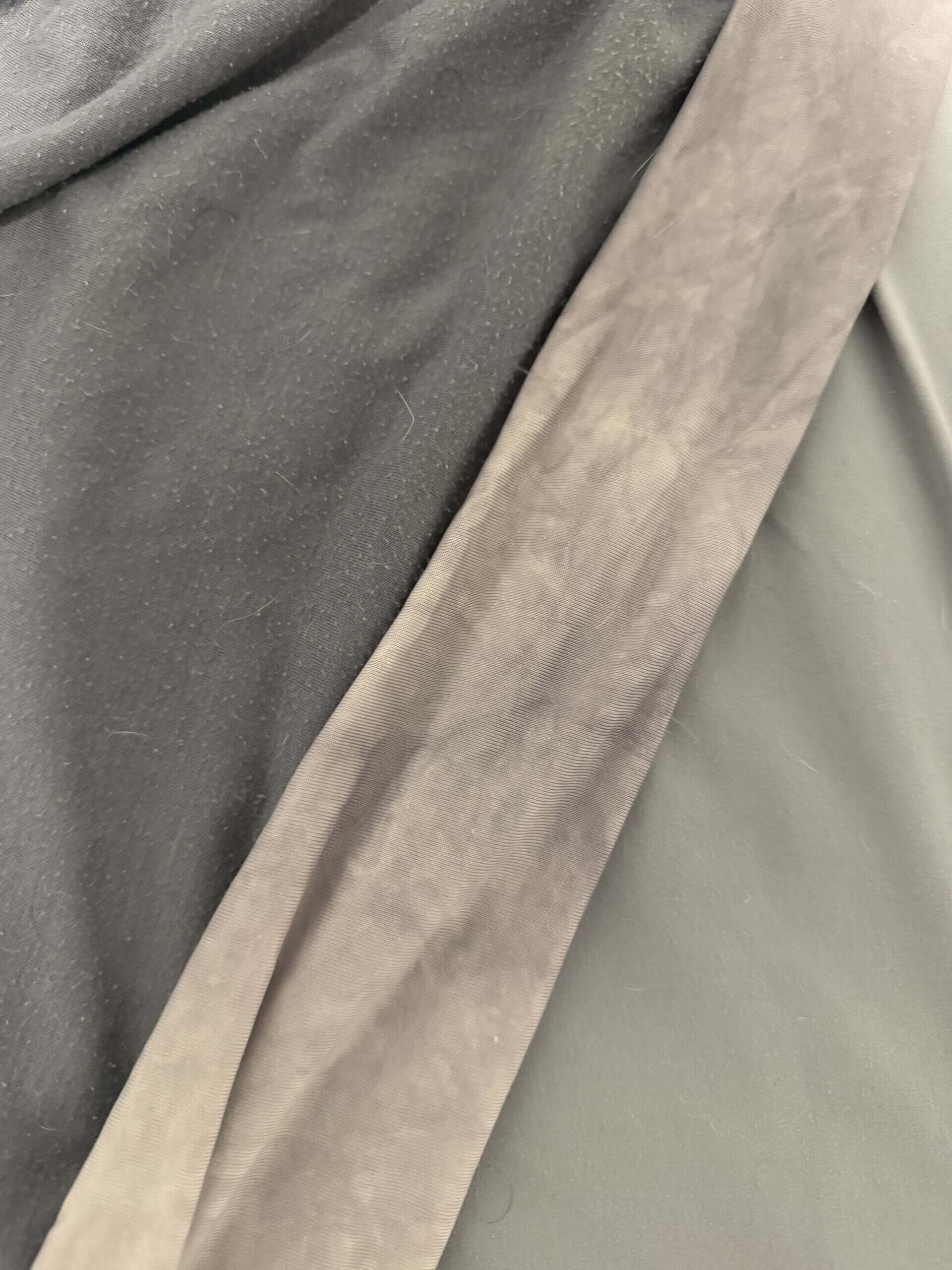
The property that makes a cooling blanket work is the same one that makes it slide. Smooth fabric conducts heat away from skin efficiently, and smooth fabric has very little grip on anything it rests against.
Mine slips occasionally, and the honest attribution is that I move around a lot rather than that the blanket is at fault. It stays put whenever I have something over it. Our roundup of cooling blankets covers the category.
Quick Answer
Cooling fabrics are smooth and light, which is what makes them cool and what makes them slide. Adding weight on top, sizing up, or using clips all address it without changing the blanket.
What Makes One Slide
| Cause | Why | Fixable |
|---|---|---|
| Smooth fabric | Low friction is inherent to cooling material | Not directly |
| Light weight | Breathable fabrics weigh little | Add weight on top |
| No top sheet | Nothing between it and slippery sheets | Yes, at a cost |
| Restless sleeping | Movement drags it toward one side | Partly |
| Undersized for the bed | No overhang to hold it | Size up |
| Slippery sheets underneath | Two smooth surfaces together | Yes |
Why It Is the Same Property
Heat moves out of your skin faster into a fabric with good contact and high conductivity, which favors smooth flat weaves over textured ones.
Texture is what creates friction. A brushed or fleecy blanket grips sheets because thousands of tiny fibers catch, and those same fibers trap air and insulate.
So a blanket that grips well is a blanket that keeps you warm, and a blanket that cools well is one with nothing to catch on.
That is a trade rather than a manufacturing flaw, which is worth knowing before assuming a particular blanket is badly made. Our note on what makes a blanket cooling covers the fabrics.
Weight Is the Other Half
Breathable means light
Cooling blankets are deliberately thin so air moves through them, and thin fabric has little weight holding it in place.
Heavier blankets stay put
A comforter stays where you put it largely because it is heavy enough to resist being dragged.
Weighted versions exist
Cooling weighted blankets solve the sliding problem directly, at the cost of warmth from the weight itself.
Any layer on top helps
Something over the cooling blanket adds the weight it lacks without changing what it does against your skin. Our roundup of cooling weighted blankets covers the heavier option.
What Happens With Mine
It slips occasionally, and those occasions are few and far between rather than a nightly problem.
I move around a lot in my sleep, which I would put ahead of the blanket as the explanation. A blanket that stays put for a still sleeper will not necessarily stay put for me.
What settles it completely is having anything over it. With a layer on top it does not go anywhere, which points at weight being the missing ingredient rather than grip.
That means the fix and the winter arrangement are the same thing, which is convenient. Our note on what to put over a cooling blanket when it gets cold covers layering.
Where It Goes When It Slides
The direction a blanket travels tells you something about why it is moving.
Off one side is the most common, and it usually means movement toward that side is dragging it rather than anything about the bed.
Off the foot of the bed points at the blanket being short, since a blanket with enough length to tuck or hang at the foot rarely escapes that way.
Bunching in the middle rather than leaving the bed is a size issue in the other direction, where there is enough fabric but nothing anchoring the edges.
On a shared bed, consistently going to one person is a width problem rather than a grip one, and the fix is a larger blanket rather than anything to do with friction. Our note on sharing a cooling blanket covers that case.
Two Smooth Surfaces Make It Worse
A cooling blanket on satin or sateen sheets has almost nothing to grip, since both surfaces are chosen for smoothness.
Percale and linen have more texture and hold a blanket better, at the cost of feeling less silky.
A top sheet in between introduces a third surface, and cotton grips better than either, though it costs you the direct skin contact the cooling depends on.
That is the trade at the center of this: the arrangement that cools best is also the one with the least holding it down. Our note on whether you need a top sheet covers that decision.
Size Matters More Than People Expect
A blanket sized exactly to the mattress has no overhang, so any movement pulls an edge up onto the bed and the rest follows.
Sizing up one step gives fabric hanging over both sides, and that hanging weight acts as an anchor.
It also means two people can each pull without stripping the other, which is a separate benefit on a shared bed.
Manufacturers size to the mattress because it looks right in photographs, not because it works best in use. Our note on what size cooling blanket to get covers dimensions.
Mattress Height Plays a Part
How far a blanket has to hang before it reaches anything is a factor people rarely consider.
Deep mattresses, particularly with a topper on them, sit high enough that a standard blanket barely clears the sides.
That removes the overhang entirely, so there is no hanging weight and any movement lifts an edge onto the bed surface.
Adding a topper to an existing setup is a common trigger for a blanket that used to stay put suddenly sliding, and the blanket has not changed at all.
Anyone who has recently added a layer under the sheets and started noticing this has probably found the cause. Our note on how heavy a mattress topper is covers that layer.
Fixes That Do Not Change the Blanket
Add a layer on top
The simplest and it doubles as the cold-weather answer, which is what works for me.
Blanket clips or straps
Grips that attach a blanket to a fitted sheet at the corners, cheap and effective on a slippery setup.
Change the sheets
Moving from sateen to percale adds friction underneath without touching the blanket.
Tuck the foot end
Tucking the bottom edge under the mattress anchors it, though restless sleepers frequently pull it loose anyway.
When It Is Actually the Blanket
A blanket that has never stayed put on any bed, with any sheets, and with weight on top is unusually slippery for its category.
Some finishes are considerably slicker than others, and the very glossy ones are the worst offenders.
Undersizing is the other genuine product issue, and a queen blanket sold for a queen bed frequently has no usable overhang.
Where several fixes have failed, that is a reasonable point to conclude the product is the problem rather than the setup around it. Our roundup of cooling blankets under 50 covers alternatives.
Cooling Blanket Slipping FAQ
Why does my cooling blanket slip off the bed?
Smooth fabric conducts heat well and grips poorly, and cooling blankets are also light. Both properties come from the same design goal.
Is it a fault?
Usually not. Texture creates friction and also insulates, so a blanket that grips well is a blanket that keeps you warmer.
What is the easiest fix?
Putting something over it. Mine stays put whenever there is a layer on top, which supplies the weight the blanket lacks.
Does moving in your sleep matter?
Considerably. I move around a lot and would put that ahead of the blanket as the cause. A still sleeper may never notice the issue at all.
Do my sheets make it worse?
If they are satin or sateen, yes. Two smooth surfaces together have almost nothing to grip. Percale and linen hold a blanket better.
Should I size up?
It helps. A blanket sized exactly to the mattress has no overhang, and hanging fabric acts as an anchor against movement.
Do blanket clips work?
Yes, and they are cheap. They attach the blanket to the fitted sheet at the corners, which addresses grip directly rather than adding weight.
Would a weighted cooling blanket solve it?
It would, since weight is what these lack. The trade is that the weight itself adds some warmth, which may work against why you bought it.
For the wider picture, see our guide to best cooling sheets for hot sleepers.
