
A fitted sheet stays on when the elastic runs the full perimeter and the pocket matches your real mattress depth, and most sheets that slip fail on one of those two things rather than on fabric quality. The best fitted sheets that don’t slip off combine all-around elastic with a pocket sized for your mattress plus whatever sits on top of it.
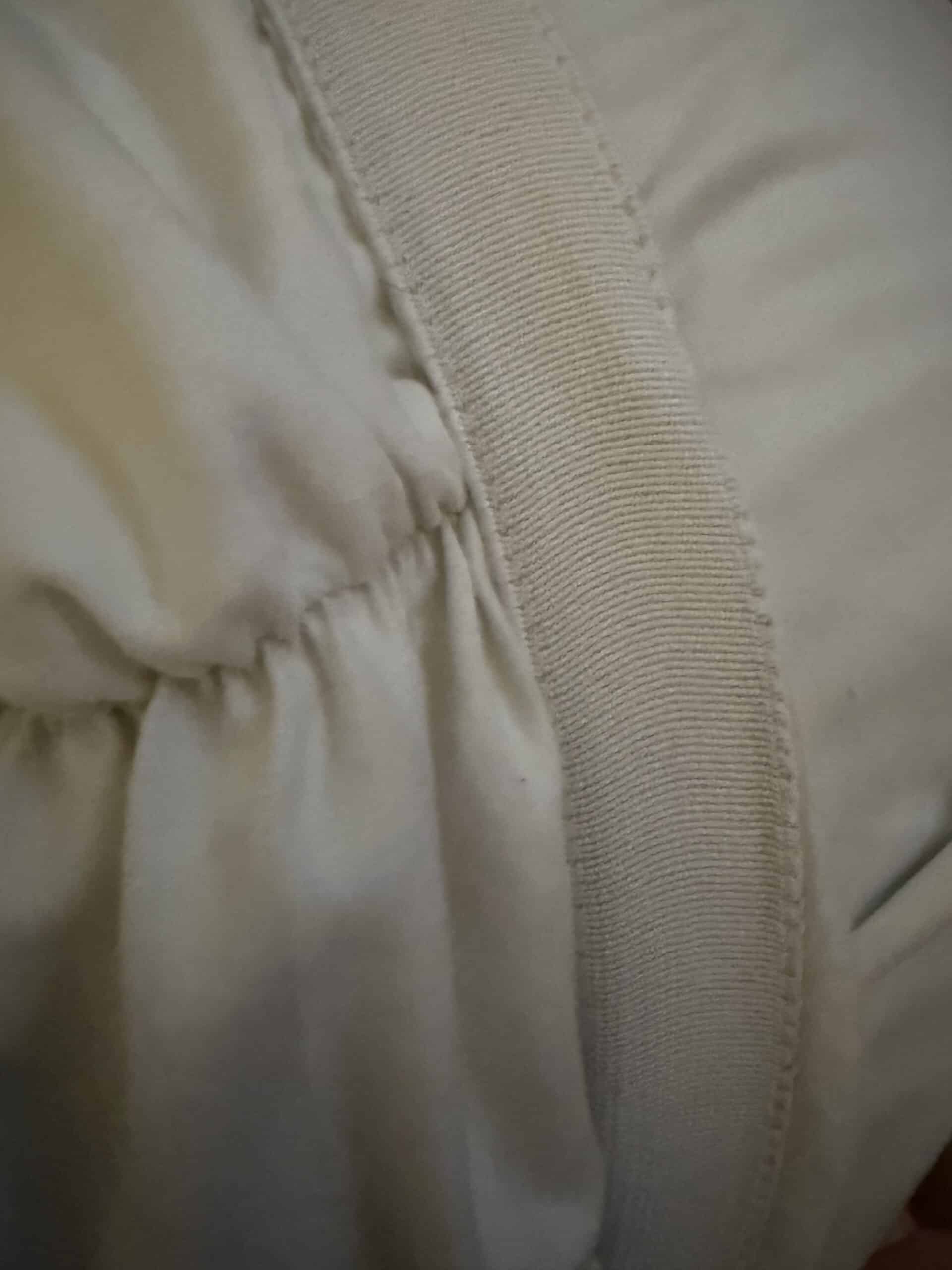
My own fitted sheet has elastic running all the way around rather than only at the corners, and it clamps down properly over a mattress with a cooling topper underneath it. I have had plenty of cheap sheets in the past that would not stay put, and thin cotton with weak elastic was the pattern every time.
Quick Verdict
Buy all-around elastic over corner-band elastic, and measure your mattress with any topper before choosing a pocket depth. Deep-pocket construction plus a heavier fabric solves most slipping without straps. Straps are a fix for sheets you already own rather than a reason to buy thinner ones.
Key Takeaways
- All-around elastic holds far better than corner-only bands
- Pocket depth must include your topper, not just the mattress
- Thin fabric slips regardless of how good the elastic is
- Deep-pocket sheets on a shallow mattress bunch instead of gripping
- Straps and grippers rescue existing sheets rather than replace good ones
- Elastic wears out with heat, so drying temperature matters
How We Picked
Elastic construction came first, since the difference between a full perimeter band and four corner bands decides more than anything else about whether a sheet holds.
Pocket depth range mattered next, because a sheet that fits a bare mattress and not the same mattress with a topper is the most common mismatch people run into.
Fabric weight was weighted heavily. Thin material stretches and rides up regardless of the elastic, which is why cheap sheets fail even when the elastic looks adequate.
Durability of the elastic itself was the last criterion, since a sheet that grips for six months and then relaxes has not solved anything.
1. All-Around Elastic Cotton Percale Fitted Sheet
Why It Stands Out
Percale is a tight plain weave with real body to it, and paired with a full perimeter elastic band it resists the ride-up that loosens corners overnight. The weave also breathes well, which matters if a fitted sheet sits over a cooling topper.
Worth Knowing
Percale feels crisp rather than silky and softens over the first several washes. It creases more visibly than sateen, which bothers some people and has no effect on how it grips.
Suits anyone whose sheets work loose at the corners and who wants breathability alongside the fit. Skip it if you prefer a smooth slippery surface, since percale is deliberately textured.
Percale against sateen sheets covers the weave difference in more detail.
Check Price on Amazon2. Deep Pocket Fitted Sheet for Thick Mattresses
Why It Stands Out
Deep-pocket construction handles mattresses in the fourteen to eighteen inch range, which is where standard sheets stop reaching. That extra fabric is what lets the elastic sit under the mattress rather than clinging to its edge.
Worth Knowing
Deep pockets on a shallow mattress are worse than standard ones, since the excess fabric bunches under the corners and the elastic never comes under tension.
Suits thick mattresses, pillow tops, and anyone running a topper on top of an already tall bed. Skip it if your total depth is under about twelve inches.
Sizing options sit in deep pocket sheets for thick mattresses.
Check Price on Amazon3. Heavyweight Cotton Sateen Fitted Sheet
Why It Stands Out
Weight does a lot of the work that elastic gets credited for. A heavier sateen has enough mass to stay where it is placed, and the smooth surface still suits people who dislike percale’s texture.
Worth Knowing
Sateen retains slightly more heat than percale because of the tighter surface float, which is a real consideration for hot sleepers rather than a marketing distinction.
Suits people who want a smooth finish without the slipping that thin sateen produces. Skip it if you sleep hot enough that breathability outranks feel.
Sateen sheets covers the finish in full.
Check Price on Amazon4. Jersey Knit Fitted Sheet With Full Elastic
Why It Stands Out
Jersey stretches in every direction, so it conforms to a mattress rather than being tensioned across it. That makes it forgiving of imperfect depth matching, which is where a lot of slipping originates.
Worth Knowing
The same stretch means jersey can relax over time and needs a good elastic band to stay taut. Lower-quality jersey loses its recovery within a year.
Suits anyone unsure of their exact mattress depth or with an unusual bed. Skip it if you want a crisp hotel-style surface, since jersey feels like a t-shirt.
Alternatives sit in jersey sheets.
Check Price on Amazon5. Fitted Sheet With Corner Straps or Anchor Bands
Why It Stands Out
Some fitted sheets include elasticated straps that pass diagonally under the mattress, which converts a sheet that grips the edge into one anchored across the underside. That removes corner lift almost entirely.
Worth Knowing
The straps add a step when changing the bed, and on a heavy mattress reaching under the corners is genuinely awkward if the bed sits against a wall.
Suits restless sleepers and adjustable beds where movement pulls at the corners. Skip it if you change bedding frequently and value speed.
Adjustable bed fit is covered in sheets for adjustable beds.
Check Price on Amazon6. Sheet Suspenders and Grippers
Why It Stands Out
Separate suspenders clip to the underside of a sheet you already own and pull the corners inward. They are the cheapest fix available and they work on sheets that are otherwise fine.
Worth Knowing
They treat a symptom rather than the cause. A sheet with a badly matched pocket depth will keep pulling against them, and clips can tear thin fabric over time.
Suits anyone with sheets they like that will not stay put. Skip it if the underlying sheet is thin and worn, since replacement solves more.
Full bedding context sits in how to choose sheets.
Check Price on AmazonFitted Sheets That Don’t Slip Off at a Glance
| Type | Grip | Best depth | Trade-off |
|---|---|---|---|
| All-around elastic percale | Very good | 10 to 15 in | Crisp, creases |
| Deep pocket | Very good if matched | 14 to 18 in | Bunches on shallow beds |
| Heavyweight sateen | Good | 10 to 16 in | Warmer |
| Jersey knit | Good, forgiving | Variable | Relaxes over time |
| Corner straps | Excellent | Any | Slower to change |
| Suspenders | Good as a retrofit | Any | Treats the symptom |
What to Look For
Elastic all the way around
This is the single biggest factor. A full perimeter band tensions the whole underside, where four corner bands leave the sides free to ride up as you move.
Measured pocket depth
Measure your mattress and add anything sitting on top of it. A topper can add three or four inches, and that pushes a standard sheet out of range entirely.
Fabric with some weight
Thin material stretches under tension and rides up regardless of the elastic. Weight is why cheap sheets slip even when the elastic looks fine.
Elastic quality rather than width
A wide band of poor elastic relaxes within months. Braided or woven elastic recovers better than the flat knit type used on budget sheets.
Why Cheap Sheets Slip and Expensive Ones Often Do Not
The pattern people notice is real, and the reasons are specific rather than a general matter of quality.
Elastic type is the first. Budget sheets typically use flat knit elastic, which stretches easily and loses its recovery within months of washing. Braided and woven elastic costs more per yard and holds tension for years.
Elastic coverage is the second, and it is mostly a cost decision. Running a band around the entire perimeter uses several times the elastic of four corner pieces, so it is the first thing cut at a low price point.
Fabric weight is the third. Thin material has less mass resisting movement and more stretch under tension, so it rides up the sides of a mattress as you move even when the elastic underneath is still doing its job.
Seam construction matters more than it appears to. The corner seams take the most stress on any fitted sheet, and a single-stitched corner on thin fabric eventually pulls open, which changes the geometry enough that the sheet no longer sits square.
Sizing tolerance is the last one. Cheaper manufacturing runs have wider tolerances, so two sheets from the same pack can fit differently, which is why one slips and its twin does not.
None of that means paying more guarantees a sheet that holds. It means the specific things that cost money to include are the same things that keep a sheet on the bed.
Elastic Against Straps
Elastic
Built in, invisible, and nothing extra to handle when changing the bed. It relies entirely on the pocket depth being right, and it cannot be adjusted once the sheet is made.
Straps
Adjustable, effective on almost any sheet, and they solve corner lift outright. They add a step at every change and can damage thin fabric where the clips grip.
What Trips People Up
Buying the deepest pocket available
More depth is not safer. Excess fabric bunches under the corners and the elastic never comes under proper tension, so a deep-pocket sheet on a shallow bed slips more than a correctly sized one.
Forgetting the topper
People measure the mattress and buy accordingly, then add a topper and wonder why the corners lift. The sheet has to clear both.
Hot drying
Heat degrades elastic faster than anything else. A sheet that gripped when new and does not now has usually been through a lot of high-heat drying cycles.
Blaming the fabric
Satin and silk get blamed for slipping when the actual cause is construction. A satin sheet with proper all-around elastic holds fine, which is covered in whether satin sheets sleep cool.
Recommended Reading
- how to choose sheets
- deep pocket sheets
- percale sheets
- jersey sheets
- cooling sheets
- replacing sheets
- washing frequency
- adjustable bed sheets
Frequently Asked Questions
What makes a fitted sheet stay on?
Elastic running the full perimeter rather than only at the corners, combined with a pocket depth that matches your mattress plus anything on top of it. Fabric weight matters too, since thin material rides up regardless of elastic.
Why do my fitted sheets keep coming off?
Usually pocket depth or corner-only elastic. A sheet sized for a bare mattress will not hold once a topper is added, and four corner bands leave the sides free to ride up as you move.
Should I buy the deepest pocket available?
No. Excess fabric bunches under the corners and the elastic never comes under tension, so an oversized pocket on a shallow mattress slips more than a correctly sized sheet would.
Do sheet straps actually work?
Yes, and they treat the symptom. They pull corners inward effectively on sheets you already own, and a badly matched pocket depth keeps pulling against them and can tear thin fabric.
Does fabric type affect slipping?
Less than construction does. Satin and silk get blamed, and a satin sheet with proper all-around elastic holds fine while a thin cotton one with corner bands does not.
How do I measure for the right pocket depth?
Measure the mattress from top to bottom, then add the thickness of any topper or protector. Buy a pocket that clears the total by an inch or two rather than by several.
Why did my sheet stop gripping?
Elastic degrades with heat, so high-temperature drying is the usual cause. A sheet that held when new and does not now has typically been through many hot cycles.
Are expensive sheets less likely to slip?
Not automatically, and price correlates with fabric weight and elastic quality, both of which help. Construction details matter more than the price on the label.
