
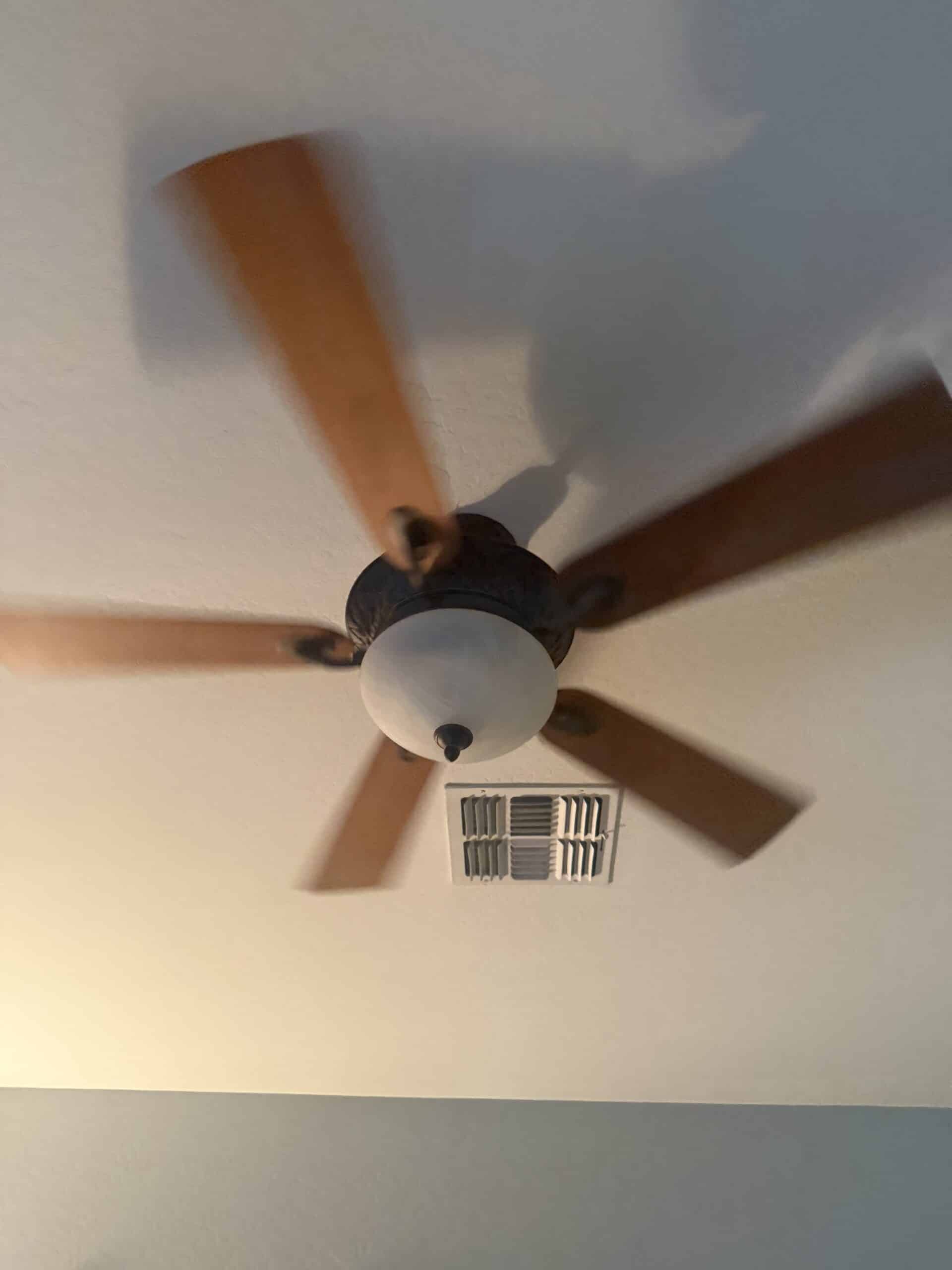
No. A ceiling fan cools people, not rooms, by moving air across skin so sweat evaporates faster. The room temperature stays where it was, and the motor adds a small amount of heat while running.
I run a ceiling fan and a floor fan year-round. The floor fan does more of the work in my bedroom, which surprised me given the ceiling fan moves far more air overall.
A Quick Note
This covers comfort rather than medical advice. Overheating with confusion, nausea, or a headache in hot weather is a medical situation rather than a ventilation problem.
Quick Answer
Fans create a wind chill effect on skin that can make a room feel several degrees cooler than the thermometer reads. That only works on people, which is why leaving a fan running in an empty room wastes electricity.
What a Fan Does and Does Not Do
| Effect | Ceiling fan |
|---|---|
| Lowers air temperature | No, slightly raises it |
| Makes you feel cooler | Yes, through evaporation |
| Removes humidity | No |
| Moves air through the house | Only within the room |
| Helps air conditioning work | Yes, by allowing a higher setting |
| Works on an empty room | No |
Every watt a fan motor draws ends up as heat somewhere in the room. The comfort gain is entirely real, and it comes from what the moving air does to your skin rather than from anything happening to the air itself.
How the Cooling Sensation Works
Your body sheds heat partly by evaporating moisture from your skin, and that process slows considerably once the thin layer of air immediately around you becomes saturated.
Moving air replaces that saturated layer with drier air, so evaporation continues at a higher rate and you lose heat faster.
The commonly cited figure is that a fan can make a room feel around four degrees Fahrenheit cooler than it is, which is why the Department of Energy suggests raising a thermostat setting when a fan is running.
Humidity is what limits it. In very humid air there is less capacity for evaporation, which is why fans feel less effective during monsoon weather, covered in bedroom humidity control products.
Why the Floor Fan Does More For Me
The ceiling fan moves more air by any measure, and the floor fan is the one I would keep if I had to choose.
Direction explains most of the difference. A ceiling fan pushes air downward in a broad column across the whole room, and a floor fan can be aimed at the bed specifically, which puts the airflow exactly where the evaporation needs to happen.
I point mine off to the side rather than directly at me, which still moves plenty of air through the space without the draft sitting constantly on one spot.
The noise matters too, more than I would have guessed. The floor fan produces a steady consistent sound that I find genuinely helps me sleep, and that is a separate benefit from any cooling it does, covered in ceiling fan against floor fan for sleeping.
Both of them run year-round in my bedroom, so I am not switching them on for summer and off again for winter the way most people do.
Using One With Air Conditioning
This is where a fan produces actual savings rather than just comfort.
Because a fan makes a given temperature feel cooler, you can set the thermostat higher and feel the same. The Department of Energy suggests around four degrees, which is a meaningful reduction in compressor runtime.
The fan costs a fraction of what air conditioning costs to run, so trading compressor hours for fan hours is a good exchange.
What does not work is running a fan instead of air conditioning in genuinely hot conditions, since a fan blowing hot air over you stops helping once air temperature approaches skin temperature, covered in running a fan and AC together.
Why the Motor Heat Is Not Worth Worrying About
The fact that a fan warms the room it sits in gets repeated a lot, and it deserves proportion rather than dismissal.
A typical ceiling fan draws somewhere between fifteen and ninety watts depending on size and speed, and essentially all of that ends up as heat in the room.
For comparison, a person at rest produces roughly a hundred watts of body heat continuously. A television draws more than most fans. A single incandescent bulb used to produce more than a fan on medium.
Spread across the air volume of a bedroom, that heat raises the temperature by a fraction of a degree over hours, and it happens gradually enough that it never registers.
The comfort gain from evaporation dwarfs it while you are in the room, which is why the trade is overwhelmingly worth making.
Where it genuinely matters is the empty room case. There, the fan is producing only the heat and none of the benefit, which is the whole argument for turning fans off when you leave rather than any concern about the heat itself.
When Fans Stop Working
Very high air temperature
Above roughly body temperature, moving air transfers heat toward you rather than away, and a fan becomes counterproductive.
Very high humidity
Evaporation is the mechanism, so saturated air removes the thing a fan is enabling.
Empty rooms
No skin, no evaporation, no cooling. A fan running in an unoccupied room is adding heat and nothing else.
Behind furniture or in corners
Air needs a path to circulate, and a fan in a room full of tall furniture moves far less than its rating suggests.
Under heavy bedding
Air cannot reach skin covered by a thick duvet, which is why lighter bedding and a fan work better together than either alone, covered in cooling bedding layers.
Getting More From One
Check which direction it turns. Most ceiling fans reverse, and counterclockwise viewed from below pushes air downward for summer, which is the setting that actually produces the wind chill effect on your skin.
Run it on a setting you can tolerate rather than the highest. A fan you turn off because it is too noisy or too strong provides no cooling at all.
Combine with a window fan or cross ventilation where outdoor air is cooler, since moving cool air into a room does what a ceiling fan cannot.
And clean the blades occasionally, since accumulated dust changes the airfoil shape and a heavily dusted fan moves noticeably less air than a clean one, covered in ceiling fans for bedrooms.
Related Reading
- ceiling against floor fan
- ceiling fans for bedrooms
- fan and AC together
- quiet fans for sleeping
- why people sleep better with a fan
- cooling setups for hot climates
Frequently Asked Questions
Do ceiling fans actually cool a room?
No. They cool people by moving air across skin so sweat evaporates faster. The room temperature stays the same, and the motor adds a small amount of heat.
How much cooler does a fan feel?
Around four degrees Fahrenheit is the commonly cited figure, which is why raising a thermostat setting while a fan runs produces the same comfort for less energy.
Should I leave a fan on in an empty room?
No. With nobody there to benefit from evaporation, the fan is adding heat from the motor and doing nothing useful.
Which way should a ceiling fan turn in summer?
Counterclockwise viewed from below, which pushes air downward. That downward flow is what creates the wind chill effect on your skin.
Why do fans feel useless in humid weather?
Evaporation is the whole mechanism, and saturated air has little capacity to absorb more moisture, so the process a fan enables is already limited.
Is a floor fan better than a ceiling fan?
For a specific spot such as a bed, often yes, since it can be aimed. A ceiling fan covers a whole room more evenly.
Does the motor heat matter?
Barely. A fan draws fifteen to ninety watts where a person at rest produces around a hundred, so the effect is a fraction of a degree over hours while you are benefiting from the airflow.
Can a fan replace air conditioning?
Not in genuinely hot conditions. Above roughly body temperature, moving air transfers heat toward you rather than away from you.
Sources
- United States Department of Energy. Fans for Cooling. https://www.energy.gov/energysaver/fans-cooling
- Sleep Foundation. Best Temperature for Sleep. https://www.sleepfoundation.org/bedroom-environment/best-temperature-for-sleep
Recommended Reading
See our note on cooling a bedroom for better sleep.
