
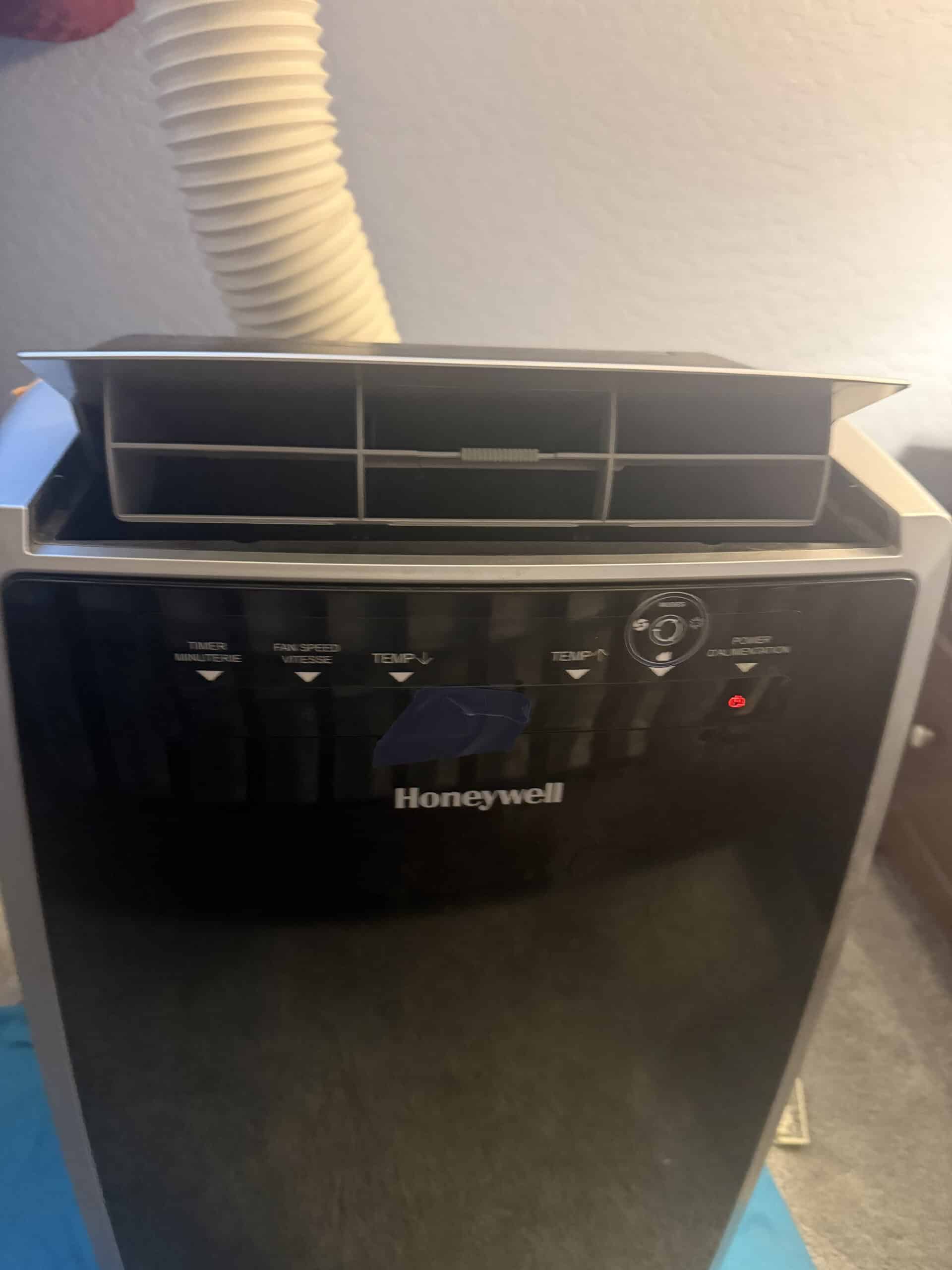
Portable air conditioners push cold air out of the front at roughly knee height, and where that stream goes is decided by where the unit sits relative to the bed. Nothing about the machine controls it.
Mine sits between the window and the bed, which is where the exhaust hose being short pushes you. That is the most common arrangement and it is also the one most likely to aim air at the bed. Our note on where to put a portable AC in a bedroom covers the wider question.
Quick Answer
Yes, if the outlet faces the bed. The exhaust hose length constrains placement more than anything else, and angling the unit or redirecting the airflow solves most of it.
Why the Hose Decides Everything
The exhaust hose has to reach a window and is usually short. That fixes the unit within a few feet of the window, and in most bedrooms the window is on the wall the bed faces or beside it.
Extending the hose is possible and comes with a real cost. Longer hoses lose heat along their length, which pushes warm air back into the room and reduces efficiency.
Manufacturers generally advise against extending beyond the supplied length for that reason, so the constraint is genuine rather than conservative.
The practical result is that you place the unit where the hose allows and then solve the airflow problem separately. Our roundup of hoses and insulation wraps covers reducing the loss.
Whether Air on You Is a Problem
For some people it is comfortable and it is how they want to sleep. For others it produces a dry throat, dry eyes, or a stiff neck by morning.
Continuous airflow across the face increases evaporation from the eyes and airways, which is the mechanism behind waking up dry.
The stiff neck version comes from cold air on one side of the neck for hours, which is a real complaint and easy to attribute to the pillow instead.
If none of that happens to you, there is no problem to solve, and plenty of people sleep directly in the airflow without difficulty.
Fixing It Without Moving the Unit
Angle it
Rotating the unit a few degrees so the outlet points along the room rather than at the bed frequently does the whole job.
Use the louvers
Most units have adjustable vanes at the outlet. Directing air upward puts it above the bed and lets it circulate down rather than blowing across you.
Aim at a wall
Air directed at a nearby wall disperses instead of traveling as a stream, which cools the room without a jet across the bed.
Put something in the path
A chair, a laundry basket, or anything solid between unit and bed breaks the stream. Inelegant and effective. Our roundup of bedroom air conditioners covers units with better vane control.
How Far the Air Actually Travels
The stream from a portable AC does not stay coherent for long. It mixes with room air as it moves, losing both speed and temperature difference with distance.
That is why a unit a few feet from the bed feels very different from one across the room, even at the same fan speed. The difference is not gradual, it drops off noticeably.
Fan speed changes the distance more than the temperature setting does, which is the practical lever most people ignore. A lower fan speed on a colder setting frequently cools the room just as well without reaching the bed.
Room size matters here too. In a small bedroom there is nowhere for the unit to be far away, which is why placement solutions work less well in the rooms that need cooling most.
Our note on what a portable AC costs to run overnight covers the settings from the other direction.
Sleep Modes and Timers
Most units have a sleep or night mode, which typically reduces fan speed and lets the temperature drift slightly upward over the night.
Lower fan speed reduces how far the air stream travels, which addresses the problem indirectly and is worth trying before rearranging furniture.
A timer that runs the unit for the first hours and then stops is another approach, though a room that reheats can wake you later.
Sleep modes vary considerably between units and some do very little. Worth testing rather than assuming yours does something useful.
Bedding Changes the Calculation
What you sleep under interacts with airflow in a way that catches people out.
A cooling blanket or a breathable duvet lets air move through to your skin, which makes a stream across the bed more noticeable rather than less. The bedding chosen to keep you cool amplifies the thing making you cold.
A heavier duvet blocks the airflow entirely below the neck, which leaves only your face and head exposed to it. For a lot of people that is the acceptable version rather than a problem.
The head and neck are where it matters regardless, since that is what stays uncovered whatever you sleep under, and it is where dry throat and stiff neck come from.
Which is worth knowing before concluding the air conditioner is the problem, because changing the duvet is considerably easier than moving a unit tethered to a window. Our roundup of cooling toppers covers the layer underneath.
Noise Is the Related Problem
Placement affects noise as much as airflow, and a unit close to the bed is loud in a way the specification does not convey.
Single-hose units in particular run the compressor and fan in the same box in the room, so all of the noise is inside with you.
Distance helps more than anything, and the same hose constraint that puts the unit near the bed also keeps the noise near the bed.
Mine has been in that position for years and I am not a light sleeper, which is the honest reason it has never been the thing I needed to solve. Our note on whether portable ACs are loud enough to disturb sleep covers it.
When Moving the Unit Is Worth It
If you are waking dry, stiff, or cold on one side, and angling and louvers have not fixed it, then the placement is the problem rather than the settings.
Options are limited by the hose, and a different window is the main one where a room has more than one.
Raising the unit onto a stable platform changes the height the air leaves at, which can put the stream above the bed rather than across it. Stability matters, since these are heavy and hold water.
The other option is accepting a longer hose and its efficiency cost in exchange for placement freedom, which is a reasonable trade in a small room.
Portable AC Airflow FAQ
Will a portable AC blow air directly on me?
Only if the outlet faces the bed, which is common because the exhaust hose is short and forces placement near the window. Angling the unit usually fixes it.
Why can I not just move it further away?
The exhaust hose has to reach a window and extending it loses heat along the way, pushing warm air back into the room. Manufacturers generally advise against going beyond the supplied length.
Is sleeping in the airflow bad?
Not inherently, and plenty of people prefer it. Continuous air across the face increases evaporation, which is why some people wake with a dry throat or eyes, and cold air on one side of the neck can leave it stiff.
What is the easiest fix?
Rotating the unit so the outlet points along the room rather than at the bed. After that, adjusting the louvers upward so air circulates down instead of blowing across you.
Does sleep mode help?
It usually lowers fan speed, which reduces how far the air travels. Worth testing, since sleep modes vary a great deal between units and some do very little.
Should I put something in the way?
It works. A chair or anything solid between the unit and the bed breaks the stream and disperses the air. Not elegant, and effective.
Is noise a bigger issue than airflow?
For many people, yes, especially with single-hose units where the compressor sits in the room. The same short hose that puts the unit near the bed keeps the noise there too.
Can I raise the unit up?
On a stable platform, which changes the height air leaves at and can put the stream above the bed. These are heavy and hold water, so stability is not optional.
For the wider picture, see our guide to how to improve sleep quality naturally.
