
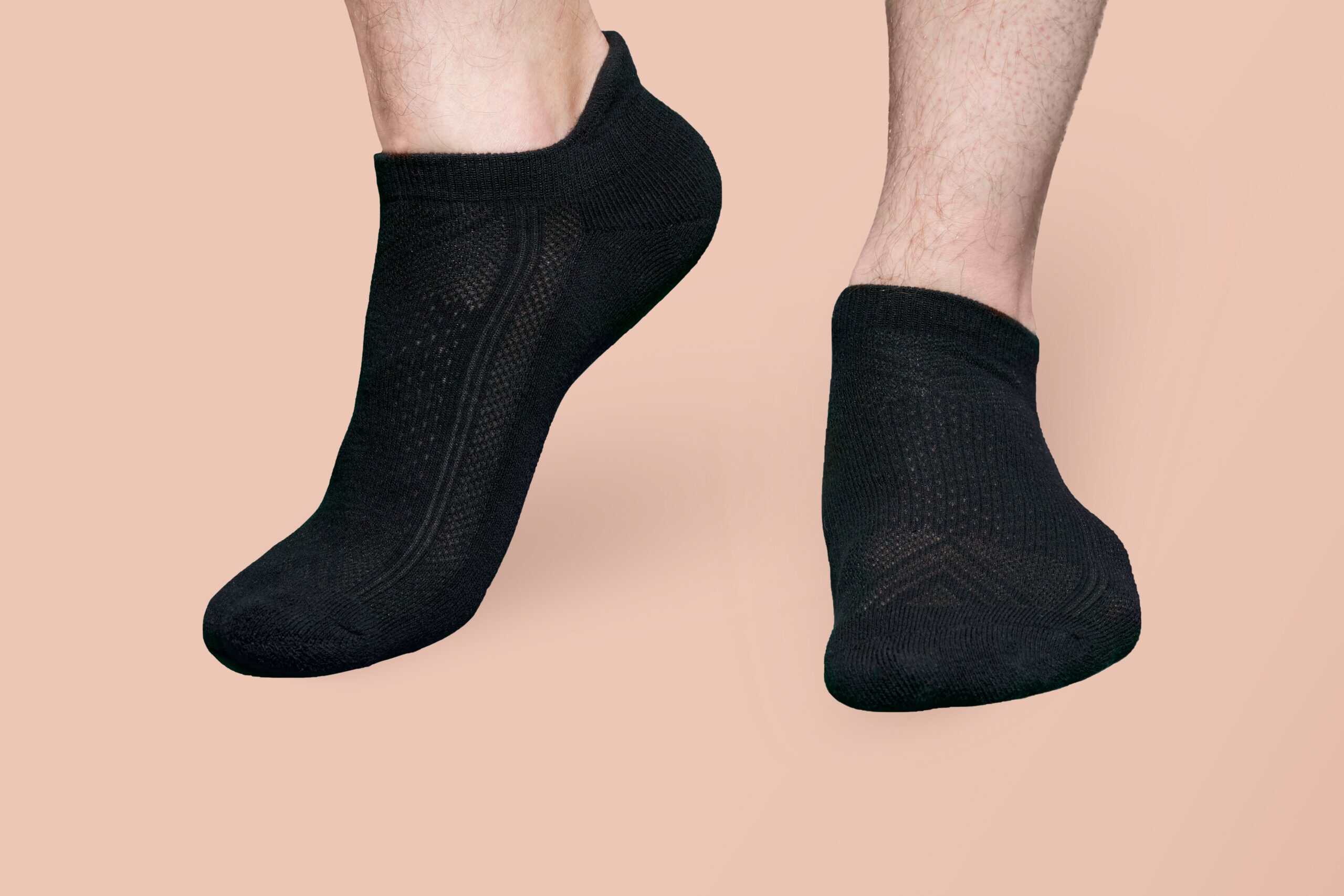
Socks on a hardwood floor are the quietest fall hazard in most homes, and the best non-slip socks for home and recovery are grip-sole hospital-style socks, because the rubber tread covers the whole underside rather than a few dots. Hospitals hand them out for exactly this reason.
The grip pattern is the product. Everything else is sock.
Coverage and placement of that tread is what separates a sock that holds on a smooth floor from one that slides on it. Our fall mats for bedside use roundup covers the floor side of the same problem.
Non-Slip Sock Types at a Glance
| Type | Grip | Warmth | Washing | Best Use |
|---|---|---|---|---|
| Grip-sole hospital style | Full tread underside | Thin | Frequent, holds up | Most people |
| Double-sided grip | Both faces | Thin | Frequent | Socks that twist |
| Compression grip | Tread plus compression | Thin | Gentle cycle | Swelling, with advice |
| Cushioned grip | Tread plus padding | Warmer | Bulkier to wash | Hard floors |
| Seamless non-binding | Tread, loose cuff | Thin | Gentle cycle | Sensitive feet |
| Grip slipper socks | Sole grip, soft upper | Warmest | Less often | Cold floors |
How We Picked the Best Non-Slip Socks for Home and Recovery
We compared sock types rather than named products, because these rotate constantly while the grip designs behave the same way.
Each section covers one type, who it suits and where it falls short. We weighted four things: how much of the sole the tread actually covers, whether the sock stays oriented on the foot, how it survives repeated hot washing, and whether the cuff binds.
We have not published grip ratings. Those are not measured for socks in any comparable way, and a figure here would be invented.
On the safety side, the National Institute on Aging lists removing tripping hazards and wearing shoes or non-slip socks indoors among practical steps for reducing fall risk at home, alongside strength, balance and a medication review. Socks are the cheapest item on that list and the least important.
1. Grip-Sole Hospital-Style Socks, Best Overall
Why It Stands Out
Thin cotton-blend socks with a rubber or silicone tread printed across the whole sole, usually in a dense pattern rather than scattered dots.
Full coverage is what makes them work. Socks with a few grip dots at the ball and heel leave the middle of the foot sliding, and on a smooth floor that is where you lose traction.
They are also cheap in multi-packs and designed for industrial laundering, so they survive repeated hot washes without the tread peeling.
Worth Knowing
They are thin and offer no warmth, which on a cold tile floor is the main complaint.
Tread does eventually wear smooth, and a worn grip sock is just a sock. Check the soles rather than assuming they still grip.
Best for most households and for anyone recovering at home. Our guide to helping seniors sleep better covers the overnight routine these fit into.
Check Price on Amazon2. Double-Sided Grip Socks, Best for Socks That Twist
Why It Stands Out
Tread printed on both the sole and the top of the sock, so the grip works whichever way round the sock has rotated.
Socks twist, especially loose ones on thin feet, and a single-sided sock that has rotated has its grip on the top of your foot doing nothing.
For anyone who cannot easily reach down to straighten a sock, that removes a daily problem rather than a theoretical one.
Worth Knowing
Tread on top looks odd and feels slightly stiff against the foot, which some people dislike.
They also cost more than single-sided socks for the same thin construction.
Best for anyone whose socks rotate or who cannot bend to adjust them. See our bed rails picks for the getting-up moment.
Check Price on Amazon3. Compression Grip Socks, Best With Clinical Advice
Why It Stands Out
Graduated compression socks with a non-slip tread added, combining two things people recovering at home are often told to wear.
Two items in one reduces what has to be managed, which matters if dressing is already difficult.
The compression also keeps the sock firmly oriented, so twisting stops being an issue.
Worth Knowing
Compression level is a clinical decision. Wearing the wrong grade, or wearing compression at all with certain circulation conditions, can cause harm, so this is one to ask about rather than choose by feel.
Firm compression is also harder to put on, which can defeat the purpose if you are the one putting them on.
Best when a clinician has recommended compression and you also want grip. Our compression socks for leg swelling roundup covers that side properly.
Check Price on Amazon4. Thick Cushioned Grip Socks, Best for Hard Floors
Why It Stands Out
Terry or fleece-lined socks with a grip tread, adding real padding underfoot on tile, concrete or hardwood.
Standing on a hard cold floor is uncomfortable, and cushioning is the reason people take grip socks off and put slippers on instead.
Warmth also matters more than it sounds for anyone who gets up at night onto a cold floor.
Worth Knowing
Bulk changes the fit of shoes and slippers, so these are indoor-only in practice.
Thicker socks also reduce how much you feel of the floor, and that feedback is part of how you keep your balance.
Best for cold hard floors and anyone who finds thin socks unpleasant. Our bedroom rugs for cold floors picks address the same problem at the floor.
Check Price on Amazon5. Seamless Non-Binding Grip Socks, Best for Sensitive Feet
Why It Stands Out
Socks knitted without a toe seam and with a loose non-elastic cuff, so nothing presses on the foot or constricts the ankle.
A toe seam is a pressure point, and for anyone with sensitive or fragile skin that detail decides whether a sock is wearable at all.
The non-binding cuff also avoids leaving a mark around the ankle, which matters if swelling comes and goes.
Worth Knowing
A loose cuff means the sock is more likely to slide down and rotate, which can put the grip in the wrong place.
These are often marketed for diabetes. If that applies to you, foot care including sock choice is worth going through with your clinician rather than deciding from a product page.
Best for sensitive or fragile feet and anyone who marks easily. Our guide to sleeping better with chronic pain covers the wider comfort picture.
Check Price on Amazon6. Grip Slipper Socks, Best for Cold Floors
Why It Stands Out
A soft upper with a proper gripped sole, somewhere between a sock and a slipper, often with a suede or rubber patch underneath.
These are warmer than any sock and grip better than most slippers, which is a useful middle ground for a cold house.
A structured sole also makes them easier to put on than a sock, since there is a shape to aim a foot into.
Worth Knowing
Loose-fitting slipper socks can slide on the foot, and a slipper that moves is its own hazard. A snug heel is what to look for.
They also wash less often and less well than socks, and a worn sole patch loses grip without looking different.
Best for cold homes and anyone who refuses thin socks. Skip loose backless styles entirely if balance is a concern. Our rollators and walkers picks cover moving around more securely.
Check Price on AmazonWhat to Look For in Non-Slip Socks
Tread across the whole sole
Scattered dots leave gaps. A dense pattern covering heel to toe is what grips a smooth floor.
A cuff that holds without binding
Too loose and the sock rotates until the grip is on top of your foot. Too tight and it marks the ankle.
Honest washing expectations
Hot washing and tumble drying peel printed tread over time. Socks built for laundering survive it; fashion grip socks often do not.
Enough pairs to rotate
These get washed constantly. A multi-pack means a gripped pair is always clean, which is the difference between using them and not.
Whether a shoe would be better
A supportive shoe with a proper sole beats any sock for stability. Socks are for when shoes are not practical.
Grip Socks or Slippers?
When grip socks are right
They wash easily, cost little, work in bed and out of it, and have no loose heel to step out of. For recovery at home and for nighttime trips to the bathroom, they are the simpler choice.
When slippers are right
A proper slipper with a closed heel and a firm sole gives more support and more warmth, which suits all-day wear in a cold house. Backless slippers are the worst of both, and anyone unsteady should avoid them. Our guide to relieving pain for better sleep covers the rest of the evening routine.
Common Mistakes to Avoid
Buying socks with grip dots only
Dotted socks are mostly a comfort product. For traction on a smooth floor, full-sole tread is what matters.
Wearing them until the tread wears off
Grip wears smooth gradually and gives no warning. Check the soles periodically and replace them rather than trusting the label.
Choosing compression without asking
Compression grade is a clinical decision and the wrong one can cause harm. Grip is a sock feature; compression is not.
Relying on socks instead of the room
Loose rugs, trailing cords and poor lighting cause more falls than socks prevent. Fix those first.
Treating them as fall prevention
Socks reduce one small part of the risk. Strength, balance, vision and a medication review do far more, and those come from a clinician.
Worth reading next: our guides to grab bars and bathroom safety rails, bed step stools, and sleep products for back surgery recovery.
Best Non-Slip Socks for Home and Recovery FAQ
What are the best non-slip socks for home and recovery?
Grip-sole hospital-style socks suit most people, because the tread covers the whole underside rather than a few dots and they survive constant washing. Double-sided versions help if socks rotate on your feet, and cushioned grip socks are the better choice on cold hard floors.
Do non-slip socks actually prevent falls?
They reduce one specific hazard, which is sliding on a smooth floor in ordinary socks. They do nothing about the larger causes of falls, including weakness, balance problems, poor lighting, loose rugs and medication side effects. Treat them as cheap insurance rather than a solution.
Are grip dots as good as full-sole tread?
No. Scattered dots leave large areas of bare fabric, and on a smooth floor your weight often lands where there is no grip. A dense tread covering heel to toe is what holds, which is why hospital socks are printed that way.
How do you wash non-slip socks?
Wash them as you would any sock, though hot washing and tumble drying wear printed tread faster. Turning them inside out helps, and socks made for institutional laundering hold up better than decorative grip socks. Replace them when the soles feel smooth.
Can you sleep in grip socks?
Many people do, and the point is that the grip is there when you get up at night, which is when the floor matters most. Choose a non-binding cuff if you will wear them for hours, and avoid compression socks overnight unless a clinician has told you to.
Grip socks or slippers for recovery?
Socks for simplicity, washing and wearing in bed. Slippers for warmth and support, provided they have a closed heel and a firm sole. Backless slippers are the one option to avoid if balance is at all a concern.
Do non-slip socks work on carpet?
They are unnecessary on carpet, which already provides traction. The hazard is hard smooth flooring, so homes with tile, laminate or hardwood are where these earn their place.
When should I see a doctor?
See a doctor if you have had a fall or near fall, feel unsteady, get dizzy standing up, or notice new weakness or numbness in your feet. A review of strength, balance, vision and medications does far more for fall risk than any product, and compression should only be worn on clinical advice.
Sources
- National Institute on Aging. Falls and Fall Prevention. National Institutes of Health. https://www.nia.nih.gov/health/falls-and-falls-prevention
- Centers for Disease Control and Prevention. Older Adult Fall Prevention. https://www.cdc.gov/falls/
- MedlinePlus. Falls and Fall Prevention. National Library of Medicine. https://medlineplus.gov/falls.html
- National Institute of Diabetes and Digestive and Kidney Diseases. Diabetes and Foot Problems. National Institutes of Health. https://www.niddk.nih.gov/health-information/diabetes/overview/preventing-problems/foot-problems
