
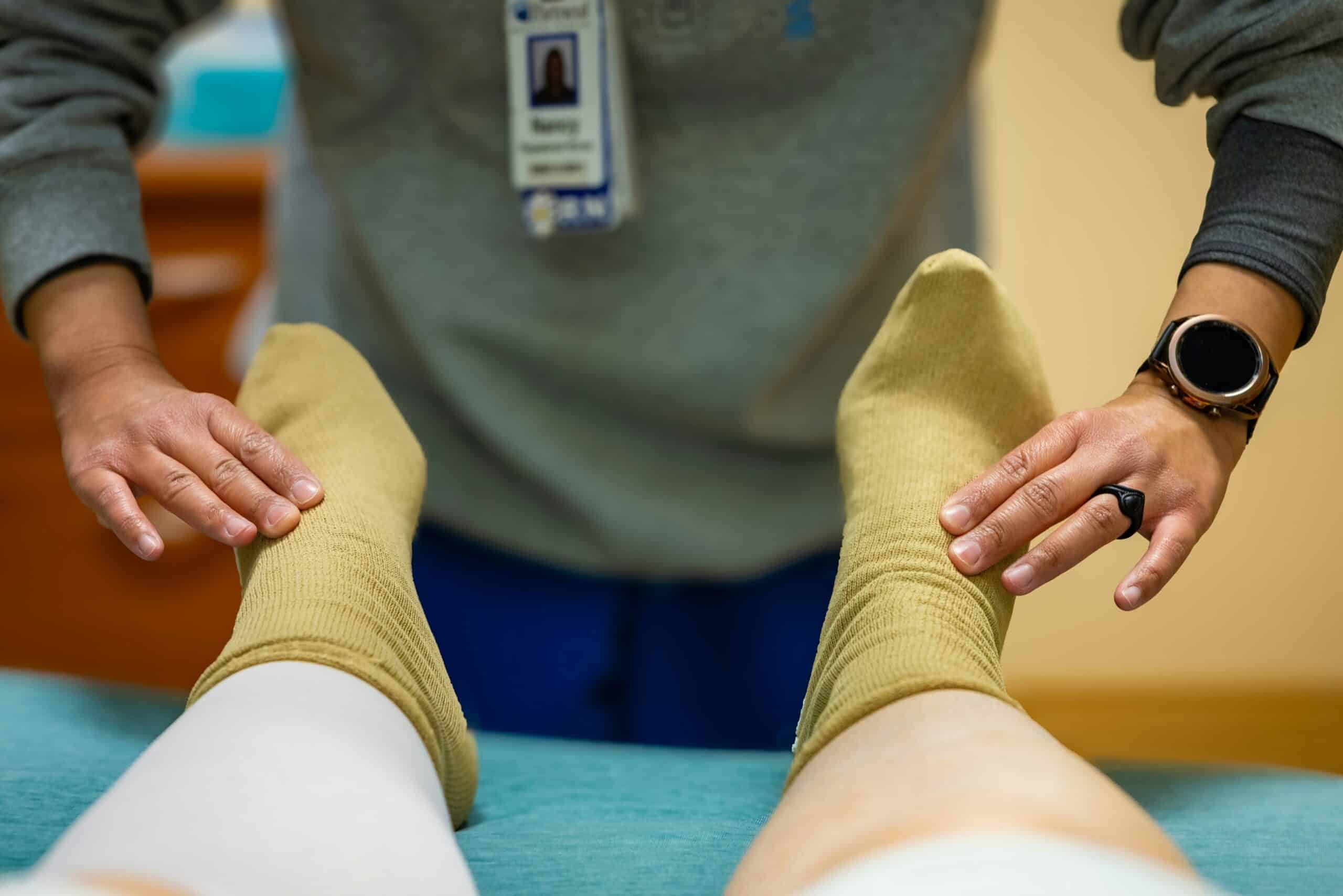
Graduated compression is applied tightest at the ankle and looser toward the knee, which is what helps move fluid upward while you are on your feet. Compression socks for leg swelling and night cramps therefore do most of their work during the day and the evening, and overnight wear is a separate question that belongs to your clinician. Understanding that split is what keeps this purchase useful instead of pointless.
The practical approach for most people is evening wear plus elevation, then bare legs in bed. Our guide to elevating your legs in bed covers the other half of that routine. The table below sorts the category by compression level and fit.
| Type | Typical Compression | Length | Available Over the Counter | Best For |
|---|---|---|---|---|
| Light graduated socks | 8 to 15 mmHg | Knee high | Yes | Mild evening puffiness |
| Mild medical grade | 15 to 20 mmHg | Knee high | Yes | Aching, heavy legs |
| Moderate grade | 20 to 30 mmHg | Knee or thigh | Often, with guidance | Clinician directed use |
| Open-toe socks | 15 to 20 mmHg | Knee high | Yes | Toe crowding, wide feet |
| Wide-calf socks | 8 to 20 mmHg | Knee high | Yes | Larger calf circumference |
| Footless sleeves | 15 to 20 mmHg | Calf only | Yes | Calf tightness, warm feet |
Medical Disclaimer
This article is general information about compression garment categories and is not medical advice, and nothing here diagnoses or treats any circulatory condition. Compression is not appropriate for everyone, and people with peripheral artery disease, significant neuropathy, diabetes with foot complications, skin infections, or heart failure need clinical guidance before using it. Get prompt medical care for sudden swelling in one leg, calf pain or tenderness, warmth and redness, shortness of breath, or any skin breakdown, because these can indicate serious conditions including blood clots.
Key Points
- Graduated compression is measured in mmHg, tightest at the ankle.
- Most over-the-counter products sit between 8 and 20 mmHg.
- Compression stockings are usually worn during waking hours, not in bed.
- Calf circumference and ankle circumference both determine the correct size.
- Night cramps and restless legs are different problems with different approaches.
- Any numbness, color change, or skin damage means stop and get advice.
How We Picked These Compression Socks
We sorted the category by compression level first, because that is the specification that determines whether a sock is appropriate for you. Higher is not better, and moving up a grade without guidance is how people end up with skin problems. So every pick below states its range.
Fit came second, and it is where most purchases fail. A knee-high sized only by shoe size will either slide down or band tightly below the knee. Products with real calf and ankle measurement charts scored much higher.
We also weighted the top band. A narrow elastic cuff creates a tourniquet effect at the calf, which is both uncomfortable and counterproductive. Wide, flat, silicone-free bands were the clear preference.
Finally, we considered whether compression addresses the actual complaint. Night cramps and restless legs feel similar to many people but respond differently, and our guides to restless legs at night and sleeping with restless leg syndrome cover that distinction.
1. Light Graduated Knee-High Socks
Why It Stands Out
Light compression at 8 to 15 mmHg is the most widely tolerated option and the sensible entry point. It reduces the puffy, heavy feeling many people get after a long day standing or sitting. Most wearers forget they have them on within an hour.
Tolerability drives results, because a sock you wear daily beats a firmer one in a drawer. Light grades also carry lower risk of skin pressure problems.
Worth Knowing
Light compression may not be enough for significant swelling. If your ankles pit when pressed or the swelling persists overnight, that is a reason to see a clinician rather than to buy something tighter. Persistent swelling has causes worth identifying.
These also lose elasticity with washing. Most makers suggest replacing them every few months with regular use.
Best for: Mild evening puffiness, long days on your feet, and first-time compression users. Skip it if a clinician has already specified a higher grade for you.
Check Price on Amazon2. Mild Medical-Grade Knee-Highs
Why It Stands Out
The 15 to 20 mmHg range is the common over-the-counter step up, and it is what many people settle on for aching, heavy legs. The added firmness is noticeable without being difficult to put on. Construction quality in this tier is usually better too.
Durability improves as well. Medical-grade knits hold their compression profile longer than fashion-weight socks.
Worth Knowing
Putting these on takes technique, and a donning aid helps considerably. Never roll them down partway, since a folded band doubles the pressure at that point. Smooth them fully or take them off.
Check your skin daily. Redness that persists, indentations that do not fade, or any breakdown means stop and ask for guidance.
Best for: Aching, heavy legs and moderate evening swelling in people without contraindications. Skip it if you have peripheral artery disease, neuropathy, or diabetic foot complications without clinical clearance.
Check Price on Amazon3. Open-Toe Compression Socks
Why It Stands Out
Open-toe designs leave the toes free, which solves toe crowding, nail pressure, and the trapped-heat complaint that makes closed socks unbearable for some people. They also let you check toe color and temperature without taking anything off. That is a practical safety advantage.
Wide feet benefit particularly. The forefoot gets room while the ankle and calf still get graduated compression.
Worth Knowing
The toe opening can roll or bind at the ball of the foot. A bound, flat edge handles this better than a raw cut knit. Try them at home on a short wear before committing to a full day.
Open toes also mean less warmth, which matters if cold feet are part of your sleep problem.
Best for: Toe sensitivity, wide forefeet, hot feet, and anyone who wants to monitor toe circulation easily. Skip it if you want the socks to keep your feet warm.
Check Price on Amazon4. Wide-Calf Compression Socks
Why It Stands Out
Wide-calf versions are built with a larger calf circumference at the same compression grade, so the pressure gradient stays correct instead of becoming a band. For anyone whose standard knee-highs cut in below the knee, this is the fix. Fit is the whole story.
Longer knit panels also reduce rolling. The sock sits flat rather than digging in at the widest point.
Worth Knowing
Do not solve a calf-fit problem by dropping to a lower compression grade. Buy the correct width at the grade you need, since a too-narrow sock at any grade creates a tourniquet effect. Measure the widest part of your calf.
Measure in the evening. Calf circumference is often slightly larger later in the day.
Best for: Larger calf circumference, athletic calves, and anyone whose socks leave a deep line below the knee. Skip it if standard sizing already sits flat without indentation.
Check Price on Amazon5. Footless Compression Sleeves
Why It Stands Out
Calf sleeves cover the lower leg and leave the foot and ankle bare. People who want support for calf tightness while keeping their feet free often prefer these, and they are easy to put on. Athletes use them widely for the same reason.
Warmth control is better too. Feet stay cool, which suits hot sleepers.
Worth Knowing
Sleeves do not address ankle or foot swelling at all, and they can cause fluid to collect below the sleeve edge. That makes them a poor choice for swelling and a reasonable one for muscle tightness. Know which problem you are solving.
For calf tightness specifically, targeted tools may suit better, which is why our calf massagers guide exists.
Best for: Calf tightness and muscle soreness in people without ankle or foot swelling. Skip it entirely if swelling in the ankles or feet is your main complaint.
Check Price on Amazon6. Light Bed Socks and Overnight-Grade Compression
Why It Stands Out
Some products are made specifically for lying down, using very light compression and soft non-binding cuffs. They aim at comfort and warmth rather than fluid management, since gravity is not working against you in bed. Warm feet also help many people fall asleep.
Non-binding tops are the key feature. Nothing bands at the calf when you shift position.
Worth Knowing
Standard daytime compression stockings are generally removed at night unless a clinician directs otherwise. Do not assume that wearing your daytime grade to bed adds benefit, because it mostly adds risk. Ask before making that change.
For cramps at night, many people combine light warmth with stretching and hydration, and our guide on relieving pain for better sleep covers the surrounding routine.
Best for: People who want warm, comfortable legs in bed without real compression. Skip it if you expect it to treat swelling, since overnight fluid management is a clinical question.
Check Price on AmazonWhat to Look For in Compression Socks
Which compression level should you start with?
Start at 8 to 15 mmHg if nobody has specified a grade for you, then consider 15 to 20 mmHg if that feels too light. Higher grades are not automatically better and carry more risk. A clinician should guide anything above 20 mmHg.
How do you measure for the right size?
Measure your ankle at its narrowest point and your calf at its widest, then match both to the chart. Shoe size alone is not enough. Measure in the evening, since legs are often slightly larger later in the day.
Should you wear compression socks to bed?
Generally no, unless a clinician has told you to. Graduated compression works with gravity while you are upright, and that mechanism largely disappears when you lie flat. Overnight wear also raises the chance of skin and pressure problems going unnoticed.
What does the top band tell you?
A wide, flat, non-binding band distributes pressure and stays put. A narrow elastic cuff concentrates pressure at the calf and can restrict rather than assist. Check the band before anything else on a knee-high.
Evening Compression vs Leg Elevation
What compression does
Compression assists fluid return while you are upright and moving, which is why it suits work hours and the hours before bed. It also reduces the heavy, aching feeling many people describe by late afternoon. The effect is active rather than passive.
What elevation does
Elevation uses position instead of pressure, letting gravity move fluid without any garment. It works when you are lying down, which is exactly when compression stops making sense. Many people combine evening compression with elevation before sleep, and our wedge versus leg elevation pillow comparison covers how to set that up.
Common Misconceptions
That tighter is better
Higher mmHg is a different clinical tool, not an upgrade. Too much compression can impair circulation rather than help it, particularly with arterial disease. Move up grades only with guidance.
That rolling them down is fine
Folding a compression sock over doubles the pressure at the fold, creating a tight band exactly where you do not want one. Pull them up fully or take them off. The same applies to bunching at the ankle.
That night cramps and restless legs are the same thing
A cramp is a painful involuntary muscle contraction, while restless legs involves an urge to move with uncomfortable sensations. They respond to different approaches, and mixing them up leads to the wrong purchase. Read up on both before assuming compression is the answer.
That swelling is just a nuisance
Persistent swelling, especially in one leg, can point to conditions that need attention rather than management at home. Sudden one-sided swelling with calf pain or warmth needs prompt care. Compression is not a substitute for that evaluation.
Worth reading next: pair evening compression with a bed wedge for leg elevation, look at compression boots for recovery if you want intermittent rather than static pressure, consider a foot massager for bedtime relaxation, and review the broader chronic pain sleep approach. Tight calves that wake you may also respond to percussive massage before bed, and foot-first pain is covered in our plantar fasciitis night splint guide.
Frequently Asked Questions
Do compression socks for leg swelling and night cramps work overnight?
Graduated compression is designed to work against gravity while you are upright, so lying flat removes most of its mechanism. Standard stockings are typically worn during waking hours and removed at night. Wear them overnight only if a clinician has told you to.
What mmHg should you buy without a prescription?
Most people start in the 8 to 15 mmHg range and may step up to 15 to 20 mmHg. Both are widely available over the counter. Anything higher should follow a clinical recommendation.
Can compression socks help leg cramps at night?
Evidence specific to nighttime cramps is limited, and compression is not established as a treatment for them. Some people find evening compression reduces the heavy, achy legs that accompany their cramps. Stretching, hydration, and a medical review of contributing factors matter more.
Who should not wear compression socks?
People with peripheral artery disease, significant neuropathy, diabetes with foot complications, active skin infections, or certain heart conditions need clinical guidance first. Compression can worsen poor arterial circulation. Ask your clinician if any of these apply.
How long do compression socks last?
Elastic fibers relax with wear and washing, and most makers suggest replacing them every few months under regular use. A sock that goes on easily and no longer feels supportive has lost its compression. Rotate two or three pairs to spread the wear.
How do you put on tight compression socks?
Turn the sock inside out to the heel, place the heel, then roll the leg portion upward and smooth it flat. A donning aid or rubber gloves help a lot. Never leave a fold or roll in place.
Are open-toe compression socks as effective?
For calf and ankle compression, yes, since the graduated pressure is in the leg portion. They do less for the toes and forefoot. Choose them for comfort or to keep toe circulation visible.
When should you see a doctor about leg swelling?
See a doctor promptly for sudden swelling in one leg, calf pain or tenderness, redness and warmth, or any shortness of breath, since these can indicate a blood clot. Also seek care for swelling that persists overnight or worsens over weeks. Skin changes or open areas need evaluation too.
Sources
- National Heart, Lung, and Blood Institute. Venous Thromboembolism. National Institutes of Health. https://www.nhlbi.nih.gov/health/venous-thromboembolism
- MedlinePlus. Varicose Veins. National Library of Medicine. https://medlineplus.gov/varicoseveins.html
- MedlinePlus. Leg Cramps. National Library of Medicine. https://medlineplus.gov/
- National Institute of Neurological Disorders and Stroke. Restless Legs Syndrome. National Institutes of Health. https://www.ninds.nih.gov/health-information/disorders/restless-legs-syndrome
