
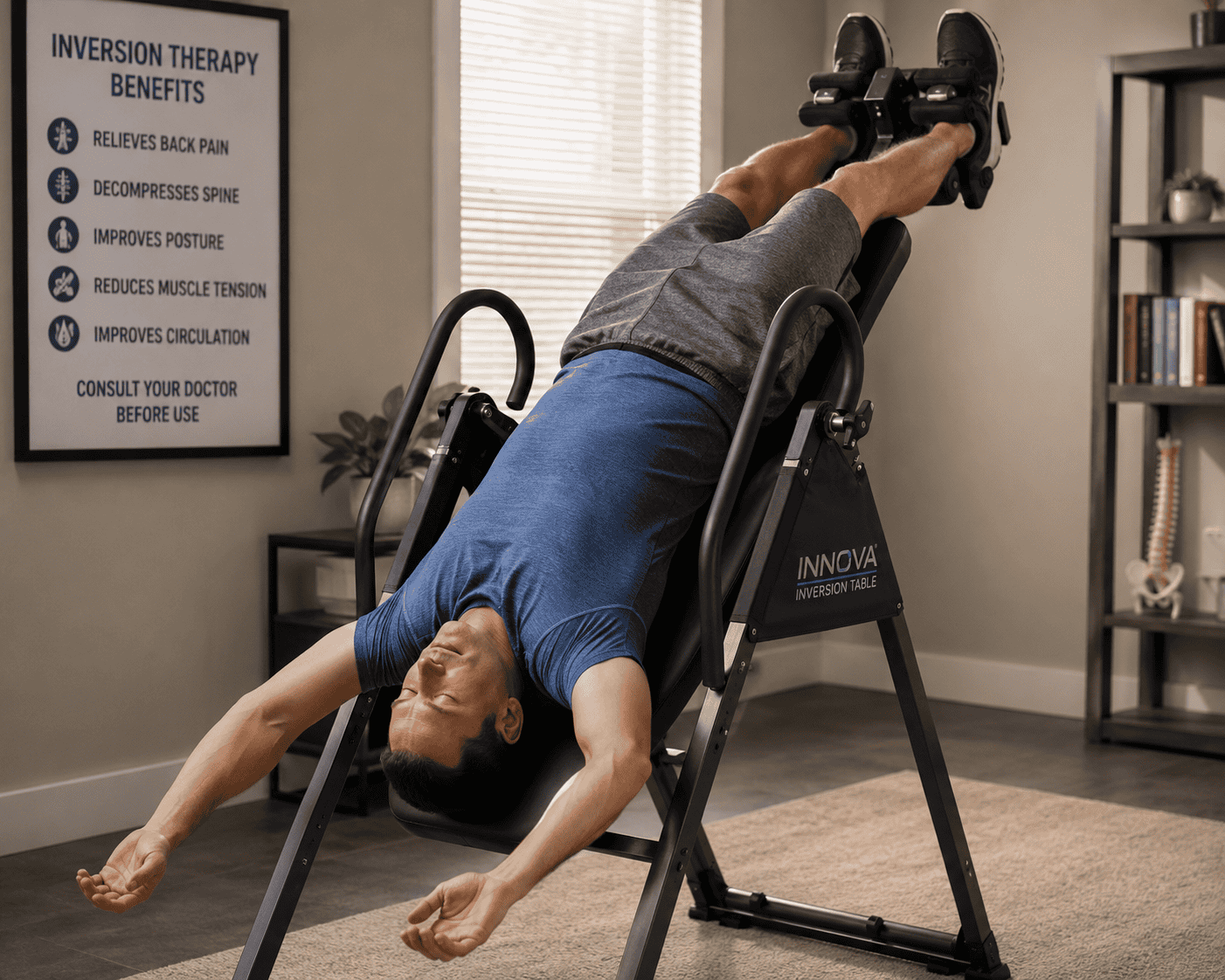
Your lower back aches after a long day at the desk, where gravity has been compressing your spine for hours. An inversion table flips that, using your own body weight to gently decompress the spine and ease pressure on the discs and surrounding nerves. The right table depends on your height, your weight, and how much support you want while inverting.
Health note: Inversion is not right for everyone. People with high blood pressure, heart conditions, glaucoma or other eye conditions, or who are pregnant should not use an inversion table without medical clearance. Talk with your doctor before starting, and stop if you feel dizzy or unwell. Research on inversion for back pain is mixed, so treat it as one comfort tool among many.1
Quick verdict: For overall quality and reassuring support, the Teeter FitSpine X3 leads. For strong value without losing stability, the Innova ITX9600 is the smart-money pick.
Disclosure: RestRight is reader-supported. As an Amazon Associate, we earn from qualifying purchases made through links on this page, at no extra cost to you.
How We Picked the Best Inversion Tables for Back Pain
We weighed stability, weight and height capacity, ankle-clamp comfort, ease of adjusting the inversion angle, and overall build. An inversion table holds your full body weight upside down, so a secure, well-built frame matters most.
We wrote about these products in a research voice rather than claiming results, since back pain varies widely from person to person. Our goal is to match a table to your body and comfort, not to promise relief.
Fit and stability drove the ranking more than features, since a table that does not suit your frame cannot be used safely. Comfort extras only matter once the basics are right.
We leaned on general guidance about back pain and decompression for context.1 For non-equipment approaches, our guide to sleep positions for back pain pairs well with any table.
1. Teeter FitSpine X3
Why It Stands Out
The FitSpine X3 is the benchmark inversion table, with a sturdy frame and a reassuring feel under load. Teeter is the established name, and the build reflects it. For a table you can trust each session, it leads the field.
Worth Knowing
It sits at the premium end of the price range. The ankle system and pre-set angle pins reward a careful first setup. Assembly takes patience, but the result feels solid.
This suits someone who wants a stable, well-supported table and will use it regularly. Skip it if your budget is tight or you only want to try inversion occasionally. A desk worker with chronic lower-back tightness who wants a daily decompression routine is the ideal user.
Good to know: confirm your height and weight fall within the rated range before buying, and ease into short, shallow sessions at first. The first week is about getting comfortable, not chasing a deep stretch.
Check Price on Amazon2. Innova ITX9600
Why It Stands Out
The Innova ITX9600 delivers stable inversion at a noticeably lower price than premium tables. It adds an adjustable headrest and a backrest pad for comfort. For value without feeling flimsy, it is a standout.
Worth Knowing
The ankle holder and finish are simpler than premium models. Setup and angle adjustment take a moment to learn. It covers the essentials rather than extras.
This suits a budget-minded buyer who still wants a stable, comfortable table. Skip it if you want top-tier build or built-in heat and massage. Someone trying inversion seriously for the first time without overspending fits it well.
Good to know: check the weight and height limits, and tighten all hardware before the first full inversion. A quick bolt check every few weeks keeps a value frame solid.
Check Price on Amazon3. Exerpeutic Inversion Table
Why It Stands Out
The Exerpeutic table targets the budget end while keeping a stable, wide frame. It offers a straightforward way to try inversion without a big outlay. For a first, low-cost step, it works.
Worth Knowing
Padding and adjustment feel basic compared with pricier tables. The capacity suits average builds rather than larger or taller users. Inspect the bolts regularly on a budget frame.
This suits someone curious about inversion who wants to test it cheaply. Skip it if you are tall, heavier, or want long-term premium comfort. A cautious first-timer easing into gentle inversion is the right match.
Good to know: start at a shallow angle, and stop immediately if you feel any dizziness or pressure in your head. On a budget frame, inspect the welds and bolts before each session for peace of mind.
Check Price on AmazonRecommended read: Decompression without a table? See our picks for back stretchers and mattress toppers for back pain.
4. Teeter FitSpine LX9
Why It Stands Out
The LX9 is Teeter’s higher-tier table, adding comfort and accessory touches over the X3. It brings extra padding, grips, and an acupressure node setup. For someone who wants the premium experience, it is the top choice.
Worth Knowing
It carries the highest price here. The extras matter most to dedicated daily users. For occasional use, the value is harder to justify.
This suits a committed user who wants the most comfortable, full-featured table. Skip it if you want basic inversion at a lower cost. Someone building a long-term home recovery routine around inversion fits the LX9 best.
Good to know: even a premium table is not a treatment, so keep sessions gentle and pair them with movement and professional guidance. The extras add comfort, not a cure.
Check Price on Amazon5. Innova Heat and Massage Inversion Table
Why It Stands Out
This Innova model adds a heated, vibrating lumbar pad to the inversion frame. The warmth and massage can feel soothing on a tight lower back. For someone who wants comfort extras, it bundles them in.
Worth Knowing
The heat and massage are comfort features, not medical treatment. The pad adds cost and another part that can wear. The core inversion function still does the main work.
This suits a buyer who values the soothing heat and massage alongside inversion. Skip it if you want the simplest, most affordable table. Someone who unwinds with warmth on the lower back after a long day will appreciate it.
Good to know: heat can mask discomfort, so do not push a session longer just because it feels pleasant. Keep the same gentle time limits you would on any table.
Check Price on Amazon6. Body Champ IT8070 Inversion Table
Why It Stands Out
The Body Champ IT8070 aims at larger and taller users who need more capacity. Its frame and adjustment range stretch beyond entry tables. For bigger builds, the extra room matters.
Worth Knowing
Always confirm the exact height and weight limits against your own. The larger frame takes more floor space. Build quality is solid for the price but worth a careful setup.
This suits a taller or heavier user who finds entry tables too small. Skip it if a standard table already fits your frame. Someone who needs a roomier table to invert comfortably is the right buyer.
Good to know: a correct fit at the ankles and within the rated range is what keeps any inversion table safe. A roomier frame helps only if your numbers still fall inside its limits.
Check Price on AmazonWho Should Avoid Inversion Tables
Inversion raises blood pressure and pressure in the head and eyes, so it does not suit everyone. This is the most important section to read before buying.
People with high blood pressure, heart disease, a history of stroke, glaucoma or other eye conditions, or who are pregnant should avoid inversion unless a doctor clears them. The same caution applies to anyone with a recent injury, hernia, or bone or joint condition. If any of these apply to you, ask your doctor before using a table at all.
Even if you have none of these, ease in gently with short, shallow sessions and stop at any dizziness, headache, or eye pressure. Inversion should feel like a mild stretch, never a strain.
How to Use an Inversion Table Safely
Safe technique matters as much as the table you buy. A few habits keep inversion gentle and low-risk.
Set the table up on a level floor with room to clear your arms, and lock the ankle holders fully before you tilt. Begin at a shallow angle and stay there for the first several sessions rather than going fully upside down. Let your body adjust to the change in blood flow before you progress.
Keep early sessions to a minute or two and come up slowly to avoid a head rush. Breathe normally and stay relaxed, since straining defeats the gentle stretch. Stop at once if you feel dizzy, see spots, or feel pressure behind your eyes.
Inversion works best as part of a fuller routine that includes movement and good sleep support. It is a comfort tool, so treat persistent pain with professional care rather than the table alone.
How to Choose an Inversion Table
A few factors decide which table fits you safely. Work through these before buying.
Height and Weight Capacity
Every table lists a height and weight range, and staying inside it is a safety must. A table that does not fit your frame cannot hold you securely. Check both numbers against your own first.
Ankle Comfort and Security
The ankles bear your weight when inverted, so the clamp system needs to feel secure and comfortable. Pressure points there are the top complaint with cheaper tables. Padded, easy-to-lock ankle holders make a real difference.
Angle Control
Look for an easy, reliable way to limit and set the inversion angle. Starting shallow and progressing slowly is the safe approach. A clear pin or strap that caps the angle helps you ease in.
Stability and Build
A wide, sturdy base and solid frame keep the table from feeling tippy under load. Stability is reassurance you feel every session.
A flimsy frame undermines confidence, and a nervous user rarely relaxes enough to benefit. Look for a wide base and a solid locking mechanism you can trust.
Extras and Storage
Heat, massage, and folding frames are nice-to-haves rather than essentials. Decide which you will actually use before paying for them. A folding frame helps if floor space is tight.
Inversion Tables vs Other Back Decompression
Inversion is one of several ways to ease spinal pressure. Here is how it compares.
Inversion Tables
A table uses gravity and your body weight for a full-body, hands-off decompression. It suits people cleared for inversion who want a repeatable routine. The trade-off is the contraindications and the floor space.
Stretchers and Supports
A back stretcher or lumbar support targets the lower back without inverting you. These suit people who cannot or prefer not to invert. They are gentler and smaller, though more localized.
Many people use both, inverting on some days and stretching on others. The best choice is the one you will actually use, cleared by your doctor.
Common Inversion Table Mistakes to Avoid
A few errors make inversion uncomfortable or unsafe. Watch for these.
Skipping Medical Clearance
Starting inversion with an untreated condition like high blood pressure or glaucoma can be dangerous. Check with your doctor first, especially if any contraindication applies to you.
Inverting Too Far, Too Soon
Going fully upside down on day one can leave you dizzy or strained. Begin at a shallow angle and progress gradually over time as you adjust.
Ignoring the Weight and Height Limits
Using a table outside its rated range risks instability and a fall. Confirm your numbers fit before the first session, every time.
Treating It as a Cure
An inversion table is a comfort tool, not a treatment for the underlying cause. Pair it with movement, good sleep support, and professional care for any persistent pain.
Decision Matrix
Prices shift often, so confirm current cost before buying. This matrix maps common needs to the table that fits.
| Your situation | Teeter FitSpine X3 | Innova ITX9600 | Exerpeutic |
|---|---|---|---|
| Daily decompression routine | Best fit | Workable | Skip |
| Best value | Workable | Best fit | Workable |
| Just trying inversion | Skip | Workable | Best fit |
| Tall or heavier user | Workable | Workable | Skip |
Frequently Asked Questions
What is the best inversion table for back pain?
For overall quality and support, the Teeter FitSpine X3 leads, while the Innova ITX9600 offers strong value. The best one for you depends on your height, weight, and budget. Always confirm you are cleared for inversion first.
How does an inversion table work?
It tilts your body backward so gravity and your own weight gently lengthen the spine. That can ease pressure on the discs and surrounding tissue for some people. Evidence is mixed, so results vary from person to person.
Are inversion tables safe?
They are safe for many people when used correctly and within the weight and height limits. They are not safe for people with high blood pressure, heart or eye conditions, or during pregnancy. Check with your doctor before starting.
How long should I use an inversion table?
Start with short, shallow sessions of just a minute or two and progress slowly. Stop at any dizziness, headache, or eye pressure. More is not better, so keep sessions gentle.
Do inversion tables really help back pain?
Some people find temporary relief, but research is inconclusive and results vary. Treat a table as one comfort tool rather than a cure. Pair it with movement and professional care for lasting pain.
Who should not use an inversion table?
Anyone with high blood pressure, heart disease, glaucoma or eye conditions, a hernia, or who is pregnant should avoid inversion unless cleared by a doctor. The increased pressure can be risky for these conditions. When in doubt, ask first.
When should I see a doctor about back pain?
See a doctor if back pain is severe, persistent, follows an injury, or comes with numbness, weakness, or loss of bladder or bowel control. These can signal a problem that needs evaluation. A professional can guide safe use of any device.
Where can I learn more about back pain?
The Mayo Clinic publishes guidance on back pain causes, care, and when to seek help.12
Related Reading
Explore more: massage tables, nightstands and bedside tables, and mattresses for back sleepers with back pain. Also explore: posture correctors, and our back stretcher vs neck traction guide.
Recommended Reading
See also our guides to massage tables.
Sources
- Mayo Clinic, back pain symptoms and causes. mayoclinic.org
- Mayo Clinic, back pain diagnosis and treatment. mayoclinic.org
This article is for general information and is not medical advice. Back pain varies by individual and requires evaluation by a qualified healthcare provider for diagnosis and treatment. Talk with your doctor before using an inversion table, especially if you have any health condition.
