
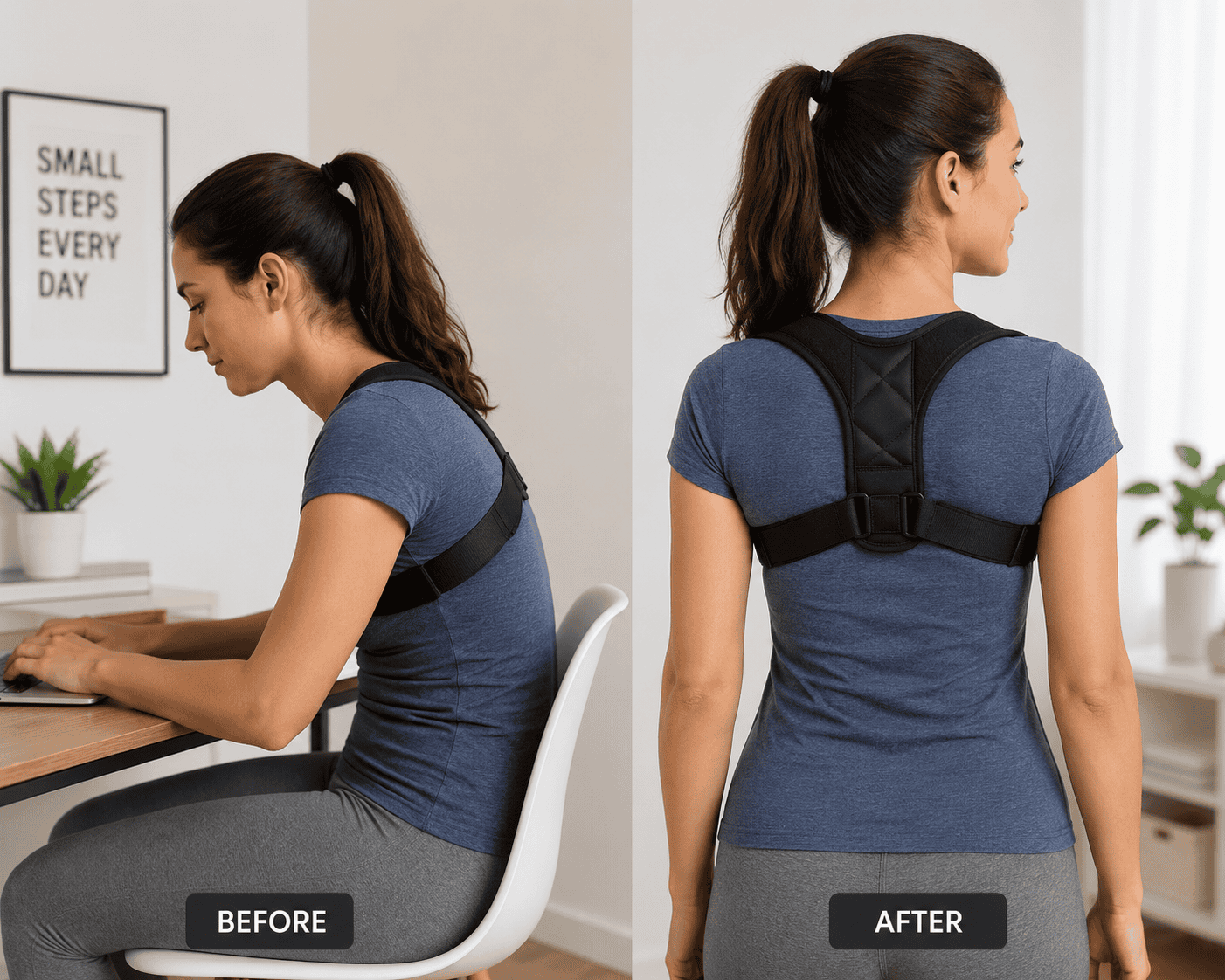
Can a posture corrector actually fix a slouch, or does it just remind you to sit up? The best posture correctors work mainly as a cue, gently pulling your shoulders back or buzzing when you slump, so you build the awareness and strength that do the real work. The right one depends on whether you want a simple strap, a smart sensor, or something discreet under clothes.
For most people the Truweo posture corrector is the best all-rounder, with a simple, comfortable strap design at a low price. Tech fans, discretion seekers, and comfort-first users each have a better match below.
General information, not medical advice. Posture correctors are reminders, not cures, and overuse can let muscles rely on them. See a doctor or physical therapist for back pain or a posture concern.
Top pick: The Truweo Posture Corrector is a simple, adjustable shoulder brace that cues you upright without much bulk or cost. Want smart feedback? The Upright GO 2 vibrates when you slump. Prefer discretion? A low-profile strap hides under a shirt.
| Your situation | Truweo | Upright GO 2 | FlexGuard | Marakym | BackEmbrace | Evoke Pro |
|---|---|---|---|---|---|---|
| Best all-rounder | Best fit | Workable | Workable | Workable | Workable | Workable |
| Smart feedback | Skip | Best fit | Skip | Skip | Skip | Skip |
| Discreet under clothes | Workable | Best fit | Workable | Workable | Best fit | Workable |
| All-day comfort | Workable | Best fit | Workable | Workable | Best fit | Workable |
| Tight budget | Best fit | Skip | Best fit | Best fit | Workable | Best fit |
Prices and app features change often; confirm current cost before buying.
Disclosure: RestRight is reader-supported. As an Amazon Associate, we earn from qualifying purchases made through links on this page, at no extra cost to you.
How We Picked the Best Posture Correctors
We weighed fit and adjustability, comfort for longer wear, whether the device cues by tension or by smart feedback, discretion under clothes, and price. Cleveland Clinic notes that posture devices can raise awareness but work best alongside movement and strengthening rather than as a standalone fix. We favored comfortable, adjustable designs and were upfront about the limits of any corrector. For seated support that complements a corrector, see our best lumbar support pillows.
Recommended read: Building back strength matters more than any brace. See our best foam rollers for mobility work.
Truweo Posture Corrector
The Truweo is the popular budget strap, a simple figure-eight brace that pulls the shoulders back. It is the easy, low-cost way to add a posture cue to your day.
Why It Stands Out
The adjustable strap fits a wide range of body sizes and cues the shoulders back without bulk. The low price makes it an easy first try, and it slips under looser clothing.
Worth Knowing
Like all straps, it can feel snug at first, so build up wear time gradually. It is a passive reminder, not a smart device, so it will not alert you when you slump.
Best for most people who want a simple, affordable posture cue. Skip it if you want smart feedback or the most discreet, low-profile option.
Check Price on AmazonUpright GO 2
The Upright GO 2 is the smart pick, a small sensor that sticks to your upper back and vibrates when you slouch. It trains awareness through gentle feedback and an app.
Why It Stands Out
The buzz when you slump builds real-time awareness, and the app tracks sessions so you can ease into longer upright stretches. It is discreet under clothing and rechargeable.
Worth Knowing
It costs much more than a strap and needs charging and an app. The adhesive or necklace mount is a preference, so consider how you will wear it daily.
Best for people who want active feedback and data to build a posture habit. Skip it if you want a simple, cheap strap or dislike app-based gadgets.
Check Price on AmazonFlexGuard Support Posture Corrector
FlexGuard is a fuller back brace that combines shoulder straps with a back panel. It targets people who want more structured support across the upper and mid back.
Why It Stands Out
The added back panel and straps give a more supported, structured feel than a thin figure-eight. It suits people who want a firmer cue and broader coverage.
Worth Knowing
More structure means more bulk, so it is harder to hide under fitted clothes. Build up wear time, since a firmer brace can feel tiring at first.
Best for people who want structured, broader support and a firmer cue. Skip it if you want something discreet or minimal under clothing.
Check Price on AmazonMarakym Posture Corrector
Marakym is another well-known figure-eight strap, simple and adjustable, often sold with a small carry bag. It is a straightforward, value-minded cue.
Why It Stands Out
The clean figure-eight design adjusts easily and cues the shoulders back without much hardware. It is affordable and travels light, which suits people who want simplicity.
Worth Knowing
As a basic strap, it offers a cue rather than smart feedback or heavy structure. Padding at the underarms helps, so check fit to avoid rubbing on longer wears.
Best for people who want a simple, adjustable, travel-friendly strap. Skip it if you want smart cueing or a more structured brace.
Check Price on AmazonBackEmbrace Posture Corrector
BackEmbrace focuses on comfort and discretion, with a softer, lower-profile design meant to wear under clothes through a workday. It targets people who found other straps too bulky or harsh.
Why It Stands Out
The softer straps and slim profile aim for all-day comfort and easy hiding under a shirt. It cues gently rather than forcing, which suits people who want subtlety.
Worth Knowing
A gentler design gives a softer cue, so people who want a firm pull may prefer a structured brace. It costs more than basic straps for that comfort focus.
Best for people who want a discreet, comfortable cue for all-day wear. Skip it if you want a firm, structured pull or smart feedback.
Check Price on AmazonEvoke Pro Posture Corrector
Evoke Pro is a budget figure-eight strap with padded shoulders, aimed at value shoppers who want a comfortable basic cue. It rounds out the affordable end of the field.
Why It Stands Out
Padded shoulder straps add comfort to a low-cost design, and the adjustable fit suits many sizes. It is an easy, cheap way to test whether a cue helps you.
Worth Knowing
It is a passive strap, so no alerts or app, just a steady reminder. As with any strap, ease into wear time to avoid early discomfort.
Best for budget shoppers who want a padded, comfortable basic strap. Skip it if you want smart feedback or a more structured brace.
Check Price on AmazonHow to Choose a Posture Corrector
Four questions narrow the field.
Decide Between a Strap and a Smart Device
A strap gives a constant physical cue for little money, while a smart sensor buzzes only when you slump and tracks progress. Choose a strap for simplicity or a sensor if data and active feedback motivate you.
Get the Fit Right
Check the size range against your measurements, since a poor fit rubs or fails to cue. Look for padded straps and easy adjustment, especially if you plan to wear it for longer stretches.
Weigh Comfort and Discretion
Slim, soft designs hide under clothes and suit all-day wear, while structured braces give a firmer pull but more bulk. Decide whether discretion or a stronger cue matters more to you.
Set Realistic Expectations
A corrector is a reminder, not a cure, and it works best in short sessions alongside movement and strengthening. Plan to pair it with stretches and breaks rather than relying on it all day.
Posture Strap vs Smart Posture Trainer
The main choice is strap versus smart device, so weigh the two.
Where a Strap Wins
A strap costs little, needs no charging, and gives a constant physical cue, which suits people who want simple and cheap. It is the easiest way to test whether a posture cue helps you at all.
Where a Smart Trainer Wins
A smart trainer vibrates only when you slouch and tracks sessions, which builds awareness without constant tension. It costs more and needs an app, but the feedback and data suit habit-builders.
Common Posture Corrector Mistakes to Avoid
The right device still disappoints if you misuse it. Avoid these.
Wearing It All Day Every Day
Relying on a corrector constantly can let muscles lean on it instead of working. Use it in shorter sessions as a reminder, and spend the rest of the day building posture awareness on your own.
Skipping the Strengthening
A brace cues position but does not build the back and core strength that hold posture. Pair it with movement, stretching, and strengthening, since those do the lasting work.
Expecting It to Fix Pain
A corrector is a comfort and awareness tool, not a treatment for back pain. If you have ongoing pain or a posture concern, see a doctor or physical therapist for a real assessment.
Choosing the Wrong Size
A corrector that is too tight digs in and a loose one fails to cue. Check the size chart against your measurements and adjust carefully, since fit decides whether you actually wear it.
Making a Posture Corrector Actually Help
A corrector earns its keep only as part of a bigger habit.
Use It in Short Sessions
Wear the corrector for shorter stretches as a reminder rather than all day, building up gradually. Long, constant wear can let muscles lean on the device, so treat it as a cue while you do the real work.
Strengthen and Move
The lasting fix is back and core strength plus regular movement, not a brace. Pair the corrector with stretching and mobility work, and use a foam roller to loosen tight areas between sessions.
Fix Your Whole Sitting Setup
Posture suffers most during long, slumped sitting. A supportive seat cushion and a quality mattress topper address the hours a brace never touches.
Frequently Asked Questions
What is the best posture corrector?
For most people, the Truweo is the best all-rounder, with a simple, comfortable, affordable strap that cues the shoulders back. Tech fans may prefer the Upright GO 2’s smart feedback, while discretion seekers can look at a slim design like BackEmbrace.
Do posture correctors actually work?
They mainly work as a reminder, cueing you upright so you build awareness, and sources note they help most alongside movement and strengthening. They are not a cure, so treat them as one tool rather than a fix on their own.
How long should I wear a posture corrector?
Most guidance favors shorter sessions rather than all day, building up gradually. Wearing it constantly can let muscles rely on it, so use it as a periodic cue and strengthen your back the rest of the time.
Are smart posture trainers worth the extra cost?
If feedback and data motivate you, a smart trainer that buzzes when you slump can help build a habit. If you want simple and cheap, a strap delivers a steady cue for far less money.
Can I wear a posture corrector under clothes?
Many slim straps and small sensors hide under a shirt, while structured braces are bulkier. If discretion matters, choose a low-profile design and check reviews about visibility under fitted clothing.
Will a posture corrector help my back pain?
It may ease the slouching that contributes to discomfort for some people, but it is not a treatment. If you have ongoing back pain, see a doctor or physical therapist rather than relying on a brace.
How do I size a posture corrector?
Check the manufacturer’s size chart against your chest or shoulder measurement, since fit decides comfort and effectiveness. Look for adjustable, padded straps so you can fine-tune the fit for longer wear.
How long until a posture corrector shows results?
There is no set timeline, and a corrector mainly builds awareness rather than changing your body on its own. Lasting improvement comes from the strengthening and habit work you do alongside it, so think in terms of weeks of consistent effort, not the device alone.
Are posture correctors safe to wear at work all day?
Most guidance favors shorter sessions over all-day wear, since constant use can let muscles rely on the brace. Wear it for periods during the workday as a cue, take it off to move and stretch, and stop if it causes pain.
Related Reading
Explore more: foot massagers bedtime relaxation.
More Sleep Guides
For the bigger picture, see the complete guide to easing pain for better sleep.
Sources
- American Academy of Orthopaedic Surgeons. OrthoInfo patient resources. https://orthoinfo.aaos.org/
- National Institutes of Health. MedlinePlus health topics. https://medlineplus.gov/
