
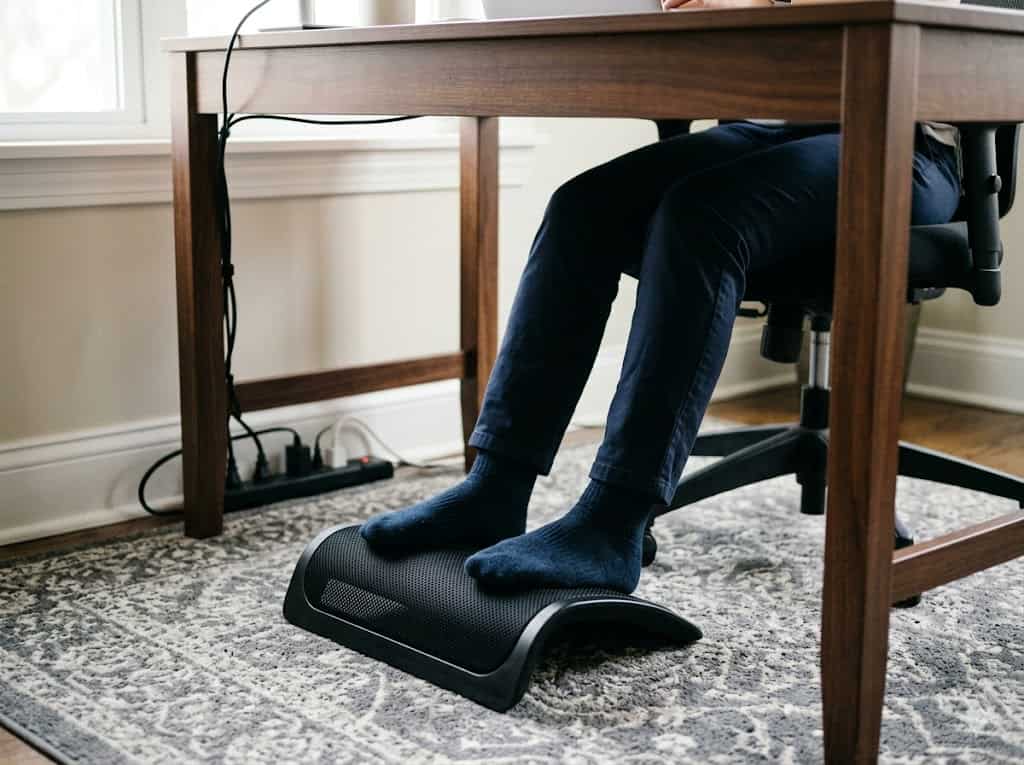
By mid-afternoon your feet are either dangling off the chair or planted on a hard floor, and your lower back has started to complain. An under desk footrest fixes that by giving your feet a supportive place to rest, which keeps your hips and spine in a more neutral line through a long workday. The picks below cover plush memory foam, rocking wooden models, and fully adjustable options.
Quick verdict
- Best overall: ErgoFoam Adjustable Foot Rest, supportive foam with a height-adjustable cover.
- Best value: Everlasting Comfort Memory Foam Footrest, plush support for less.
- Best adjustable: Fellowes Office Suites Foot Rest, height and tilt you can set.
Disclosure: RestRight is reader-supported. As an Amazon Associate, we earn from qualifying purchases made through links on this page, at no extra cost to you.
How We Picked the Best Under Desk Footrests
We focused on what makes a footrest actually help posture: the right height, a supportive surface, and a size that fits real desks. A footrest works by lifting your feet so your hips sit at or slightly above knee level, which keeps the pelvis neutral and takes strain off the lower back. We weighed adjustability, surface comfort, build quality, and footprint, and we included both static and rocking designs since people use them differently.
1. ErgoFoam Adjustable Foot Rest
Why It Stands Out
The ErgoFoam pairs firm-but-plush memory foam with a removable cover that lets you set two height levels. That adjustability matters because the right footrest height depends on your chair and desk. It is a comfortable, flexible pick for most home setups.
Worth Knowing
The foam is supportive rather than squishy, so your feet do not bottom out over a long day. The cover is washable, which helps in a shared or busy workspace. It sits on the floor as a static rest, so it does not rock.
It suits most desk workers who want comfort and a couple of height options without fuss. Skip it if you specifically want a rocking footrest for active feet or a hard, tilting surface, where a different design fits better.
Check Price on Amazon2. Everlasting Comfort Memory Foam Footrest
Why It Stands Out
The Everlasting Comfort footrest is a popular, well-priced memory foam option that delivers plush support. Its teardrop shape lets you rest feet flat or angle them slightly, which eases pressure during long sits. For the money, it covers the basics well.
Worth Knowing
It is a single-height foam wedge, so you cannot adjust the lift the way an adjustable model allows. The soft foam is comfortable but may feel too plush for people who prefer a firm rest. The non-slip bottom helps it stay put.
It fits anyone who wants comfortable support at a friendly price and does not need height adjustment. Skip it if your chair height demands a specific lift or you prefer a firm, tilting surface.
Check Price on Amazon3. Fellowes Office Suites Foot Rest
Why It Stands Out
The Fellowes Office Suites rest is an office staple with adjustable height and a tilting, rocking platform. You can set the angle and lift to match your desk, and the surface lets your feet move slightly through the day. That movement suits people who fidget.
Worth Knowing
It is a harder platform than a foam rest, so it is about positioning more than cushioning. The adjustment makes it adaptable across different chair and desk heights. The textured surface helps keep feet in place.
It suits someone who wants to dial in height and tilt and likes a rocking platform. Skip it if you want soft cushioning underfoot, where a memory foam model is more comfortable.
Check Price on Amazon4. StrongTek Wooden Rocking Footrest
Why It Stands Out
The StrongTek is a wooden rocking footrest that lets your feet and ankles move while you sit. The gentle rocking encourages circulation and keeps your legs from going static. It is a sturdy, minimalist pick that suits a tidy desk.
Worth Knowing
The wood surface is hard, so it is about motion and positioning rather than cushioning. It has a textured top to keep feet steady as it rocks. It is built to take daily use without wearing out.
It fits restless sitters who want active movement and a durable, simple design. Skip it if you want soft support or a fixed, stable platform, where foam or a static rest works better.
Check Price on Amazon5. HUANUO Adjustable Foot Rest
Why It Stands Out
The HUANUO offers adjustable height and a tilting surface at a mid-range price, with a design built for under-desk use. The height options help you match it to your chair, and the angle eases ankle strain. It is a versatile all-rounder.
Worth Knowing
The platform leans firm, so it is more about position than plush comfort. The adjustable feet make it adaptable across setups. A textured surface keeps feet from sliding.
It suits someone who wants adjustability without a premium price. Skip it if you want the softest possible cushioning or a pure rocking motion, where other picks specialize.
Check Price on Amazon6. Kensington Memory Foam Foot Rest
Why It Stands Out
The Kensington memory foam rest is a comfortable, office-grade option from a known ergonomics brand. The foam supports the feet evenly, and the sloped shape promotes a neutral leg position. It is a dependable choice for a standard desk.
Worth Knowing
It is a single-height foam design rather than an adjustable platform. The cover and base are built for daily office use. The slope is fixed, so check that the angle suits you.
It fits someone who wants reliable foam support from an established brand. Skip it if you need adjustable height or a rocking surface.
Check Price on AmazonRecommended read: A footrest is one piece of the setup. See our guide to relieving back pain from working from home and our best seat cushions for tailbone pain.
How to Choose an Under Desk Footrest
A few details decide whether a footrest actually helps. Match these to your desk and how you sit.
Height and Adjustability
The right height lifts your feet so your hips sit at or slightly above knee level. If your chair and desk are fixed, an adjustable footrest lets you fine-tune that lift. A single-height model works if it happens to match your setup.
Surface: Foam or Hard
Memory foam cushions the feet and suits people who want comfort, while a hard platform is about positioning and movement. Foam feels better for long static sits, and a hard surface pairs with rocking designs. Pick based on whether you want cushioning or motion.
Static or Rocking
A static rest gives a stable place to plant your feet, while a rocking footrest lets your ankles move to encourage circulation. Restless sitters often prefer rocking, and people who want a firm anchor prefer static. Neither is better; they suit different habits.
Size and Grip
Check that the footrest is wide enough for both feet and fits the space under your desk. A non-slip base keeps it from sliding on hard floors. Measure your clearance before buying so it actually fits, and remember that a wider top lets you shift your feet around through the day.
Footrest vs Standing Desk
Both aim to ease the strain of a long workday, but they solve different problems.
Where a Footrest Wins
A footrest is cheap, simple, and fixes the specific issue of dangling or poorly supported feet while seated. It improves your seated posture without changing your whole setup. For most people, it is the faster, lower-cost fix.
Where a Standing Desk Wins
A standing desk lets you alternate between sitting and standing, which changes the load on your spine through the day. The two are not mutually exclusive, and many people use both. Our guide to back pain from working from home covers how to combine them.
| If you are | Best fit | Skip |
|---|---|---|
| After comfort plus a couple of height options | ErgoFoam Adjustable | Rocking-only designs |
| Watching the budget | Everlasting Comfort | Adjustable-height needs |
| Wanting set height and tilt | Fellowes Office Suites | Soft-cushion seekers |
| A restless sitter who likes motion | StrongTek Wooden Rocking | Plush-support fans |
Prices on these move around, so check the current cost before buying.
Building a Comfortable Workstation
A footrest is one piece of a setup that keeps your back happy through a long day. A few companions do the rest. Together they remove the common reasons a desk leaves you sore.
Add Lower-Back Support
Most chairs offer little support for the lower back, which is where slouching starts. A supportive cushion restores that curve, and our best seat cushions for tailbone pain and ergonomic pillows for desk workers cover the options. Pair one with your footrest for a bigger improvement than either alone.
Mind Your Posture and Screen
Keep your screen near eye level and your shoulders relaxed so your neck stays neutral. A posture corrector can help if you slump without noticing. Our guide to back pain from working from home ties the whole setup together.
Move and Stretch
No setup replaces regular movement, so stand and stretch through the day. A foam roller helps release a tight back after work, and a back stretcher gives the lower back a gentle extension. Build short breaks into the day rather than sitting for hours.
Common Under Desk Footrest Mistakes to Avoid
A few missteps mean a footrest that does not help, or even hurts. Watch for these.
Getting the Height Wrong
Too high pushes your knees up and shifts strain to your hips, while too low does nothing. Aim for a lift that keeps hips at or slightly above knee level. An adjustable model helps you find that sweet spot.
Choosing the Wrong Surface
A hard platform frustrates someone who wanted cushioning, and a soft wedge annoys someone who wanted to rock. Decide whether you want comfort or movement before buying. The surface is the choice people most often get wrong.
Treating It as the Only Fix
A footrest helps seated posture, but screen height, lower-back support, and regular movement matter too. Pair it with the rest of a sound setup. One accessory does not fix a whole workstation.
Frequently Asked Questions
What is the best under desk footrest?
For most people, the ErgoFoam Adjustable Foot Rest is the top pick thanks to supportive foam and adjustable height. The Everlasting Comfort is the value choice, and the Fellowes Office Suites is best if you want to set both height and tilt.
Do footrests actually help with back pain?
A footrest can help by keeping your feet supported and your hips neutral, which reduces strain on the lower back during long sits. It works best as part of a good setup with proper screen height, lower-back support, and regular movement, since no single accessory fixes a whole workstation on its own.
How high should a footrest be?
Set it so your feet rest flat with your hips at or slightly above knee level, keeping your thighs roughly parallel to the floor. An adjustable footrest lets you fine-tune this to your chair and desk height.
Foam or hard footrest, which is better?
Neither is universally better. Foam cushions the feet and suits long static sitting, while a hard or rocking platform is about positioning and movement. Choose based on whether you want comfort or active motion.
Are rocking footrests better than static ones?
Rocking footrests let your ankles move, which some people find encourages circulation and reduces fidgeting. Static rests give a stable anchor for your feet. The better choice depends on whether you like to keep your feet still or moving.
Will a footrest fit under my desk?
Most footrests are compact, but clearance varies, so measure the space under your desk first. Check both the width for both feet and the height of the footrest plus your legs. A non-slip base helps it stay in place.
Where can I learn more about desk ergonomics?
The Mayo Clinic office ergonomics guide covers desk setup and posture in detail. The CDC also publishes guidance on reducing sedentary strain at work.
Related Reading
Explore more: mattresses under 1000, under bed storage, and mattress toppers under 100. Also explore: foot massagers bedtime relaxation.
Recommended Reading
See also our guides to how to recover from jet lag.
Standing all day needs floor support. standing desk mats covers cushioning and thickness.
