
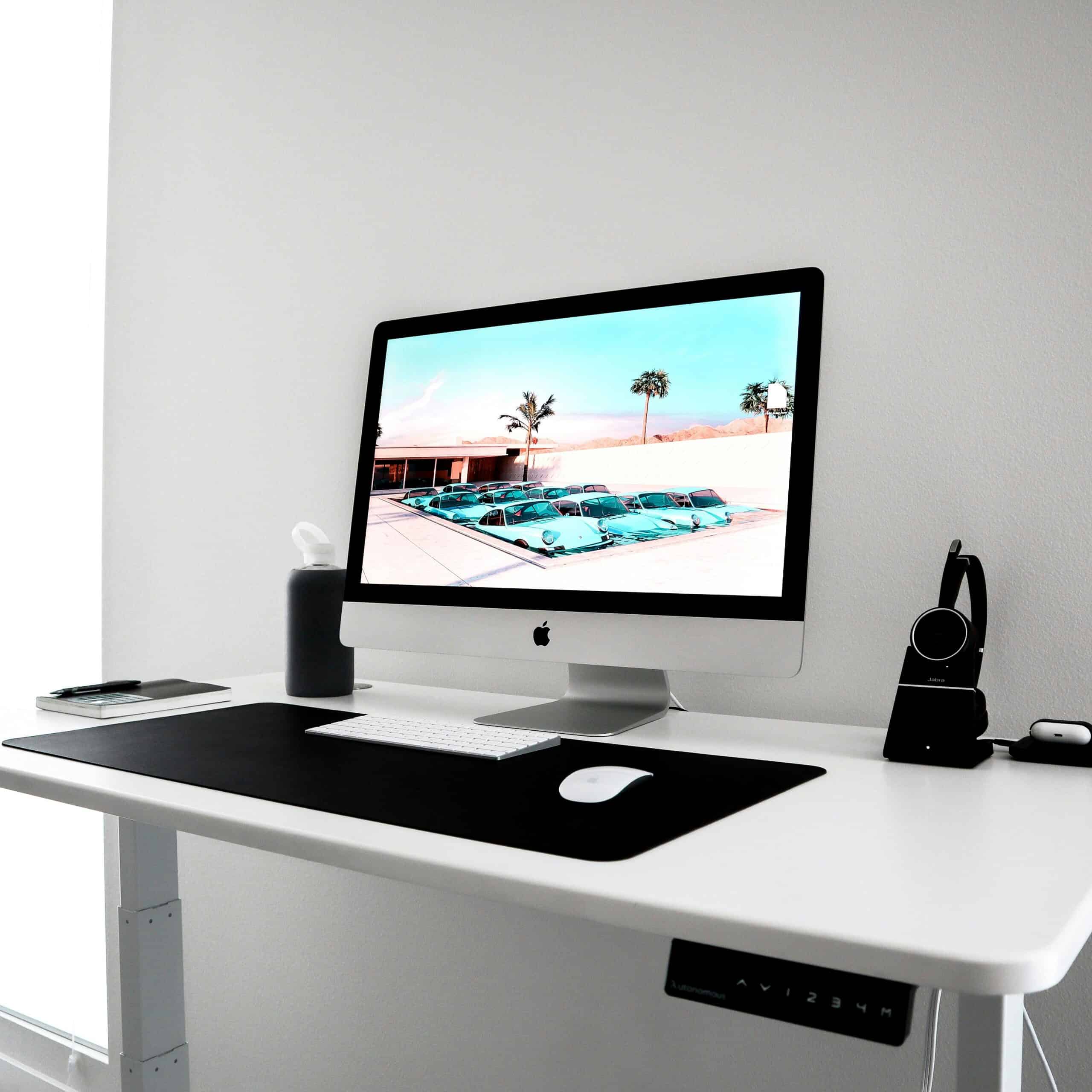
A standing desk mat cushions your feet and legs while you work at a standing desk, reducing the fatigue and soreness that come from standing on a hard floor for hours. The best standing desk mats offer real anti-fatigue cushioning, a supportive but not too-soft surface, and a size and durability that suit your setup. The trade-offs that matter most are the cushioning and thickness, the surface texture and features, and the size and material. Below are six standing desk mats worth buying, from flat cushioned mats to contoured terrain designs, with a plain guide to choosing the right one. For a fuller ergonomic setup, see our guides to the best office chairs for back pain and under-desk footrests.
Quick Verdict
For most people, a thick cushioned anti-fatigue mat is the right default, balancing supportive foam with stability for long standing sessions. Those who stand for hours may prefer a contoured terrain mat for active movement, wide desks suit a large mat, and busy spaces benefit from a durable wipe-clean polyurethane mat.
Why Trust This Guide
Independent picks, reader-supported through affiliate links at no cost to you. Selections draw on product research, manufacturer specs, and general ergonomic guidance on standing comfort.
Key Takeaways
- A standing desk mat cushions your feet and legs to reduce fatigue on hard floors.
- Supportive but not too-soft foam keeps you comfortable and stable.
- Contoured terrain mats encourage movement for people who stand for long periods.
- A larger mat gives room to shift stance and reposition.
- Durable polyurethane mats wipe clean and last well in busy spaces.
How We Picked the Best Standing Desk Mats
Picks were chosen on anti-fatigue cushioning, surface features, size, and durability, then cross-checked against reviewer consensus and manufacturer specs.1 Because standing comfort depends on supportive rather than overly soft cushioning, balanced anti-fatigue foam was prioritized. The goal was a short list from flat cushioned to contoured terrain mats rather than six near-identical products.
1. Cushioned Anti-Fatigue Mat, Best Overall
A thick, cushioned anti-fatigue mat is the best all-around choice, providing supportive foam that eases pressure on your feet, legs, and lower back during long standing sessions. It suits most standing desks.
Why It Stands Out
Dense anti-fatigue foam encourages the subtle muscle movement that reduces fatigue while cushioning hard floors, so you can stand comfortably for longer. A supportive, not overly soft, surface keeps you stable. For most standers, this balanced cushioning is exactly what is needed.
Worth Knowing
Very soft mats can feel unstable, so look for firm, supportive foam rather than the softest option. Check the thickness suits your comfort preference.
Pair standing sessions with a good chair from our office chairs guide for sit-stand balance.
Best For: Best for most people at a standing desk wanting balanced anti-fatigue cushioning. Skip only if you want active movement features, where a terrain mat fits better.
2. Contoured Terrain Mat, Best for Active Standing
A contoured or terrain mat has raised areas, mounds, and edges that encourage you to shift position, stretch, and move your feet, promoting active standing.
Why It Stands Out
The built-in contours give your feet places to flex, roll, and stretch, which keeps your legs moving and reduces the stiffness of standing still. It turns passive standing into subtle active movement. For people who stand for long stretches, this movement helps a lot.
Worth Knowing
The raised terrain is a matter of preference and takes getting used to, and it suits standing more than a flat surface for occasional sitting. Some find it too busy underfoot.
Best For: Best for people who stand for long periods and want to keep moving. Skip if you prefer a simple flat cushioned surface.
3. Large Standing Desk Mat, Best for Room to Move
A larger anti-fatigue mat gives you more space to shift your stance, step side to side, and reposition, useful for wider standing desks and people who move around.
Why It Stands Out
Extra surface area means you are not confined to one spot, so you can change your stance and stay comfortable over a long session. It suits wider desks and taller users with a longer stride. More room supports natural movement.
Worth Knowing
A large mat takes up more floor space and can be harder to move or store. Measure your standing area before choosing a size.
Best For: Best for wide desks and people who like room to shift position. Skip if your standing area is compact.
4. Mat With Massage Points, Best for Foot Stimulation
A mat with massage points, bumps, or a foot roller adds gentle stimulation for your feet, appealing to people who want extra circulation and comfort while standing.
Why It Stands Out
Textured massage areas and sometimes a built-in foot roller let you stimulate your soles and keep blood flowing during long stands. The extra features add comfort beyond plain cushioning. For foot comfort, these touches are a nice bonus.
Worth Knowing
Massage textures are a preference and can feel like too much for some, so try to gauge your tolerance. The core still needs to be a supportive anti-fatigue base.
Best For: Best for people who want foot stimulation and circulation while standing. Skip if you prefer a plain cushioned surface.
5. Budget Anti-Fatigue Mat, Best Value
An inexpensive anti-fatigue mat covers the basics for a low price, an easy way to add cushioning to a standing desk without spending much.
Why It Stands Out
Even a budget mat provides cushioning that beats standing on a bare hard floor, making standing comfortable for less. The low cost suits a first mat or a second workstation. Basic foam still eases foot and leg fatigue.
Worth Knowing
Cheaper mats may be thinner, less durable, or flatten over time, so check the foam quality. Treat one as a practical starter rather than a long-term premium mat.
Best For: Best for adding affordable cushioning to a standing desk. Skip if you want premium foam or movement features.
6. Wipe-Clean Polyurethane Mat, Best for Durability
A polyurethane anti-fatigue mat has a durable, wipe-clean surface that resists wear and spills, good for busy or shared workspaces.
Why It Stands Out
Polyurethane mats are hard-wearing and easy to clean, standing up to daily use and the occasional spill better than softer foams. They keep their support over time. For durability and easy maintenance, this material excels.
Worth Knowing
Polyurethane can feel firmer than plush foam, which some prefer and others find less cushioned. Confirm it still offers genuine anti-fatigue support.
See our under-desk footrests guide for seated comfort too.
Best For: Best for busy or shared spaces needing durability and easy cleaning. Skip if you want the plushest possible cushioning.
Standing Mat Types at a Glance
| Type | Best For | Movement | Cushioning |
|---|---|---|---|
| Cushioned flat | Most people | Passive | High |
| Contoured terrain | Active standing | Active | Medium |
| Large mat | Wide desks | Room to shift | High |
| Polyurethane | Durability | Passive | Firm |
How to Choose a Standing Desk Mat
Look for supportive, not too-soft, cushioning
The best anti-fatigue mats are supportive enough to keep you stable while cushioning the floor, rather than being so soft they feel unstable. A firm but cushioned foam encourages the subtle movement that reduces fatigue.
Decide flat or contoured
A flat cushioned mat suits most people, while a contoured terrain mat adds features that encourage movement and stretching for those who stand a long time. Choose based on whether you want simple cushioning or active standing.
Match the size to your space
A larger mat gives room to shift your stance, which suits wide desks and people who move, while a compact mat fits tight areas. Measure your standing space before choosing a size.
Common Standing Mat Mistakes to Avoid
Choosing the softest mat
A mat that is too soft feels unstable and can actually increase fatigue. Look for firm, supportive anti-fatigue foam rather than the plushest option.
Standing all day without sitting
A mat helps, but standing all day is still tiring, so alternate sitting and standing. Use the mat as part of a sit-stand routine rather than standing constantly. Both heights matter for a sit-stand setup, and our desk height calculator gives each one.
Ignoring mat thickness and edges
A mat that is too thin offers little cushioning, and sharp or curling edges are a trip hazard. Check the thickness and that the edges are beveled and lie flat.
Flat, Terrain, or Large: Which Fits You
Flat cushioned for everyday comfort
If you want simple, supportive cushioning for your standing desk, a thick flat anti-fatigue mat is the versatile default. It eases foot and leg fatigue while keeping you stable, suiting most standers.
Terrain for active standing
If you stand for hours and want to keep moving, a contoured terrain mat gives your feet places to flex and stretch. It turns passive standing into subtle movement that helps reduce stiffness.
Large for room to move
If you have a wide desk or like to shift position, a larger mat gives you space to step and reposition. Just measure your area first, since a big mat takes up more floor space.
Frequently Asked Questions About Standing Desk Mats
Do standing desk mats really work?
Yes, anti-fatigue standing mats cushion hard floors and encourage subtle muscle movement, which reduces the foot, leg, and lower-back fatigue of standing for long periods. They work best as part of a sit-stand routine rather than standing all day.
What is the best type of standing desk mat?
A thick, supportive cushioned anti-fatigue mat suits most people, while those who stand for hours may prefer a contoured terrain mat that encourages movement. The key is firm, supportive foam rather than the softest option.
How thick should a standing desk mat be?
A mat needs enough thickness to cushion a hard floor without being so soft it feels unstable, and many good anti-fatigue mats fall in a moderate thickness range. Look for supportive foam and beveled edges that lie flat.
Are contoured standing mats better than flat ones?
Contoured terrain mats encourage more movement and stretching, which helps people who stand for long periods, while flat mats offer simple stable cushioning. Which is better depends on whether you want active movement or plain comfort.
Can a standing mat help with back pain?
By cushioning the floor and encouraging movement, a standing mat can reduce the leg and lower-back fatigue of standing, though it is one part of good ergonomics. Alternating sitting and standing and a supportive chair also matter for back comfort.
How do I clean a standing desk mat?
Most anti-fatigue mats wipe clean with a damp cloth, and durable polyurethane mats handle spills and cleaning especially well. Check the manufacturer’s care guidance for the specific material.
Should I stand all day at a standing desk?
No, standing all day is tiring even with a mat, so alternate sitting and standing throughout the day. A standing mat makes the standing portions more comfortable as part of a balanced sit-stand routine.
Recommended Reading
- Best Office Chairs for Back Pain
- Best Under-Desk Footrests
- Best Ergonomic Pillows for Desk Workers
- Best Posture Correctors
Sources
- General guidance on ergonomics and standing comfort from established ergonomic and health information sources.
Standing all day affects how you sleep. managing pain for better sleep covers the overlap.
