
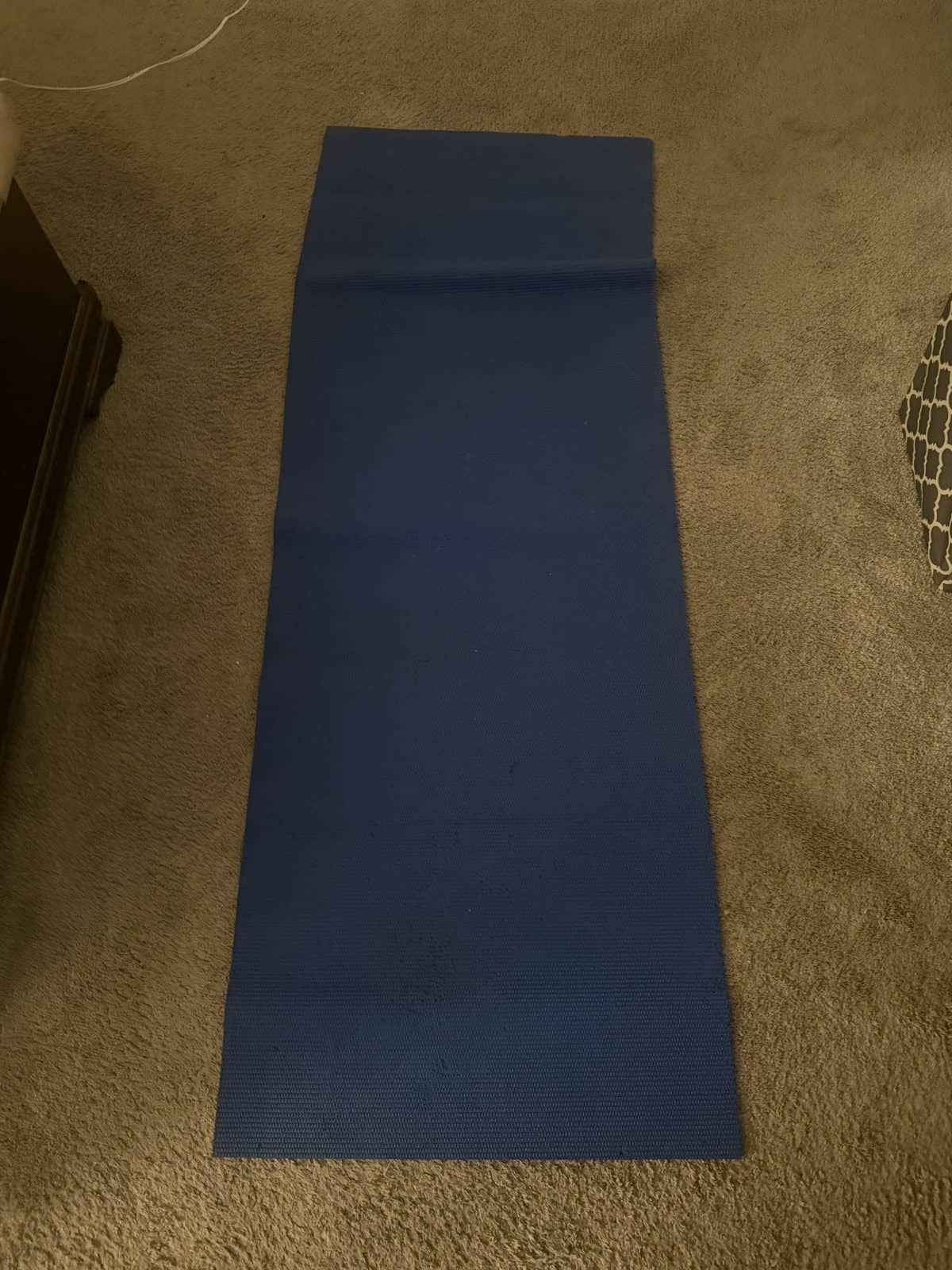
A good stretching session falls apart on a mat that is too short, too thin, or slides across the floor. The best stretching mats give you room to lie down full length, enough cushion to protect your spine and joints when you roll out, and enough grip to hold still while you move. If you stretch or foam roll to loosen a tight back and unwind before bed, the mat is the quiet piece of gear that makes the whole routine comfortable instead of a chore. Length matters more than most people expect, since a mat that leaves your head or heels on the hard floor undercuts half the stretches you want to do.
I use one of these daily and care most about length, since I am on the taller side and a standard mat leaves me hanging off the end. This guide pairs that hands-on use with product research and the sources cited below. Since a mat is where you roll out too, our guide to foam rollers pairs naturally with the right surface underneath you.
The Manduka PRO is the pick most people should start with, thanks to a dense, joint-friendly cushion, real durability, and an extra-long version for taller users. Want the most room to stretch and roll? The Gorilla Mats large exercise mat. On a budget, the Gaiam Essentials covers the basics.
Reader-supported through affiliate links at no cost to you. I stretch and foam roll on a long mat daily and prioritize length because I am tall, so the first-person notes are genuine. Health context is kept conservative and grounded in the sources cited below, since stretching should be adjusted to your own body and any injury.
- Length is the most overlooked spec: taller users want a mat around 72 to 85 inches so the whole body stays on it.
- Cushion protects your spine and joints during floor work and foam rolling, but too soft hurts balance in standing stretches.
- Grip keeps the mat from sliding, which matters as much for safety as for comfort.
- Stretching and foam rolling support flexibility and recovery, but ease off or adjust technique if you have an injury.
How We Picked the Best Stretching Mats
We judged mats on the things that actually decide a comfortable session: length, cushion, grip, and durability. Length led, since a mat that leaves your head or heels off the end limits your stretches, and taller users especially need the long versions. Cushion came next, thick enough to protect the spine and joints when you roll out, but firm enough to keep you stable in standing poses. We looked for a grippy surface that stays put on hard floors and a build that survives daily use without flaking or thinning. We treated these as tools for flexibility and recovery. Cleveland Clinic notes that stretching helps warm up muscles, joints, and connective tissue and supports range of motion, which is the realistic benefit a good mat helps you access. We spread the picks from premium to budget so there is a fit for any routine.
1. Manduka PRO Yoga Mat
Why It Stands Out
The Manduka PRO is the durable, do-everything pick. Its dense cushion protects your spine and joints during floor work and foam rolling without feeling squishy, so you stay stable in standing stretches too. It is famously long-lasting, and it comes in an extra-long version that fits taller users who hang off standard mats. For a mat you will keep for years, it is the safe premium choice.
Worth Knowing
It is heavy and pricey, and the closed-cell surface needs a short break-in before it grips well, which some people speed up with a quick salt scrub. It is a home-base mat, not the lightest one to haul around.
Buy it if you want one lasting, joint-friendly mat, especially the long version. Skip it if you want something light and cheap.
Check Price on Amazon2. The Long Stretching Mat I Use
Why It Stands Out
This is the mat I actually use, so I will speak plainly about it. The reason I reach for it is the length: I am on the taller side, and most mats leave my head or heels on the hard floor, which ruins a full-body stretch or a roll-out down the spine. This one is long enough that I stay fully on it from head to heel, and it feels high quality underfoot, sturdy and supportive rather than thin and slippery. It has held up to daily stretching and foam rolling, and being able to lie out completely makes the whole routine more comfortable.
Worth Knowing
A longer mat takes more floor space and more room to roll up and store, which is the trade for the extra length. If yours is an unbranded mat like mine, look for the same things I value: real length for your height, a quality surface with grip, and cushion that supports without sinking.
Buy a mat like this if you are tall and want to stay fully on the mat. Skip it if a compact, standard-length mat already fits you fine.
Check Price on Amazon3. Gorilla Mats Premium Large Exercise Mat
Why It Stands Out
The Gorilla Mats large mat is the pick when you want space. Sold in oversized dimensions, it gives you room to stretch wide, roll out, and move through a routine without edging off the mat, which suits taller users and anyone who likes to spread out. The surface grips well and the cushion handles floor work comfortably.
Worth Knowing
A big mat is a big object to store and move, so it is best left rolled in a dedicated spot. It costs more than a standard mat, which is the price of the extra real estate.
Buy it if you want maximum room to stretch and roll. Skip it if floor space or storage is tight.
Check Price on Amazon4. Gaiam Essentials Yoga Mat
Why It Stands Out
The Gaiam Essentials is the value pick that covers the basics well. It offers a comfortable amount of cushion for floor stretches and rolling, a grippy surface, and a carry strap, all at a friendly price. For a first mat or a spare, it does everything most people need without fuss.
Worth Knowing
It comes in standard length, so very tall users may still hang off the end, and the softer foam is less durable than premium mats over years of hard use. It is a great starter rather than a lifetime mat.
Buy it if you want solid basics for less. Skip it if you need extra length or maximum durability.
Check Price on Amazon5. ProsourceFit Extra Thick Mat
Why It Stands Out
The ProsourceFit extra-thick mat is the cushioning pick for sensitive joints. Its thicker foam pads knees, elbows, and the spine during floor work and foam rolling, which helps anyone who finds thin mats hard on the body. It is a comfortable surface for gentle stretching and recovery sessions.
Worth Knowing
Extra thickness trades away stability, so it is less ideal for balance-heavy standing poses where you want to feel the floor. The soft foam also shows wear sooner than dense premium mats.
Buy it if joint comfort is your priority. Skip it if you do a lot of standing balance work.
Check Price on Amazon6. Retrospec Solana Yoga Mat
Why It Stands Out
The Retrospec Solana is the budget pick that looks and feels better than its price. It gives you a grippy, reasonably cushioned surface and a carry strap in a range of colors, making it an easy, affordable entry into a stretching routine. For occasional use, it is plenty.
Worth Knowing
It is standard length and standard thickness, so it will not solve a tall user’s overhang or a sensitive-joint need for extra padding. Treat it as a dependable starter mat.
Buy it if you want the lowest-cost decent mat. Skip it if you need length or heavy-duty durability.
Check Price on AmazonStretching Mats at a Glance
| If you want this | Reach for | Why |
|---|---|---|
| One durable, joint-friendly mat | Manduka PRO | Dense cushion, long-lasting, extra-long option |
| A long mat for a taller body | A long mat like the one I use | Stay fully on it from head to heel |
| Maximum room to stretch and roll | Gorilla Mats large mat | Oversized space, good grip and cushion |
| The best basics for less | Gaiam Essentials | Comfortable cushion and grip at a fair price |
| Extra joint cushioning | ProsourceFit Extra Thick | Thick foam pads knees, elbows, and spine |
| The lowest price | Retrospec Solana | Grippy, cushioned starter mat, many colors |
How to Choose a Stretching Mat
Length for Your Height
Length is the spec most people ignore and taller users feel the most. Standard mats run about 68 inches, which leaves anyone much over average height with their head or heels on the floor during full-body stretches and spine roll-outs. Longer mats around 72 to 85 inches keep you fully supported end to end. Measure your height against the mat length before buying, since no amount of cushion makes up for running out of mat.
Cushion and Thickness
Cushion protects your spine and joints when you lie down or roll out, but there is a balance. Too thin is hard on the knees and back, while too thick makes standing stretches wobbly because you cannot feel the floor. A medium thickness suits mixed stretching and rolling for most people, while a thicker mat is worth it if your joints are sensitive and you mostly do floor work.
Grip and Material
A mat that slides is both frustrating and unsafe, so grip matters. Denser rubber and textured surfaces hold their place on hard floors better than slick foam, especially once you add movement. Material also affects durability and feel: dense closed-cell mats last longest, while softer open-cell foam is cushier but wears faster.
Storage and Portability
A longer or thicker mat is more comfortable but bulkier to roll and store, so think about where it will live. If you keep it out in a dedicated spot, size is no issue; if it shares a closet or travels, a lighter standard mat with a strap is easier. Match the mat to your space, not just your stretches.
Common Stretching Mat Mistakes to Avoid
Buying Too Short
The most common regret is a mat that is too short. If your head or feet land on the floor during a lie-down stretch, the mat is not doing its job. Check the length against your height first, and size up if you are tall.
Going Too Thick for Everything
A plush mat feels great for floor work but sabotages standing balance, since you cannot feel the ground. If you mix standing and floor stretches, a medium thickness serves you better than the thickest option available.
Forcing a Cold Stretch
Stretching a cold muscle raises the risk of strain, so warm up first, and some people add foam rolling before a workout to get blood flowing. Ease into each stretch rather than bouncing or forcing depth, and never stretch through sharp pain.
Ignoring an Injury
A mat makes stretching comfortable, but it does not make every stretch safe. If you have a chronic condition or an injury, you may need to adjust your technique, since stretching a strained muscle can cause further harm. When in doubt, check with a professional.
Frequently Asked Questions
What length stretching mat do I need if I am tall?
Standard mats run about 68 inches, which is short for many taller people. Look for a mat around 72 to 85 inches so your whole body stays on it during lie-down stretches and spine roll-outs. Measure your height against the listed length before buying.
What is the difference between a yoga mat and a stretching mat?
They overlap heavily. A yoga mat is a stretching mat, and most people use the same mat for yoga, stretching, and foam rolling. For stretching and rolling out specifically, prioritize length and cushion over the thin, grippy mats favored for fast-flowing yoga.
How thick should a stretching mat be?
A medium thickness suits most people who mix standing and floor work. Go thicker if your joints are sensitive and you mostly stretch on the floor, and thinner if you do a lot of standing balance poses where you want to feel the ground.
Can I foam roll on a yoga or stretching mat?
Yes, a cushioned mat is a comfortable surface for foam rolling, protecting your spine and joints against the hard floor. Foam rolling is a self-massage technique that can help ease sore, tight muscles, and a good mat underneath makes it easier to relax into.
Does stretching before bed help sleep?
Gentle stretching can be a calming part of a wind-down routine that helps some people relax before sleep. Keep it light and slow rather than intense, and pair it with a consistent pre-bed routine for the best effect.
How do I keep my mat from sliding?
Choose a denser, textured mat that grips hard floors, make sure both the mat and floor are clean and dry, and give a new closed-cell mat a short break-in period. If a mat still slips, a thin rug or mat gripper underneath can help.
How do I clean a stretching mat?
Wipe it down with a damp cloth and a little mild soap or a diluted vinegar solution, then let it air dry fully before rolling it up. Avoid harsh cleaners that break down the surface, and clean it regularly if you use it daily.
Is stretching on a mat safe for everyone?
Most people tolerate gentle stretching well, but it is not one-size-fits-all. If you have an injury or a chronic condition, adjust your technique or check with a professional, since stretching a strained muscle can worsen it.
Anything done nightly benefits from a set place in the evening. Structuring a bedtime routine covers building that.
A mat and a table solve different problems. table against mat covers the height difference.
