
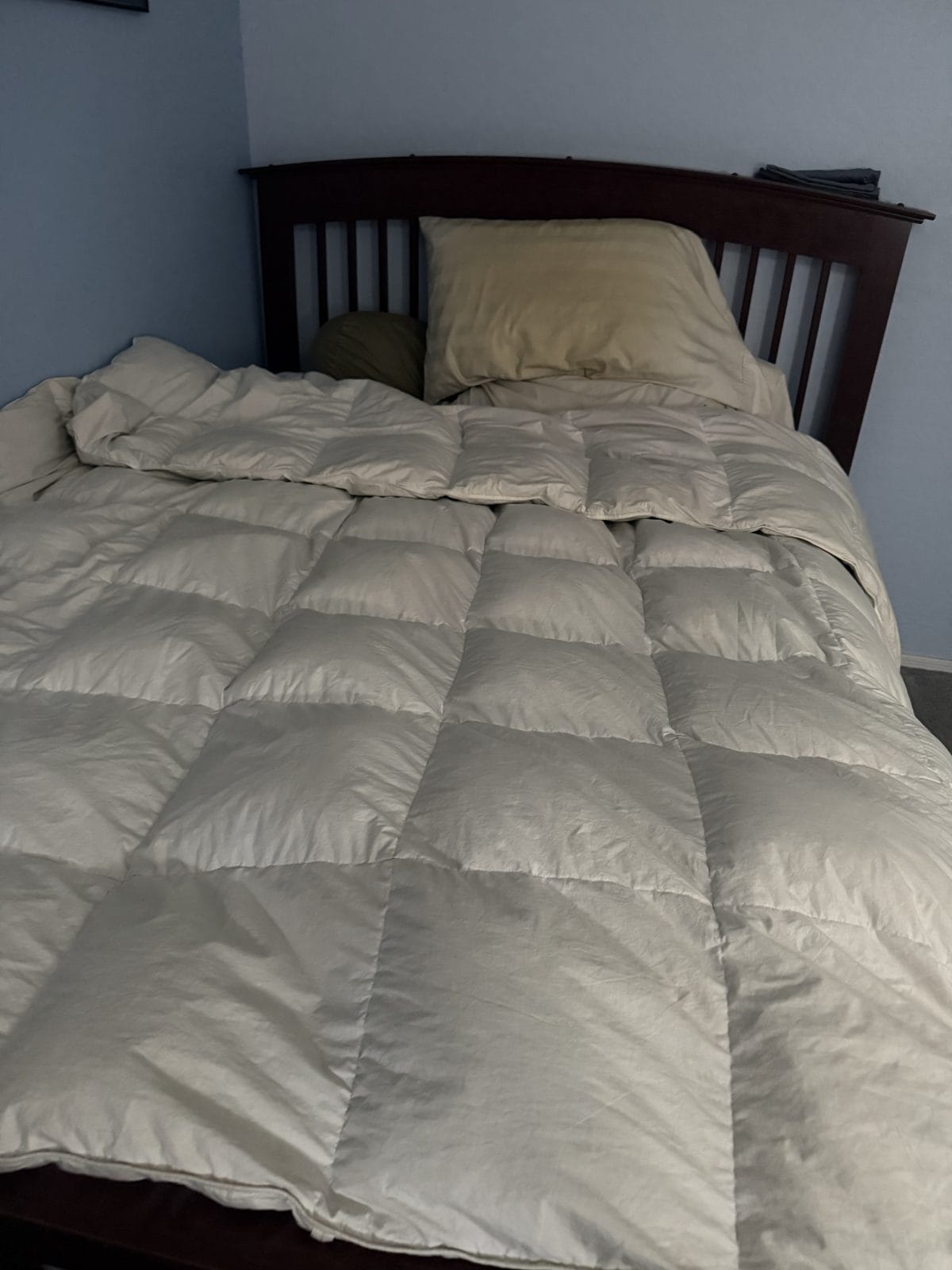
To rotate a mattress, strip the bedding, turn the mattress 180 degrees so the head end is now at the foot, and settle it back onto the foundation. Learning how to rotate a mattress the right way keeps wear even, so no single spot breaks down before the rest and the bed keeps feeling supportive. I rotate my own memory foam mattress at least once every couple of months, and doing it on the day I strip the sheets for washing makes it a painless habit. This is my routine plus general care guidance, not a manufacturer manual, so check your mattress’s own care label too. If your bed already dips, our guide to why a mattress sags is worth a read first.
Quick Verdict: Rotate your mattress 180 degrees, head to foot, on a regular rhythm to spread out wear and keep support even. Most modern foam and one-sided mattresses should be rotated, not flipped. Tie it to sheet-changing day so it becomes automatic, and get a second person to help with anything heavy.
Why Trust This Guide: I sleep on a memory foam mattress and rotate it regularly as part of caring for my own bed, so the routine here is what I actually do rather than theory. Where I describe how different mattress types should be handled, that reflects standard mattress care, and I flag clearly where flipping does not apply to modern one-sided beds.
Key Takeaways:
- Rotating means turning the mattress 180 degrees head-to-foot; flipping means turning it over.
- Most modern foam and one-sided mattresses should be rotated only, never flipped.
- Regular rotation spreads out wear so body impressions and sagging develop more evenly.
- Tying rotation to sheet-changing day makes it an easy, repeatable habit.
- Heavy mattresses are far easier and safer to rotate with a second person.
How to Rotate a Mattress Step by Step
The whole job takes only a few minutes, and it is easiest with the bed already stripped. Clear the area around the bed first so you have room to turn the mattress.
- Strip the bedding. Remove sheets, protector, and any topper so you are working with the bare mattress. This is why sheet-changing day is the natural time to do it.
- Clear the space. Move nightstands or anything close to the bed so you have room to swing the mattress around.
- Lift and pivot. Lift the mattress slightly and rotate it 180 degrees, so the end that was at the head is now at the foot.
- Reseat it squarely. Lower the mattress back onto the foundation and line it up evenly with the frame on all sides.
- Check the base. Give the foundation or slats a quick look while the mattress is off, since a solid base is what keeps everything feeling sturdy.
- Remake the bed. Add the protector, fresh sheets, and topper, and you are done until next time.
Rotate vs Flip: Know Your Mattress Type
The single most important thing to get right is whether your mattress should be rotated only or can also be flipped. Most modern mattresses, including memory foam and other one-sided designs, are built with comfort layers on top and a support base beneath, so they should be rotated head-to-foot but never turned over. Flipping a one-sided mattress puts the hard base against your body and can damage the comfort layers. Older two-sided innerspring mattresses were made to be flipped as well as rotated, so if you have one of those, turning it over is fine. When in doubt, rotate rather than flip, and check your mattress type, since the difference between a foam and a spring bed is covered in our memory foam versus spring mattress guide.
How Often Should You Rotate a Mattress?
A steady rhythm matters more than a precise interval, and every few months is a sensible baseline for most beds. I rotate mine at least once every couple of months, which keeps the surface from settling into one shape and helps everything even out. Newer mattresses and heavier or shared beds benefit from the more frequent end of that range, since they take on wear faster. The easiest way to stay consistent is to attach rotation to something you already do, like stripping the sheets for laundry, so you are not relying on memory. Whatever cadence you choose, a regular one beats an occasional deep effort, and it extends how long the mattress stays comfortable, a point our guide on how long mattresses last expands on.
Why Rotating Your Mattress Matters
Rotation matters because you sleep in the same spots night after night, and without it those areas compress faster than the rest. Turning the mattress head-to-foot spreads that load around, so body impressions and early sagging develop more evenly instead of forming a permanent dip where you lie. The payoff is a bed that keeps feeling consistent and sturdy underfoot rather than lopsided, which is exactly what I notice when I keep up with it. Even support also treats your body better over a long night. Rotation will not rescue a mattress that is already worn out, so if yours sags no matter what, that is a sign to look closer at the mattress or its protection and care rather than just rotating more.
Making Rotation an Easy Habit
The reason rotation sticks for me is that I never treat it as a separate chore. On the day I take the sheets off to wash them, the mattress is already bare and the bed is already pulled apart, so giving it a 180-degree turn adds barely a minute. By the time fresh sheets go on, it is done, and I do not have to think about scheduling it again. Pairing it with laundry day also means it happens on a natural rhythm rather than whenever I happen to remember. If you wash your bedding regularly, that same trick keeps your rotation consistent without any extra planning, and it pairs well with keeping the rest of the bed in good shape, like following tips to keep sheets from pilling.
Common Mattress Rotation Mistakes to Avoid
Flipping a one-sided mattress
Turning a memory foam or other one-sided mattress over puts the hard base against you and can ruin the comfort layers. Rotate these head-to-foot only, and save flipping for genuine two-sided mattresses.
Forgetting to do it at all
An unrotated mattress wears fastest where you sleep, forming a dip. Tie rotation to sheet-changing day so it actually happens on a regular basis.
Ignoring the foundation
A sagging base makes even a good mattress feel worn. While the mattress is off, check the slats or foundation, since a solid base is half of what keeps the bed sturdy.
Wrestling a heavy mattress alone
Large or dense mattresses are awkward and heavy, and rotating one solo risks strain or a dropped corner. Grab a second person for anything you cannot easily handle.
Recommended Reading:
- How to clean a mattress, another job for sheet-changing day.
- Memory foam mattresses, if yours is due for replacing.
- How to store a mattress, for moves and spare beds.
How to Rotate a Mattress FAQ
How do you rotate a mattress?
Strip the bedding, clear space around the bed, then lift and turn the mattress 180 degrees so the head end moves to the foot. Reseat it squarely on the foundation and remake the bed. It takes only a few minutes and is easiest right after you remove the sheets.
How often should you rotate a mattress?
Every few months is a good baseline, and I rotate mine at least once every couple of months. Newer, heavier, or shared beds do well on the more frequent end. The simplest way to stay consistent is to tie rotation to sheet-changing day so you never have to track it separately.
Should I rotate or flip my mattress?
Most modern foam and one-sided mattresses should be rotated head-to-foot only and never flipped, since flipping puts the hard base against you. Older two-sided innerspring mattresses can be flipped as well as rotated. When unsure, rotate rather than flip and check your mattress type.
Does rotating a mattress really help?
Yes. Because you sleep in the same spots, those areas wear faster, and rotating spreads that load so impressions and sagging develop more evenly. It keeps support consistent and extends comfort, though it cannot revive a mattress that is already worn out.
Can rotating fix a sagging mattress?
Rotation helps prevent uneven sagging, but it will not repair a mattress that has already broken down. If your bed dips no matter how often you rotate it, the mattress or its base may be worn, and it is time to look at replacement or the foundation.
Do memory foam mattresses need to be rotated?
Yes, most memory foam mattresses benefit from regular rotation to keep wear even, but they should only be rotated, not flipped, because they are one-sided. Check your specific mattress’s care guidance, since a few models are designed to need no rotation at all.
See the complete guide: the complete mattress selection framework.
