
For the foundational guidance behind these picks, see the complete mattress selection framework.
Bassinet or crib is one of the first sleep decisions new parents face, and the good news is it is not either-or: many families use a bassinet for the early months and move to a crib later. What matters most is that whichever you choose meets safe-sleep guidance, with a firm, flat surface and a bare sleep space. This guide compares the two on size, portability, longevity, and cost, and keeps safety front and center. This is general information, not medical advice; follow your pediatrician and current safe-sleep guidance.
Quick Verdict
A bassinet is smaller, portable, and fits beside your bed, which suits the early newborn months and room-sharing, but babies outgrow it within months. A crib is larger and lasts into toddlerhood but is not portable. Many families use a bassinet first, then a crib. Whichever you choose, it must have a firm, flat mattress and a bare sleep space, with the baby placed on their back.1
Why Trust This Guide
Independent, reader-supported through affiliate links at no cost to you. Because infant sleep is a safety topic, this guidance follows the American Academy of Pediatrics and the U.S. Consumer Product Safety Commission rather than marketing claims, with sources cited below. This is not medical advice; always follow current safe-sleep guidance and your pediatrician.
Key Takeaways
- Bassinets are compact and portable for early months and bedside room-sharing; babies outgrow them quickly.2
- Cribs are larger and last into toddlerhood but stay in one place.
- Both must have a firm, flat mattress that fits snugly, with a bare sleep space and back sleeping.1
- Many families use a bassinet first and transition to a crib, following the product’s weight and development limits.2
How We Compared Them
We weighed the factors new parents actually decide on: size and portability, how long each lasts, cost over time, and where each fits in the early months versus toddlerhood. Above all, we kept safe sleep central, since both surfaces must meet the same firm, flat, snug, and bare requirements. Each section names which option fits a given need, and where either works as long as safe-sleep basics are met. Our how we research, choose and make money is set out on the editorial page.
Bassinet vs Crib at a Glance
| Factor | Bassinet | Crib |
|---|---|---|
| Size | Compact, fits small spaces | Larger footprint |
| Portability | Often movable room to room | Stays in place |
| Best for | Early newborn months, bedside | Infancy into toddlerhood |
| Longevity | Outgrown in months | Lasts a year or more |
| Cost over time | Lower upfront, shorter use | Higher upfront, longer use |
| Safe-sleep basics | Firm, flat, snug, bare, back | Firm, flat, snug, bare, back |
The Bassinet
A bassinet is a small, often portable sleep space designed for the early newborn months. Its compact size fits beside your bed, which supports room-sharing, where the baby sleeps on their own separate safe surface in the parents’ room, an arrangement the American Academy of Pediatrics encourages for the early months.1 Bassinets are easy to move around the home and suit tight spaces. The trade-offs are that babies outgrow them within months, and the Consumer Product Safety Commission advises following the product’s weight and use limits, so move on once the baby can push up, roll, or sit. Like any sleep surface, a bassinet needs a firm, flat bassinet mattress that fits snugly, with nothing loose inside.1,2
Pros
- Compact and often portable around the home.
- Fits beside the bed for early room-sharing.
- Lower upfront cost.
- Suits small spaces.
Cons
- Outgrown within months.
- Bound by the product’s weight and use limits.
- You will likely buy a crib afterward.
Choose it for the early months and bedside room-sharing. Skip it if you want one surface for the long haul.
The Crib
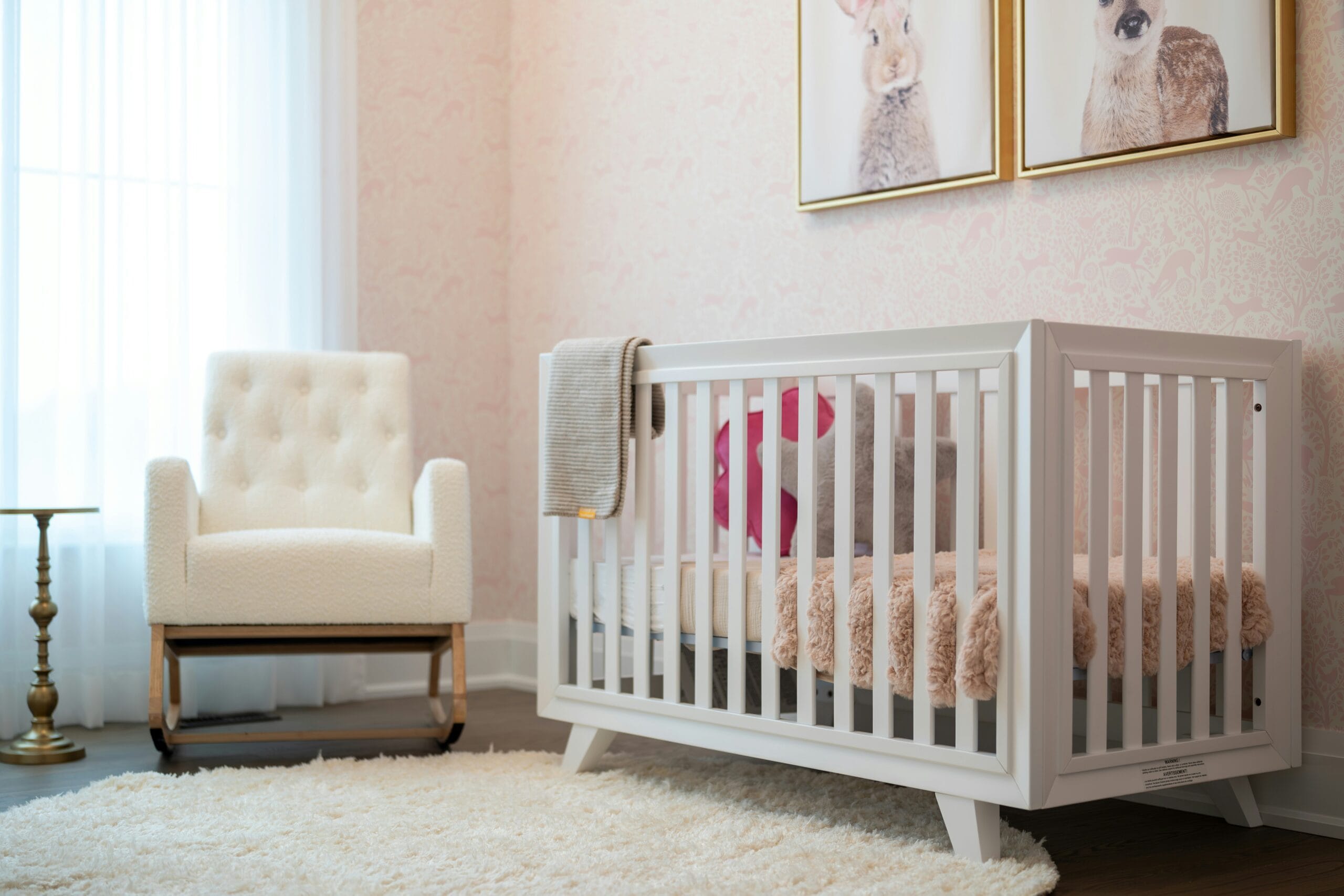
A crib is a larger, sturdier sleep space that lasts from infancy well into toddlerhood, making it the longer-term choice. It stays in one place, so it is not portable, but it offers more room and years of use, often converting to a toddler bed later. A crib needs a firm, flat crib mattress sized to fit snugly with no gaps, dressed only with a fitted crib sheet and nothing else in the sleep space.1 Because a crib takes up more room, some families keep the baby in a bassinet nearby at first, then move them to the crib as they grow.
Pros
- Lasts from infancy into toddlerhood.
- More room and years of use.
- Often converts to a toddler bed.
- One surface, bought once.
Cons
- Larger footprint that stays in place.
- Not portable room to room.
- Higher upfront cost.
Choose it for a long-lasting sleep surface with nursery space. Skip it if you need a portable, bedside option first.
How They Compare on Space and Portability
Bassinets shine in small spaces and for families who want the baby beside the bed or movable around the home during the day. Cribs need a dedicated spot and stay put. If your bedroom is tight or you want easy room-sharing in the early months, a bassinet fits better; if you have nursery space and want one surface for the long haul, a crib makes sense. Setting up a calm room with blackout curtains helps either way.
How They Compare on Longevity and Cost
A crib costs more upfront but lasts a year or more, often converting to a toddler bed, so its cost spreads over a long period. A bassinet is usually cheaper but outgrown within months, meaning you will likely buy a crib afterward anyway. Using both is common: a bassinet for the early months and a crib as the baby grows. Whichever you choose, budget for a firm mattress and fitted sheets, and keep the sleep space bare.1. Bedding follows its own schedule after the crib stage, and the point at which a pillow belongs in the bed arrives later than most parents expect.
Which Fits Your Situation
| If this is you | Better choice |
|---|---|
| You want the baby beside your bed early on | Bassinet |
| You have nursery space and want one surface | Crib |
| Your bedroom is tight | Bassinet |
| You want to avoid buying twice | Crib |
| You value portability around the home | Bassinet |
| You want early convenience and long-term use | Both, bassinet first |
Which Should You Choose?
Choose a Bassinet If
Pick a bassinet if you want the baby beside your bed for the early months, have limited space, or value portability around the home. Plan to transition to a crib once your baby reaches the bassinet’s weight or developmental limits, and pair it with a swaddle or sleep sack rather than loose bedding.2
Choose a Crib If
Pick a crib if you have nursery space, want one sleep surface that lasts into toddlerhood, and prefer to avoid buying twice. Room-sharing is still encouraged early on, so some parents place the crib in their room at first if space allows, then move it to the nursery later.1
Or Use Both
Many families use a bassinet for the first few months for easy bedside room-sharing, then transition to a crib as the baby grows. This combines the bassinet’s early convenience with the crib’s longevity. Later on, toddler pillows come into play as your child grows, and comfort additions like a white noise machine and a sleep sack support either setup. Our guide on setting up a safe nursery ties the whole sleep space together.
The Verdict
There is no single winner, because a bassinet and a crib suit different stages. A bassinet wins for the early newborn months, small spaces, and easy bedside room-sharing, though babies outgrow it quickly. A crib wins for longevity and value over time, lasting into toddlerhood from a single purchase. Many families use both, a bassinet first and a crib as the baby grows. Whichever you choose, the safety basics are identical: a firm, flat, snug mattress, a bare sleep space, and the baby placed on their back. Match the choice to your space and stage, and follow safe-sleep guidance throughout.
When should I ask a pediatrician?
Before introducing anything into an infant’s sleep space, and for any question about safe sleep positioning, bedding, or products used around a baby. Guidance changes as evidence develops, and current pediatric recommendations are the reference rather than product marketing.
Recommended Reading
Frequently Asked Questions
Is a bassinet or crib safer?
Neither is inherently safer; both are safe when they meet safe-sleep guidance with a firm, flat mattress that fits snugly, a bare sleep space, and the baby placed on their back.1 The right choice depends on your space and stage, not safety, as long as you follow the product’s instructions and safe-sleep basics.
Do I need both a bassinet and a crib?
Not necessarily. Some families use only a crib from the start, while others use a bassinet for early bedside room-sharing and move to a crib later. Using both is common but optional. What matters is that whichever surface the baby sleeps on meets safe-sleep guidance.
When does a baby outgrow a bassinet?
It depends on the product’s weight and developmental limits, but babies often outgrow a bassinet within a few months, and definitely once they can push up, roll, or sit. Follow the manufacturer’s limits and move to a crib at that point, per the product guidance and your pediatrician.2
Can a newborn sleep in a crib right away?
Yes, a newborn can sleep in a crib from the start as long as it has a firm, flat, snug-fitting mattress and a bare sleep space, with the baby on their back.1 Some parents prefer a bassinet early for bedside room-sharing, but a properly set up crib is a safe option too.
What kind of mattress do bassinets and cribs need?
Both need a firm, flat mattress that fits the product snugly with no gaps, used with only a fitted sheet.1 Bassinet and crib mattresses are different sizes, so use the correct one for each, and never add a thicker, softer, or aftermarket mattress that changes the fit.2
Is room-sharing recommended?
Pediatric guidance encourages room-sharing, where the baby sleeps on their own separate safe surface in the parents’ room, which a bassinet makes easy in the early months.1 Room-sharing does not mean bed-sharing; the baby should always have their own firm, flat, bare sleep space.
Are bedside sleepers and bassinets the same?
They are similar in supporting bedside room-sharing, but designs vary, so always follow the specific product’s instructions and confirm it meets current safety standards. Whatever the design, the baby needs a firm, flat, snug surface and a bare sleep space, placed on their back.1,2
How do I transition from bassinet to crib?
Move your baby to a crib once they reach the bassinet’s weight or developmental limits, such as pushing up or rolling. Keep the crib set up the same safe way, with a firm mattress, fitted sheet, and bare space, and follow your pediatrician’s guidance to make the transition smooth and safe.2
Sources
- American Academy of Pediatrics, HealthyChildren.org, A Parent’s Guide to Safe Sleep, on a firm flat sleep surface, snug-fitting mattress, back sleeping, a bare sleep space, and room-sharing without bed-sharing. https://www.healthychildren.org/English/ages-stages/baby/sleep/Pages/a-parents-guide-to-safe-sleep.aspx
- U.S. Consumer Product Safety Commission, Safe Sleep, on following the manufacturer’s weight and use limits, using only the provided mattress or pad, and avoiding added padding. https://www.cpsc.gov/SafeSleep
More in this guide: how to improve sleep quality naturally.
