
After a long day hunched over a desk or on your feet, your lower back can feel tight, achy, and in need of a good stretch. A back stretcher is a simple arched device you lie back over, letting your own weight gently extend the spine and open up the muscles that stiffen from sitting. Used sensibly, it is a low-effort way to ease everyday tension and unwind before bed. Here are six of the best back stretchers for 2026, including the sturdy one I use myself, along with clear guidance on when a stretcher is the wrong answer and a doctor is the right one.
RestRight is reader-supported; purchases made through links on this page may earn a commission at no added cost to you.
This article is for general information and is not medical advice. A back stretcher is a comfort and stretching tool, not a treatment for any injury or medical condition. If your back pain lasts more than a few weeks, is severe, or comes with warning signs like leg weakness or numbness, trouble walking, loss of bladder or bowel control, fever, or unexplained weight loss, stop and see a doctor.
Quick verdict: For most people, an adjustable multi-level arch is the place to start, since you can begin on the gentlest setting and work up as your back loosens. The DMI Lumbar Extender offers a smooth, gradual arch, while acupressure models like the Nayoya add a massage-like feel. Prefer to roll rather than lie still? A back stretching wheel targets the upper and mid back. Whatever you choose, ease into it gently and never force a stretch that hurts.
What a Back Stretcher Does, and Doesn’t, Do
A back stretcher works by arching your spine backward into gentle extension, which stretches the muscles along the back and can feel wonderfully relieving after hours of sitting or slouching forward. Most everyday back tension is mechanical, coming from tight, overworked muscles, and gentle stretching is a widely recommended way to ease it. What a stretcher cannot do is diagnose or treat an actual injury or spinal condition, so treat it as a comfort tool, not a cure. If stretching consistently makes your pain worse rather than better, that is a signal to stop and get it checked.
How We Chose These Back Stretchers
Picks were judged on sturdiness and build quality, since you are putting your body weight on the device, adjustability so you can start gentle, comfort of the contact points against your spine, and stability so it does not slip on the floor. A range of styles was included, from firm arches to acupressure models to rolling wheels, because backs and preferences differ. Comfort and everyday usefulness drove the choices, not medical claims, which no stretcher can deliver.
1. Multi-Level Adjustable Arch Back Stretcher, Best Overall
The adjustable multi-level arch is the back stretcher most people should start with. It offers several height settings, so you can begin on the lowest, gentlest arch and step up only as your back loosens over time. You lie back over it for a short stretch, and the tiered design lets you dial in exactly how deep an extension feels good.
Why It Stands Out
Adjustability is what makes it beginner-friendly and forgiving, since a fixed, aggressive arch can be too much on a stiff back. The firm plastic frame is sturdy and stable on the floor, and the tiered settings mean it grows with you. For a first back stretcher, this flexibility is exactly what you want.
Worth Knowing
The lowest setting can still feel intense on a very tight back, so ease in with short sessions and build up. The hard surface suits some people better with a thin towel over it. It pairs well with the wind-down routine in our guide to sleeping with lower back pain.
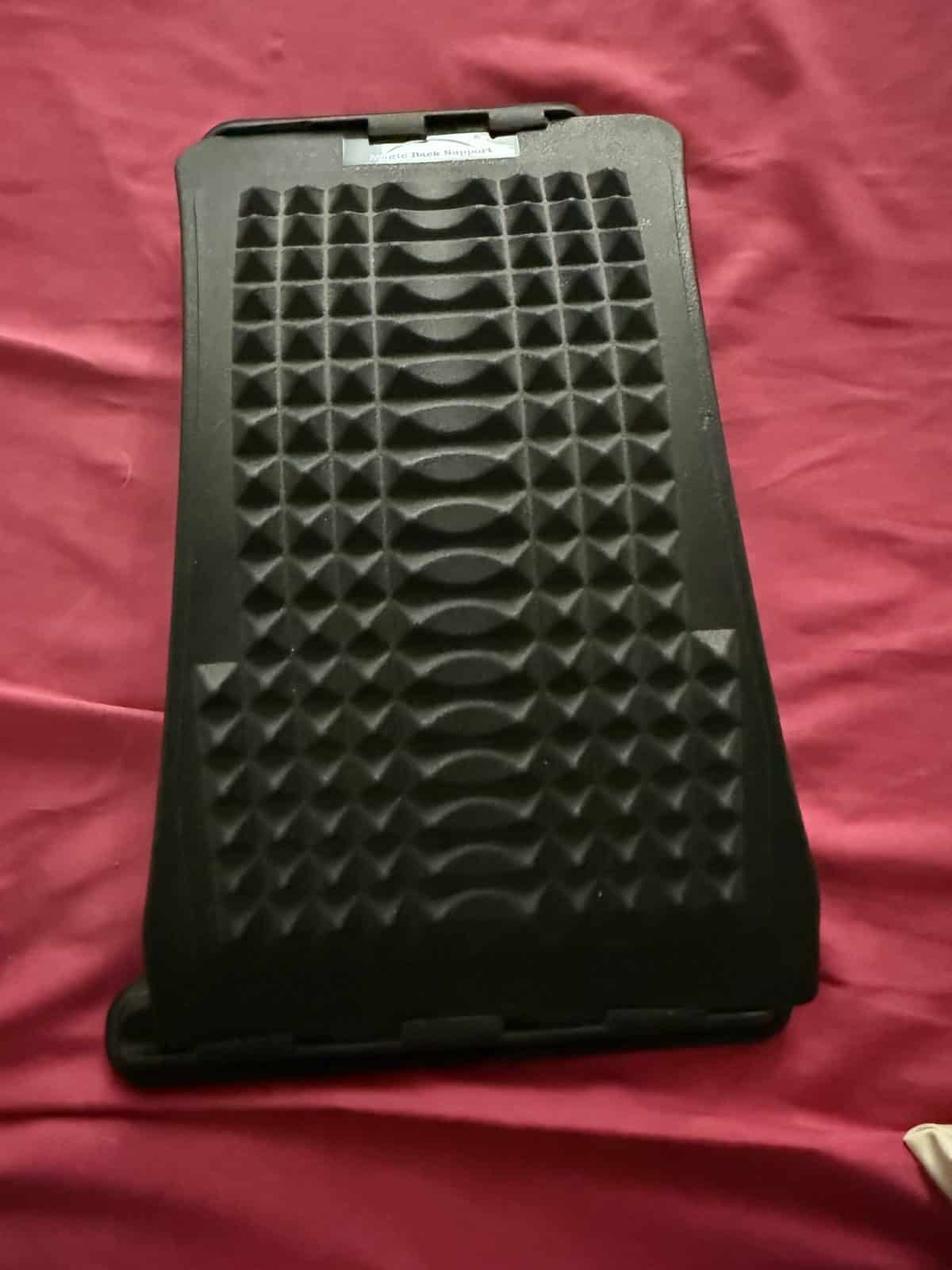
Check Price on Amazon2. The Back Stretcher I Use, What I Use
The back stretcher I actually use is a sturdy, well-made one that has become part of how I unwind at the end of the day. I lie back over it to stretch out my lower back after too many hours at a desk, and it eases the everyday tightness and tension that builds up from sitting. Every so often it produces that satisfying little pop, and my back feels looser and more relaxed afterward. It is solid and high quality, and it has held up to regular use without flexing or wearing out.
Why It Stands Out
What keeps it in rotation is the build and the payoff: it feels reassuringly sturdy under my weight, and a few minutes on it genuinely loosens up a stiff lower back before bed. For me it is a simple, satisfying stretch rather than anything more, which is exactly what I want from it. Sturdy and dependable is the whole appeal.
Worth Knowing
Mine is unbranded, so rather than point you at a model you cannot buy, the button below goes to the current back stretchers, so you can find a comparable sturdy one. Ease into it gently rather than forcing the arch, let any release happen on its own instead of straining for a crack, and stop if anything sharpens into real pain. If a stretch never feels good, it is not the tool for your back.
Check Price on Amazon3. DMI Lumbar Extender Back Stretcher, Best Gradual Arch
If a steep arch feels like too much, the DMI Lumbar Extender takes a gentler approach. Its flexible arch bows smoothly under your weight for a gradual, even stretch across the lower back, rather than forcing a fixed shape, which makes it approachable for people new to stretching their back this way.
Why It Stands Out
The smooth, progressive arch is the appeal, easing the lower back into extension without a hard peak pressing into one spot. It is lightweight and simple to use on the floor for a few minutes at a time, and the gentle action suits stiff or cautious backs. For an easy, low-drama stretch, it is a friendly pick.
Worth Knowing
Because it is gentle, seasoned users who want a deeper stretch may find it mild, which is a fair trade for approachability. As always, build up slowly. It complements the daytime habits in our guide to work-from-home back pain relief.
Check Price on Amazon4. Nayoya Acupressure Back Stretcher, Best Massage Feel
The Nayoya adds a massage-like dimension to the stretch. Its arch is lined with small raised acupressure points that press into the muscles along your spine as you lie back, combining a gentle extension with a stimulating, kneading sensation that many people find deeply relieving after a tense day.
Why It Stands Out
The acupressure nodes are the differentiator, turning a plain stretch into something closer to a massage, which can help tight muscles let go. Like the best arches, it offers adjustable height so you can start gentle, and the firm build feels stable under load. For anyone who likes the pleasant intensity of acupressure, it is a standout.
Worth Knowing
The raised points feel sharp to some people at first, so a thin shirt or towel softens the introduction. It is more sensation than a smooth arch, which not everyone wants. It sits naturally alongside the tools in our massage balls guide for targeted tension.
Check Price on Amazon5. Back Stretching Wheel, Best for Upper and Mid Back
Where arches focus on the lower back, a back stretching wheel lets you roll along more of your spine. You rest your back on the padded wheel and use your legs to roll up and down, opening the mid and upper back and chest in a way that is hard to reach lying flat on an arch.
Why It Stands Out
The rolling motion is the appeal, giving you control over where and how much you stretch rather than a fixed position, and it reaches the mid and upper back that arches largely skip. The padded surface is comfortable, and it doubles as a mobility tool. For desk-bound upper-back tightness, it is a smart choice.
Worth Knowing
It takes a little balance and core control to use, so it is less set-and-relax than an arch. Start slow until you are steady on it. It works well with the loosening routine in our foam rollers guide.
Check Price on Amazon6. Foam Arch Back Stretcher, Best Gentle Option
For the most forgiving stretch, a foam arch trades hard plastic for firm foam. It gives a softer, cushioned extension that suits sensitive backs, older users, or anyone who finds a rigid arch too intense, while still lifting and opening the lower back.
Why It Stands Out
The cushioned give is the point, offering a gentle, comfortable stretch without a hard edge pressing into the spine, which makes it the easiest style to relax onto. It is light, quiet, and simple to tuck away, and it is a low-risk way to try back stretching without committing to a firm arch. For gentle everyday use, it is ideal.
Worth Knowing
The softer foam gives a milder stretch, so those wanting a deep extension may outgrow it. Firmer foam holds its shape better over time than very soft versions. It pairs nicely with a supportive setup from our lumbar support pillows guide for daytime sitting.
Check Price on AmazonBack Stretchers at a Glance
Prices shift with sales and seller, so treat cost as a rough tier and confirm current pricing before buying.
| Stretcher | Style | Adjustable | Intensity | Best for |
|---|---|---|---|---|
| Multi-level arch | Firm plastic arch | Yes, tiered | Gentle to firm | Most people, starting out |
| My stretcher (brand-free) | Arch | Not stated | Moderate | Everyday wind-down |
| DMI Lumbar Extender | Flexible arch | Bows to weight | Gentle | Beginners, gradual stretch |
| Nayoya | Acupressure arch | Yes, tiered | Moderate, tingly | Massage-like feel |
| Stretching wheel | Rolling wheel | Roll to control | Your control | Upper and mid back |
| Foam arch | Cushioned foam | Fixed | Gentle | Sensitive backs |
How to Choose a Back Stretcher
Start Gentle and Adjustable
If you are new to this, an adjustable arch you can set on its lowest level is the safest starting point, letting you ease in and increase the stretch only as your back loosens. A fixed, aggressive arch can be too much on a stiff back and put you off entirely. It is always easier to work up than to recover from overdoing it on day one.
Match the Style to Where You Feel It
Arches focus on the lower back, which is where most sitting-related tightness lives, while a rolling wheel reaches the mid and upper back and opens the chest. Acupressure models add a massage sensation, and foam arches keep everything gentle. Think about where your tension actually sits and pick the shape that reaches it.
Prioritize Sturdiness and Stability
You are trusting the device with your body weight, so a solid, well-built frame that does not flex or crack matters more than any feature. It should also sit stably on the floor without sliding. Cheap, flimsy arches are both unpleasant and a hazard, so favor a sturdy build even if it costs a little more.
Listen to Your Body
A good stretch should feel like relief, not pain. Ease in with short sessions, never force a deeper arch than feels comfortable, and let any pop or release happen on its own rather than straining for it. If a stretcher consistently makes your back feel worse, stop using it, because that is a sign the tool, or your back, needs a different approach.
Which Back Stretcher Fits You
| Your situation | Multi-level arch | DMI Extender | Nayoya | Wheel | Foam arch |
|---|---|---|---|---|---|
| New to back stretching | Best fit | Best fit | Workable | Skip | Best fit |
| Want a deeper stretch | Best fit | Skip | Best fit | Workable | Skip |
| Lower-back tightness | Best fit | Best fit | Best fit | Skip | Best fit |
| Upper or mid-back tightness | Skip | Skip | Skip | Best fit | Skip |
| Like a massage feel | Workable | Skip | Best fit | Workable | Skip |
| Sensitive or cautious back | Workable | Best fit | Skip | Skip | Best fit |
Related guide: back stretcher vs foam roller.
Related guide: back massagers.
Frequently Asked Questions About Back Stretchers
When should I see a doctor instead of using a back stretcher?
See a doctor if your back pain lasts more than a few weeks, is severe, or comes with red-flag symptoms: weakness or numbness in your legs, trouble walking, loss of bladder or bowel control, fever, unexplained weight loss, or pain that is worse at night. These can signal something a stretcher will not fix, so get evaluated rather than stretching through it.
Do back stretchers actually work?
For everyday mechanical tightness, the kind that comes from sitting and slouching, gentle stretching genuinely helps loosen the muscles and can feel relieving. A stretcher is a convenient way to do that. It is not a cure for an underlying injury or condition, so think of it as comfort and maintenance rather than treatment, and pair it with movement and good posture.
Are back stretchers safe?
For most people using them gently and sensibly, yes, but they are not for everyone. Ease in on the lowest setting, never force a painful stretch, and stop if it makes things worse. If you have a diagnosed spine condition, osteoporosis, recent injury, or are pregnant, check with your doctor before using one, since aggressive extension may not be appropriate.
Is it safe to crack your back on a stretcher?
The occasional painless pop that happens naturally as you stretch is generally harmless and simply gas releasing from the joints. What you should not do is strain or force your back to crack, since forcing it can irritate muscles and joints. Let any release happen on its own, and if cracking is accompanied by pain, stop and get it checked.
How long should I use a back stretcher?
Short sessions of a few minutes are plenty, especially at first, and it is better to do a little regularly than a lot occasionally. Build up gradually as your back adapts. Lying on an aggressive arch for a long stretch early on can leave you sore, so ease in and let comfort, not a timer, be your guide.
Can a back stretcher help me sleep?
Many people find that easing lower-back tension before bed helps them get comfortable and wind down, and back tightness is a common reason for restless nights. A gentle stretch as part of your evening routine may help. If back pain regularly wakes you or keeps you up, though, look at your mattress and sleep position too, and see a doctor if it persists.
Can a back stretcher fix sciatica or a herniated disc?
No. Conditions like sciatica, a herniated disc, or spinal stenosis need proper diagnosis and care, and a back stretcher is not a treatment for them. In some cases the wrong movement can aggravate these issues. If you have leg pain, numbness, or a diagnosed spine condition, talk to a doctor or physical therapist before using any stretching device.
Who should not use a back stretcher?
Anyone with acute or severe back pain, a recent back injury, osteoporosis, a known spinal condition, or who is pregnant should check with a healthcare provider first, since backward extension is not right for every back. The same goes if you have any of the red-flag symptoms above. When in doubt, get personalized advice before you start.
Recommended Reading
Build out a back-friendly routine with our guides to the best mattresses for back pain, sleep positions for back pain, and heating pads for the back and neck. If mornings are the worst, see why in our guide to waking up with lower back pain, and for a deeper stretch, our inversion tables guide.
Technique matters more than the device. using a back stretcher safely covers positioning and duration.
