
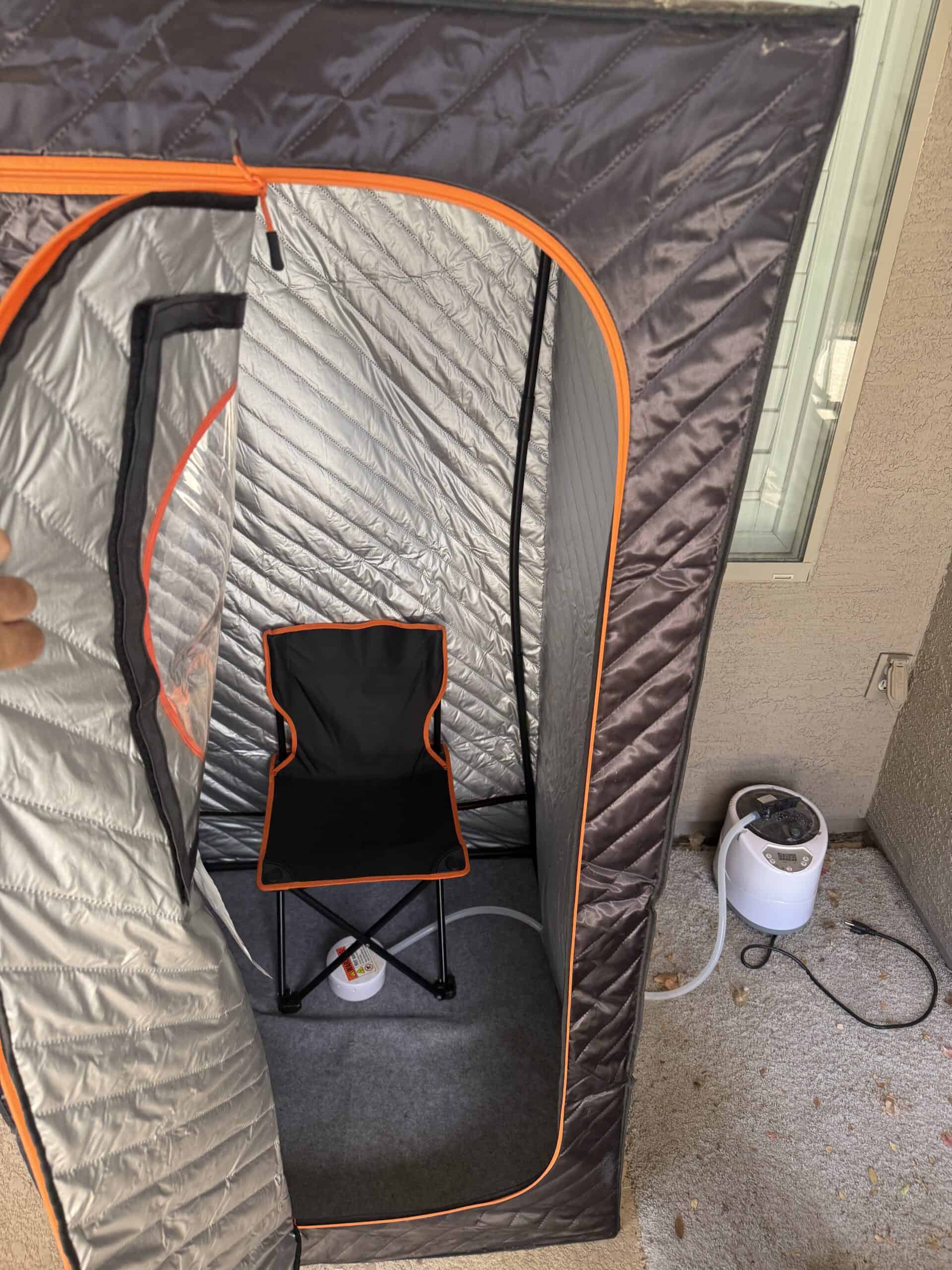
Used correctly by someone without contraindications, generally yes. The risks split into two separate categories that get discussed as one: what heat does to your body, and whether the unit itself is electrically sound.
The second one is not theoretical for me. My first portable sauna was a different brand and its wiring burnt out within six months. The power wires were faulty and it overheated quickly, which is why I pay attention to that side of it now.
A Quick Note
This covers general safety rather than medical advice. Sauna use is not appropriate for everyone, and anyone with a heart condition, blood pressure issues, or who is pregnant should speak to a doctor before using one. Any electrical fault, burning smell, or overheating means stopping use immediately. Build quality varies, and our portable sauna roundup covers what to look at before buying.
Quick Answer
The health risks are known and manageable for most people: hydrate, keep sessions moderate, never combine with alcohol, and stop if you feel unwell. The equipment risk is less discussed and more variable, since these are high-draw heating appliances at low price points.
Two Separate Risk Categories
| Category | Main risks | Managed by |
|---|---|---|
| Physiological | Dehydration, blood pressure drop, overheating | Hydration, session limits, medical clearance |
| Electrical | Wiring failure, overheating components, fire | Certification, inspection, correct outlet use |
Most coverage of sauna safety addresses the first and skips the second entirely, which is odd given that portable units are heating appliances sold cheaply and used in confined spaces. Build quality varies most at the low end, and the budget end of the category covers what to check before buying there.
The Health Side
Heat places load on the cardiovascular system. Blood vessels dilate, heart rate rises, and blood pressure can drop, particularly when standing up afterward.
Dehydration is the most common problem, since you lose fluid rapidly and often more than you notice inside a heated space. Hydration affects sleep independently, covered in improving sleep quality naturally.
Overheating is the acute risk, and the warning signs are dizziness, nausea, headache, and confusion. Those mean getting out rather than finishing the session.
Sessions of fifteen to twenty minutes are commonly recommended when starting out, extending gradually, and the general sleep context sits in whether portable saunas help you sleep.
Who Should Not Use One
Heart and blood pressure conditions
Heat raises cardiac demand. Anyone with heart disease, arrhythmia, unstable blood pressure, or a history of fainting should get medical clearance first.
Pregnancy
Raised core temperature carries recognized risks during pregnancy, and health authorities generally advise against sauna and hot tub use.
With alcohol
Alcohol impairs temperature regulation and blood pressure control, and the combination is a documented hazard rather than a general caution.
Children and older adults
Both regulate temperature less effectively, which warrants shorter sessions, supervision, and a conversation with a doctor for anyone with existing conditions.
What Happened to My First One
It was a different brand from the one I have now, and it lasted about six months. The failure was in the power wiring, which burnt out.
What I noticed before it failed was how quickly it overheated. That was the signal in hindsight, though at the time I read it as the unit being effective rather than as something being wrong.
I replaced it with the unit I have now, which I have had for over a year at multiple sessions a week with no problems. So this is not an argument that portable saunas are unsafe as a category.
It is an argument that build quality varies enormously in a product category where a heating element, a controller, and a power cable are doing all the work.
The thing I would tell anyone buying one is to treat unexpected heat, smells, or discoloration around the cable as a reason to stop rather than a quirk.
Why This Category Has More Variation Than Most
Portable saunas sit in an awkward spot that explains why build quality ranges so widely.
They draw a lot of power. A heating element producing enough output to raise a small enclosed space to high temperature is a serious electrical load, closer to a space heater than to most household electronics.
They also sell at prices where corners get cut. A category where units are available for a couple of hundred dollars leaves very little room for the wiring, controller, and thermal cutoffs that a high-draw appliance ought to have.
They are used in confined spaces with a person inside, which raises the consequence of a failure well above what the same fault would mean in an appliance sitting in a garage.
And they are a newer consumer category, so the buying public has less accumulated knowledge about what a bad one looks like than it does for kettles or heaters.
None of that makes them dangerous as a class. It means the difference between a well-built unit and a poorly built one is larger here than in categories where the basic engineering is settled, and price is a weaker guide than usual.
Electrical Warning Signs
A burning or plastic smell during use is the clearest one, and it means unplugging rather than finishing the session.
A power cable or plug that is hot to the touch indicates a load problem. Warm is expected on a high-draw appliance, hot is not.
Discoloration or scorching around the plug, the controller, or where the cable enters the unit all indicate heat where there should not be any.
Tripping a breaker repeatedly is a signal rather than an inconvenience, and repeatedly resetting it is the wrong response.
Reducing the Electrical Risk
Check for certification marks
Look for a recognized testing mark such as UL, ETL, or CE depending on your region. Their absence on a mains-powered heating appliance is worth taking seriously.
Plug directly into a wall outlet
Extension leads and power strips are a common failure point with high-draw appliances, and manufacturers usually advise against them for this reason.
Never leave it running unattended
This is the single most consequential habit, and it is also the one people abandon once the unit has worked reliably for a while. Evening routines are easier to keep when they are deliberate, covered in creating a bedtime routine.
Inspect the cable periodically
Flexing at the entry point is where cables fail, and a visual check every few weeks catches problems before they become failures.
Outdoor and Indoor Considerations
Mine lives outside now and used to be inside, and each setting has its own considerations.
Indoors, ventilation and what surrounds the unit matter. A heating appliance surrounded by soft furnishings in a small room is a different proposition from one with space around it.
Outdoors, moisture is the added factor. Most portable units are not rated for weather exposure, and a damp electrical connection is a serious hazard rather than a minor one.
Anything running outside needs protection from rain and a properly rated outdoor outlet, and the practicalities sit in whether you can put a portable sauna outside.
Related Reading
- saunas and sleep
- using one outside
- recovery tools for bedtime
- bedtime routines
- cooling a bedroom
- improving sleep quality
Frequently Asked Questions
Are portable saunas safe?
For most people without contraindications, used with sensible session limits and hydration, yes. The less discussed risk is electrical, since these are high-draw heating appliances at low price points.
How long is a safe session?
Fifteen to twenty minutes is commonly recommended for people starting out, extending gradually. Dizziness, nausea, or headache means stopping regardless of elapsed time.
Who should avoid them?
Anyone with heart disease, arrhythmia, unstable blood pressure, or a fainting history should get medical clearance. Pregnancy is a contraindication, and alcohol should never be combined with sauna use.
What are the electrical warning signs?
A burning or plastic smell, a plug or cable that is hot rather than warm, scorching or discoloration near connections, and repeated breaker trips. All mean stopping use.
Can I use an extension cord?
Manufacturers generally advise against it. High-draw heating appliances on extension leads or power strips are a common failure point, and a wall outlet is the safer connection.
Is it safe to leave one running?
No. Unattended operation of any heating appliance is the risk worth taking most seriously, and it is the habit people relax about once a unit has been reliable.
Do certification marks matter?
They indicate the unit has been submitted for safety testing. On a mains-powered heating appliance, the absence of a recognized mark is worth weighing heavily.
Sources
- American Heart Association. Sauna Use and Heart Health. https://www.heart.org/en/healthy-living/healthy-lifestyle/sauna-use-and-heart-health
- Mayo Clinic. Heat Exhaustion. https://www.mayoclinic.org/diseases-conditions/heat-exhaustion
- United States Consumer Product Safety Commission. Portable Heater Safety. https://www.cpsc.gov/Safety-Education/Safety-Guides/Home/Portable-Heaters
