
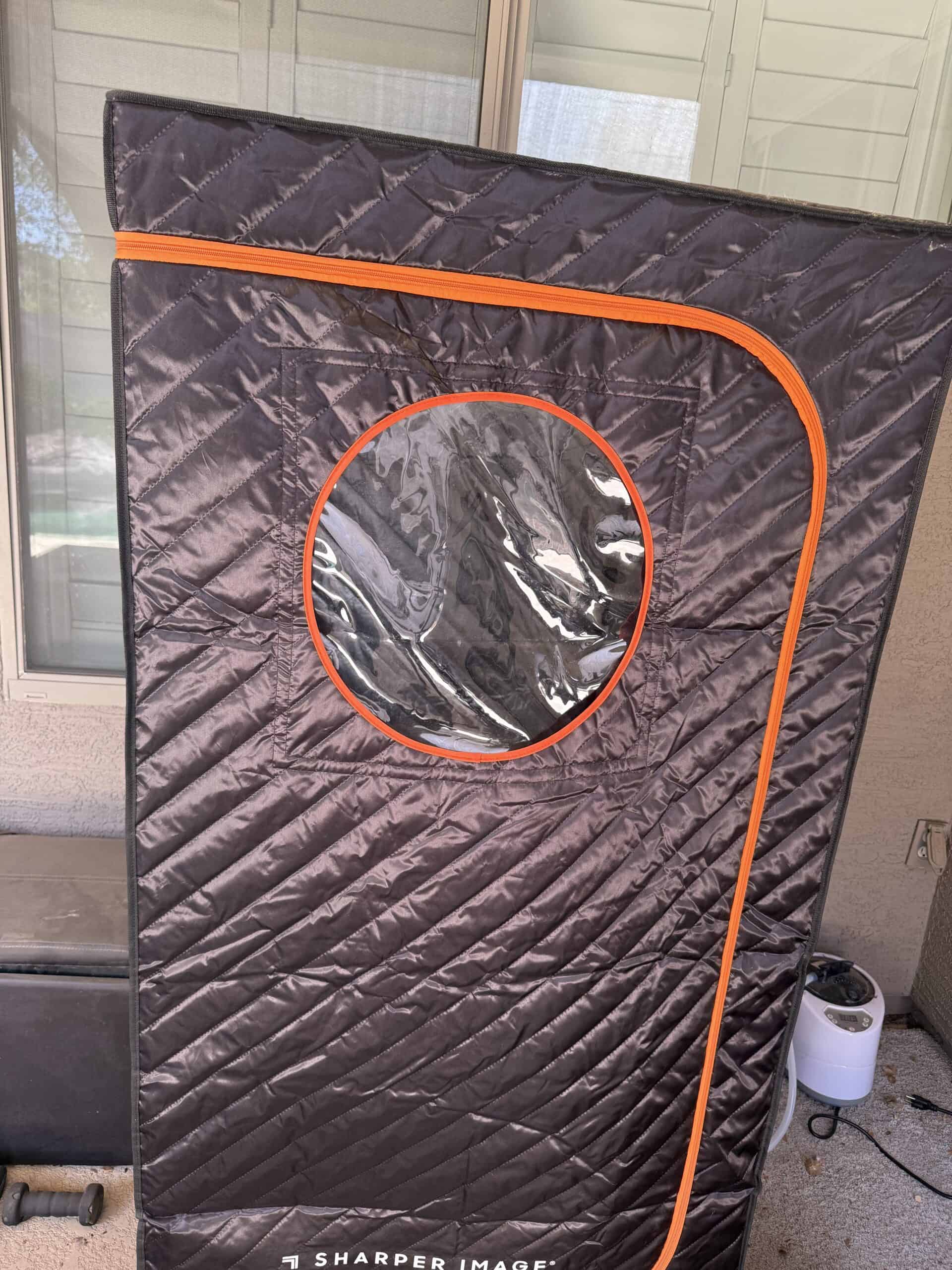
You can, and most units are not designed for it, so it becomes a question of what protection you add rather than whether the manufacturer intended it. Moisture and electricity are the constraint, not temperature.
Mine lives outside now and used to be inside. It is a tent-style unit with a frame and a viewing window, and moving it out solved a space problem and created a weather problem in exchange.
A Quick Note
This covers practical placement rather than electrical or medical advice. Any mains-powered appliance used outdoors needs an appropriately rated outlet and protection from moisture, and anything involving permanent wiring is work for a qualified electrician.
Quick Answer
Outdoor use works with cover from rain, a properly rated outdoor outlet, and somewhere dry to store the electrical components. Check whether your unit is rated for outdoor use, since most portable saunas are specified for indoors and using one outside is your responsibility rather than the manufacturer’s. Not every unit suits outdoor use, and our portable sauna roundup covers the differences.
Indoors Against Outdoors
| Factor | Indoors | Outdoors |
|---|---|---|
| Moisture risk | Low | The main concern |
| Space | Takes a room | Frees the room |
| Heat-up time | Faster | Slower in cold |
| Power access | Standard outlet | Needs rated outdoor outlet |
| Ventilation | Needs thought | Not an issue |
| Humidity in the home | Adds to it | Removes it |
Why I Moved Mine Out
Space was the reason. A tent sauna indoors occupies a meaningful share of a room even when it is not in use, and folding it away between sessions is not something anyone actually keeps doing.
Outside it stops competing with the rest of the house for space. That is the main gain and it is a genuine one.
What I gave up is convenience in cooler weather and the need to think about rain, which is a smaller concern here than it would be in most places.
The other thing worth mentioning is humidity. A steam-type unit indoors puts moisture into the room it sits in, and outdoors that stops being your problem, covered in bedroom humidity control products.
I have had this unit over a year with multiple sessions a week, most of that time outside, and it has been fine. That is one setup in a dry climate rather than a general endorsement of the approach.
Moisture Is the Whole Problem
Rain reaching the controller, the power connection, or the heating element is the risk that matters. Water and a high-draw electrical appliance is a serious combination rather than an inconvenience.
Most portable saunas carry no outdoor rating at all, which means there is no ingress protection specification and no manufacturer position on weather exposure to rely on.
Condensation is the subtler version of the same problem. Overnight temperature swings produce moisture inside a covered unit even when no rain has fallen, and that reaches exactly the same components.
Storing the electrical parts indoors between sessions removes most of this, and it is the approach that actually works, covered in whether portable saunas are safe.
Making Outdoor Use Work
Put it under cover
A patio roof, a pergola, an awning, or a carport all work. Direct rain exposure is the thing to eliminate, and the shade also reduces sun damage to the fabric over time.
Use a rated outdoor outlet
A weather-resistant outlet with a proper cover, on a circuit with ground fault protection. Running an indoor extension lead outside is the wrong answer.
Bring the electronics in
The controller, the cable, and any removable heating components come indoors between uses. The tent and frame can stay where they are.
Raise it off the ground
A pallet, decking, or paving stops moisture wicking up from below and keeps the base clear of standing water after heavy rain.
What Happens to the Fabric
The tent portion is the part most affected by moving outside, and it fails differently from the electronics.
Ultraviolet light degrades synthetic fabric over months. Colors fade first, then the material itself weakens and seams become the failure point. Shade does more for the fabric than a rain cover does.
Mold and mildew are the other issue, and they come from the inside rather than the weather. A unit closed up damp after a session grows the same things a wet towel would, and a sealed tent gives that nowhere to escape.
Leaving it open to air after each use is the fix, and it is a habit rather than a purchase. Wiping the interior down matters more outdoors than in, since ambient humidity slows natural drying.
Zips and seams take the most stress on a tent-style unit, and outdoor temperature swings make the material less forgiving. Opening a cold stiff zip is how they break.
Dust and pollen accumulate on an outdoor unit in a way they do not indoors, which adds to the cleaning that was already the part I like least about owning one.
Climate Changes the Answer
Dry climates make this considerably easier. Less rain, less ambient humidity, and faster drying between sessions all reduce the risk.
Wet and humid climates make it considerably harder. Persistent damp reaches components regardless of cover, and mold in the fabric becomes a separate ongoing problem.
Cold climates add heat-up time, since the unit starts from a lower ambient temperature and loses heat faster through the walls.
Freezing conditions are worth avoiding entirely for any unit holding water, since ice expanding inside components causes damage that heat never will, and heat-up generally sits in how long a portable sauna takes to heat up.
What Outdoor Use Costs You
Longer heat-up in anything other than warm weather, which is the practical cost you end up noticing most often.
A walk outside before and after, which matters more than it sounds when the point is a relaxed evening routine, covered in creating a bedtime routine.
Cooling down in cold air immediately after a session, which is unpleasant and also cuts short the gradual temperature decline that supports sleep.
And fabric wear from sun and weather, which shortens the life of the tent portion even when the electrical side is protected.
When to Keep It Inside
Wet or humid climates, where the moisture problem outweighs the space gain.
Where no covered outdoor space exists, since a tarp thrown over a unit is not the same thing as being under a roof.
Where the only outdoor power is an extension lead from indoors, which is the specific arrangement to avoid.
And where the sauna is part of an evening routine you want to keep simple, since anything that requires a trip outside in bad weather quietly stops happening after a few weeks.
Related Reading
- portable sauna safety
- saunas and sleep
- heat-up time
- recovery tools for bedtime
- bedtime routines
- humidity control
Frequently Asked Questions
Can you put a portable sauna outside?
Yes, with cover from rain, a rated outdoor outlet, and the electrical components stored indoors between uses. Most units are not rated for outdoor use, so it is your responsibility rather than the manufacturer’s.
What is the main risk outdoors?
Moisture reaching the controller, power connection, or heating element. Water and a high-draw electrical appliance is a serious combination rather than an inconvenience.
Do I need a special outlet?
A weather-resistant outdoor outlet with a proper cover, on a circuit with ground fault protection. Running an indoor extension lead outside is the arrangement to avoid.
Can it be left outside permanently?
The tent and frame usually can under cover. The electrical components are better stored indoors, since condensation from temperature swings reaches them even without rain.
Does outdoor use affect heat-up time?
Yes, in anything but warm weather. The unit starts from a lower ambient temperature and loses heat faster through the walls.
Is outdoor use better in a dry climate?
Considerably. Less rain, lower ambient humidity, and faster drying between sessions all reduce the moisture risk that makes this difficult elsewhere.
Will the fabric last outside?
Less well than indoors. Ultraviolet light weakens synthetic fabric over months, so shade matters as much as rain cover, and leaving it open to air after each session prevents mildew.
What about cooling down afterward in cold weather?
Stepping into cold air immediately is unpleasant and removes the gradual temperature decline that supports sleep. A warm indoor route back matters more than people expect.
Sources
- United States Consumer Product Safety Commission. Portable Heater Safety. https://www.cpsc.gov/Safety-Education/Safety-Guides/Home/Portable-Heaters
- Sleep Foundation. Bathing Before Bed. https://www.sleepfoundation.org/sleep-hygiene/bathing-before-bed
Recommended Reading
See our note on what happens when a portable sauna breaks.
