
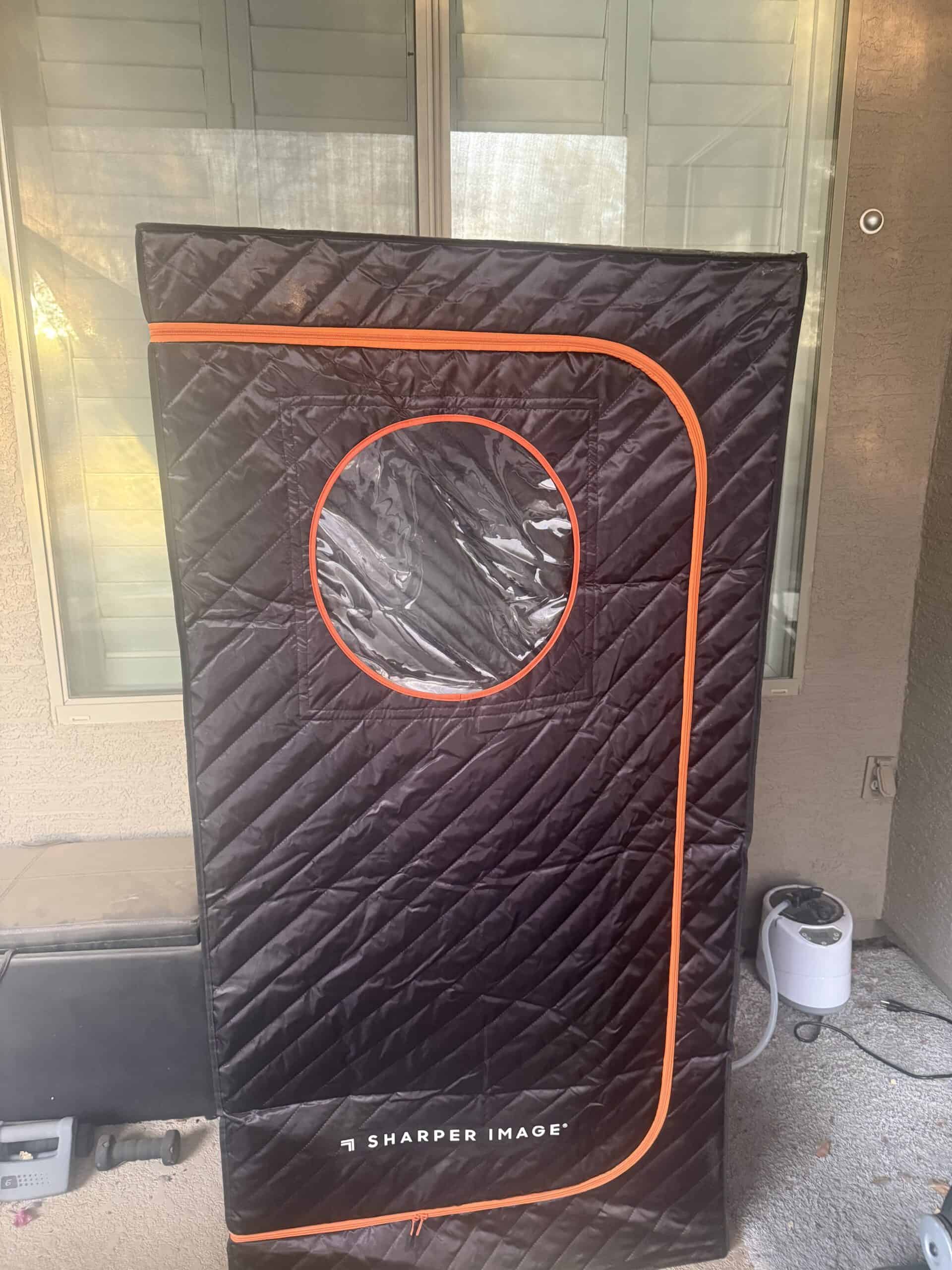
Most portable units reach usable temperature in fifteen to thirty minutes, with steam models generally faster than infrared and outdoor placement slower than indoor. It is the least discussed practical cost of owning one.
Heat-up time is the thing I find most annoying about mine. It is a tent-style unit with a frame that lives outside, and the wait is the reason a session becomes something you plan rather than something you decide on.
A Quick Note
This covers practical use rather than medical advice. Never leave a heating appliance running unattended, and anyone with heart conditions, blood pressure issues, or who is pregnant should speak to a doctor before using a sauna.
Quick Answer
Budget fifteen to thirty minutes depending on type, ambient temperature, and where the unit sits. Preheating while you do something else is the practical answer, since the wait is what stops people using one as often as they intended.
What Affects Heat-Up Time
| Factor | Effect |
|---|---|
| Steam generator | Faster, water boils quickly |
| Infrared panels | Slower to fill the space, heats you directly |
| Ambient temperature | Cold starting point adds substantially |
| Indoors against outdoors | Outdoors slower in all but warm weather |
| Unit size | Larger cavity takes longer |
| Insulation quality | Thin fabric loses heat as fast as it gains |
The physics is straightforward. A heating element of a given output has to raise the temperature of a volume of air, and anything that adds volume or removes heat along the way extends the time it takes. Heating time is where cheaper units tend to differ most from the expensive ones.
Steam Against Infrared
Steam units heat a small water reservoir and push vapor into the tent. Water boils quickly, so steam starts arriving sooner and the enclosed space feels hot within the first few minutes. Heat-up time varies by type, which our portable sauna picks break down.
Infrared panels warm objects and bodies directly rather than heating the air first. The air temperature reading climbs more slowly as a result, which makes them feel slower even when the effect on your body is comparable.
That difference matters for how you judge readiness. With infrared, waiting for a high air temperature is waiting for something the design does not prioritize.
Neither type is dramatically faster in practice, and the perception gap is larger than the actual one, covered in whether portable saunas help you sleep.
Why Mine Feels Slow
It sits outside, which is the main reason. Starting from ambient outdoor temperature rather than a heated room adds time in anything but summer.
Tent-style units are also thin. Fabric walls with a frame lose heat continuously, so the element is fighting loss the whole time rather than filling an insulated box.
The practical consequence is that a session is a decision made in advance. You cannot get the idea and be in it five minutes later, which changes how often it happens.
I have had this one over a year at multiple sessions a week, so the wait has not stopped me using it. It is the thing I would change if I could, covered in whether you can put a portable sauna outside.
What I would tell someone considering one is to factor the wait into whether it fits your evening rather than assuming you will work around it.
Reducing the Wait
Preheat while doing something else
The wait costs nothing if it overlaps with dinner, tidying, or anything that keeps you nearby. This is the whole answer for most people.
Close it up properly
Gaps at zips and seams leak heat continuously. A unit sealed correctly reaches temperature noticeably faster than one left partly open.
Move it out of wind
Air moving across a fabric wall strips heat quickly. A sheltered position does more for heat-up than most people expect.
Put something insulating underneath
A mat or rug under the base slows heat loss into a cold floor or paving, which matters more outdoors than in.
Start from a warmer baseline
In cold weather, bringing the unit somewhere warmer for an hour before use shortens the run considerably, and heat and sleep timing sits in how long a sauna session should be before bed.
Never Leave It Unattended
The obvious way to solve heat-up time is to start it and go elsewhere, and that is the one approach worth ruling out.
These are high-draw heating appliances, and unattended operation is the risk that turns a fault into a fire. Staying in the room or within earshot is the standard, covered in whether portable saunas are safe.
Timers and app control make this easier to get wrong than it used to be, since the appliance can be running for half an hour while nobody is home.
Preheating while nearby is fine. Preheating while out is the version to avoid, regardless of how reliable the unit has been.
Why Manufacturer Figures Rarely Match
Almost every unit quotes a heat-up time that owners do not reproduce, and the reasons are consistent enough to predict.
Test conditions assume an indoor room at comfortable temperature with no air movement. That is the best case, and most real placements are worse in at least one respect.
The quoted figure usually describes reaching a target air temperature at the sensor rather than the space being comfortable and holding. Those are different moments and the second one is later.
Voltage matters more than people expect. A unit on a long circuit or an older installation may receive slightly less than rated voltage, and heating output drops disproportionately when it does.
Fabric units also have no thermal mass. An insulated cabin holds heat once warm, and a tent reaches temperature and then loses it as fast as the element supplies it, so the number never stabilizes the way a spec implies.
The practical response is to time your own from cold, twice, and use that figure rather than the manual. Yours will not change much once you know it.
How Long Before It Is Actually Ready
Air temperature is one signal and not the only one. A unit that has reached temperature briefly is different from one that has been holding it.
Letting it run a few minutes past the point it first feels hot gives the fabric and frame time to warm, which means the temperature holds once you are inside.
Without that, opening the door and sitting down drops the temperature immediately and the element spends your session catching up.
Most units include a thermometer, and where one is missing an inexpensive standalone one tells you considerably more about readiness than guessing from how the air feels on your hand.
Related Reading
- saunas and sleep
- portable sauna safety
- using one outside
- session timing before bed
- bedtime routines
- recovery tools
Frequently Asked Questions
How long does a portable sauna take to heat up?
Fifteen to thirty minutes for most units, depending on type, ambient temperature, and placement. Outdoor units in cool weather sit at the longer end of that range.
Are steam models faster than infrared?
Steam feels faster because water boils quickly and vapor fills the space. Infrared heats you directly rather than the air, so the temperature reading climbs more slowly.
Why does mine take longer than the manual says?
Manufacturer figures assume indoor use at room temperature. Outdoor placement, cold weather, wind, and gaps at the zips all extend it substantially.
Can I preheat and come back?
Only if you stay nearby. Unattended operation of a high-draw heating appliance is the risk worth taking most seriously, and timers make it easy to get wrong.
How do I know when it is ready?
Let it run a few minutes past the point it first feels hot, so the fabric and frame warm too. Otherwise the temperature drops as soon as you get in.
Does the wait get shorter with use?
No, though a unit that has been used recently starts from a warmer baseline. Consecutive sessions on the same evening heat up considerably faster.
Why does it not match the manual?
Manufacturer figures assume indoor use at room temperature with no air movement, and describe reaching a sensor reading rather than the space holding a comfortable temperature.
What is the easiest way to deal with it?
Overlap the wait with something else nearby. The heat-up cost disappears entirely if it happens during dinner rather than while you stand watching it.
Sources
- United States Consumer Product Safety Commission. Portable Heater Safety. https://www.cpsc.gov/Safety-Education/Safety-Guides/Home/Portable-Heaters
- Sleep Foundation. Bathing Before Bed. https://www.sleepfoundation.org/sleep-hygiene/bathing-before-bed
Recommended Reading
See our note on what happens when a portable sauna breaks.
