
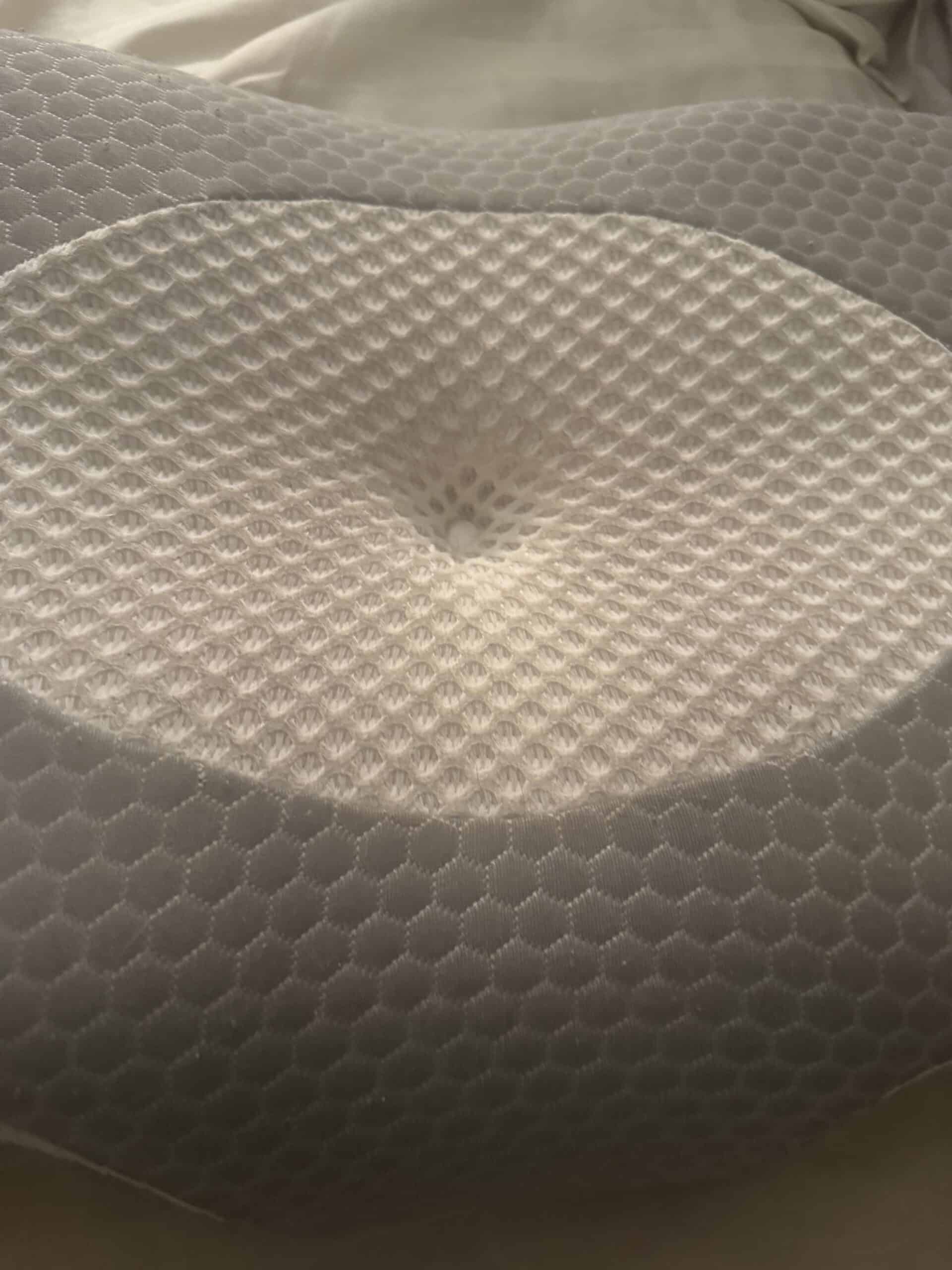
No. The support works whenever your head is resting on it, and sleeping is simply the longest stretch most people spend in that position. Daytime use is a legitimate way to own one.
Mine is used entirely during the day. I lie back on it while working on a laptop or watching television, and I do not sleep on it at all, which is not how these are marketed.
A Quick Note
This covers positioning rather than medical advice. Persistent neck pain, or any numbness or tingling into the arms, needs a doctor rather than a pillow.
Quick Answer
A cervical pillow supports the neck curve in any reclined position. Sleeping gives you the most hours of it, and shorter daytime sessions still relieve the load of holding your head unsupported. Neither is wrong.
Where the Benefit Comes From
| Situation | Hours typical | What the pillow does |
|---|---|---|
| Overnight sleep | 6 to 9 | Sustained neutral alignment |
| Working reclined | 1 to 3 | Relieves muscles holding the head |
| Watching television | 1 to 2 | Same, in a more relaxed position |
| Reading | 30 min to 2 hours | Depends on head angle |
| Napping | 20 min to 2 hours | Same as sleeping, shorter |
The mechanism does not care in the slightest whether you happen to be conscious. A contour filling the gap between your head and the surface underneath takes load off the neck muscles either way.
Why Sleeping Gets All the Attention
Duration is the honest reason for it. Eight hours of poor alignment does considerably more than two hours of the same thing, so the sleeping case is simply where the largest effect sits.
You also cannot correct yourself at all while asleep. Awake, you shift the moment something becomes uncomfortable, and asleep you can hold a genuinely bad position for hours without registering it.
The market follows that. Pillows are a bedding category, so they get designed, described, and reviewed as sleep products regardless of when people actually use them.
Which leaves daytime use almost entirely uncovered even though a great many people actually do it, covered in using a cervical pillow while working in bed.
How I Actually Use Mine
Two years with a fixed contour cervical pillow, entirely during the day, lying back with a laptop or watching television.
It helps with neck tension for me and it is a comfort item as much as a support one. Both of those are true and I would not pretend one is the whole story.
I have never slept on it and I do not intend to start. That is not a criticism of the pillow at all, it is simply that my sleeping setup is a separate thing that already works fine for me.
Owning a pillow you only use for a couple of hours a day sounds wasteful on paper, and it has not felt that way in practice, since those are hours I would otherwise be spending with my head entirely unsupported, covered in when to use a cervical pillow.
What I would say is that if the daytime use is what appeals to you, that is a reasonable basis for buying one.
When Daytime Use Makes More Sense
Your sleeping setup already works
Replacing a pillow that suits you to solve a daytime problem is the wrong trade. Two pillows for two purposes is simpler.
You recline for hours anyway
Anyone who works, reads, or watches television propped up is spending real time with the neck unsupported, and that is where the load builds.
Contours do not suit your sleep position
Some people find a fixed contour wrong for how they sleep and comfortable when lying back deliberately, which is a different head angle entirely.
You want to try one
Daytime use is a low-commitment way to find out whether the shape suits you before changing your sleeping arrangement, covered in how long it takes to adjust to a cervical pillow.
Where the Sleeping Case Is Stronger
For anyone waking with a stiff neck, sleep is the relevant window and daytime support does not address it.
Sleep position matters a great deal too. Side sleepers need more loft than back sleepers do, and a pillow chosen purely for reclined daytime use may turn out wrong for either of them.
Duration compounds. Small alignment problems held for eight hours produce symptoms that the same problem for two hours does not.
So the honest answer is that the two uses are solving genuinely different problems rather than one being a watered-down version of the other, covered in why you wake up with a stiff neck.
What the Research Actually Covers
Studies on cervical pillows almost entirely examine sleep, which is worth knowing before treating any of it as evidence for daytime use.
The published work looks at people with neck pain sleeping on contoured pillows and measures morning symptoms, sleep quality, and pain scores over weeks. Daytime reclined use is not what those studies examined.
Results are mixed rather than conclusive. Some studies find contoured pillows help people with existing neck pain, others find pillow type matters less than individual fit, and the field has no strong consensus.
The mechanism is better established than the outcomes. Supporting the cervical curve reduces muscular load, and whether that translates to less pain varies considerably between people.
Which means the honest position for daytime use is that it rests on the same mechanism with no direct evidence behind it. That is not a reason to avoid it, and it is a reason not to present it as clinically supported.
Anyone with neck pain significant enough to be looking for solutions is better served by a doctor or physiotherapist than by a pillow chosen from search results.
Using One for Both
Possible, and it means the pillow has to suit your sleep position rather than only your reclined one.
A contour cut for back sleeping works reasonably reclined. A pillow chosen purely for reclined comfort may be too low or too high for side sleeping.
Hygiene is the practical issue with doing both. A pillow used through the day and then slept on accumulates rather more than one used only at night, so a washable cover matters more than it otherwise would.
Owning two separate pillows removes the compromise entirely and costs you the price of a second pillow, which is a reasonable trade for anyone doing both of these regularly.
Related Reading
- cervical pillows
- when to use one
- using one while working in bed
- cervical against reading pillow
- pillows for neck pain
- pillows by sleep position
Frequently Asked Questions
Do you have to sleep on a cervical pillow to benefit?
No. The contour supports the neck curve whenever your head rests on it. Sleeping gives the most hours, and shorter daytime sessions still relieve the load.
Why is everything written about sleeping then?
Duration, and the fact that you cannot correct your position while asleep. Pillows are also sold as a bedding category, so that is how they get described.
Can I use one only during the day?
Yes, and it is a reasonable basis for buying one if you spend hours reclined working, reading, or watching television with your head unsupported.
Will daytime use help a stiff neck in the morning?
Not directly, since morning stiffness usually relates to how you slept. That is a sleeping pillow question rather than a daytime one.
Can one pillow do both?
If it suits your sleep position as well as your reclined one. A pillow chosen purely for reclined comfort may be the wrong height for side sleeping.
Is it wasteful to own one for a couple of hours a day?
Those are hours the neck would otherwise be unsupported, so it is doing real work. Whether it is worth the money is a personal call.
Is daytime use backed by research?
Not directly. Published studies examine sleep, and daytime use rests on the same mechanism of supporting the cervical curve without direct evidence behind it.
Should I try daytime use before switching my sleeping pillow?
It is a low-commitment way to find out whether a contour suits you at all, without changing an arrangement that may already be working.
Sources
- Sleep Foundation. Best Pillows for Neck Pain. https://www.sleepfoundation.org/best-pillows/best-pillow-for-neck-pain
- American Academy of Sleep Medicine. Healthy Sleep Habits. https://sleepeducation.org/healthy-sleep/healthy-sleep-habits/
- National Institute of Neurological Disorders and Stroke. Neck Pain. https://www.ninds.nih.gov/health-information/disorders/neck-pain
