
Yes, and the pillowcase decides how much of the cooling you actually get. Every cooling mechanism in a pillow works through whatever fabric sits between it and your skin, so a thick case blocks most of it and a thin breathable one lets it through.
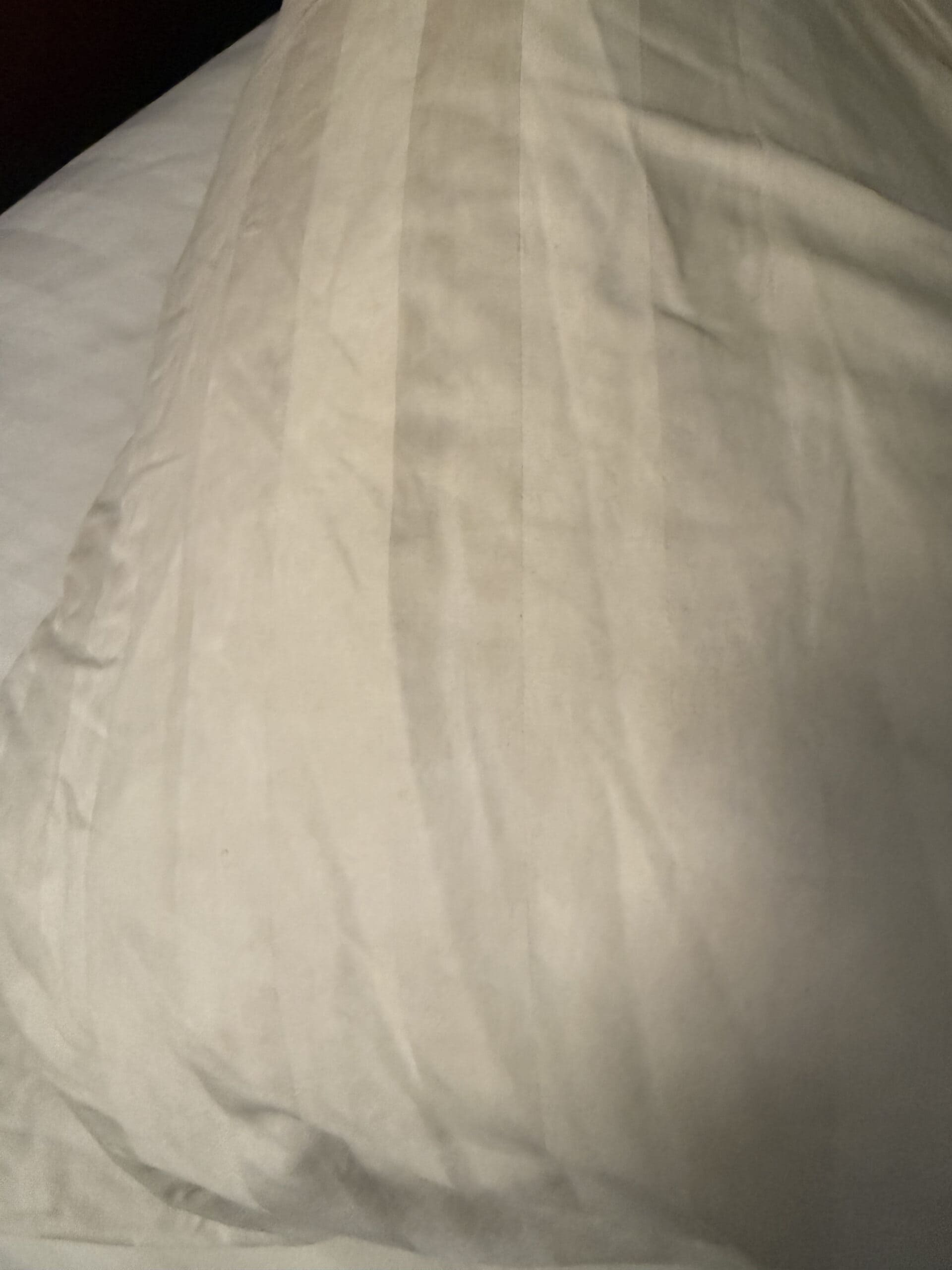
I use a satin pillowcase on a gel cooling pillow, which is not the pairing anyone would recommend for temperature. I use it for the surface feel rather than for cooling, and I am not relying on the pillow for that either. Our note on sizing a cooling pillow covers that in more detail.
Quick Answer
Any pillowcase works and thin, breathable, loosely woven fabric preserves the most cooling. Thick flannel and heavy cotton block it substantially. Satin and polyester feel cool initially and breathe poorly overnight. Percale and bamboo are the best pairings for temperature.
How Much Different Fabrics Block
| Pillowcase | Effect on cooling |
|---|---|
| Percale cotton | Minimal, breathes well |
| Bamboo viscose | Minimal, moves moisture |
| Linen | Minimal, very breathable |
| Cotton sateen | Moderate, tighter surface |
| Satin polyester | Cool to touch, poor overnight |
| Flannel or jersey | Substantial, insulating |
| Waterproof protector | Blocks most of it |
That ranking follows breathability rather than how cool the fabric feels on first contact, and those two qualities frequently point in completely opposite directions.
Why the Case Matters So Much
Gel and phase-change pillows work by conducting heat away from your head, and that requires genuine contact to happen at all.
Ventilated and shredded foam pillows work instead by allowing airflow through the fill itself, which requires the case above to let that air pass freely.
Either way, the fabric sitting in between is genuinely part of the system rather than an accessory bolted onto it. A sealed or insulating case defeats both of those mechanisms at once.
This is exactly why people sometimes conclude that a cooling pillow does not work at all, when the thing actually failing is the case they have put over it, covered in whether cooling pillows actually work.
My Pairing and Why It Is Not a Recommendation
I use a satin pillowcase over a gel cooling pillow, which on paper is close to exactly the wrong combination to choose.
Satin feels cool on first contact and then does not breathe well at all across a whole night, which is precisely the opposite of what a cooling pillow needs from the case covering it.
I use it because I like the surface of it, rather than because it does anything for temperature. That is a perfectly legitimate reason and it is worth being clear that it is the actual reason.
The rest of my setup does the actual temperature work. There is a cooling topper, a cooling blanket, and fans running year-round, so the pillow is one layer among several rather than the thing keeping me cool on its own, covered in using a cooling blanket and topper together.
Someone relying on the pillow alone to keep them cool would be better off pairing it with something else entirely.
What to Use Instead for Temperature
Percale cotton
Crisp, loosely woven, and genuinely breathable. The plain weave structure allows air straight through where tighter weaves restrict it considerably.
Bamboo viscose
Smooth like sateen and considerably better at moving moisture, which suits people who dislike percale’s texture.
Linen
The most breathable of the common options by some margin, with a textured surface that some people find too rough against the face.
Cotton jersey to avoid
Jersey feels soft and behaves like a t-shirt against your face, holding warmth in exactly the way a cooling pillow is trying to prevent.
Purpose-made cooling cases
Cases built for this pair a cooling-treated or naturally breathable fabric with the pillow, covered in cooling pillowcases.
The Protector Problem
Waterproof pillow protectors are the single biggest blocker of all, and people routinely forget they are even there.
A membrane designed to stop liquid passing through also stops air and moisture passing through, which is precisely what cooling depends on.
Breathable protectors do exist and they cost rather more, using a membrane that passes water vapor through while still blocking liquid.
Someone with an expensive cooling pillow and a cheap waterproof protector has effectively paid for cooling and then blocked it, covered in what a mattress protector is for.
Testing Your Own Setup
Working out whether the case is the problem takes one night and no purchases.
Sleep a night with the pillow bare, or with just the pillow’s own cover if it has one. That gives you the pillow performing without anything in the way.
Compare that against a normal night with your usual case. A large difference points at the case; little difference points at the pillow or at the room.
Check what is actually on there while you are at it, since protectors get put on once and forgotten, and people are frequently surprised to find one still in place.
Feel the underside of the case in the morning. A case that is damp underneath is holding moisture rather than moving it, which is the clearest sign it is working against the pillow.
Try flipping frequency as a measure too. A pillow you flip constantly is one where heat is building faster than it can escape, and that is usually a case problem rather than a fill problem.
If the pillow performs no better bare, the case was never the issue and the pillow itself has probably lost its cooling, which happens with age.
Fit Matters Too
A case that is too tight compresses ventilated foam and closes off the very channels that airflow depends on.
A loose case leaves air gaps that reduce the contact conduction gel pillows rely on, which is the opposite failure.
Correct sizing for the pillow’s actual dimensions matters more on cooling pillows than on ordinary ones for that reason.
Zippered cases sit noticeably closer than envelope closures do, which is worth knowing if your pillow already has a ventilated cover of its own underneath, covered in keeping a pillow cool all night.
Deciding What You Actually Want
If cooling is genuinely the priority, pair the pillow with percale, bamboo, or linen, and skip any waterproof layer that is not specifically sold as breathable.
If surface feel is the priority, satin or sateen is a reasonable choice and it costs you some of the cooling, which is a trade rather than a mistake.
If both matter to you, silk satin or a bamboo sateen gets considerably closer to satisfying both than polyester satin manages, at a noticeably higher price.
And if the room itself is hot, none of this makes a great deal of difference, since every cooling layer ultimately depends on having somewhere to send the heat it removes.
Related Reading
- cooling pillowcases
- do cooling pillows work
- what makes a pillow cooling
- keeping a pillow cool
- gel cooling pillows
- whether satin sleeps cool
Frequently Asked Questions
Can you use a cooling pillow with a regular pillowcase?
Yes. Any case works, and thin breathable fabric preserves the most cooling while thick or waterproof layers block substantial amounts of it.
Which pillowcase is best for a cooling pillow?
Percale cotton, bamboo viscose, or linen. All three are breathable enough to let both conduction and airflow through.
Does a satin pillowcase block cooling?
Polyester satin feels cool on contact and breathes poorly overnight, so it works against a cooling pillow’s mechanism even though it feels right initially.
What about a waterproof protector?
It blocks most of the cooling. A membrane that stops liquid also stops air and moisture, so look for one specifically described as breathable.
Should the case be tight or loose?
Correctly sized. Too tight compresses ventilated foam and closes airflow channels, too loose leaves gaps that reduce contact conduction.
Why does my cooling pillow not feel cool?
Frequently the case rather than the pillow. Check the pillowcase fabric and whether a protector is sitting between them before concluding the pillow has failed.
How do I test whether the case is the problem?
Sleep one night with the pillow bare and compare. A large difference points at the case, little difference points at the pillow or the room. Check whether a protector is still on there.
Do I need a special cooling pillowcase?
Not necessarily. A good percale or bamboo case does most of what a purpose-made one does, and purpose-made cases add a treated fabric on top.
Recommended Reading
See our note on choosing the right pillow for your sleep position.
