
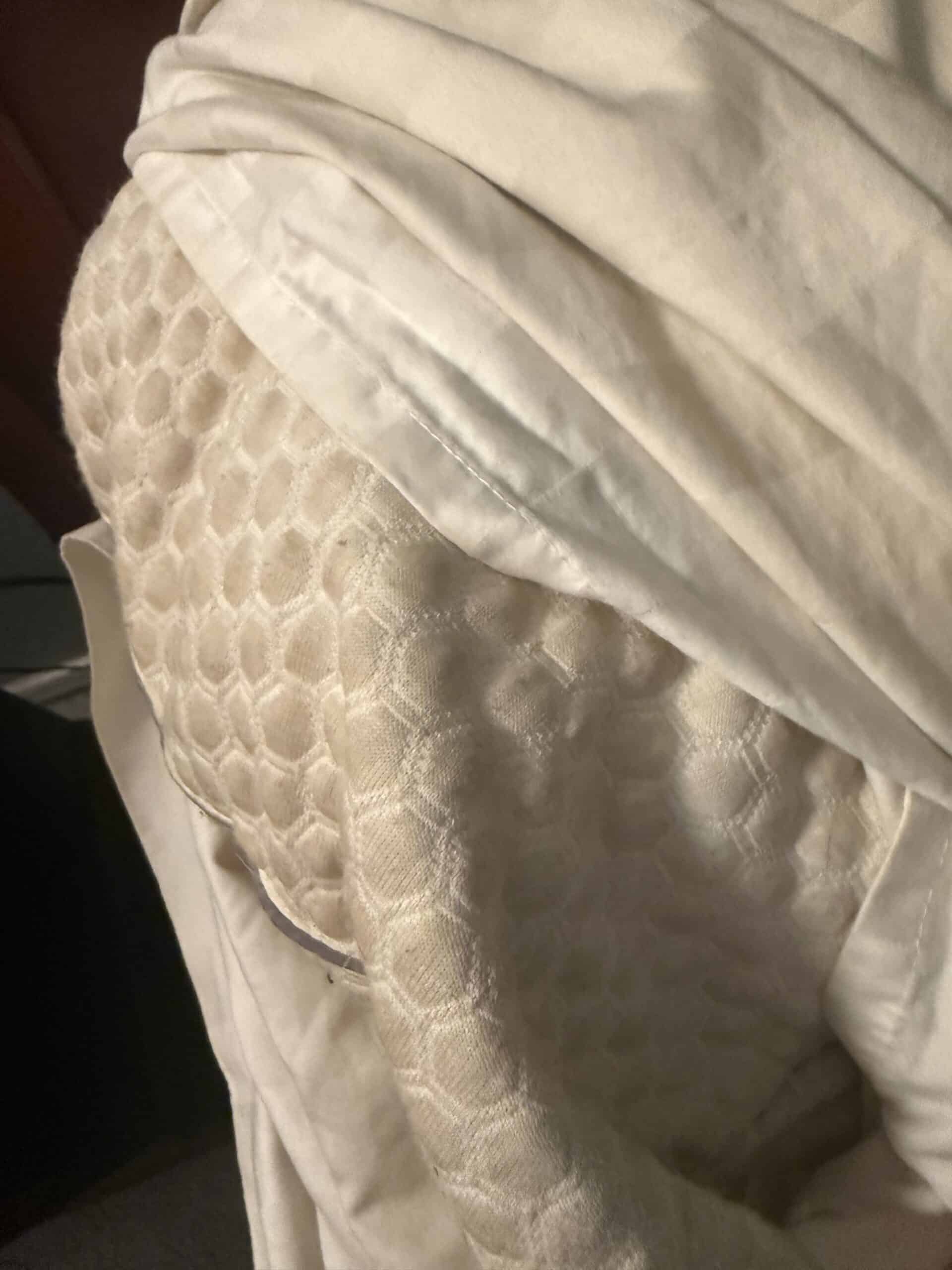
Cooling pillow listings lead with the cooling and treat size as an afterthought, which is backwards. A pillow at the wrong loft causes neck problems whatever temperature it runs at.
Mine is a gel cooling pillow used every night year-round, and it has flattened a bit over about a year. That flattening is a sizing issue as much as a durability one, since loft is what a pillow is for. Our roundup of cooling pillows covers the category.
Quick Answer
Loft is decided by your sleeping position and shoulder width, not by the cooling technology. Standard, queen, and king refer to length rather than height, and length matters least of the three dimensions.
The Three Dimensions
| Dimension | Decides | Matters |
|---|---|---|
| Loft, the height | Neck alignment | Most |
| Width, front to back | Head staying on it | Moderate |
| Length, side to side | Room to move | Least |
| Firmness | How much loft survives your weight | As much as loft |
Why Loft Depends on Position
The job is filling the gap between your head and the mattress so your neck stays in line with your spine.
Side sleepers have the largest gap, because the distance from ear to mattress is roughly your shoulder width, so they need the highest loft.
Back sleepers need considerably less, since the head sits closer to the mattress with only the curve of the neck to fill.
Stomach sleepers need least of all and frequently do better with something very thin, because a high pillow forces the neck backward. Our note on what pillow loft you need covers measuring.
Shoulder Width Is the Measurement
For side sleepers there is a rough way to work out loft rather than guessing between soft, medium, and firm.
The gap you are filling runs from the outside of your shoulder to the side of your head, which is roughly the distance your neck has to span when lying on your side.
Broader shoulders mean a larger gap and a higher pillow, which is why the same pillow suits one person and leaves another with a bent neck.
Mattress firmness changes it too, since a soft mattress lets your shoulder sink in and reduces the gap the pillow needs to fill.
That interaction is why people who change mattresses frequently find their pillow suddenly wrong, and it is the pillow that needs adjusting rather than the new mattress being at fault. Our note on needing a cooling pillow and a topper covers the layers together.
Firmness Changes Effective Loft
Soft pillows compress
A high soft pillow can end up lower under your head than a medium firm one of less stated height.
Gel and memory foam hold better
Solid foam keeps closer to its stated loft than fill does, which makes the number on the box more meaningful.
Shredded fill is adjustable
Removing or adding fill changes loft directly, which is the most forgiving option for anyone unsure of their number.
Firm suits heavier sleepers
More weight compresses more, so the same pillow gives a different effective loft to different people. Our roundup of gel cooling pillows covers changing it after purchase.
What Mine Has Done
A gel cooling pillow, used nightly and year-round rather than seasonally, for about a year.
It has flattened a bit in that time, which is the normal path for a pillow in constant use rather than a fault.
What that means for sizing is that the loft you buy is the maximum you will ever have, and it declines from there. Buying at exactly the right height means being slightly under it within months.
Constant use accelerates that, and a pillow used seasonally would take considerably longer to reach the same point. Our note on why cooling pillows stop feeling cool covers the other decline.
Width Matters More Than Length
Of the two horizontal dimensions, the front-to-back width is the one that affects sleep and the side-to-side length is the one people shop by.
A narrow pillow means your head can roll off the back edge when you turn, which wakes you without you registering why.
Wider pillows keep your head supported through a position change, which matters for anyone who moves between back and side through the night.
Contoured and cervical shapes constrain this deliberately, guiding the head to a specific spot, which suits some sleepers and frustrates those who move a lot.
Length only matters if you move sideways across the bed or want to prop yourself up, which is a different job from head support. Our roundup of cooling pillows that hold their loft covers durability.
Standard, Queen, and King
These describe length rather than loft, which is why they cause so much confusion in a sizing conversation.
Standard suits most single sleepers and fits standard cases, which is a practical consideration people forget.
Queen adds length, which helps anyone who moves around, and it still fits some standard cases loosely.
King is long enough to double as back support when sitting up, and it needs king cases. None of those choices changes the support under your head, which is entirely a loft question. Our note on washing pillowcases covers the case side.
Those labels are worth understanding mainly so you can ignore them while shopping, since none of them tells you whether a pillow will hold your neck in line.
Cooling Materials and Their Loft Limits
Gel-infused foam comes in a range of lofts and holds its height well, which makes it a reasonable default for most positions.
Phase-change covers sit on top of whatever pillow is underneath, so the loft is decided by the base rather than the cooling layer.
Ventilated latex is firm and holds loft indefinitely, at higher cost and more weight.
Shredded gel foam is the adjustable option, letting you set loft directly, and it compresses more under load than solid foam does.
Knowing which material you have also tells you how quickly the loft will change, since solid foam holds its height where fill settles and needs adjusting.
Standard, queen, and king are shelf categories more than sleep categories, and treating them as sizing guidance is how people end up with the wrong pillow at the right length.
Checking Whether Yours Is Right
Lie in your normal position and have someone look at your neck from the front, which should be in line with your spine rather than bent up or down.
Waking with neck or shoulder ache on one side points at too little loft for a side sleeper.
Waking with your chin tucked toward your chest suggests too much.
Needing to fold or bunch the pillow is the clearest signal of all, since that is you manually adding the loft the pillow is not providing. Our note on why your neck hurts in the morning covers the symptoms.
Running that check once a year catches a pillow that has flattened past its useful loft, which is the failure people live with longest without noticing.
Cooling Pillow Size FAQ
What size cooling pillow do I need?
Loft is the number that matters and it depends on sleeping position and shoulder width. Standard, queen, and king describe length rather than height.
Does the cooling change the sizing?
No. Cooling technology and loft are separate specifications, and a pillow at the wrong height causes neck problems regardless of how cool it runs.
Which position needs the most loft?
Side sleepers, since the gap from ear to mattress is roughly shoulder width. Stomach sleepers need least and frequently do better very thin.
Does firmness affect the height I need?
Considerably. A soft high pillow compresses lower than a firm medium one, so effective loft under your head is what counts rather than stated height.
Will it flatten?
Yes. Mine has flattened a bit over about a year of nightly year-round use, which means the loft you buy is the most you will ever have.
Should I size up to allow for flattening?
Slightly, or choose an adjustable pillow where you can add fill later. Buying at exactly the right height means being under it within months.
What size case do I need?
Match it to the pillow length. Standard pillows fit standard cases, king pillows need king cases, and a loose case bunches under your head.
How do I know mine is wrong?
Neck ache on waking, a chin tucked toward your chest, or finding yourself folding the pillow to add height. That last one is the clearest signal.
For the wider picture, see our guide to how to choose the right pillow for your sleep position.
