
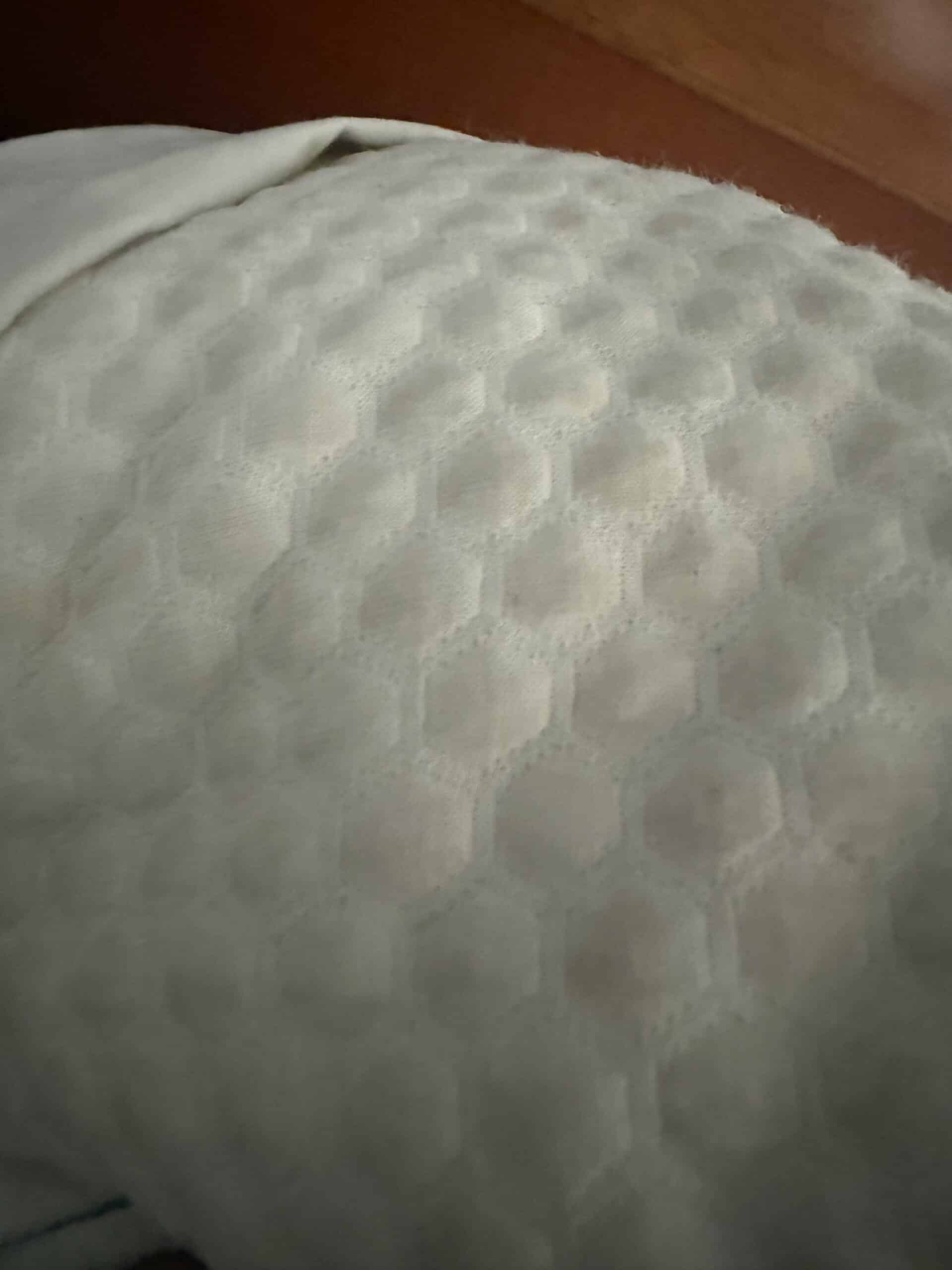
Every pillow loses loft. The question is how much and how fast, and no pillow sold as flatten-proof actually resists it entirely.
Mine is a gel cooling pillow I have used every night for about a year, all year round rather than just in summer. It has flattened a bit, not completely, and that is roughly what I would expect from a year of nightly use. Our roundup of gel cooling pillows covers the category broadly.
Fill Types and How They Hold Up
| Fill | Loft retention | Cooling approach |
|---|---|---|
| Solid memory foam | Good | Gel layer or infusion |
| Shredded memory foam | Moderate, refillable | Airflow between pieces |
| Latex | Very good | Open cell structure |
| Down and feather | Poor without fluffing | Natural breathability |
| Polyester fill | Poor | Cover fabric only |
| Buckwheat | Excellent | Air moves through hulls |
How We Picked
Selections are grouped by fill type, since that is what determines both how a pillow cools and how it holds its shape. Loft retention is weighted heavily, because a flat cooling pillow is a flat pillow.
Descriptions come from documented construction, alongside a year of nightly use with a gel cooling pillow as my only pillow.
Why Pillows Flatten
Foam cells break down under repeated compression, which is a mechanical process rather than a defect. A pillow supporting a head for eight hours a night is under load for a third of its life.
Heat accelerates it, and moisture from sweat and humidity does too, which is why a cooling pillow in a hot room faces both.
Loose fills like down and polyester compress and clump rather than breaking down, which is why they respond to fluffing where foam does not.
What separates a good pillow from a poor one is the rate. A year of use showing some loss is normal; a few months to noticeably flat is not. Our note on pillows for neck pain covers timing.
1. A Solid Memory Foam Gel Pillow, Best Overall
Why It Stands Out
A single piece of foam holds its shape better than any loose fill, since there is nothing to shift or clump.
Gel layers or infusion address foam’s tendency to trap heat, which is the main complaint about memory foam generally.
Worth Knowing
It will still compress. Mine has flattened a bit over a year of nightly use, which is normal rather than a failure.
Solid foam cannot be adjusted for height. Our roundup of cooling pillows for hot sleepers covers alternatives.
This suits most people wanting consistent support. Skip it if you need adjustable loft.
Check Price on Amazon2. A Latex Cooling Pillow, Best Loft Retention
Why It Stands Out
Latex resists compression better than memory foam and springs back rather than holding an impression, which is why it keeps its height longer.
The open cell structure moves air naturally, so cooling comes from the material rather than an added gel layer that can wear.
Worth Knowing
Heavier and firmer than foam, which some people dislike immediately.
Costs more, and natural latex is a genuine allergy concern for a small number of people. Our roundup of latex pillows covers the material.
This suits anyone tired of replacing pillows. Skip it if you like a soft sinking feel.
Check Price on Amazon3. A Shredded Foam Pillow, Best Adjustable
Why It Stands Out
Removable fill means you can add more as it compresses, which is the only genuine answer to flattening on this page.
Air moves between the pieces, so shredded foam runs cooler than an equivalent solid block.
Worth Knowing
Shifts and clumps, so it needs redistributing regularly to stay even.
Adding fill requires having spare fill, which is an ongoing cost. Our roundup of adjustable loft pillows covers the category.
This suits anyone between pillow heights. Skip it if you want something you never touch.
Check Price on Amazon4. A Buckwheat Pillow, Best for Firm Support
Why It Stands Out
Hulls do not compress the way foam does, so loft stays essentially constant for years, and hulls can be topped up.
Air passes freely between them, which makes buckwheat one of the coolest fills available without any gel or treatment.
Worth Knowing
Heavy, firm, and it rustles when you move, which is a genuine problem for some people.
Nothing like a conventional pillow to lie on. Our roundup of buckwheat pillows covers what to expect.
This suits people who want firm support that lasts. Skip it if you want softness.
Check Price on Amazon5. A Gel Layer Pillow, Best Cooling Feel
Why It Stands Out
A solid gel pad on the surface feels cool to the touch immediately, which is the sensation people are usually chasing.
The foam underneath provides support while the gel handles the contact surface.
Worth Knowing
The initial coolness fades as the gel reaches body temperature, so it helps falling asleep more than staying cool all night.
Gel pads can separate from the foam over time. Our note on whether cooling pillows actually work covers the mechanism.
This suits people who struggle to fall asleep when warm. Skip it expecting all-night cooling.
Check Price on Amazon6. A Ventilated Foam Pillow, Best Airflow
Why It Stands Out
Punched channels through the foam let heat escape rather than accumulating, which addresses foam’s core weakness structurally.
Because the cooling comes from the shape rather than an additive, it does not wear out the way a gel layer can.
Worth Knowing
Ventilation channels slightly reduce the supporting material, so these can compress marginally faster than solid foam.
Airflow only helps if the cover breathes too. Our roundup of cooling pillowcases covers the cover.
This suits hot sleepers who found gel disappointing. Skip it if you want maximum firmness.
Check Price on AmazonWhat a Year of Nightly Use Looks Like
Mine has flattened a bit rather than completely, which is the honest description and the one most listings avoid.
It is still my normal pillow, used every night, and I have not felt any need to replace it. Some loss of loft after a year of nightly use is what a foam pillow does.
Using it year-round rather than seasonally means it has had considerably more use than a summer-only cooling pillow would.
What I would tell someone shopping is to expect this and judge a pillow on the rate rather than on whether it happens. A pillow noticeably flat at three months is a different product from one slightly softer at a year. Our note on choosing a pillow for your sleep position covers the fit question.
Height Matters More Than Firmness
Most pillow disappointment is a height problem misdiagnosed as a firmness or cooling problem.
Side sleepers need enough loft to fill the gap between shoulder and head, which is more than most people buy. Too little and the neck bends downward all night.
Back sleepers need considerably less, since the gap is smaller, and an over-lofted pillow pushes the head forward.
This is where flattening actually bites. A pillow that started at the right height for a side sleeper and lost loft has moved out of range, where the same loss on a back sleeper’s pillow might move it into range.
Which is why “does it flatten” is less useful than “does it still hold you in a neutral position,” and that is a question only you can answer by lying on it. Our roundup of pillows for side sleepers covers loft by position.
Making One Last Longer
Use a protector
Moisture from sweat accelerates foam breakdown, and a protector keeps it out of the fill entirely.
Air it out
Foam needs to dry between uses. Pulling back the bedding rather than making it immediately helps more than it sounds.
Rotate and flip
Compression concentrates where your head sits. Turning the pillow spreads that load.
Follow the cleaning guidance
Most foam pillows cannot be machine washed, and washing one is how a good pillow becomes a lumpy one. Our roundup of pillow protectors covers the first step.
Cooling Fades Before Loft Does
The two failures happen on different timelines, and the cooling usually goes first.
Gel layers and cooling treatments work by conducting heat away, and they saturate once they reach body temperature. That happens within an hour on the first night and continues happening every night.
What degrades over months is the cover fabric, since cooling covers rely on smooth fibers that pill and roughen with washing.
Foam structure lasts longer than either, which is why a pillow can feel warm long before it feels flat.
Replacing the pillowcase with a genuinely cool one restores much of the effect for a fraction of the cost of a new pillow, and it is worth trying before concluding the pillow has failed. Our roundup of cooling mattress pads covers those.
Common Mistakes to Avoid
Expecting no compression
Every pillow loses loft. Judge the rate rather than the fact, and be suspicious of anything claiming otherwise.
Washing foam
Water breaks foam down and it rarely recovers its shape. Protectors exist precisely to avoid this.
Buying on cooling alone
A cool pillow at the wrong height is worse than a warm one that supports your neck properly.
Replacing too early
Slightly softer after a year is normal rather than a reason to buy again. Our note on body pillows covers the timeline.
Recommended Reading
See our roundup of pillows for back sleepers, our note on why you keep flipping your pillow, our roundup of cooling toppers, and a roundup of cooling blankets.
Cooling Pillow FAQ
Do cooling pillows flatten?
All pillows do. Mine has flattened a bit over a year of nightly use, which is normal for foam. The useful question is how fast rather than whether.
Which fill holds its loft best?
Buckwheat and latex resist compression considerably better than memory foam, and both are firmer and heavier than most people expect.
Can I fix a flattened pillow?
Only if the fill is removable. Shredded foam and buckwheat can be topped up; a solid foam pillow cannot be restored once it compresses.
How long should a cooling pillow last?
Depends on fill and use. Some loss after a year of nightly use is expected. Noticeably flat at a few months suggests poor quality foam.
Does gel cooling wear out?
The cooling sensation fades within each night as the gel reaches body temperature, and gel layers can separate from the foam over years of use.
Should I use a cooling pillow year-round?
Mine is my normal pillow and I use it every night regardless of season. That means more total use than a summer-only pillow, which affects how quickly it compresses.
Can I wash a foam cooling pillow?
Usually not. Water breaks foam down and it rarely recovers its shape. A protector keeps moisture out and is the reason to use one.
Is a flatter pillow always worse?
Not necessarily. If the height still suits your sleep position it is fine. Replace it when support is wrong for your neck rather than when it feels softer than new.
