
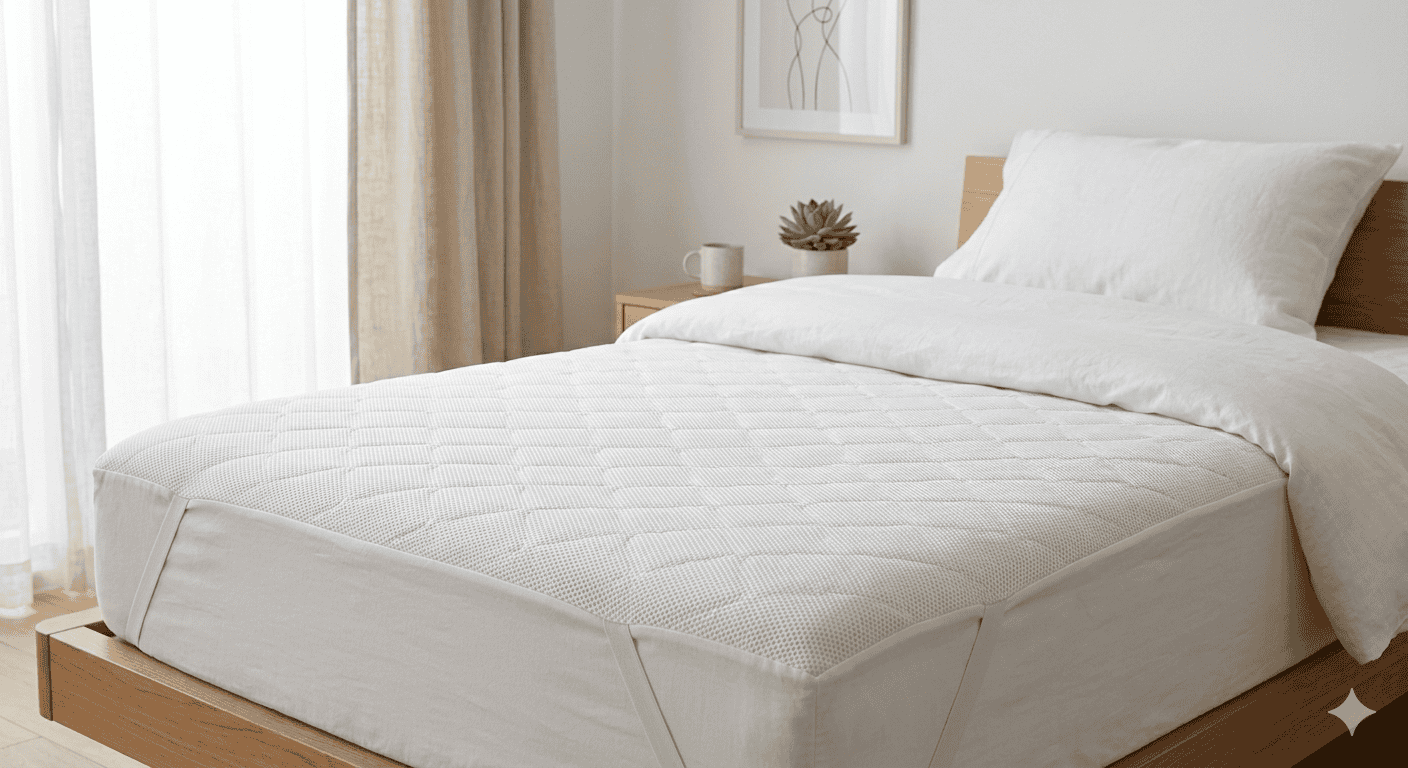
A cooling mattress pad is the targeted fix for a bed that sleeps hot without the cost of a new mattress. It lays a breathable, heat-wicking layer over the surface, pulling warmth away from your body so you stop waking up overheated and hunting for a cool spot. The catch is that “cooling pad” spans very different approaches, from breathable natural fibers to active moisture-wicking fabrics to waterproof pads that happen to run cool, and the right one depends on how hot you run and what else you need it to do. Below are six cooling mattress pads sorted by approach, with a plain guide to matching one to your bed and your priority. Understand why cooling blankets stop feeling cool.
For most hot sleepers the Bedsure cooling pad is the best overall, pairing a heat-wicking surface with everyday comfort at a fair price. The Elegear Arc-Chill is the pick for cool-to-the-touch fabric, the Molecule AirTec is the performance choice, the SafeRest is the best cooling pad that also waterproofs, the Bare Home is the budget option, and the Utopia is the value all-rounder. Decide whether you want pure cooling or cooling plus protection first, because a pad built for one is not automatically good at the other.
Disclosure: RestRight is reader-supported. As an Amazon Associate, we earn from qualifying purchases made through links on this page, at no extra cost to you.
Independent picks, reader-supported through affiliate links at no cost to you. Selections draw on product research, manufacturer specifications, and the sources cited below. First-person notes appear only where the gear was genuinely used.
- Cooling pads work in different ways: breathable quilted, cool-touch fabric, or active moisture-wicking for the hottest sleepers.
- Match the cooling type to how hot you run; mild warmth needs less than night sweats.
- Most cooling pads are not waterproof, so a combined pad cools slightly less because the membrane limits airflow.
- Cooling bedding works best paired with breathable sheets and a cool room.
How We Picked These Cooling Mattress Pads
Each pad was sorted by cooling approach, since a breathable quilted pad and an active moisture-wicking pad suit very different sleepers. Fit, waterproofing, and price were weighed so hot sleepers can match a pad to how hot they actually run.
Bedsure Cooling Mattress Pad: Best Overall
The Bedsure cooling pad is the best all-around pick because it balances genuine heat-wicking with a comfortable, quilted feel at a price most people can justify. The cooling fabric moves warmth away from the surface while a light quilted fill adds a touch of softness, so a hot bed feels cooler without losing comfort. It fits like a deep-pocket fitted sheet and grips the mattress, making it an easy, low-risk upgrade for the typical hot sleeper.
Its cooling is breathable rather than the intense cool-touch of a specialized fabric, and it is not waterproof. As the everyday all-rounder, it hits the balance of cooling, comfort, and price most people are after.
Who it is for: most hot sleepers who want effective cooling with a comfortable feel at a fair price. Who should skip it: those who want the strongest cool-touch surface or waterproofing.
Elegear Arc-Chill: Best Cool-Touch Fabric
For hot sleepers who want that immediate cold feel when they get into bed, the Elegear Arc-Chill leads with a cool-to-the-touch fabric. It uses a heat-conductive material designed to draw warmth from your skin quickly, giving a noticeably cool surface that breathable quilted pads do not match at first contact. If the moment you lie down is when you feel hottest, this is the pad built to address that.
Like all cool-touch fabrics, the cold sensation fades as the surface warms to body temperature, so it works best alongside breathable sheets and a cool room, and it adds little cushioning. For the strongest initial cool feel, it is the standout.
Who it is for: hot sleepers who want an immediate cool-to-the-touch surface. Who should skip it: those who want added plushness or waterproof protection.
Molecule AirTec: Best Performance Cooling
The Molecule AirTec pad targets serious heat with a performance-oriented design built around airflow and moisture management. Its construction is meant to move both heat and sweat away actively, which suits people who sleep very hot or wake up damp rather than just warm. For hot sleepers who have found ordinary cooling pads not enough, the more aggressive moisture-wicking approach is the appeal.
It sits at the higher end of the price range, and the performance focus means it is less about plush comfort than about temperature and moisture control. For the hottest sleepers, that tradeoff is worth it.
Who it is for: very hot sleepers and those who wake up sweaty, wanting active moisture and heat control. Who should skip it: people who run only slightly warm or want a budget option.
SafeRest Cooling Waterproof: Best Cooling Plus Protection
For hot sleepers who also need to protect the mattress, the SafeRest cooling pad combines a heat-wicking surface with a waterproof membrane. You get a cooler sleeping surface plus protection from sweat, spills, and accidents, which is exactly what someone who runs hot and wants to guard a new mattress needs in one product. It fits like a fitted protector and covers the surface while keeping things cooler than a standard waterproof pad.
Combining cooling with a waterproof layer means it will not cool quite as aggressively as a dedicated cool-touch pad, since the membrane limits some airflow. For cooling and protection together, it is the practical compromise.
Who it is for: hot sleepers who also want waterproof protection in a single pad. Who should skip it: those who want maximum cooling with no membrane limiting airflow.
Bare Home Cooling Pad: Best Budget
The Bare Home cooling pad is the cheapest way to add a cooler, more breathable layer to a hot bed. It is a simple, lightweight pad that improves airflow at the surface and adds a little softness, aimed at buyers who want some cooling relief without spending much. For a spare bed or testing whether a cooling pad helps before investing more, it is the low-cost starting point.
The cooling is mild compared with cool-touch or performance pads, and the materials are entry-level, so it suits slightly-warm sleepers more than the very hot. At this price, it is an easy, low-risk way to start.
Who it is for: budget buyers and slightly-warm sleepers wanting mild cooling cheaply. Who should skip it: very hot sleepers who need stronger, active cooling.
Utopia Bedding Cooling Pad: Best Value All-Rounder
The Utopia Bedding cooling pad gives you breathable cooling and a quilted, protective surface at a low price, making it the value all-rounder. It adds light cushioning and a cooler, more breathable surface while gripping the mattress like a fitted pad, covering the basics of comfort and mild cooling for very little. For households outfitting several beds who want a step up from a plain pad, it is the sensible choice.
It overlaps with the Bedsure as a breathable quilted option and cools less than dedicated cool-touch or performance pads. Choose it when value and a comfortable surface matter more than maximum cooling.
Who it is for: value buyers who want light cooling plus a comfortable quilted surface. Who should skip it: those who need the strongest cooling or waterproofing.
Quick Comparison
| Pad | Price | Cooling type | Waterproof | Best for |
|---|---|---|---|---|
| Bedsure Cooling | ~$45 | Breathable quilted | No | Best overall |
| Elegear Arc-Chill | ~$50 | Cool-touch fabric | No | Cool-touch feel |
| Molecule AirTec | ~$130 | Active moisture-wicking | No | Performance cooling |
| SafeRest Cooling | ~$55 | Heat-wicking, waterproof | Yes | Cooling plus protection |
| Bare Home Cooling | ~$30 | Breathable | No | Budget |
| Utopia Bedding Cooling | ~$30 | Breathable quilted | No | Value all-rounder |
How to Choose a Cooling Mattress Pad
Pick the cooling approach first, then the fit and extras.
Match the cooling type to how hot you run
Cooling pads work in different ways. Breathable quilted pads improve airflow gently, cool-touch fabrics feel cold the moment you lie down, and performance pads actively wick heat and moisture for the hottest sleepers. If you run only slightly warm, a breathable pad is enough; if you wake up sweaty, lean toward a cool-touch or performance pad.
Decide if you also need protection
Most cooling pads are not waterproof, so if you also want to guard the mattress from sweat and spills, choose a pad that combines cooling with a waterproof membrane. Be aware that the membrane limits airflow slightly, so a combined pad cools a little less than a dedicated cooling-only pad. Decide which matters more before buying.
Set realistic expectations
A cooling pad reduces heat buildup; it does not refrigerate the bed. Cool-touch surfaces feel coldest at first and warm over time, and all cooling bedding works best paired with breathable sheets and a cool room. Think of the pad as one part of a cooler sleep setup rather than a standalone air conditioner.
Check fit, depth, and care
Make sure the pad’s pocket depth fits your mattress height, including any topper, so it grips without bunching. Confirm it is machine washable, since regular washing keeps it fresh and effective. Budget pads cool mildly but wear sooner, so weigh the low price against how long it will keep performing. For more on this, see our guide to cooling toppers left on all year.
Our Verdict
For most hot sleepers the Bedsure cooling pad is the best balance of cooling, comfort, and price, with the Utopia and Bare Home as cheaper breathable options. Choose the Elegear Arc-Chill if you want an immediate cool-to-the-touch surface, the Molecule AirTec if you sleep very hot or wake up sweaty, and the SafeRest if you want cooling and waterproof protection together. Decide your cooling approach and whether you need protection first, then match the fit to your mattress, and the right pad follows.
Cool-Touch Fabric vs Breathable Pad
The core cooling-pad decision is between a cool-touch surface and a breathable quilted pad.
Cool-touch fabrics
Cool-touch pads feel cold the moment you lie down, ideal if you feel hottest getting into bed, but the sensation fades as the surface warms. They add little cushioning.
Breathable quilted pads
Breathable quilted pads cool more steadily by improving airflow and add light comfort, rather than peaking and fading. They rarely feel ice-cold but stay comfortable across the night.
Common Cooling Mattress Pads Mistakes to Avoid
Buying for the first cold feel alone
Cool-touch panels fade as they warm, so weigh steady breathability alongside that initial chill.
Assuming a cooling pad is waterproof
Most are not. If you want both, choose a combined pad and accept slightly less cooling from the membrane.
Expecting air conditioning
A pad slows heat buildup rather than refrigerating the bed. Pair it with breathable sheets and a cool room.
Ignoring pocket depth
A pad too shallow for a deep mattress shifts and undoes its cooling. Check the depth rating against your mattress plus any topper.
Frequently Asked Questions
Do cooling mattress pads actually work?
Yes, within limits. Cooling pads move heat away from the surface and improve airflow, which genuinely reduces the heat buildup that wakes hot sleepers. They are not air conditioning, so they lower heat rather than make the bed cold, and the effect is strongest when paired with breathable sheets and a cool room.
What is the difference between a cooling pad and a cooling topper?
A cooling pad is a thin layer that mainly manages temperature and adds light comfort, while a cooling topper is a thicker layer that also changes how the bed feels. Choose a pad when your goal is cooler sleep with minimal change to firmness, and a topper when you want cooling plus a noticeable change in cushioning.
Are cool-touch pads better than breathable ones?
They feel colder at first contact, which suits people who feel hottest when they get into bed, but the cool-touch sensation fades as the fabric warms. Breathable pads cool more steadily through the night by improving airflow. The best choice depends on whether you want an immediate cold feel or consistent all-night breathability.
Can a cooling pad help with night sweats?
A cooling pad, especially a moisture-wicking performance one, can make night sweats more comfortable by moving heat and moisture away from your body. It treats the symptom rather than the cause, though, so if night sweats are frequent or severe it is worth discussing with a doctor. Pair the pad with breathable bedding for the most relief.
Are cooling mattress pads waterproof?
Most are not; cooling and waterproofing are usually separate features. If you want both, choose a pad that specifically combines a cooling surface with a waterproof membrane, like the SafeRest. Keep in mind that the membrane slightly reduces airflow, so a combined pad cools a little less than a cooling-only one.
Will a cooling pad fit a deep mattress or one with a topper?
It depends on the pad’s pocket depth. Check the depth rating against your mattress height plus any topper, and choose a deep-pocket pad if the total runs tall. A pad that is too shallow will not grip and will shift during the night, undoing its cooling and comfort.
How do I care for a cooling mattress pad?
Most cooling pads are machine washable, but follow the care label, since some cool-touch and performance fabrics need gentle washing and low heat to preserve their properties. Wash it regularly to keep it fresh, and avoid high-heat drying, which can damage cooling fabrics. Proper care keeps the cooling effect working over time.
How long do cooling mattress pads last?
Typically a few years, with performance and cool-touch pads holding their effect longer than budget breathable ones that wear sooner. The sign to replace one is reduced cooling or a pad that no longer feels cooler than a basic surface. Gentle washing and low-heat drying extend a cooling pad’s usable life.
- whether a mattress topper is worth it
- how long a mattress topper lasts
- cooling pillows for hot sleepers
- cooling pajamas
- mattress pads
- mattress toppers for hot sleepers
- mattress toppers for back sleepers
- Heated Mattress Pad vs Electric Blanket
- choosing a mattress
Related: cooling topper work in winter.
Recommended Reading
See also our guides to are heated mattress pads safe, and heated mattress pads. It also helps to understand staying cool through the night.
See also the foundation principles of a sleep-cool bedroom.
More in this guide: do cooling mattress toppers actually work.
