
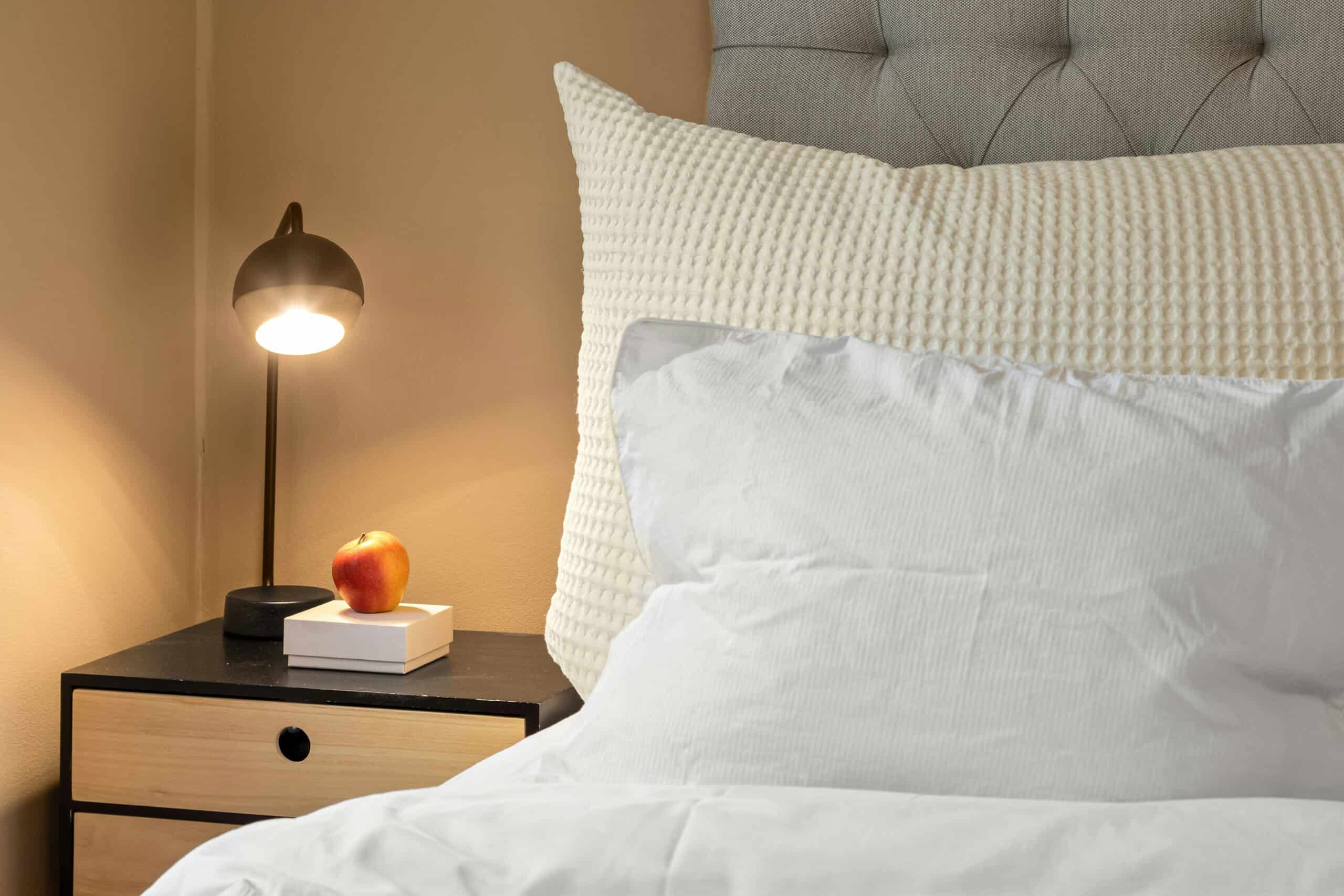
If you have ever flattened a soft pillow by midnight and woken with a stiff neck, latex is worth a look. The best latex pillows hold their shape all night, springing back under your head instead of collapsing, so your neck stays in line with your spine through every position change. Latex also breathes better than dense memory foam, which keeps the surface cooler. The catch is that loft and firmness have to match how you sleep, so a side sleeper and a stomach sleeper need very different pillows. If you are weighing materials, our breakdown of memory foam vs latex pillows lays out the trade-offs. This guide sorts the latex field by sleep position, feel, and how cool you want the surface.
Quick Verdict
For most sleepers, a solid Dunlop latex pillow with a medium-to-firm feel gives responsive, lasting support that keeps the neck aligned. Side sleepers usually want a higher, firmer loft; back and stomach sleepers want lower and softer. Hot sleepers should look for a ventilated, pinhole design, and a shredded-latex pillow lets you fine-tune the height. The picks below match latex to your position and feel.
Why Trust This Guide
Selections draw on material and loft differences and the sleep-ergonomics sources cited in Sources. Support and alignment are described honestly, with no claims to diagnose or treat any condition.
Key Takeaways
- Loft and firmness should match your sleep position: higher and firmer for side sleepers, lower and softer for back and stomach sleepers.
- Dunlop latex feels denser and more supportive; Talalay feels lighter and plusher.
- Ventilated, pinhole latex breathes and sleeps cooler than solid foam.
- A pillow supports good alignment, but it cannot guarantee pain-free mornings on its own.
Disclosure: RestRight is reader-supported. As an Amazon Associate, we earn from qualifying purchases made through links on this page, at no extra cost to you.
How We Picked the Best Latex Pillows
We compared latex type, loft, firmness, ventilation, durability, and fit by sleep position, then matched each pick to a sleeper rather than ranking on price alone. The alignment notes lean on pillow-ergonomics research, which finds that matching pillow loft to your sleep position helps keep the head and neck in a neutral line, even though no pillow alone guarantees symptom-free waking. Each pick below names who it fits and who should skip it.
1. Solid Dunlop Latex Pillow (Everyday Support)
Why It Stands Out
A solid Dunlop pillow gives firm, responsive support that holds your head in place and bounces back as you shift, which is the core appeal of latex. It resists the slow sink of memory foam, so your neck stays supported all night.
Worth Knowing
Solid latex runs heavy and firm, and the fixed loft will not suit every neck. Choose the loft that matches your main sleep position rather than a one-size promise.
This pillow fits sleepers who want durable, consistent support in a medium-to-firm feel. Skip it if you prefer a soft, moldable pillow you can scrunch into shape.
2. Shredded Latex Pillow (Adjustable Loft)
Why It Stands Out
A shredded latex pillow lets you add or remove fill to dial in the exact height and firmness for your neck. That adjustability makes it the most flexible pick, and it suits combination sleepers who change positions.
Worth Knowing
Shredded fill can feel less uniform than a solid core and may need occasional fluffing. The upside is a custom loft that solid pillows cannot offer.
This pillow fits combination sleepers and anyone who has never found the right height. Skip it if you want the seamless, springy feel of a single solid latex core.
3. Ventilated Pinhole Latex Pillow (Hot Sleepers)
Why It Stands Out
A pinhole or channeled latex pillow adds airflow through the core, so heat and moisture move away from your head. Latex already breathes well, and the ventilation pushes it further for a cooler surface.
Worth Knowing
Ventilation helps but does not make any pillow cold, so pair it with breathable bedding if you sleep very warm. The open structure can feel slightly softer than a dense solid core.
This pillow fits hot sleepers and warm bedrooms. Skip it if you sleep cool and would rather prioritize maximum firmness over airflow.
4. Contoured Latex Cervical Pillow (Neck Support)
Why It Stands Out
A contoured latex pillow shapes a higher ridge and a lower hollow to cradle the neck and support the head, which helps keep the cervical spine in a neutral line for back and side sleepers. The firm latex holds that shape all night.
Worth Knowing
The fixed contour takes a few nights to adjust to and does not suit stomach sleepers, who need a flatter surface. Match the contour height to your shoulder width if you sleep on your side.
This pillow fits back and side sleepers who want structured neck support. Skip it if you sleep on your stomach or dislike a shaped pillow.
5. Talalay Latex Pillow (Plush Feel)
Why It Stands Out
Talalay latex is whipped lighter and airier than Dunlop, giving a softer, more buoyant feel that still springs back. It suits sleepers who want latex support without a dense, firm surface.
Worth Knowing
Talalay usually costs more than Dunlop and feels a touch less supportive at the same loft. Choose it for comfort-forward softness rather than maximum firmness.
This pillow fits sleepers who like a plush, responsive surface. Skip it if you want the firmest, densest support latex can offer.
6. Natural Organic Latex Pillow (Eco and Sensitive Sleepers)
Why It Stands Out
A certified natural latex pillow uses latex tapped from rubber trees rather than synthetic blends, which appeals to eco-minded and chemical-sensitive sleepers. Natural latex is naturally resistant to dust mites and mold.
Worth Knowing
Natural latex costs more and can carry a mild rubber scent that fades with airing out. Anyone with a latex allergy should avoid latex pillows entirely.
This pillow fits eco-conscious and sensitive sleepers who want a natural material. Skip it if you have a latex allergy or want the lowest price.
Latex Pillows at a Glance
| Pick | Type | Feel | Best for |
|---|---|---|---|
| Solid Dunlop | Solid core | Firm, responsive | Everyday support |
| Shredded latex | Adjustable fill | Customizable | Combination sleepers |
| Ventilated pinhole | Channeled core | Cooler, airy | Hot sleepers |
| Contoured cervical | Shaped core | Structured | Neck support |
| Talalay | Aerated latex | Plush, buoyant | Softer feel |
| Natural organic | Natural latex | Firm, eco | Sensitive sleepers |
How to Choose a Latex Pillow
Four factors get you to the right pillow. Sleep position drives most of the decision, so our guide on choosing a pillow for side sleepers is a useful companion.
Loft and Your Sleep Position
Side sleepers need a higher, firmer loft to fill the gap between the shoulder and the head, while back sleepers want a medium loft and stomach sleepers want a low, soft one. Matching loft to position is what keeps the neck neutral, so buy for how you actually sleep. A quick test: lie down in your usual position and have someone check that your nose lines up with the center of your chest and your chin is neither tucked nor tipped back, which signals the loft is about right.
Dunlop vs Talalay
Dunlop latex is denser, firmer, and more supportive, while Talalay is lighter, softer, and bouncier. Pick Dunlop for firm support and durability, and Talalay for a plusher, more cushioned feel at a higher price.
Cooling and Ventilation
Latex breathes better than solid memory foam, and pinhole or channeled designs add airflow for a cooler surface. If you run hot, prioritize a ventilated core and consider pairing it with cooling pillows built for hot sleepers for comparison.
Durability and Care
Latex is one of the longest-lasting pillow materials, holding its shape for years, but it needs a breathable cover and spot cleaning rather than machine washing. Our guide to washing pillows without ruining them covers the right approach.
Latex vs Memory Foam Pillows
These two dominate the support-pillow market, and they feel very different under your head.
Where Latex Wins
Latex springs back instantly, breathes better, and resists sagging for years, so it stays cooler and more supportive over time. Sleepers who dislike the slow, sinking hug of memory foam usually prefer the responsive feel of latex.
Where Memory Foam Wins
Memory foam molds slowly to the exact shape of your head and neck, which some sleepers find more cradling and pressure-relieving. It also tends to cost less, though it can sleep warmer and soften over time.
Common Latex Pillow Mistakes to Avoid
A few simple errors leave you with a stiff neck or a pillow that does not fit.
Buying the Wrong Loft for Your Position
A loft that is too high or too low bends the neck out of line and undoes the support latex is meant to give. Match loft and firmness to your main sleep position, and size up the loft for broad shoulders on your side.
Expecting a Pillow to Fix Neck Pain Alone
A well-fitted pillow supports neutral alignment, but lasting neck or shoulder problems involve your mattress, posture, and habits too. If pain persists, see a healthcare professional rather than relying on bedding to solve it.
Ignoring Heat If You Sleep Hot
A dense solid latex core sleeps warmer than a ventilated one, and a hot pillow surface disrupts sleep as your body tries to cool overnight. Choose a pinhole or channeled design if heat is your issue.
Overlooking a Latex Allergy
Latex pillows are not safe for anyone with a latex allergy, even with a cover. If you react to latex, choose a different material entirely rather than risking exposure.
Recommended Reading
- Memory foam vs latex pillows compared
- The best memory foam pillows
- Pillows built for side sleepers
- Pillows for neck pain and support
Latex Pillow FAQ
What is the best latex pillow for most people?
A solid Dunlop latex pillow with a medium-to-firm feel is the best all-around choice. It offers responsive, durable support that keeps the neck aligned and resists the slow sink of memory foam. Match the loft to your main sleep position for the best fit.
Is Dunlop or Talalay latex better?
Dunlop is denser, firmer, and more supportive, while Talalay is lighter, softer, and bouncier at a higher price. Choose Dunlop for firm, lasting support and Talalay for a plusher, more cushioned feel. Both spring back better than memory foam.
Are latex pillows good for side sleepers?
Yes, with a higher, firmer loft that fills the gap between the shoulder and the head to keep the neck neutral. Side sleepers should size the loft to their shoulder width, and a contoured latex pillow can add structured neck support.
Do latex pillows sleep hot?
Latex breathes better than dense memory foam, so it sleeps cooler than many foam pillows. A ventilated, pinhole, or channeled design improves airflow further. If you sleep very hot, pair it with breathable bedding and a cooler bedroom.
How long do latex pillows last?
Latex is one of the most durable pillow materials and can hold its shape for several years with a breathable cover and spot cleaning. It resists the flattening that synthetic fills experience, which is part of its long-term value.
Are latex pillows good for neck pain?
A correctly lofted latex pillow supports neutral neck alignment, which many people find comfortable. It is not a medical treatment, though, and persistent neck pain involves your mattress, posture, and other factors, so see a professional if pain continues.
Can you wash a latex pillow?
Latex pillows should not go in a washing machine, which can damage the core. Use a removable, washable cover, spot clean the latex with mild soap and water, and air dry it away from direct heat and sunlight to protect the material.
Are latex pillows safe for allergies?
Natural latex resists dust mites and mold, which helps many allergy-prone sleepers, but anyone with a latex allergy should avoid latex pillows entirely. If latex is not an option for you, a down-alternative or other foam pillow is a safer choice.
Related Reading
Explore more: memory foam vs latex mattress, and hybrid vs latex mattress.
Recommended Reading
See also our guides to euro pillows and shams.
