
A good down comforter is the closest bedding gets to sleeping under a cloud: light in the hand, warm against the cold, and breathable enough that you do not wake up sweating. The best down comforters trap heat with lofted down and feathers while a tight cotton shell keeps the fill in place and the quills inside. For most sleepers an all-season feather-and-down insert like the Puredown is the sensible starting point, warm enough for winter without being smothering. Fill type, fill power, and construction decide how warm and how lasting a comforter is, so it helps to understand the difference between down and down-alternative before you buy. For more, see what fill power means. Our guide to the best duvet inserts is a natural next read.
Quick Verdict
The Puredown all-season comforter is the safest all-round pick: RDS-certified fill, a breathable cotton shell, and medium warmth that works most of the year. Choose by how warm you sleep and how cold your winters get. Hot sleepers want a lightweight summer-weight insert, cold sleepers want a heavyweight with high fill power, and anyone with down allergies should go down-alternative.
Why Trust This Guide
Selections draw on product research and manufacturer specs. First-person notes appear only where the gear was genuinely used. I run warm, so pick two is the feather-and-down comforter I keep for the colder months, and those notes are my own.
Key Takeaways
- Down is the light, lofty cluster that traps heat; feather is heavier and cheaper, and most affordable comforters blend the two.
- Fill power measures loft and quality, while fill weight in ounces drives warmth, so read both, not just one.
- Baffle-box construction keeps the fill evenly spread and prevents cold spots, unlike flat sewn-through stitching.
- Always use a duvet cover: it protects the comforter, extends its life, and is far easier to wash than the insert.
- People with down allergies should choose a down-alternative, which mimics the loft without the feathers.
Disclosure: RestRight is reader-supported. As an Amazon Associate, we earn from qualifying purchases made through links on this page, at no extra cost to you.
How We Picked the Best Down Comforters
A down comforter earns its place by being warm for its weight, well-built enough to keep the fill where it belongs, and breathable enough to sleep under comfortably. The goal is lofted warmth without overheating, with a shell that holds the down inside instead of leaking quills across your bed. Every pick had to use quality, responsibly sourced fill, hold its loft through real use, come in a weight that matches a clear type of sleeper, and come from a maker whose comforter is current and widely sold.
One pick is the comforter I sleep under in cold weather, so it carries first-hand notes. The rest are chosen on fill quality, construction, warmth, and value across different sleeping needs.
1. Puredown Goose Feather and Down Comforter: Best Overall
The comforter that suits the most people is the one that gets warmth and price right, and the Puredown does exactly that. A blend of goose feather and down in a breathable cotton shell delivers medium, all-season warmth without a luxury price.
Why It Stands Out
The RDS-certified fill is responsibly sourced, the cotton shell is down-proof so quills stay inside, and baffle-box construction keeps the loft even with no cold spots. It lands at a medium warmth that works for most of the year, and owners report it holding up for many years of nightly use. For a first real down comforter, it is the low-risk, high-value choice.
Worth Knowing
Medium warmth means very cold sleepers in harsh winters may want something heavier. Like all down, it benefits from a duvet cover and an occasional fluff to keep its loft.
Buy it as a do-everything all-season comforter at a fair price. Skip it if you need maximum heavyweight warmth for a frigid bedroom.
Check Price on Amazon2. The Feather and Down Comforter I Use: What I Use
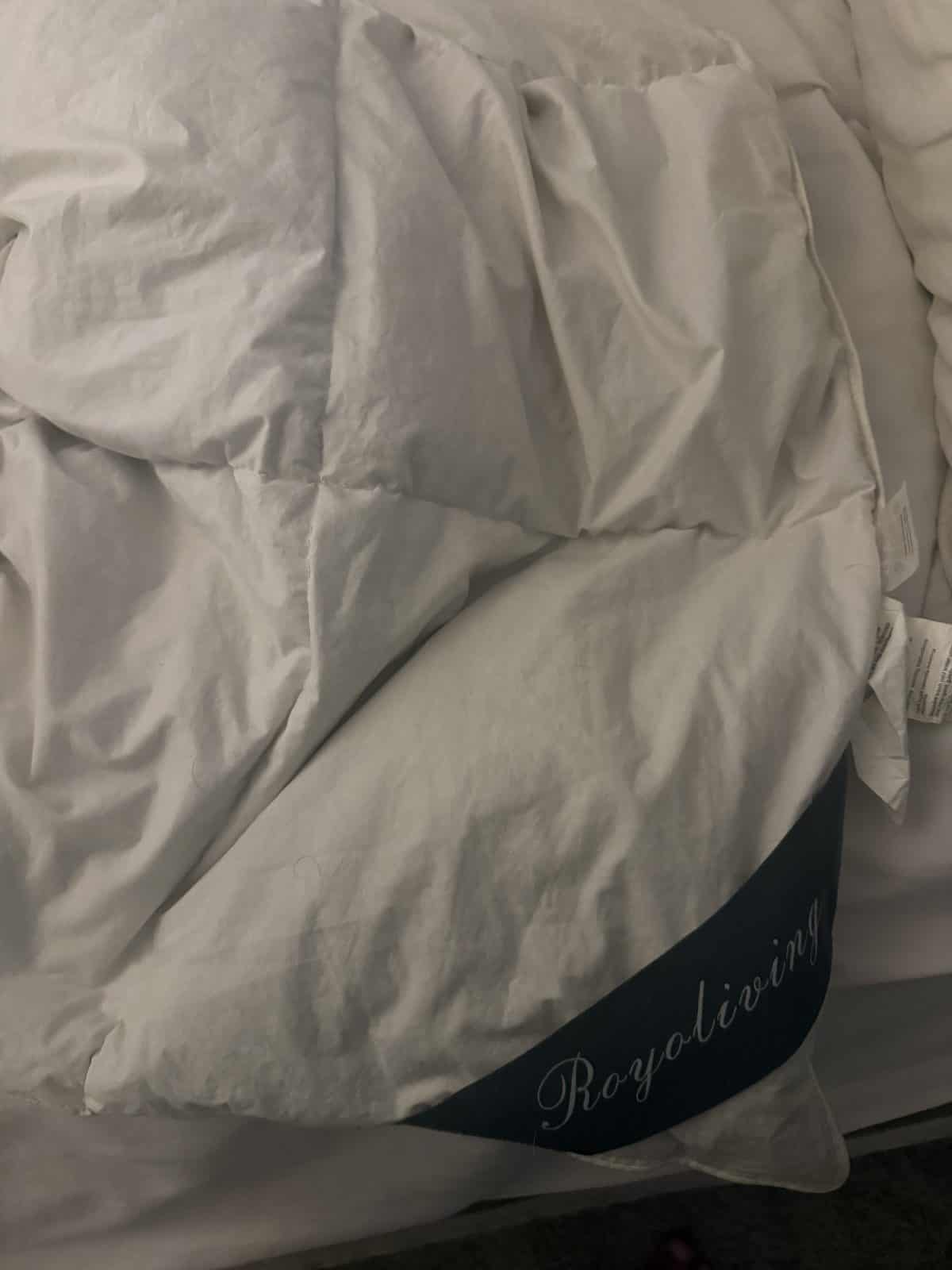
Pick two is the comforter on my own bed in the cold months. It is a white, lofty feather-and-down comforter with a baffle-box look and a soft cotton shell, and because I run warm, it spends the summer in the closet and comes out only when the nights actually turn cold.
Why It Stands Out
Once the temperature drops, this thing is on my bed every single night. It is warm without feeling heavy, which is the trick a good down comforter pulls off, and it has been genuinely easy to live with. It washes up easily and comes back fluffy, which matters more to me than almost anything, and it has held its loft and quality through long use with no leaking or flattening. It is all-around quality bedding that has never given me a reason to replace it. I pair it with a duvet cover to keep it clean, and in summer I swap to a lighter cooling blanket instead.
Worth Knowing
Because I run warm, a full down comforter is genuinely too much for summer, so this is seasonal bedding for me rather than year-round. Mine carries no legible brand on the comforter itself, so I have not named it; the button points to the same style of white feather-and-down comforter.
Reach for a feather-and-down comforter like this if you want real, lofty warmth for the colder half of the year. Pass if you sleep hot year-round and need something lighter.
Check Price on Amazon3. APSMILE Goose Feather Down Comforter: Best All-Season
For a soft, quiet comforter that works across the seasons, the APSMILE is a popular pick. A down-forward blend in a baffle-box shell gives it a plush, even feel without the rustle some inserts have.
Why It Stands Out
The higher proportion of down fiber and down makes it soft and lofty rather than feather-heavy, and the baffle-box design keeps the fill from shifting or poking through. A tight, soft shell holds everything in place, owners praise how quietly it sleeps, and it is machine washable for easy care. It is a comfortable middle ground between budget and luxury.
Worth Knowing
Natural down can have a slight scent out of the packaging that airs out in a day or two. As with any down, a duvet cover is recommended to protect the shell and keep it clean.
Choose it for soft, quiet, all-season warmth. Skip it if you want the absolute warmest heavyweight option for deep winter.
Check Price on Amazon4. Egyptian Bedding Siberian Goose Down Comforter: Best Premium and Warmest
When you want luxury-grade warmth, high fill power is what you pay for, and this Siberian goose down comforter delivers it. A generous fill weight in a high-thread-count Egyptian cotton shell makes it the pick for cold bedrooms and cold sleepers.
Why It Stands Out
The high fill power gives it serious loft and warmth that holds up on the coldest nights, while the premium Egyptian cotton shell is soft and durable. Baffle-box construction keeps the down fluffy and evenly spread even after heavy use, and the natural down and cotton breathe well enough to regulate temperature rather than just trapping heat. For a long-term, heirloom-grade comforter, it is the standout.
Worth Knowing
It is the priciest pick here, and like many high-loft down comforters it can rustle when you shift, which a duvet cover helps quiet. The warmth is real, so hot sleepers will find it too much.
Get it for premium, lasting warmth in a cold bedroom. Look elsewhere if you sleep hot or want to spend less.
Check Price on Amazon5. Globon Texcote Summer Down Comforter: Best Lightweight
Not everyone wants to be buried in warmth, and hot sleepers need a down comforter that breathes. The Globon Texcote summer-weight brings the soft feel of down with far less fill, so it cozies without cooking you.
Why It Stands Out
A light fill weight with high fill power gives it loft without heat, ideal for warm rooms, summer nights, and people who overheat under a normal comforter. The down is treated to repel moisture and resist dust and mites, and the soft shell with quality piping feels good against the skin. It is the rare down comforter that suits a hot sleeper, much like a dedicated cooling comforter.
Worth Knowing
A summer weight is not meant for deep winter, so cold sleepers will need to layer or choose a heavier insert. With fewer anchor tabs, it can shift inside a duvet cover for restless sleepers.
Pick it if you sleep hot or want a breezy warm-season comforter. Move up in weight if you need real winter warmth.
Check Price on Amazon6. Bedsure Down-Alternative Comforter: Best Down-Alternative
For anyone with a down allergy or an ethical reason to skip feathers, a good down-alternative gives the loft without the fill. The Bedsure mimics the cloud-like feel with a microfiber fill that washes easily and costs less.
Why It Stands Out
The synthetic fill is hypoallergenic, so it suits sleepers who react to down, and it is fully machine washable with none of the special care real down sometimes needs. Box stitching keeps the fill in place, the brushed shell is soft, and the price is friendly. For allergy sufferers and vegans, it is the obvious choice, and it pairs naturally with allergy-friendly pillows.
Worth Knowing
Down-alternative does not quite match the warmth-to-weight or longevity of real down, and the fill can flatten faster over years of use. It is a comfort and value choice rather than a luxury one.
Choose it for allergies, easy care, or a lower price. Skip it if you want the lightest, warmest, longest-lasting real down.
Check Price on AmazonDown Comforters at a Glance
| Comforter | Fill | Warmth | Best for | Shell | Price band |
|---|---|---|---|---|---|
| Puredown | Goose feather and down | Medium, all-season | Overall value | Cotton | $60–$110 |
| Feather and down (what I use) | Feather and down | Cold-season | Warm months off, winter nightly | Cotton | $50–$120 |
| APSMILE | Down-forward blend | Medium, all-season | Soft, quiet feel | Cotton blend | $70–$130 |
| Egyptian Bedding Siberian | Goose down, high fill power | Heavyweight | Premium, cold bedrooms | Egyptian cotton | $150–$300 |
| Globon Texcote | Goose down, summer weight | Lightweight | Hot sleepers, summer | Cotton | $80–$140 |
| Bedsure (alternative) | Microfiber | Medium | Allergies, budget | Brushed microfiber | $30–$60 |
Prices, fill weights, and sizes vary by retailer and weight, so read the bands as a guide. Match the warmth to how you sleep first, then weigh fill quality against budget.
How to Choose a Down Comforter
Four things decide it: the fill type, the fill power and weight, the construction, and how you plan to care for it. Work through them and the right comforter narrows quickly.
Down, feather, or a blend
Pure down is the lightest, warmest, and priciest, made of soft clusters that trap air. Feather is heavier, cheaper, and can have quills that poke through. Most affordable comforters blend the two, so check the ratio: more down means lighter and warmer, more feather means heavier and firmer.
Read fill power and fill weight together
Fill power measures the loft and quality of the down, while fill weight in ounces drives how warm and heavy the comforter is. A high fill power with a light weight gives airy warmth for hot sleepers, while a high weight gives heavyweight winter warmth. Reading only one number tells half the story.
Look for baffle-box construction
Baffle-box construction uses internal walls to create pockets that keep the fill evenly spread and lofted, preventing the cold spots you get when down shifts. Cheaper sewn-through stitching can leave thin, cold lines, so baffle boxes are worth seeking out for even warmth.
Plan for care and a duvet cover
Always use a duvet cover, since it protects the comforter, extends its life, and is far easier to wash than the insert itself. Check the care label too: some down is machine washable on a gentle cycle, while others are dry-clean only, and the right approach keeps the fill from clumping. A good duvet cover makes seasonal swaps painless.
Down vs Down-Alternative Comforters
The biggest fork in the road is whether to buy real down at all. Each side has a clear case, and our full down versus down-alternative guide goes deeper.
When real down wins
Real down offers the best warmth for its weight, a lofty natural feel, and impressive longevity, often lasting many years with care. If you want the lightest, warmest, longest-lasting comforter and you are not allergic, down is the premium choice.
When down-alternative wins
Down-alternative is the answer for allergy sufferers, vegans, and anyone who wants easy machine washing and a lower price. It does not quite match down’s warmth-to-weight or lifespan, but it delivers a similar cloud-like feel without the feathers.
Common Down Comforter Mistakes to Avoid
A few predictable errors lead to a comforter that disappoints. Each is easy to avoid.
Skipping the duvet cover
Using a bare down comforter exposes the shell to body oils and spills and shortens its life. A duvet cover protects the insert and is far easier to wash, so treat it as essential rather than optional.
Buying for warmth you do not need
A heavyweight winter comforter will cook a hot sleeper, while a summer weight leaves a cold sleeper shivering. Match the fill weight to how warm you actually sleep and how cold your room gets, the way you would when choosing bedding to layer for every season.
Ignoring allergies
Real down can trigger reactions in people sensitive to it, and no amount of cleaning changes that. If you have a down allergy, choose a down-alternative rather than hoping a natural-fill comforter will be fine.
Washing it wrong
Cramming a down comforter into a small machine or skipping a full dry can clump the fill and leave it musty. Use a large washer, a gentle cycle, mild detergent, and a thorough low-heat dry with dryer balls, and always check the label first.
Recommended Reading
- Duvet vs comforter
- Best comforters for all-season sleep
- Best cooling comforters for hot sleepers
- Best quilts and coverlets for layering
Frequently Asked Questions
What is the difference between down and feather fill?
Down is the soft, fluffy cluster from under a bird’s feathers that traps air and warmth, while feathers are the flatter, quill-bearing outer plumage. Down is lighter, warmer, and pricier; feather is heavier and cheaper. Most affordable comforters blend the two, so the down-to-feather ratio tells you how light and warm it will feel.
What fill power should I look for?
Fill power measures loft and quality, with higher numbers meaning fluffier, more insulating down. A higher fill power gives more warmth for less weight, which is why premium comforters can be both light and toasty. Pair the fill power with the fill weight in ounces to judge overall warmth.
Are down comforters good for all seasons?
Some are. All-season and medium-warmth comforters suit most of the year, while heavyweight versions are made for cold winters and summer weights for hot months. If you run warm or live somewhere hot, a lightweight down or a cooling comforter is the better year-round bet.
Can you wash a down comforter?
Often yes, but check the label first, since some are machine washable and others are dry-clean only. For washable ones, use a large machine, gentle cycle, mild detergent, and a full low-heat dry with dryer balls to keep the fill from clumping. A duvet cover means you rarely need to wash the insert itself.
Do I need a duvet cover with a down comforter?
It is strongly recommended. A duvet cover protects the comforter from oils, spills, and wear, extends its life, and is far easier to wash than the insert. It also lets you change the look of your bedding without buying a new comforter.
Are down comforters bad for allergies?
They can be for people specifically allergic to down or feathers. Responsibly sourced, well-cleaned down is fine for most sleepers, but if you react to it, a down-alternative comforter gives a similar feel without the trigger. Hypoallergenic treatments help with dust mites but do not remove a true down allergy.
Why does my down comforter have cold spots?
Usually the fill has shifted, which happens more with flat sewn-through stitching than with baffle-box construction. Baffle boxes hold the down in even pockets to prevent thin, cold lines. Giving the comforter a good shake redistributes the fill and restores even warmth.
How long does a down comforter last?
A quality down comforter can last many years, often far longer than synthetic fill, especially when protected by a duvet cover and cared for properly. When it stops lofting, develops persistent cold spots, or leaks fill, it has reached the end of its useful life and is worth replacing.
Recommended Reading
See also our guides to down vs synthetic pillow.
Related Reading
Explore more: down vs synthetic pillow, and down alternative pillows. Also explore: smart bulbs.
