
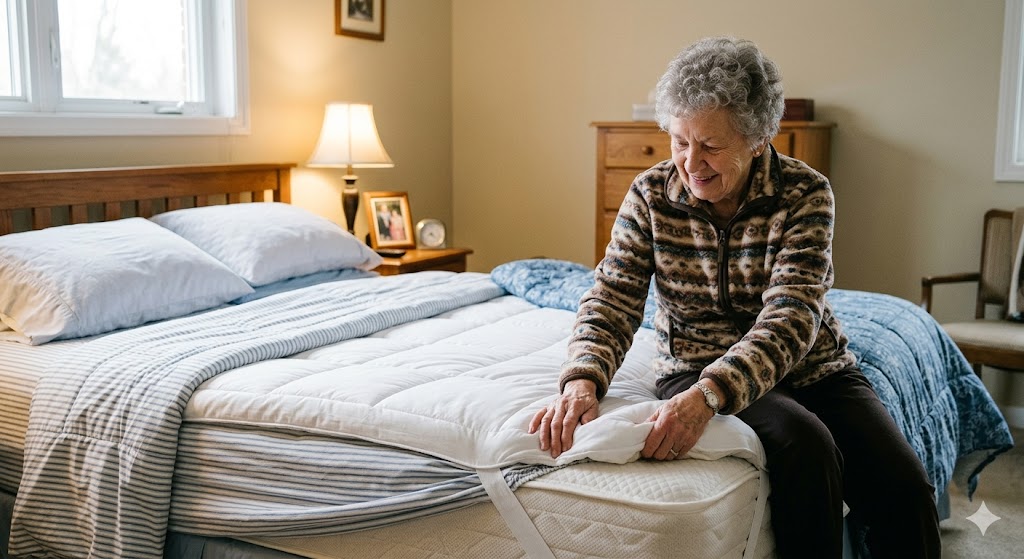
The right mattress topper can take real strain out of a senior’s night, cushioning the hips and shoulders that ache when lying still and making it easier to settle and to get up again. It does all of that for a fraction of the cost of a new bed.
What matters most with age is a balance: enough cushioning to relieve pressure, but not so much that turning over or climbing into bed becomes a struggle. Temperature and a bed height that stays manageable count too. This guide weighs all of those against six toppers worth considering.
The good news is that the right topper is one of the most cost-effective comfort upgrades available, and it can be tailored to what matters most with age: relief at the hips and shoulders, a surface that is easy to move on, a temperature that suits the room, and a bed that stays easy to get into and out of.
This guide is for general comfort and shopping information only and is not medical advice. A mattress topper or pillow can support more comfortable rest, but it does not diagnose or treat any condition. Talk with a qualified clinician about persistent or worsening symptoms.
Disclosure: RestRight is reader-supported. As an Amazon Associate, we earn from qualifying purchases made through links on this page, at no extra cost to you.
Quick Verdict
For most seniors, a plush but supportive pillow-top foam topper that relieves pressure while staying easy to move on is the best all-round choice, and the ViscoSoft leads the list. Cooling, budget, and firmer options follow for specific needs. Getting up is often harder than lying down, and lift chairs address the other half of that problem.
What to Look for in Mattress Toppers for Seniors
Thickness sets the tone. A thinner topper adds light cushioning and keeps the bed close to its current height, which helps with sitting and standing at the edge. A thicker one gives deeper relief for sore hips and shoulders, at the cost of a taller bed.
Balance softness with movement. Very soft foam can feel like quicksand and make turning over harder. Look for a topper that cushions the joints yet still lets you reposition, especially if mobility is already a concern.
Temperature matters more with age. Gel-infused and open-structure foams shed heat better than dense traditional foam. If a warm bedroom or night sweats interrupt sleep, lean toward a cooling pick.
Practical details count. Corner straps or a grippy base keep the topper from sliding, a washable cover keeps things fresh, and a lighter topper is easier for a caregiver to lift when changing the bed.
Off-gassing and break-in. New foam can carry a faint smell at first that airs out once unwrapped. Giving the topper time to expand and breathe before the first night makes for a more pleasant start.
Edge and stability. Toppers do not add edge support, so if sitting on the side of the bed already feels unsteady, keep the topper thinner and rely on the mattress edge underneath. A grippy base or straps keep the whole surface from creeping toward the edge over time. The floor beside the bed matters too, which our bedside fall mat guide covers.
1. ViscoSoft 4-Inch Pillow Top Memory Foam Topper: Best Overall
For seniors who want noticeable cushioning under the hips and shoulders without buying a whole new bed, this pillow-top topper adds a soft, supportive layer that takes pressure off the joints that ache most when lying still.
The quilted cover and elastic corner straps keep it in place, which matters when getting in and out of bed is already an effort. It suits side and back sleepers who want a plush surface that still lets them shift position.
Give the foam a little time to soften after unboxing so it reaches its full plushness, and add a washable protector on top to keep the cover clean through years of nightly use.
Who should skip it: Skip it if you prefer a firm, barely-there surface, or if a thick topper would make a tall bed harder to climb into.
2. Linenspa Gel Memory Foam Topper: Best Budget
For a first try at a topper without much outlay, this gel-infused foam adds a comfortable layer at a friendly price.
A thinner profile keeps the bed height close to where it was, which helps anyone who needs to sit and stand from the edge with confidence.
Because it is light, a caregiver can lift it easily when changing the bed, and it pairs well with a firm older mattress that just needs a gentler top layer.
Who should skip it: Skip it if you want deep, sink-in cushioning, since a thinner budget layer feels firmer and offers less pressure relief.
3. Lucid Bamboo Charcoal Memory Foam Topper: Best for Easy Movement
For seniors who feel stuck or trapped in soft foam, this version balances cushioning with enough response to roll over and reposition easily.
The charcoal-infused foam helps keep the surface feeling fresh, a plus for a bed that gets long hours of use.
The open, charcoal-infused foam breathes better than dense foam, so it stays fresher between washes and suits anyone sensitive to the smell of new bedding once it has aired out.
Who should skip it: Skip it if your main goal is the softest possible feel rather than freedom to move.
4. Sweetnight Gel Memory Foam Topper: Best Combination Support
For those who switch between side and back through the night, this topper offers a middle-ground feel that cushions without going overly plush.
It works well over a mattress that has started to feel too firm, restoring comfort without the cost of replacement.
It strikes a middle ground that works for couples with different preferences, and the gel helps it avoid the trapped-heat feeling that plain foam can have.
Who should skip it: Skip it if you sleep hot and want the most cooling option here, since a dedicated cooling pick will serve you better.
5. Novilla Cooling Gel Mattress Topper: Best for Hot Sleepers
For seniors who wake up warm or share a warm bedroom, the gel layer is built to draw heat away from the surface.
Pair it with breathable bedding to keep night-time temperature steady, which can make settling back to sleep easier.
Layer it under breathable cotton or bamboo sheets rather than flannel to get the most from the cooling gel, especially in a warm bedroom.
Who should skip it: Skip it if you tend to feel cold at night and prefer a topper that holds a little warmth.
6. Zinus Green Tea Memory Foam Topper: Best Firmer Value
For a supportive, more structured feel at a sensible price, this topper leans firmer and holds its shape.
It suits seniors who want light cushioning over a still-decent mattress rather than a deep plush layer.
Its firmer structure holds up well under heavier body weight and resists the deep sag that very soft toppers can develop over time.
Who should skip it: Skip it if you need pronounced pressure relief for sore hips or shoulders.
Quick Comparison of Mattress Toppers for Seniors
| Pick | Best for | Feel |
|---|---|---|
| ViscoSoft Pillow Top | Overall pressure relief | Plush, supportive |
| Linenspa Gel | Budget first topper | Medium, lighter |
| Lucid Bamboo Charcoal | Easy repositioning | Balanced, responsive |
| Sweetnight Gel | Combination sleepers | Medium |
| Novilla Cooling Gel | Hot sleepers | Cool, cushioned |
| Zinus Green Tea | Firmer value | Firm, supportive |
Getting the Most from a Topper Safely
Securing the topper is the first job. A layer that slides during the night can shift the surface underfoot when you sit on the edge, which is a real concern if balance is already a worry. Use the corner straps, a non-slip pad, or a snug fitted sheet so the topper stays exactly where it should.
Mind the bed height. Adding a thick topper raises the mattress, which can make a tall bed harder to climb into. If sitting and standing from the edge is part of the daily routine, a thinner topper that keeps the height familiar is often the safer trade than maximum cushioning.
Keep it clean and fresh. A washable, breathable protector over the topper guards against spills and keeps the foam in good shape, while making the bed easier to freshen between deep cleans. For a bed that sees long hours of use, that protection extends the comfortable life of the layer.
Give new foam a little time. Fresh from the packaging, foam needs a short while to expand fully and any faint new-foam smell to air out. Unwrapping it ahead of the first night lets it reach its proper loft and feel.
When a Topper Is Not Enough
A topper refreshes the comfort layer of a mattress, but it cannot fix worn-out support underneath. If the mattress sags noticeably in the middle, has springs you can feel, or leaves you sore no matter what sits on top, the support core has broken down and a topper only masks the problem for a while.
Watch for the signs. Waking with new aches, rolling toward a dip, or feeling the bed offer no push-back are all hints that the mattress itself, not the surface, is the issue. In that case the money is better spent on a new mattress.
For seniors especially, a supportive, stable bed is worth more than a soft surface over a failing one. Cushioning helps sore joints, but it works best on top of a base that still holds its shape.
Matching the Topper to Your Body and Bed
Body weight changes how a topper feels. A lighter person rests more on the surface and may find a thinner topper plenty, while a heavier person sinks in further and often needs a firmer or denser layer to avoid bottoming out against the mattress. If a topper feels too soft and unsupportive, a firmer pick usually solves it.
Your main sleeping position matters too. Side sleepers press the hip and shoulder hardest and benefit from a plusher, thicker topper, while back sleepers usually want a thinner, more supportive layer that keeps the spine level. If you switch between the two, a balanced medium feel is the safest middle ground.
Work with the mattress you already have. A topper is meant to fine-tune a serviceable bed, softening one that feels too firm or adding a little support to one that has gone slightly soft. Pairing a soft topper with an already-soft mattress can leave you without enough support, so match the topper to what the bed lacks rather than to what you like in isolation.
When in doubt, choose the topper that fixes your single biggest complaint, whether that is a sore hip, a too-hot bed, or a mattress gone firm, and keep the thickness modest so the bed stays easy to get into and out of.
Our Verdict
If you want one topper that covers the most ground, the ViscoSoft pillow top is the easiest to recommend: it cushions the joints that tend to ache with age while staying easy to move on. From there, the choice comes down to a single priority.
Sleep hot? The Novilla cooling gel is the safer bet. On a tight budget? The Linenspa gets you started. Feel trapped in soft foam? The Lucid keeps you mobile. Match the topper to the one problem that wakes you most, and the rest of the list falls into place.
Whatever you choose, secure the topper, keep the bed at a height that is easy to manage, and protect it with a washable cover. Those small steps turn a comfortable layer into one that stays safe and lasts.
Recommended Reading
See also our guides to mattress toppers for arthritis.
Related Reading
Keep going with how to choose a mattress, toppers for arthritis, relieving pain for better sleep. Also explore: mattress toppers for back sleepers, how to help seniors sleep better, mattresses seniors, mattress toppers for hip pain, and mattress toppers for sciatica.
Frequently Asked Questions About Mattress Toppers for Seniors
How thick should a mattress topper be for a senior?
A two to three inch topper adds comfort while keeping the bed easy to get into, and a four inch topper gives deeper cushioning for sore joints. The right thickness depends on how much pressure relief you need versus how tall you want the bed to sit.
Can a topper help instead of buying a new mattress?
A topper can refresh a mattress that has grown too firm or lost some comfort, and it costs far less than a replacement. If the mattress sags in the middle or has broken-down support, a topper only masks the problem and a new mattress is the better fix.
Will a soft topper make it harder to get out of bed?
It can, because very soft foam cushions well but offers little to push against. If standing up from bed is already a challenge, choose a topper with a balanced, more responsive feel rather than the plushest option.
Do memory foam toppers sleep hot?
Traditional dense foam can trap warmth, while gel-infused and open-structure foams stay cooler. If you wake up warm, a cooling pick on this list will feel more comfortable.
Are these toppers safe to use on an adjustable bed?
Most foam toppers flex with an adjustable base without trouble. Use the corner straps or a non-slip base so the topper stays put as the bed moves.
How do I keep a topper from sliding around?
Look for elastic corner straps or a grippy underside, and use a fitted sheet snug enough to hold everything together. A topper that shifts each night can become a trip hazard, so securing it is worth the small effort.
When should I see a doctor about pain that disrupts sleep?
A topper is a comfort upgrade, not a treatment. If joint or back pain regularly wakes you, keeps you from daily activities, or comes with swelling, numbness, or new symptoms, talk with a clinician rather than relying on bedding alone.
How long does a memory foam topper last?
Quality foam holds its shape for several years with regular rotation and a protector, though heavier use shortens its life. When it stops springing back or develops a permanent dip, it is time to replace it.
Sources
- Asthma and Allergy Foundation of America. Allergy and asthma resources. https://aafa.org/
- National Institutes of Health. MedlinePlus health topics. https://medlineplus.gov/
