
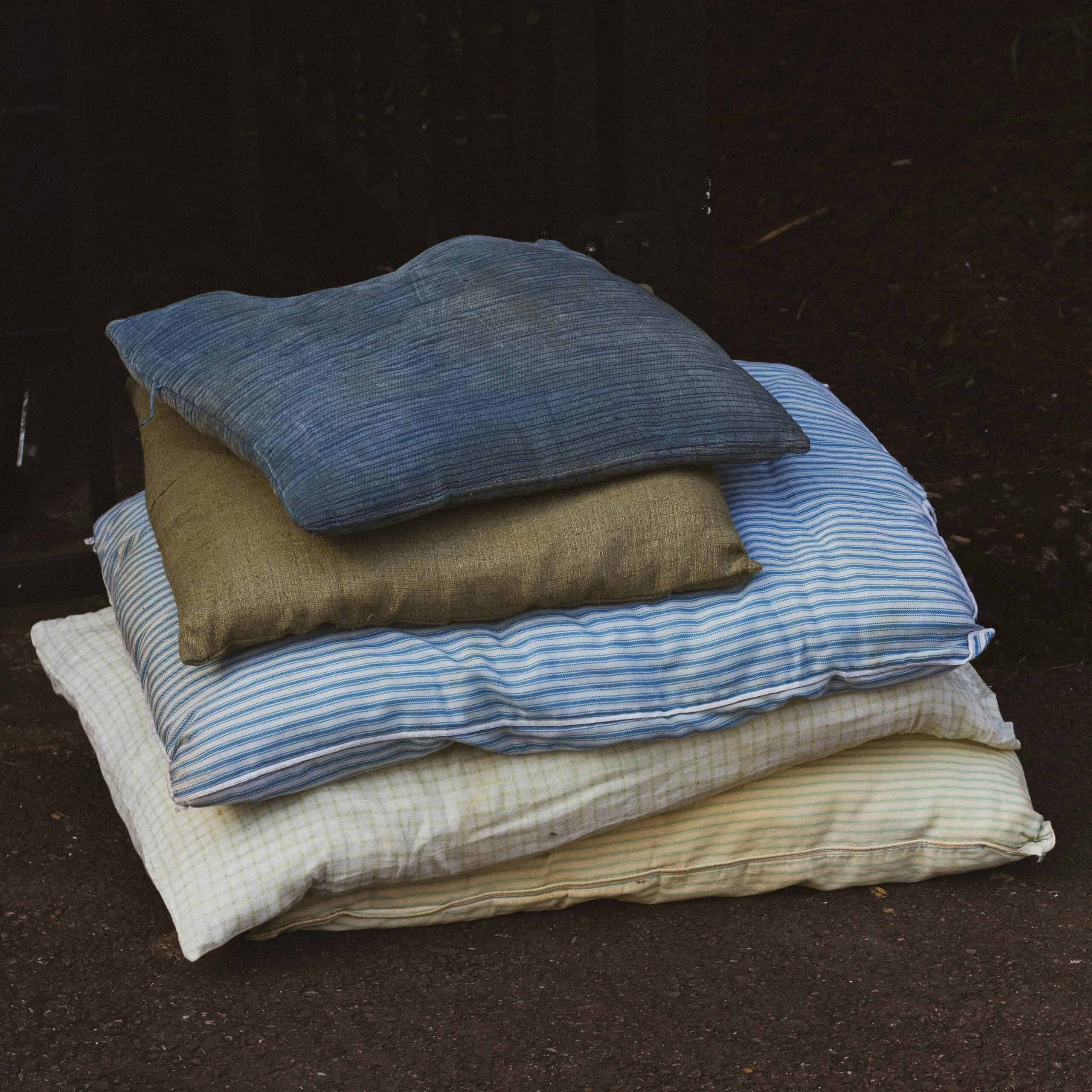
The pillow-washing problem usually hits people in the same way. You finally decide to wash your pillows, throw them in with your sheets, run a normal cycle, and pull out lumpy, misshapen pillows that never recover their original loft. Or you wash a memory foam pillow that wasn’t supposed to go in water at all and watch the foam disintegrate. Or you dry feather pillows on high heat and discover the next morning that your pillow now smells permanently of burned protein. Comparing options? See our best travel pillows for neck pain roundup.
Knowing how to wash pillows without ruining them comes down to matching the cleaning method to the specific fill type. Memory foam pillows, down and feather pillows, polyester fiber pillows, latex pillows, and buckwheat pillows each require completely different approaches. The single biggest cause of pillow damage is treating all pillows the same way during cleaning.
This guide covers the correct washing methods for every common pillow type, the warning signs that mean a pillow shouldn’t be washed at all, and the maintenance approach that extends pillow life across years rather than months.
Why Most Pillows Need More Frequent Washing Than People Realize
Pillows accumulate substances that affect both hygiene and sleep quality. Sweat penetrates through pillowcases over months, even with regular pillowcase washing. Skin oils, dead skin cells, and dust mite waste build up in the filter. Bacteria and fungi colonize the moist environment created by overnight head contact. The cumulative effect, especially after 6-12 months without washing, is a pillow that’s measurably affecting your sleep environment.
Most pillows benefit from washing every 3-6 months. Pillow protectors significantly reduce contamination, allowing you to extend the interval to 6-12 months between deep cleans. Without protectors, the 3-month interval is the practical minimum to maintain hygienic sleep surfaces.
The exception is pillows that explicitly cannot be washed, solid memory foam, latex pillows in some configurations, and specialty pillows with particular construction. For these, surface cleaning and protector use become the only maintenance options, making protectors essential rather than optional.
For broader sleep environment management, our guides on the best mattress protectors for allergies and the best pillow protectors cover protective layers that extend the time between deep cleanings.
How to Identify Your Pillow Type Before Washing
Different pillow fills require completely different washing approaches. Misidentifying your pillow type produces the damage that ruins pillows in single washing cycles.
Down and Feather Pillows
Down and feather pillows feel light, compress dramatically when squeezed, and bounce back to their original shape when released. Removing the pillowcase reveals a fabric shell containing loose feathers or down clusters. The label typically lists down percentage, feather percentage, and fill power.
These pillows tolerate machine washing with appropriate protocols. Improper washing produces clumping that’s difficult to recover from.
Memory Foam Pillows (Solid Block)
Solid memory foam pillows feel dense, slowly recover their shape after compression, and retain a contoured form rather than redistributing fill. The pillow consists of a single foam block, often with a removable cover.
Solid memory foam pillows cannot be machine-washed. Water saturation damages the foam structure permanently. Only the removable cover goes in the washing machine.
Shredded Memory Foam Pillows
Shredded memory foam pillows feel adjustable and conform to your head shape, but contain visibly distinct foam pieces inside the cover. Squeezing the pillow shows the shredded foam moving within the shell.
Some shredded memory foam pillows can be machine-washed; others cannot. Check the manufacturer’s care label specifically, assumption produces damage.
Polyester Fiber Pillows
Polyester fiber pillows feel soft, compress and recover quickly, and contain visible polyester fluff fill. These are the most common pillow types and tolerate washing better than most alternatives.
Standard washing protocols work for polyester fiber pillows with minimal special handling.
Latex Pillows
Latex pillows feel firm, springy, and bounce back to shape immediately after compression. The fill is typically a solid latex block with a textured surface or a piece of perforated latex foam.
Latex pillows generally cannot be machine-washed. The latex material can degrade with water exposure, particularly with detergent contact. Spot cleaning and protector use are the practical maintenance approaches.
Buckwheat and Specialty Fills
Buckwheat pillows feel firm, make a distinctive shifting sound when moved, and contain visible hulls inside the shell. Other specialty fills include kapok, wool, and millet.
These pillows require fill-specific protocols, often involving emptying the shell, washing only the cover, and refilling with fresh material. Manufacturer instructions are essential.
How to Wash Down and Feather Pillows
Down and feather pillows tolerate machine washing well when you follow the right protocol. The key risks are clumping during washing and inadequate drying, which produces mildew.
Use a front-loading washing machine when possible. Top loaders with center agitators can damage feather pillows; agitator-free top loaders work but produce less reliable results than front loaders. If you only have an agitator top loader, hand washing is the safer alternative.
Wash two pillows at once for balance. Single pillows produce uneven loads that don’t clean properly; three or more crowd the machine. Two pillows balance the load and clean evenly.
Use a small amount of mild liquid detergent. Powder detergent doesn’t dissolve completely and leaves residue in the down. Skip fabric softener entirely, it coats the down and reduces loft permanently.
Run on warm water with the gentle or delicate cycle. Hot water damages feathers; cold water doesn’t clean adequately. Warm water provides the cleaning action without thermal damage.
Run an extra rinse cycle to remove all detergent. Detergent residue in down clusters produces stiffness that doesn’t fully recover, even after drying.
Dry on low heat with dryer balls or clean tennis balls. The balls bounce against the pillows during drying, breaking up clumps that form when wet sticks together. Drying takes 2-3 hours typically, much longer than other laundry. Stop the dryer every 30-45 minutes to fluff the pillows and check for damp spots.
The pillows must be completely dry before storing. Any residual moisture produces mildew and odors that ruin the pillow permanently. If you’re not certain the down is fully dry, run another low-heat cycle rather than risking storage of damp fill.
How to Wash Polyester Fiber Pillows
Polyester fiber pillows are the most forgiving to wash and tolerate standard washing protocols well.
Use the same front-loader-preferred approach as down pillows. Top loaders work but require the agitator-free design.
Wash two pillows at once for load balance. Use mild liquid detergent without fabric softener.
Run on warm water with the gentle cycle. Polyester tolerates slightly more aggressive washing than down, but a gentle cycle still produces the best results without unnecessary stress on the fabric shell.
Add a second rinse cycle to remove detergent residue. Polyester fill doesn’t trap detergent the way down does, but a complete rinse still produces better results.
Dry on low to medium heat with dryer balls. Polyester dries faster than down, typically 1-2 hours depending on the dryer. The dryer balls help maintain a fluffy structure rather than allowing the fill to mat together.
Polyester pillows lose loft over their lifespan regardless of care. Even with perfect washing, most polyester pillows need to be replaced every 2-3 years. The washing protocol extends usable life but doesn’t prevent the eventual loft loss inherent to the material.
How to Care for Memory Foam Pillows
Solid memory foam pillows cannot go in the washing machine. Water damages the foam structure permanently, producing crumbling and lost contouring that ruins the pillow.
Remove the cover for washing. Most quality memory foam pillows include zip-off covers designed for machine washing. Wash the cover according to its specific care label, usually warm water, gentle cycle, no fabric softener.
For the foam itself, use spot cleaning only. Mix mild detergent with water in a spray bottle. Lightly mist the affected area, blot with a clean cloth, and air dry completely before using the pillow again. Avoid saturating the foam.
Air the foam pillow regularly to manage odors. Sun exposure for 1-2 hours every few months helps reduce odor buildup. UV exposure also has mild antibacterial effects that contribute to pillow hygiene.
Use a quality pillow protector to minimize the need for foam cleaning. Protectors absorb the sweat and oils that would otherwise contaminate the foam, allowing the protector to take the cleaning load while the foam stays clean.
How to Care for Shredded Memory Foam Pillows
Shredded memory foam falls between solid foam and traditional fills in care requirements. Some shredded memory foam pillows can be machine-washed; others cannot. Check the manufacturer’s care label specifically.
For machine-washable shredded foam pillows, use a gentle cycle with cold water and minimal detergent. The shredded pieces redistribute during washing, which is normal, manual reshaping after drying restores the proper distribution.
Drying requires extra patience. Low heat only, high heat damages the foam pieces. Drying time runs 3-4 hours typically because the foam holds water more than other fills. Multiple low-heat cycles with breaks to redistribute the fill produce better results than continuous drying.
For non-washable shredded foam pillows, follow the solid memory foam protocol, wash the cover, spot clean the fill, and use protectors to extend the time between cleanings.
How to Care for Latex Pillows
Latex pillows generally cannot be machine-washed. The latex material reacts poorly to water saturation and detergent contact, producing degradation that affects both the material structure and the pillow’s pressure relief properties.
Remove and wash the cover according to its care label. Most latex pillow covers tolerate standard washing protocols.
For the latex itself, spot clean only. Use a damp cloth with a mild soap solution, blot rather than scrub, and dry completely with a fresh towel before allowing the pillow to be used again.
Some latex pillows can be hand-rinsed if heavily soiled, but this approach risks degradation. Air dry for 24+ hours in a well-ventilated area away from direct heat or sunlight before use.
Like memory foam pillows, latex benefits significantly from quality protector use. The protector handles the contamination that would otherwise reach the latex, dramatically extending the time between deep cleanings.
How to Wash Buckwheat and Specialty Fill Pillows
Buckwheat pillows require a fill-specific approach that other pillow types don’t need.
Empty the buckwheat hulls into a bowl or container. The hulls themselves cannot be washed, water damages them permanently.
Wash the empty cover according to its care label. Most buckwheat covers tolerate machine washing well.
Refill with the original hulls or fresh hulls. If the original hulls are old (more than 1-2 years), replacement is often appropriate. Fresh buckwheat hulls maintain pillow shape and aroma better than aged hulls.
Allow the cover to dry completely before refilling. Damp covers in contact with hulls produce mildew that ruins the entire pillow.
Other specialty fills follow similar protocols. Wool pillows often have removable wool batting that can be washed separately or replaced. Kapok pillows typically cannot be washed at all and rely on protector use for hygiene management.
When You Should Replace Rather Than Wash
Some pillows reach the point where washing won’t restore them. Recognizing these situations prevents wasted effort and disappointment.
Lumpy, permanently misshapen pillows after multiple washes indicate fill degradation that cleaning won’t fix. The fill has lost its structural integrity, and the pillow won’t return to its original shape regardless of cleaning efforts.
Yellow stains throughout the fill, rather than just surface stains, indicate deep contamination from sweat and oils. Cleaning may improve the appearance temporarily, but it won’t address the embedded contamination.
Strong odors that persist after multiple washes signal mildew or bacterial contamination that’s penetrated the fill. Replace these pillows rather than continuing to use them.
Pillows older than their typical lifespan generally need replacement regardless of washing effort. Most pillows have practical lifespans of 1-3 years for synthetic fills, 3-5 years for down, and 2-4 years for memory foam. Beyond these timelines, the cleaning effort doesn’t justify the marginal gains.
The fold test helps identify pillows that need replacement. Fold the pillow in half and release. A pillow with intact loft springs back to flat; a pillow that stays folded has lost its structural integrity and needs replacement, regardless of how clean it is.
Quick Reference by Pillow Type
Down/Feather: Machine wash warm, gentle cycle, mild detergent, no softener, extra rinse, low heat dry with balls 2-3 hours.
Polyester Fiber: Machine wash warm, gentle cycle, mild detergent, low to medium heat dry 1-2 hours.
Solid Memory Foam: Cannot be machine-washed. Spot clean only, wash cover separately, use protector.
Shredded Memory Foam: Check label. If washable, gentle cycle in cold water, and low heat dry for 3-4 hours. If not, follow solid foam protocol.
Latex: Cannot be machine-washed. Spot clean only, wash cover separately, use protector.
Buckwheat: Empty hulls, wash cover separately, refill with original or fresh hulls.
Frequently Asked Questions
How often should I wash my pillows?
Most pillows benefit from deep cleaning every 3-6 months without protectors, or 6-12 months with quality pillow protectors in place. The interval depends on your specific situation, sweaters, allergy sufferers, and pet households need more frequent washing than dry sleepers. The pillowcase should be washed weekly regardless of pillow washing frequency.
Can you wash all the pillows in the washing machine?
No. Solid memory foam pillows, latex pillows, and buckwheat pillows generally cannot go in the washing machine without damage. Down, feather, polyester fiber, and some shredded memory foam pillows tolerate machine washing with appropriate protocols. Always check the manufacturer’s care label before washing any pillow type.
How do you wash pillows without lumps?
Lumps form when fill clumps together during washing and don’t redistribute during drying. Prevent lumps by washing with dryer balls or clean tennis balls that bounce against the pillows during drying, breaking up clumps as they form. Stop the dryer every 30-45 minutes to manually fluff the pillows. Allow extended drying time, most pillows need 2-3 hours minimum to dry completely.
Can you wash memory foam pillows?
Solid memory foam pillows cannot be machine-washed. Water saturation damages the foam structure permanently. Wash only the removable cover according to its care label, and spot clean the foam itself with mild detergent solution and air dry. Some shredded memory foam pillows can be machine-washed, check the specific manufacturer’s instructions.
What temperature should I wash pillows at?
Warm water (around 100-110°F) cleans most pillows effectively without thermal damage. Hot water can damage feathers, down, and some foam materials. Cold water doesn’t clean adequately because the contamination pills accumulate. The exception is shredded memory foam that may be machine-washed, which requires cold water specifically.
How long do pillows take to dry?
Drying times vary significantly by fill type. Polyester fiber pillows dry in 1-2 hours. Down and feather pillows take 2-3 hours. Shredded memory foam takes 3-4 hours. The pillow must be completely dry before storage, residual moisture produces mildew that ruins the pillow permanently. When uncertain, run additional low-heat drying cycles rather than risking damp storage.
Will washing my pillow make it last longer?
Washing extends pillow life when done correctly. Accumulated sweat, oils, and contamination degrade fill materials over time, and regular cleaning slows this degradation. However, washing doesn’t prevent the eventual loft loss inherent to most pillow materials. Most pillows still need replacement every 1-5 years, depending on fill type, but proper washing maximizes the usable lifespan.
Should I use bleach when washing pillows?
No, avoid bleach on pillows. Chlorine bleach damages most pillow fills, including down, feather, and polyester fiber. Oxygen-based bleach (OxiClean or similar) is gentler but still risks filling damage. Mild liquid detergent without bleach produces the best cleaning results without material damage. For pillows with significant staining, replace rather than attempting aggressive cleaning.
Recommended Reading
See also our guides to bamboo pillows, and toddler pillows.
Related Reading
Explore more: bolster pillows, latex pillows, bamboo pillows, toddler pillows, pillows for couples, euro pillows and shams, buckwheat pillows, and fiber pillows. Also explore: orthopedic pillows recovery, pillows for sciatica, reading pillows, pillows for tmj, pillows for fibromyalgia sufferers, pillows for allergies, and cpap pillows.
Related guides: how to wash a comforter.
Flat often means clumped rather than finished. What to do with pillows past saving covers disposal and reuse.
