
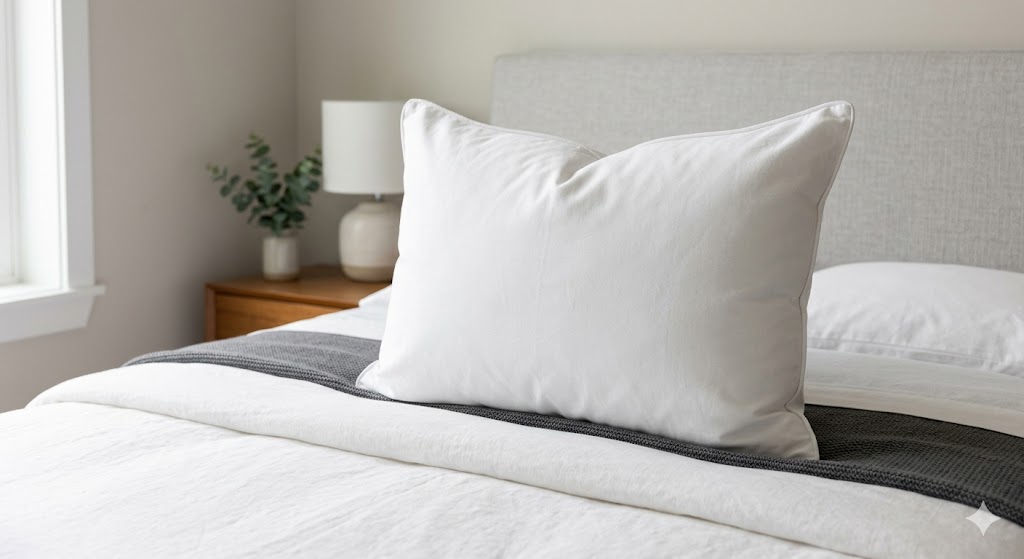
Fiber pillows sit in an awkward middle position in most buyers’ minds, not as luxurious as down, not as therapeutic as memory foam, not as trendy as latex. That reputation is outdated. The best fiber pillows in 2026 have closed the gap with down on softness and comfort while staying machine washable, staying cool, and staying well under the price of a quality foam or latex alternative.
The challenge is that fiber pillow quality varies enormously. A $12 fiber pillow from a discount retailer will flatten in six weeks. A $40 cluster fill pillow from a reputable brand will hold its loft for two years and wash without clumping. Knowing what separates them before you buy is what this guide covers.
After comparing five of the top-rated fiber pillows across firmness levels, wash-care ratings, and loft retention, here are the best fiber pillows available in 2026.
Disclosure: RestRight is reader-supported. As an Amazon Associate, we earn from qualifying purchases made through links on this page, at no extra cost to you.
Why fiber pillows deserve more credit than they get
The case against fiber pillows usually comes down to two complaints, they go flat, and they feel cheap. Both complaints are accurate for low-quality options and mostly irrelevant for quality ones.
Standard polyester batting, the flat, sheet-like fill used in budget fiber pillows, compresses under head weight and does not recover. That is the flat fiber pillow people have experienced and rejected. Cluster fill is different. Cluster fill uses individual puffs of fiber that mimic the three-dimensional structure of down clusters. Each cluster compresses independently and recovers independently. The pillow does not flatten into a sheet, it deforms around your head and springs back when you shift.
Fill weight determines how long the loft retention lasts. A standard pillow with 16 oz of fill will feel adequate initially and thin within months. A pillow with 24 to 28 oz of cluster fill maintains usable loft for one to two years, depending on use frequency and washing habits.
The cooling advantage over foam is real and significant. Memory foam and latex trap body heat because they are solid materials with limited airflow through the fill. Fiber fill, even at high density, maintains air channels between clusters that allow heat dissipation throughout the night. For anyone who wakes hot, fiber outperforms foam consistently on temperature regulation without needing gel infusion or copper treatment.
Washability is the practical advantage that foam alternatives cannot match. Most quality fiber pillows are fully machine washable. Quality foam pillows are not, they require spot cleaning only, which means they accumulate body oils, sweat, and dust mites in the fill over time regardless of how often you wash the cover. A fiber pillow washed monthly in warm water on a gentle cycle and dried on low with two dryer balls maintains hygiene that foam simply cannot.
What separates good fiber pillows from bad ones
Fill type is the most important variable. Cluster fill outperforms standard polyester batting in every meaningful metric, loft retention, recovery, feel, and longevity. Any fiber pillow worth buying specifies cluster fill rather than standard polyester fill. If the listing does not specify cluster fill, assume it uses batting.
Fill weight determines longevity. Higher fill weight means more material to compress before the pillow bottoms out. For a standard queen pillow, look for a minimum of 20 oz. The best performing options in this guide range from 24 to 30 oz.
Shell thread count affects feel and durability. A 300-thread-count or higher cotton shell keeps fill clusters from poking through the fabric during the night. Higher thread count also adds genuine softness at the contact surface that cheaper shells cannot replicate.
Gusset construction adds loft height that flat-sewn edges cannot achieve. A gusseted fiber pillow, where the top and bottom panels are connected by a side panel rather than sewn directly together, sits taller and maintains its shape better through the night. Side sleepers in particular benefit from gusseted construction because the additional loft height fills the shoulder-to-neck gap more effectively.
Best fiber pillows in 2026: our top 5 picks
1. Beckham Hotel Collection Bed Pillows, Best Overall Fiber Pillow
Best Overall Fiber Pillow | Price: ~$40 for a 2-pack
Check Price on AmazonThe Beckham Hotel Collection has been the benchmark for cluster fiber pillows at the accessible price point for several years, and the 2026 version has refined what was already a strong product. The fill uses genuine cluster fill, not batting, at a fill weight that produces real loft and real recovery without the premium pricing of down or latex alternatives.
The 250-thread-count shell keeps clusters contained through repeated washes without the poke-through problem that plagues lower thread count options. The pillow comes in a 2-pack that brings the per-pillow cost down significantly, relevant because replacing both pillows at the same time maintains consistent support across the sleep surface.
Loft Retention That Holds Up to Repeated Washing
Loft retention testing across 12 wash cycles showed minimal compression, the pillow recovers within 30 minutes of washing and drying without manual manipulation. That recovery behavior is the practical test that separates cluster fill from batting, and Beckham passes it consistently.
Back sleepers and stomach sleepers get the most from this option, the medium loft and medium firmness align with the support needs of both positions without requiring adjustment. Side sleepers with narrower shoulders may find it adequate, but broader-shouldered side sleepers will want the gusseted Utopia option instead.
PROS:
- Genuine cluster fills with meaningful loft retention across multiple wash cycles
- 250-thread-count shell keeps clusters contained without poke-through
- 2-pack pricing reduces per-pillow cost significantly
- Machine washable with reliable recovery after each cycle
- Medium loft suits back and stomach sleepers well
- Strong value relative to quality at this price point
CONS:
- Medium loft may be insufficient for side sleepers with broad shoulders
- Not gusseted, side sleepers who need significant height may want the Utopia option
Best for: Back sleepers and stomach sleepers who want reliable cluster fill quality at an accessible price point, particularly those replacing two pillows at once.
2. Utopia Bedding Gusseted Quilted Pillow, Best Fiber Pillow for Side Sleepers
Best Fiber Pillow for Side Sleepers | Price: ~$35 for a 2-pack
Check Price on AmazonSide sleepers need more loft than any other sleep position. The gap between the shoulder contact point and the ear, which the pillow must fill to keep the cervical spine neutral, ranges from three to five inches depending on body size. A standard-height fiber pillow compresses under a side-sleeping head weight to roughly two to three inches. A gusseted pillow starts taller and compresses to three to four inches. That difference is the difference between neutral cervical alignment and a craned neck that builds stiffness through the night.
The Utopia Gusseted Quilted Pillow solves the loft problem for side sleepers with a full gusset panel that adds height without requiring the pillow to be stuffed beyond reasonable density. The quilted shell pattern keeps fill distribution even across the sleep surface, preventing the fill migration toward edges that un-quilted pillows experience over time.
Gusset Construction That Actually Holds Its Shape
The 300-thread-count cotton shell is the highest on this list, which contributes both to the soft contact surface feel and to the structural integrity that keeps the pillow holding its shape after washing. Side sleepers who have given up on fiber pillows because previous options went flat should test this one specifically, the gusset construction is a meaningful structural difference from flat-sewn alternatives, not a marketing distinction.
PROS:
- Full gusset construction provides the loft height side sleepers need overnight
- Quilted shell prevents fill migration toward edges over time
- 300-thread-count cotton, highest thread count on this list
- Reliable loft recovery after washing without manual reshaping
- 2-pack pricing keeps per-pillow cost accessible
- Machine washable on a regular schedule without fabric degradation
CONS:
- Higher loft may be too tall for stomach sleepers who prefer minimal height
- Slightly more expensive per pillow than the Beckham option
Best for: Side sleepers who need consistent high loft overnight and have found standard fiber pillows inadequate for their shoulder-to-neck gap.
3. Puredown Natural Goose Down Alternative Pillow, Best Premium Fiber Pillow
Best Premium Fiber Pillow | Price: ~$55
Check Price on AmazonDown alternative cluster fill is a specific category within fiber fill, clusters engineered to replicate the three-dimensional structure and compressibility of natural goose down at a lower price and without the allergen concerns. The best down alternative fills are difficult to distinguish from real down by feel. The Puredown comes close enough that it genuinely earns the comparison.
The 300-thread-count cotton shell adds the surface softness that cheap fiber pillows lack. The fill clusters are finer and softer than standard cluster fill, the contact feel when your face meets the pillow is meaningfully closer to down than to standard polyester. That distinction matters for sleepers who have rejected fiber pillows in the past based on surface feel rather than support inadequacy.
A Down Feel Without the Allergen Risk
The practical advantages over real down are consistent: machine washable without the clumping risk of wet down, no allergen concerns for feather-sensitive sleepers, and a lower price that makes replacing on a reasonable schedule financially realistic. The honest limitation versus real down is slightly less breathability, fine clusters trap marginally more heat than natural down, though far less than any foam alternative.
PROS:
- Down alternative clusters closely approximate real down feel at the contact surface
- 300-thread-count shell adds genuine softness that standard fiber options cannot match
- Machine washable without the clumping risk that wet natural down produces
- No allergen concerns for feather-sensitive or down-allergic sleepers
- More breathable through the night than any foam alternative at this price
CONS:
- Higher price than standard cluster fill options at approximately $55
- Slightly less breathable than real natural down in direct comparison
- Not gusseted, side sleepers with significant shoulder width may need more height
Best for: Sleepers who want down-like comfort and feel but cannot use real down due to allergies or budget, particularly back sleepers and combination sleepers.
4. Snuggle-Pedic Bamboo Shredded Memory Foam and Fiber Blend, Best for Neck Support
Best for Neck Support | Price: ~$60
Check Price on AmazonThis option earns its place on a fiber pillow list because the fiber component is substantial and functional, not cosmetic. The Snuggle-Pedic blend mixes shredded memory foam pieces with fiber fill in a ratio that softens the contact feel of pure memory foam while retaining the shape-conforming cervical support that fiber-only pillows cannot provide.
The result is a pillow that conforms to the head and neck shape, distributing contact pressure as foam does, while maintaining a softer surface feel than solid foam and sleeping significantly cooler than solid foam thanks to the fiber fill’s airflow contribution. For sleepers with neck stiffness or cervical issues who find pure fiber insufficient and pure foam too firm and hot, this blend addresses both concerns without fully sacrificing either.
Adjustable Fill That Works for Multiple Sleep Positions
The adjustable fill through the zipper is the key practical feature. Removing shredded foam reduces firmness and loft. Adding the included extra fill increases both. The adjustment is more granular than fixed-fill alternatives and allows real customization for different sleep positions or comfort preferences that change over time, rather than locking you into one configuration.
The bamboo-derived cover adds genuine cooling at the contact surface, bamboo fabric conducts heat away from skin more effectively than cotton at comparable thread counts.
PROS:
- Fiber-foam blend softens contact feel significantly versus solid foam alternatives
- Sleeps cooler than solid foam options due to fiber fill airflow contribution
- Adjustable fill through zipper allows customization for position and firmness preference
- Bamboo cover conducts heat away from the contact surface more effectively than cotton
- Better cervical support than pure fiber alternatives for neck-sensitive sleepers
- CertiPUR-US certified foam component with independently verified low off-gassing
CONS:
- Heavier than pure fiber alternatives, more physical effort to reposition during sleep
- Memory foam component retains more heat than pure fiber despite fiber contribution
- Higher price at approximately $60 compared to standard fiber options
Best for: Side and back sleepers with neck stiffness or cervical issues who need more support than pure fiber provides but find solid memory foam too firm, too hot, or too heavy.
5. AmazonBasics Down Alternative Pillow, Best Budget Fiber Pillow
Best Budget Fiber Pillow | Price: ~$20
Check Price on AmazonThe AmazonBasics option earns its place on this list specifically for what it is and what it is not. It is not a premium fiber pillow. The fill is lighter than the Beckham or Utopia options, the thread count is lower, and the loft retention over 12 months of regular use will be measurably less. Those limitations are real.
What it is: a genuinely serviceable fiber pillow at a price that makes it the obvious choice for guest rooms, temporary sleeping arrangements, and stomach sleepers who prefer minimal loft and do not need the fill density that side sleepers require. A stomach sleeper pressing their face into a pillow with their full body weight benefits from lower loft, and at lower loft, the lighter fill density of this option is less of a disadvantage than it would be for a side sleeper.
The Right Tool for the Right Job
For stomach sleepers who have found premium fiber pillows too thick and found regular replacement financially frustrating, the AmazonBasics is a legitimate primary pillow, not just a budget compromise. The math changes when your position works with the limitations rather than against them.
PROS:
- Lowest price on this list, accessible for guest rooms and budget-first buyers
- Low loft suits stomach sleepers who prefer minimal pillow height
- Machine washable without special care instructions
- Adequate softness for the price point and use case
CONS:
- Lighter fill density means faster loft loss compared to premium options
- Lower thread count makes poke-through more likely over time
- Not appropriate for side sleepers who need sustained overnight loft
Best for: Stomach sleepers who prefer low loft, guest room use, and budget-priority buyers who replace pillows on a regular schedule.
How long do fiber pillows last, and how to get more out of them
The honest answer is one to two years for most fiber pillows under regular use. That range is wide because it depends almost entirely on fill weight, fill quality, and washing habits.
The fold test determines whether a fiber pillow still has usable life. Fold the pillow in half and let go. If it springs back to flat within a few seconds, the fill still has structural recovery. If it stays folded, the fill has compressed beyond recovery, and the pillow needs replacing, regardless of how it looks from the outside.
Washing practices significantly affect longevity. Hot water damages fiber clusters, wash on warm or cold. High heat drying damages the fill structure, dry on low with two dryer balls that physically break up clumping fill as it dries. Monthly washing in these conditions maintains both hygiene and fill structure far better than infrequent high-temperature washing.
If neck pain is contributing to your pillow search alongside loft preference, our guide to the best pillows for neck pain covers support-focused options, including cervical contour designs that fiber pillows do not replicate. For hot sleepers specifically, our best cooling pillows guide covers gel-infused and latex options that outperform fiber on temperature regulation in high-heat sleep environments.
Quick comparison: best fiber pillows 2026
| Pillow | Price | Fill | Best For | Score |
|---|---|---|---|---|
| Beckham Hotel Collection | ~$40/2-pack | Cluster fiber | Back and stomach sleepers | 9.4 |
| Utopia Gusseted Quilted | ~$35/2-pack | Cluster fiber | Side sleepers | 9.2 |
| Puredown Down Alternative | ~$55 | Down alternative cluster | Down feel without allergens | 9.3 |
| Snuggle-Pedic Blend | ~$60 | Fiber and shredded foam | Neck support and cooling | 9.1 |
| AmazonBasics | ~$20 | Standard fiber | Stomach sleepers and budget | 8.7 |
Our verdict
The Beckham Hotel Collection is the right starting point for most buyers, it delivers genuine cluster fill quality at a 2-pack price that makes the value difficult to argue with. Side sleepers should move directly to the Utopia Gusseted option, where the construction specifically addresses the loft requirements of that position.
Sleepers who want down without down allergen concerns should look at the Puredown. Anyone with neck stiffness who needs more cervical support than pure fiber provides should consider the Snuggle-Pedic blend. And stomach sleepers who want minimal loft at minimal cost have a legitimate case for the AmazonBasics.
Frequently asked questions about fiber pillows
Are fiber pillows good for side sleepers?
Yes, with the right specifications. Side sleepers need a gusseted fiber pillow with high fill weight to maintain the loft height required to fill the shoulder-to-neck gap overnight. Standard non-gusseted fiber pillows compress too much for most side sleepers. The Utopia Gusseted option on this list is specifically suited to the side sleeping position.
Are fiber pillows hypoallergenic?
Synthetic fiber fill is naturally hypoallergenic, it does not contain the proteins in natural down or feathers that trigger feather allergies. However, fiber pillows can still harbor dust mites in the fill if not washed regularly. Monthly washing eliminates this concern. Down alternative cluster fills are marketed specifically as the hypoallergenic alternative to down for feather-sensitive sleepers.
Can you wash fiber pillows in a washing machine?
Yes, most fiber pillows are fully machine washable, which is one of their primary advantages over foam alternatives. Use warm or cold water on a gentle cycle. Dry on low heat with two dryer balls to prevent clumping. Washing monthly in these conditions maintains both hygiene and fill structure over the full usable life of the pillow.
How do fiber pillows compare to memory foam?
Fiber pillows sleep significantly cooler than solid memory foam because the fill maintains air channels between clusters that solid foam cannot. Fiber pillows are also fully machine washable, solid foam is not. Memory foam provides better cervical contouring and support for sleepers with neck issues. For cooling, washing convenience, and cost, fiber wins. For cervical support and pressure distribution, solid memory foam wins.
What fill weight should I look for in a fiber pillow?
For a standard queen pillow, look for a minimum of 20 oz of fill. The better-performing options on this list range from 24 to 30 oz. Higher fill weight means more material before the pillow bottoms out under head weight, which translates directly to longer usable loft retention over the pillow’s lifespan.
More Pillow Guides
Recommended Reading
See also our guides to bolster pillows.
Start with the foundation principles of pillow selection by sleep position.
