
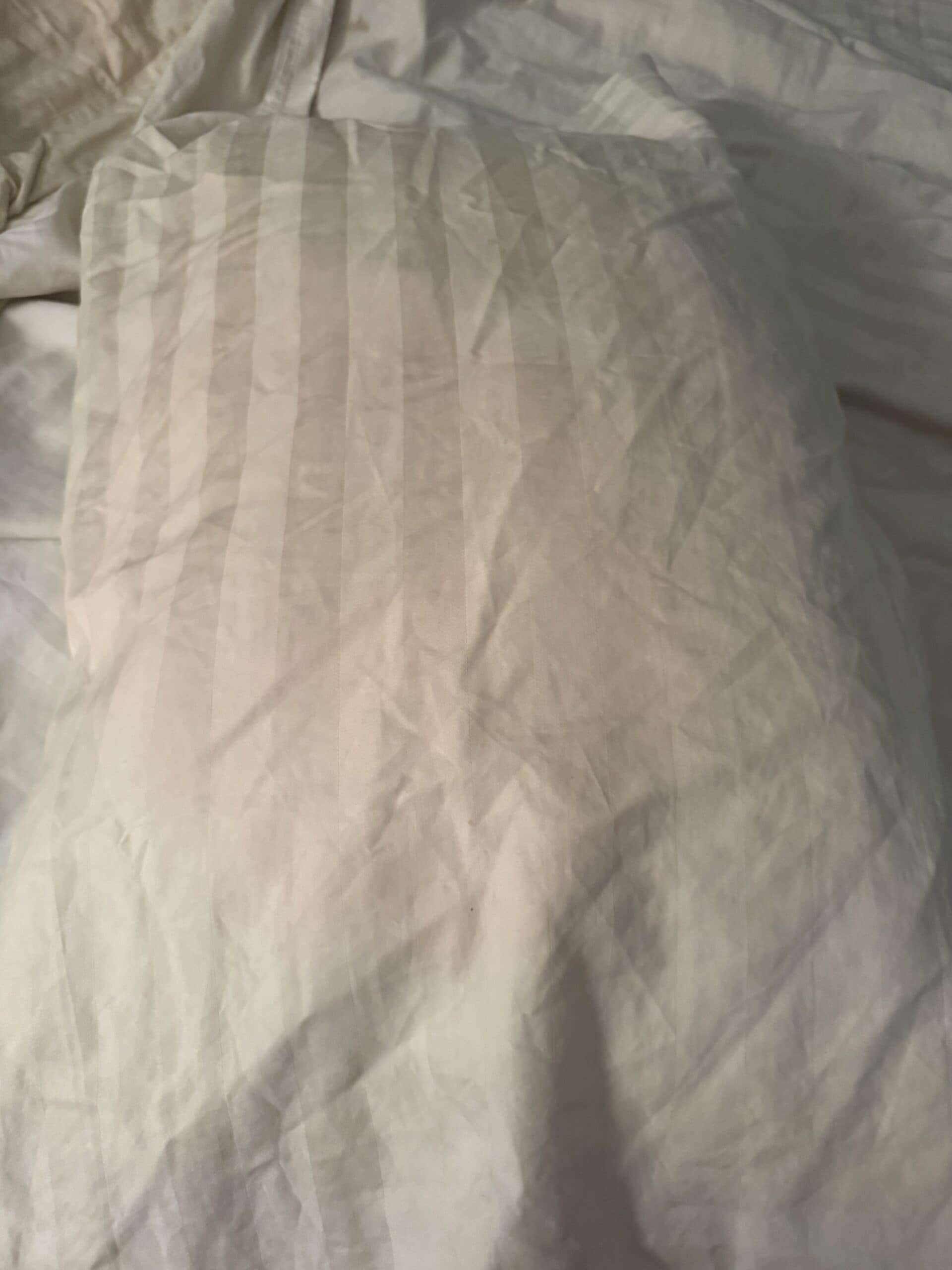
A pillowcase collects more than the rest of a bed does, because it is against your face for hours and takes skin oils, hair products, and whatever is on your hands.
Mine go every two to three weeks, washed separately from the sheets as a batch of cases, on roughly the same schedule the sheets run on. Our roundup of cooling pillowcases covers the fabric side.
Quick Answer
Weekly is the common recommendation, and most people run longer than that. What matters more than the number is being consistent and matching the interval to your skin, hair, and how warm you sleep.
What Accumulates and How Fast
| Deposit | Source | Builds |
|---|---|---|
| Skin oils | Face contact | Fastest |
| Hair products | Overnight transfer | Fast if used daily |
| Sweat | Warm sleeping | Fast in summer |
| Dead skin cells | Normal shedding | Steady |
| Dust and airborne particles | Room air | Slow |
| Cosmetics or creams | Night routine | Depends on use |
Why the Case Outpaces the Sheets
Your face has more active oil glands than most of your body, and it is in direct contact with the pillowcase rather than separated by clothing.
Hair sits on the same small area all night, transferring whatever product is in it.
The contact area is also concentrated. A fitted sheet spreads contact across a large surface, while a pillowcase takes the same nightly deposit onto a fraction of the fabric.
That is why cases justify a shorter interval than sheets, even though most people wash them together and on the same schedule. Our note on how often to replace sheets covers the bedding lifespan.
What I Actually Do
Every two to three weeks, and I wash a batch of pillowcases separately rather than mixing them into a load of sheets.
The schedule is roughly the same as the sheets, so bedding gets refreshed together even though the cases go through their own cycle.
Satin cases get a cold wash and nothing else different, no special detergent and no separate handling beyond the temperature.
That is looser than the weekly figure most guidance gives, and it has not caused me any problem I have noticed. Our note on whether satin sheets sleep cool covers the fabric.
The Case Is Not the Only Layer
Washing a case regularly while ignoring the pillow underneath is the common gap in most bedding routines.
A pillowcase is thin, and oils and moisture pass through it into the pillow over months rather than being stopped at the surface.
That is why pillows discolor at the contact area even when the case has been washed diligently, and it is not a sign of neglect so much as of physics.
A pillow protector between the case and the pillow catches most of that, and it washes as easily as a case does.
Without one, the pillow itself needs washing periodically where it can be washed, and replacing where it cannot. Our roundup of gel cooling pillows covers pillows that cannot be washed conventionally.
Who Should Go More Often
Acne-prone skin
Oil and bacteria transfer back onto skin, and dermatologists frequently suggest more frequent changes for anyone dealing with breakouts.
Heavy hair product use
Product transfers overnight and builds faster than skin oil alone.
Hot sleepers
Sweat means more moisture in the fabric, which shortens the sensible interval, particularly in summer.
Anyone with allergies
Frequent washing at higher temperature is standard advice for dust mite allergy, though the mattress matters more than the case. Our roundup of hypoallergenic bedding covers that.
Washing Satin and Silk
Cold water is the main requirement, since heat damages the fibers and dulls the finish.
A gentle cycle reduces snagging, and satin catches on zips and hooks in a mixed load, which is one reason washing cases together makes sense.
Harsh detergents and anything with bleach strip the finish that makes satin worth having.
Air drying preserves it longest, though cold washing alone covers most of the difference for a case that is being replaced eventually anyway. Our roundup of cooling pillows that dont flatten covers the options.
Cooling Cases Have Their Own Rules
Performance fabrics complicate the washing question, because the property you paid for is the one heat damages.
Phase-change and cooling-treated fabrics rely on a finish applied to the material, and hot water and high-heat drying degrade that finish faster than they degrade the fabric.
Fabric softener is worse still, since it leaves a coating that blocks the moisture movement cooling fabrics depend on.
Bamboo and satin behave similarly, wanting cold water and gentle handling to keep the smooth surface that makes them feel cool on contact.
Cold washing is the general answer across all of them, which is convenient given it is also what preserves color and elastic in everything else in the load. Our roundup of body pillows covers the fabrics.
Temperature and What It Kills
Hot water is more effective against dust mites and bacteria, and it is harder on fabric and on any elastic in the case.
Cold washing removes oils and dirt perfectly well with a decent detergent, which is what most washing is actually for.
Warm is the middle ground and it is what most cotton cases tolerate indefinitely.
Where allergy is the concern rather than cleanliness, temperature matters and the case is a small part of the total exposure compared with the mattress and the pillow itself. Our note on adjustable pillows covers the layer underneath.
Getting the temperature right matters more for fabrics chosen for their feel than it does for plain cotton, which tolerates almost anything you put it through.
Signs You Have Left It Too Long
Visible marks or discoloration at the contact area, which is oil rather than dirt and does not always wash out once set.
A smell noticeable when you lie down, which is the clearest signal and usually appears before anything is visible.
Skin changes that follow the pillow rather than anything else, though attributing breakouts to bedding specifically is harder than it sounds.
Fabric feeling less smooth than it did, since accumulated oil changes the surface of satin noticeably before it changes cotton.
None of those signals is subtle once you know to look for them, and noticing one is a reason to shorten the interval rather than to worry about the previous one.
Making the Schedule Work
Owning several cases is what makes any interval sustainable, since a spare means the change happens when it should rather than when laundry does.
Washing cases as their own batch rather than mixing them into sheets suits fabrics that need different handling, which is the arrangement I use.
Flipping a case over partway through the interval is a genuine half-measure, giving a fresh surface without a wash.
And pairing it to something you already do weekly makes it stick better than aiming at a number and forgetting.
Whatever interval you settle on, having enough cases to cover it is what makes the schedule survive a busy week.
Pillowcase Washing FAQ
How often should you wash a pillowcase?
Weekly is the common recommendation and most people run longer. Mine go every two to three weeks, on roughly the same schedule as the sheets.
Why more often than sheets?
Your face has more oil glands than most of your body and is in direct contact, and the same nightly deposit lands on a fraction of the fabric.
Should I wash them with the sheets?
You can, and washing cases separately suits fabrics needing different temperatures. I do a batch of cases on their own.
How do I wash satin?
Cold water is the main thing. Gentle cycle to avoid snagging, no bleach or harsh detergent, and air drying preserves it longest.
Does hot water matter?
For dust mites and bacteria, yes. For oils and ordinary dirt, cold with a decent detergent is sufficient and much kinder to fabric.
Who needs to wash more frequently?
Acne-prone skin, heavy hair product users, hot sleepers, and anyone with a dust mite allergy. Each shortens the sensible interval.
How do I know I have left it too long?
A smell when you lie down usually comes before anything visible. Marks at the contact area are oil and do not always wash out once set.
Does flipping the case help?
As a half-measure, yes. It gives a fresh surface partway through the interval without a wash, though it is not a replacement for one.
