
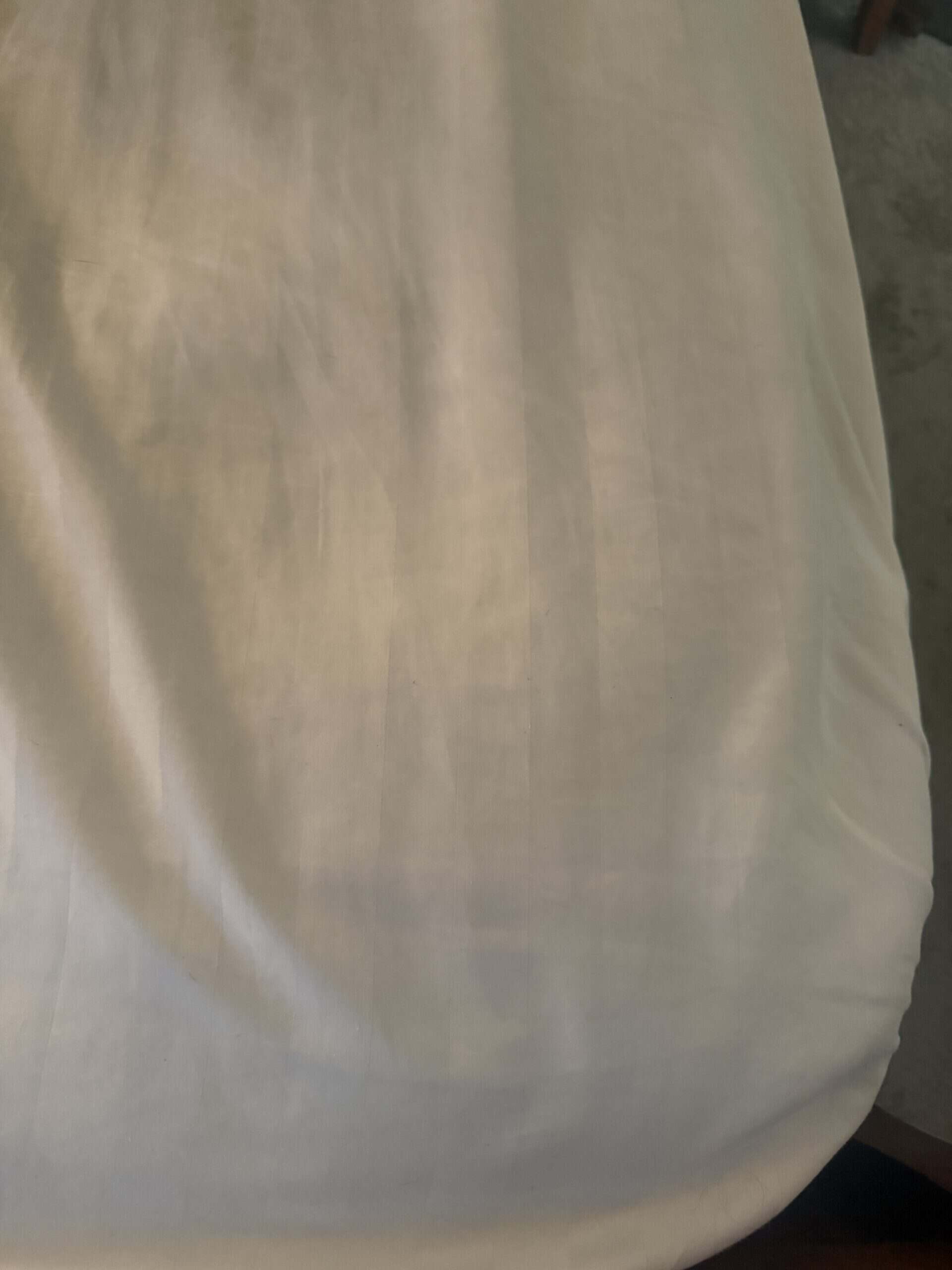
They feel cool to the touch and they do not sleep cool for everyone. Satin is a weave rather than a fiber, and most satin sheets are polyester, which conducts that first cool sensation well and breathes poorly through the night.
I have satin sheets and I would not call them cool. The initial contact is smooth and cool the way the marketing suggests, and it does not translate into sleeping cooler over a whole night for me.
A Quick Note
This covers bedding rather than medical advice. Night sweats that are new, drenching, or come with other symptoms are worth raising with a doctor rather than managed with sheets.
Quick Answer
Satin gives a strong cool-to-the-touch sensation and limited breathability, since most satin bedding is polyester. Silk satin breathes considerably better and costs far more. For sleeping cool, percale cotton, linen, or bamboo generally outperform satin.
Satin Is a Weave, Not a Fiber
| Material | Touch | Breathability |
|---|---|---|
| Polyester satin | Very cool initially | Poor |
| Silk satin | Cool, softer | Good |
| Cotton sateen | Smooth, less cool | Moderate |
| Percale cotton | Crisp | Very good |
| Linen | Textured | Excellent |
| Bamboo viscose | Cool, smooth | Good |
This is the confusion sitting at the center of the whole question. Satin describes only how the threads are woven together, and the fiber underneath decides almost everything about how a sheet behaves across a night.
Why It Feels Cool and Sleeps Warm
The satin weave puts long floating threads across the surface, which creates a very smooth face with a lot of direct skin contact and almost no texture to break it up.
That contact conducts heat away from you quickly on first touch, which is the sensation people buy them for.
Once the surface has taken your heat, conduction slows. From there, what matters is whether the fabric lets heat and moisture pass through, and polyester does that poorly.
Percale cotton feels less dramatic on contact and moves air and moisture far better across a whole night, which is why it wins for hot sleepers, covered in percale against sateen sheets.
Thread Count Is a Distraction Here
Satin bedding is often sold on thread count, and the number means considerably less than it does on cotton.
Thread count measures threads per square inch, and on polyester the individual filaments are far finer than cotton fibers, so manufacturers can reach very high numbers without the fabric being denser or better.
What actually matters on satin is the weight of the fabric and the quality of the finish. Heavier satin drapes better and resists snagging, and cheap thin satin looks similar in a photograph and behaves quite differently in use.
Momme weight is the meaningful measure on silk specifically, and it rarely appears on polyester satin because there is no equivalent standard being applied.
The useful test when buying is to hold the fabric up to light. A dense satin blocks more and hangs with some weight to it, where a thin one is translucent and feels almost papery.
What Mine Are Actually Like
They are not cool to me. That is the honest version and it is not what I expected from the way satin gets described.
The first contact is exactly as advertised, smooth and cool, and it does not carry through the night in any way I notice.
What I do like about them is that they stay put properly. The fitted sheet has sturdy elastic running all the way around each corner and it clamps down well, so nothing slides or pulls loose overnight, which is one of the most common complaints people have about satin bedding.
They are one part of a setup that includes a cooling topper, a cooling blanket, and fans running year-round, so I am not relying on sheets for temperature, covered in using a cooling blanket and topper together.
If cooling were the only reason to buy sheets, I would not choose these.
Where Satin Genuinely Wins
Hair and skin
The smooth surface creates less friction than cotton, which reduces hair breakage and creasing on skin. This is the strongest reason to own satin.
Feel
Some people simply prefer the surface, and that is a legitimate reason without needing a functional justification.
Cost against silk
Polyester satin gives much of the surface feel of silk for a small fraction of the price, covered in silk against satin pillowcases.
Winter comfort
The same low breathability that works against you in summer holds warmth in when it is cold, which some people prefer seasonally.
Sensitive skin
Low friction suits people who find cotton abrasive, though breathability still matters for anyone with eczema.
If You Want Both
Silk satin is the most direct answer available. It keeps the weave you want and swaps the fiber for one that actually breathes, and it costs considerably more and needs careful washing.
Bamboo viscose gives a smooth cool surface with much better moisture handling than polyester, at a middle price.
A satin pillowcase paired with cooler sheets is the practical compromise most people land on, since the hair and skin benefit happens at the pillow and the breathability question matters across the whole bed.
Tencel is worth considering too, since it handles moisture well and has a smooth finish without the satin weave’s heat retention, covered in cooling sheets for hot sleepers.
How the Fitted Sheet Decides Everything Else
The complaint people have about satin bedding is usually about it moving rather than about temperature, and that comes down to construction rather than to the fabric.
Elastic all the way around the perimeter holds far better than elastic only at the corners. A corner-only fitted sheet on a slippery fabric works loose within a couple of nights.
Pocket depth matters as much. A sheet sized for a shallow mattress stretched over a thick one is under constant tension and pulls off from the corners, and that problem is worse on satin because there is no friction helping it stay.
Some fitted sheets add grip strips or elasticated straps that pass under the mattress, which solves the problem entirely and adds a small amount of faff when changing the bed.
The flat sheet and duvet cover are a separate issue, since satin against satin is close to frictionless and bedding slides off people who move at night.
Mixing materials is the usual fix. A satin fitted sheet with a cotton duvet cover keeps the surface contact where you want it while giving the top layer something to hold onto.
Caring for Them
Cold wash on a gentle cycle is the rule. Heat damages the fibers over time and dulls the surface sheen that is the entire point of buying satin in the first place.
Skip fabric softener, which coats the fibers and reduces the smoothness rather than adding to it.
Air dry them, or use the lowest heat setting you have, since high heat degrades polyester satin considerably faster than the washing itself does.
Wash separately from anything with zips or hooks, because the long surface threads snag easily and a pulled thread is permanent, covered in satin sheets.
Related Reading
Frequently Asked Questions
Do satin sheets sleep cool?
They feel cool on contact and generally do not sleep cool, since most satin bedding is polyester and breathes poorly across a whole night.
Is satin the same as silk?
No. Satin is a weave and silk is a fiber. Silk satin breathes well and costs considerably more, and polyester satin is what most satin bedding actually is.
Why does it feel cool at first then not?
The smooth surface conducts heat away quickly on contact. Once it has absorbed your heat, what matters is breathability, and polyester does that poorly.
What sheets are actually cooler?
Percale cotton, linen, bamboo viscose, and Tencel all handle heat and moisture better across a night, even though they feel less dramatic on first touch.
Do satin sheets slide off the bed?
Some do, and it depends on the fitted sheet construction. Deep pockets with strong elastic all the way around hold considerably better than corner-only elastic.
How do I stop satin bedding sliding?
Elastic all the way around the fitted sheet rather than corner-only, correct pocket depth, and mixing materials so the duvet cover is cotton rather than satin against satin.
What is satin actually good for?
Reduced friction on hair and skin, which is the strongest reason to own it. That benefit is real regardless of the temperature question.
How should I wash them?
Cold and gentle, no fabric softener, and air dry or lowest heat. Wash separately from zips and hooks, since the surface threads snag permanently.
Sources
- Sleep Foundation. Best Sheets for Hot Sleepers. https://www.sleepfoundation.org/best-sheets/best-cooling-sheets
- American Academy of Sleep Medicine. Healthy Sleep Habits. https://sleepeducation.org/healthy-sleep/healthy-sleep-habits/
Recommended Reading
See our note on cooling a bedroom for better sleep.
