
Five to ten years for the fabric on a standard blackout curtain, and the coating or lining usually gives out before the outer fabric does. Sun exposure is the main clock, and the window a curtain covers matters more than the curtain itself. For more on this, see our guide to floor-length blackout panels.
Mine are three or four years old. They are standard blackout rather than thermal, and there is a little fading, which is what you expect from Arizona sun and nothing more than that.
Quick Answer
Expect five to ten years from decent fabric, shorter on a sunny window. Replace when light starts passing through the fabric itself, when the backing flakes or cracks, or when fading becomes uneven enough to bother you. Hardware often fails before the curtains do.
What Determines Lifespan
| Factor | Effect |
|---|---|
| Direct sun hours | The largest single factor |
| Construction type | Coated backings fail before woven blackout |
| Washing frequency | Each cycle stresses the backing |
| Opening and closing | Friction at the header and hooks |
| Humidity | Damp behind curtains encourages mildew |
| Fabric weight | Heavier lasts longer, sags sooner |
A curtain hanging on a north-facing window can easily last twice as long as an identical panel facing west, which is exactly why a single number for lifespan is never the whole answer.
Coated Against Woven Blackout
Two constructions get sold as blackout and they age differently.
Coated curtains have a foam or acrylic layer applied to the back of ordinary fabric. That layer is what blocks light, and it is the part that eventually cracks, flakes, or separates from the fabric.
Triple-weave blackout uses a dense black yarn woven into the middle of the fabric. There is no coating to fail, so these age more like ordinary curtains and last longer.
Coated versions are cheaper and block light very well when new, and they are the ones people find shedding little flakes after a few years, covered in blackout curtains for sleep.
What Mine Look Like Now
Three or four years in and the only change I notice is a little fading. No flaking, no thinning, nothing that affects how they work.
They are standard blackout rather than thermal, which means fewer layers to separate and probably explains part of it.
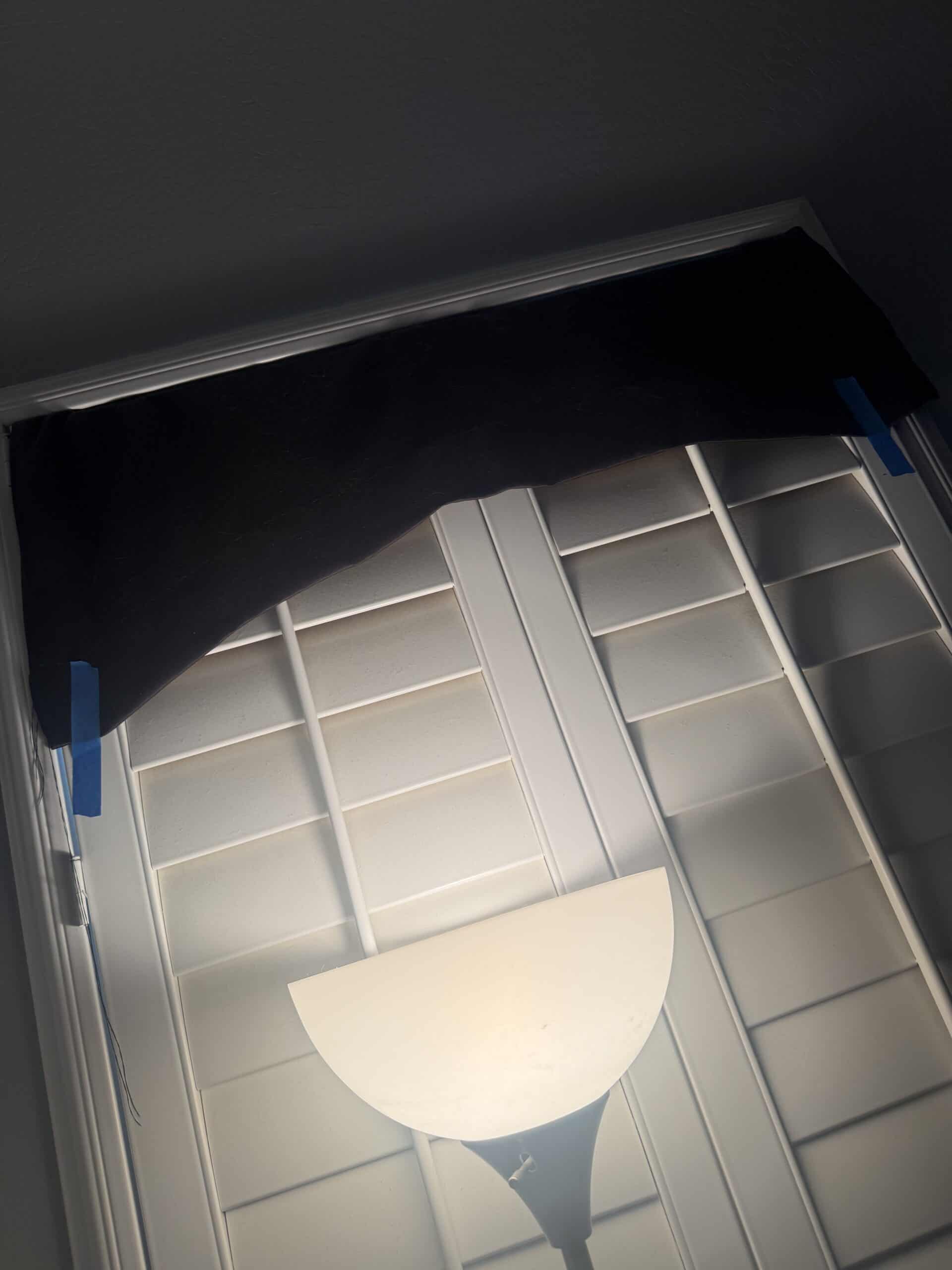
Some hang on rods at floor length and some are fitted into the shutters, and the ones in the shutters get handled less, which likely helps them.
The room is dim rather than genuinely dark anyway, because the sliding door has blinds rather than curtains, so I am not asking these to do the whole job, covered in how to stop light leaking around blackout curtains.
Arizona sun is a fair test, so mild fading at three or four years reads as normal to me rather than as a failure.
What Fading Actually Tells You
Fading is the most visible change and the least useful one for judging whether a curtain still works.
The dye sitting on the outward-facing surface is what breaks down first, and that surface is not the layer doing the light blocking. A visibly faded curtain can still block light perfectly.
What fading does indicate is cumulative ultraviolet exposure, which is the same thing degrading the backing you cannot see. So it is a useful proxy even though it is not the problem itself.
Uneven fading between panels usually means one gets more direct sun, or one has been washed more often, since detergent accelerates dye loss alongside sunlight.
Fading on the room-facing side rather than the window side points at light bouncing off a wall or a mirror rather than at direct exposure, which is worth knowing if a curtain fades in a way that seems to make no sense.
The practical version is to treat fading as a prompt to check the backing rather than as a reason to replace anything.
Signs It Is Time to Replace
Light passing through the fabric
Hold a section up against a bright window. Fresh blackout passes almost nothing, and a visible glow means the light-blocking layer has degraded.
The backing flaking or cracking
Small pieces on the windowsill or a backing that feels stiff and brittle means the coating is separating. That is terminal on a coated curtain.
Uneven fading
Fading is cosmetic until it becomes patchy, at which point one panel no longer matches the other and the room looks worse than bare glass would.
Thinning at the folds
Where a curtain creases repeatedly, the fabric wears first. Holding it to the light shows this before it becomes visible, covered in blackout curtains against blinds.
Hardware Often Goes First
Rods sag under heavy curtains, particularly on long spans with no center support, and a sagging rod is the most common complaint before any fabric problem.
Rings and hooks wear at the contact point, and grommets tear out of the fabric header where the load concentrates.
Curtain tracks and gliders on fitted systems are usually plastic and become brittle with age and sun, which is the same failure mode as any other plastic near a window.
Replacing hardware costs far less than replacing curtains, so it is worth diagnosing which has failed, covered in no-drill blackout curtain rods.
Why the Window Decides More Than the Curtain
Two identical panels hung in the same house can be years apart in condition, and the difference is almost entirely which window they cover.
West-facing windows are the hardest. Afternoon sun is both the brightest and the hottest of the day, and it lands when curtains are most likely to be closed against it.
South-facing windows take longer exposure through the day at a lower intensity, which fades fabric evenly rather than aggressively.
East-facing windows get strong morning light for a shorter period, and curtains there are often open by the time the sun is strongest.
North-facing windows barely age curtains at all in most climates, which is why a spare panel from a north window can look almost new next to its partner.
Glazing matters too. Modern double glazing with a low-emissivity coating filters some ultraviolet before it reaches the fabric, so curtains behind newer windows last noticeably longer than the same fabric behind old single glazing.
Making Them Last
Wash sparingly. Every cycle stresses a coated backing, and most curtains need vacuuming with an upholstery attachment far more often than they need washing.
Cold water and air drying when you do wash. Heat is what delaminates a coating, and a tumble dryer does more damage in one cycle than a year of use.
Rotate panels between windows if they are the same size, which evens out sun exposure and delays the point where one is visibly older.
Line them with a cheap sacrificial liner on the worst window, so the liner takes the ultraviolet damage and can be replaced on its own.
Related Reading
- blackout curtains for sleep
- do they block heat
- curtains against blinds
- no-drill curtain rods
- curtains with shutters
- stopping light leaks
Frequently Asked Questions
How long do blackout curtains last?
Five to ten years for decent fabric, shorter on a sunny window. The light-blocking layer usually degrades before the outer fabric shows any problem.
What fails first?
On coated curtains, the backing, which cracks or flakes away from the fabric. On woven blackout there is no coating, so they age more like ordinary curtains.
Is fading a reason to replace them?
Only when it becomes uneven. Even fading is cosmetic and does not affect light blocking, and patchy fading is what makes a room look worse than bare glass.
How do I test whether they still work?
Hold a section against a bright window. Fresh blackout fabric passes almost nothing, and a visible glow means the light-blocking layer has degraded.
Does washing shorten their life?
On coated curtains, considerably. Vacuum them with an upholstery attachment instead, and when you do wash use cold water and air drying.
Why do mine sag?
Usually the rod rather than the curtains. Heavy panels on a long span without center support sag, and replacing hardware costs far less than replacing curtains.
Why does one panel look older than the other?
Almost always the window rather than the fabric. West-facing takes the hardest sun, north-facing barely ages curtains at all, and older single glazing filters less ultraviolet than modern double glazing.
Can I extend their life?
Wash rarely, avoid heat, rotate panels between windows to even out sun exposure, and add a cheap sacrificial liner on the sunniest window.
Recommended Reading
See our note on making a bedroom dark.
