
Comparing options? See our best blackout curtains for sleep roundup. For the darkest possible bedroom and the easiest path to it, blackout curtains win for most sleepers, while blinds win when you want light control by degree and a clean, minimal window. Blackout curtains vs blinds comes down to one trade-off: curtains seal out more total light and add insulation, while blinds give finer adjustment and take up no fabric space. If your priority is a cave-dark room for sleep, start with curtains; if you want to dial daylight up and down through the day, lean blinds. For the top curtain picks, see our guide to the best blackout curtains for sleep.
Quick Verdict
Pick blackout curtains if your goal is the darkest possible room, added heat and noise insulation, and the simplest install. Pick blinds if you want precise light control through the day, a minimal look, and easy wiping in humid or dusty rooms. Many sleepers combine both for the best result. For more on this, see our guide to why some rooms stay dim.
What I Use
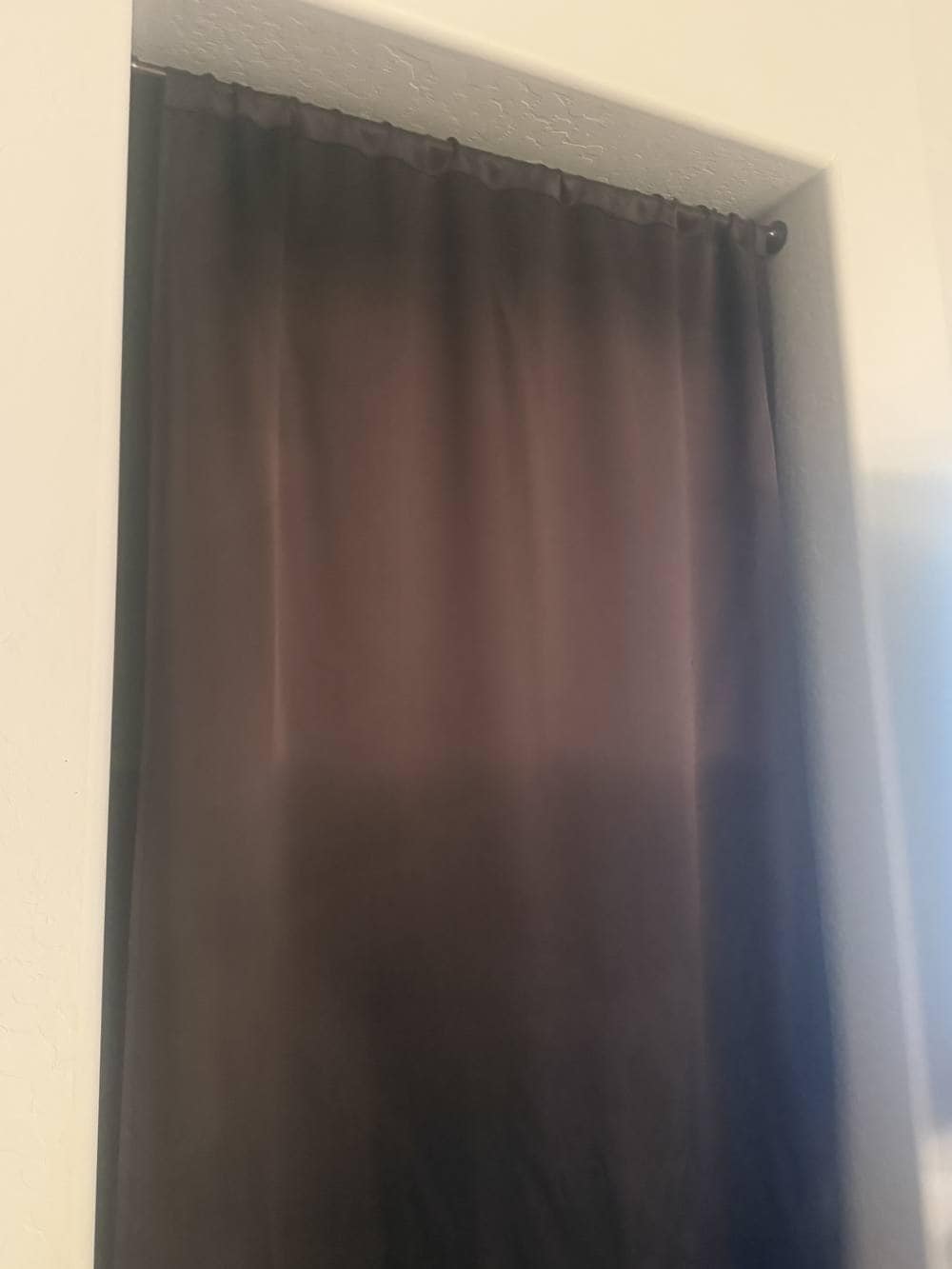
I sleep in Arizona, where blackout curtains earn their keep twice over, and the pair I use does exactly what I need. They are genuinely thick, which is the key to both jobs: they block the sun completely for a dark room, and that same heavy fabric noticeably reduces how much the bedroom heats up during the brutal summer afternoons, which takes real load off staying cool at night. They are nice to use and easy to clean, and after regular use they have held up well. I keep this brand-neutral because the panels carry no clearly legible brand, but the experience is why I lean toward curtains in this comparison: the same thick fabric that darkens the room also helps with heat in a way slatted blinds do not.
Key Takeaways
- Curtains seal out more total light because fabric overlaps the wall, while blinds leave small gaps at the slats and edges.
- Blinds give finer control, letting you tilt slats to dim a room by degree rather than all-or-nothing.
- Thick curtains add heat and noise insulation that thin slatted blinds do not.
- Blinds wipe clean easily and suit humid or dusty rooms; curtains need occasional washing.
- The darkest setup is often both: blinds for daytime control plus blackout curtains over them for sleep.
How We Compared Blackout Curtains and Blinds
This comparison weighs the two on the factors that actually affect sleep and daily living: total darkness achieved, light-control precision, heat and noise insulation, cleaning and maintenance, install effort, and cost. Darkness matters most for sleep because light exposure suppresses melatonin and disrupts the body’s sleep signals, so a darker room supports easier, deeper rest. First-person notes reflect genuine use of blackout curtains in a hot, bright climate; the blinds side is assessed from product research and manufacturer specifications.
Blackout Curtains vs Blinds at a Glance
| Factor | Blackout Curtains | Blinds |
|---|---|---|
| Total darkness | Excellent when sized to overlap the wall | Good, but slat and edge gaps leak light |
| Light-control precision | All or nothing (open or closed) | Fine control by tilting slats |
| Heat insulation | Strong with thick fabric | Minimal |
| Noise dampening | Noticeable with heavy fabric | Little to none |
| Cleaning | Wash periodically | Wipe slats, dries fast |
| Install | Rod above and beyond the frame | Mounted in or above the frame |
| Look | Soft, warm, full coverage | Clean, minimal, modern |
Blackout Curtains, Pros and Cons
Pros
- Seal out the most total light when panels overlap the wall on each side.
- Thick fabric adds real heat and noise insulation.
- Simple to install with a rod, no window-fit measuring inside the frame.
- Soft, warm look that absorbs sound and feels cozy.
Cons
- Light control is all-or-nothing rather than adjustable by degree.
- Take up wall and floor space and need periodic washing.
- Can leak light at the top or center gap without a wraparound rod or overlap.
Best for sleepers who want the darkest room and added heat or noise insulation, especially in bright or hot climates. Skip if you want a minimal window or precise daytime light control.
Blinds, Pros and Cons
Pros
- Precise light control by tilting slats, dimming a room by degree.
- Clean, minimal look that suits modern rooms.
- Wipe clean quickly and resist humidity, good for bathrooms and kitchens.
- Take up no fabric space and sit flush with the window.
Cons
- Slat gaps and edges leak light even when fully closed.
- Little heat or noise insulation compared with heavy fabric.
- Dust collects on slats and needs regular wiping.
Best for people who want adjustable daytime light, a minimal look, and easy cleaning in humid rooms. Skip if your main goal is a fully dark bedroom for sleep.
Head-to-Head by Total Darkness
Blackout curtains win on total darkness. Because fabric panels can extend several inches past the window frame and overlap the wall, they cover the gaps where light sneaks in around the edges. Blinds, even blackout-rated ones, sit inside or just over the frame and leave thin lines of light at the slat joints and along the sides. For a genuinely cave-dark room, curtains sized to overlap the wall are the more reliable choice, and a wraparound rod removes the last edge gaps. Blinds get close but rarely fully eliminate the perimeter light that a wide fabric panel covers.
Head-to-Head by Light Control
Blinds win on light control. Tilting the slats lets you set any level between fully open and fully closed, so you can soften harsh afternoon glare without plunging the room into darkness or filter morning light to a comfortable level. Curtains are essentially binary: open for full light or closed for full dark, with little in between unless you layer a sheer panel. For a room used through the day where you want daylight on your own terms, blinds give the finer dial. For a room used mainly for sleep, that precision matters less than total darkness.
Head-to-Head by Heat and Noise
Blackout curtains win on heat and noise. Thick curtain fabric forms an insulating barrier at the window that slows heat transfer, which keeps a room cooler against hot afternoon sun, pairing well with cooling sheets on the bed, and the same dense material absorbs sound that thin slats let through. In a hot, bright climate this is the difference between a window that bakes the room and one that holds temperature, a benefit that comes directly from genuine use. Blinds, being thin and slatted, do little for insulation or sound. If comfort beyond darkness matters, curtains carry the day.
Head-to-Head by Cleaning and Upkeep
Blinds win on cleaning. A quick wipe of the slats removes dust, and because they resist humidity they suit bathrooms, kitchens, and damp climates where fabric would struggle. Curtains need periodic washing and take time to dry, and heavy panels can be cumbersome to take down and rehang. That said, curtain care is infrequent rather than difficult, and many panels are machine washable. For the lowest-effort upkeep in a humid or dusty room, blinds are simpler; for a typical bedroom, curtain washing is an occasional chore rather than a real drawback.
Which Fits Your Situation
| If this is you | Better choice |
|---|---|
| You want the darkest possible bedroom for sleep | Blackout curtains |
| You live in a hot or bright climate and want heat insulation | Blackout curtains |
| You want to dial daylight up and down through the day | Blinds |
| You want a minimal, modern window with no fabric | Blinds |
| The room is humid or dusty and needs easy wiping | Blinds |
| You want both total darkness and daytime control | Both, layered |
How to Choose Between Them
Start with your single biggest priority. If it is sleep in a fully dark room, blackout curtains are the safer default, especially when you size the panels to overlap the wall and mount the rod above and beyond the frame. If it is flexible daytime light or a clean, low-profile look, blinds make more sense. Climate tips the scale too: in a hot or bright region, the heat insulation of thick curtains is a real daily benefit, alongside gear like a cooling blanket, while in a humid room the wipe-clean ease of blinds matters more. When budget and space allow, layering blinds under blackout curtains gives daytime control and sleep-grade darkness at once.
The Verdict
For most sleepers, blackout curtains are the better single choice: they achieve the darkest room, add heat and noise insulation, and install simply, which is why they lead in a bright, hot climate where both darkness and temperature matter. Blinds are the better pick when daytime light control, a minimal look, or easy cleaning in a humid room is the priority. If you can do both, layering blinds under blackout curtains is the strongest setup of all, combining adjustable daylight with sleep-grade darkness. Choose curtains for sleep-first rooms, blinds for living-first rooms, and both when the window does double duty. A child’s room has its own constraints, and our roundup of blackout blinds for nurseries covers cord safety alongside darkness. Hanging heavy panels raises its own question, and our note on whether tension rods hold blackout curtains covers weight.
Common Misconceptions
Blackout blinds make a room as dark as curtains
Even blackout-rated blinds leave thin light gaps at the slat joints and along the edges, so they rarely match the total darkness of fabric panels that overlap the wall. Blinds reduce light well, but curtains seal it more completely.
Curtains alone always block all light
Curtains only fully darken a room when they are wide enough to overlap the wall and mounted on a rod that extends beyond the frame. Panels sized to the window opening still leak light around the edges.
You have to choose one or the other
Blinds and blackout curtains work well together. Blinds handle daytime light control, and curtains pulled over them at night deliver full darkness, so layering is a common and effective setup rather than a compromise.
Recommended Reading
- blackout curtains for sleep
- room darkening shades
- Sleep Mask vs Blackout Curtains
- making a bedroom dark
Blackout Curtains vs Blinds FAQ
Are blackout curtains or blinds better for sleep?
Blackout curtains are generally better for sleep because they seal out more total light when sized to overlap the wall, while blinds leak light at the slat gaps and edges. For the darkest room, curtains are the more reliable choice.
Do blackout blinds fully block light?
Blackout blinds reduce light significantly but rarely block it completely, since thin gaps remain at the slat joints and around the frame. They darken a room well, though not as fully as fabric panels that cover the wall.
Which is better for keeping a room cool?
Thick blackout curtains keep a room cooler than blinds because dense fabric insulates the window and slows heat transfer. In hot, bright climates this insulation is a meaningful daily benefit that slatted blinds do not provide.
Can you use blackout curtains and blinds together?
Yes, and many people do. Blinds give adjustable daytime light control, and blackout curtains pulled over them at night deliver full darkness, so the combination offers the best of both with no real downside beyond cost.
Are blinds easier to clean than curtains?
Blinds are easier to clean for routine upkeep, since a quick wipe removes dust and they resist humidity. Curtains need occasional washing, which is infrequent but more involved than wiping slats.
Which is cheaper, curtains or blinds?
Costs overlap widely depending on size and quality, but basic blackout curtains and basic blinds are both affordable. Custom-fit blinds and premium lined curtains sit at the higher end, so compare within the tier you are shopping.
Do I need a special rod for blackout curtains?
You do not need specialty hardware, but a rod that extends beyond the window frame helps panels overlap the wall and seal edge light. A wraparound or return rod removes the side gaps for the darkest result.
Related: you layer blackout curtains with regular curtains.
Related: do blackout curtains last.
For the bigger picture, see the comprehensive choosing sleep aids guide.
More in this guide: do blackout curtains block heat.
