
In a genuinely hot climate no single device cools a bedroom, and the setups that work are layered: block the heat before it enters, remove what gets in, and move air across the bed. Buying one excellent product and expecting it to carry the room is the most common and most expensive mistake here.
The order matters as much as the equipment. Blocking solar gain costs the least and does the most, air conditioning handles what remains, and air movement makes a given temperature feel several degrees cooler than it measures. Get those three working together and the room becomes sleepable, which the individual pieces rarely manage alone. The behavioral side sits in cooling a bedroom properly.
Quick Verdict
Start with window coverings, because heat you never let in costs nothing to remove. Add a room air conditioner sized to the space, then a ceiling fan and a bedside fan for air movement. Cooling bedding helps at the margin and cannot compensate for a room that is genuinely hot.
Key Takeaways
- Blocking solar gain is the cheapest and highest-impact layer
- Air movement makes a room feel cooler without changing its temperature
- A ceiling fan and a bedside fan do different jobs and pair well
- Undersized air conditioning runs constantly and still loses ground
- Oversized units cool fast, shut off, and leave the room clammy
- Cooling bedding is a finishing layer, not a foundation
How We Picked
Layer contribution came first. Products were assessed by what they add to a system rather than in isolation, since a bedside fan and a room air conditioner are not competing purchases and comparing them directly is meaningless.
Noise mattered throughout, because every item here runs while you sleep. A device that cools well and wakes you has failed at the actual job, so published noise figures and steady rather than cycling sound were weighted heavily.
Apartment practicality finished the list. Portable and window units, plug-in fans, and non-permanent window coverings all suit renters, while anything requiring installation was noted as such rather than assumed available.
What I Actually Run in an Arizona Summer
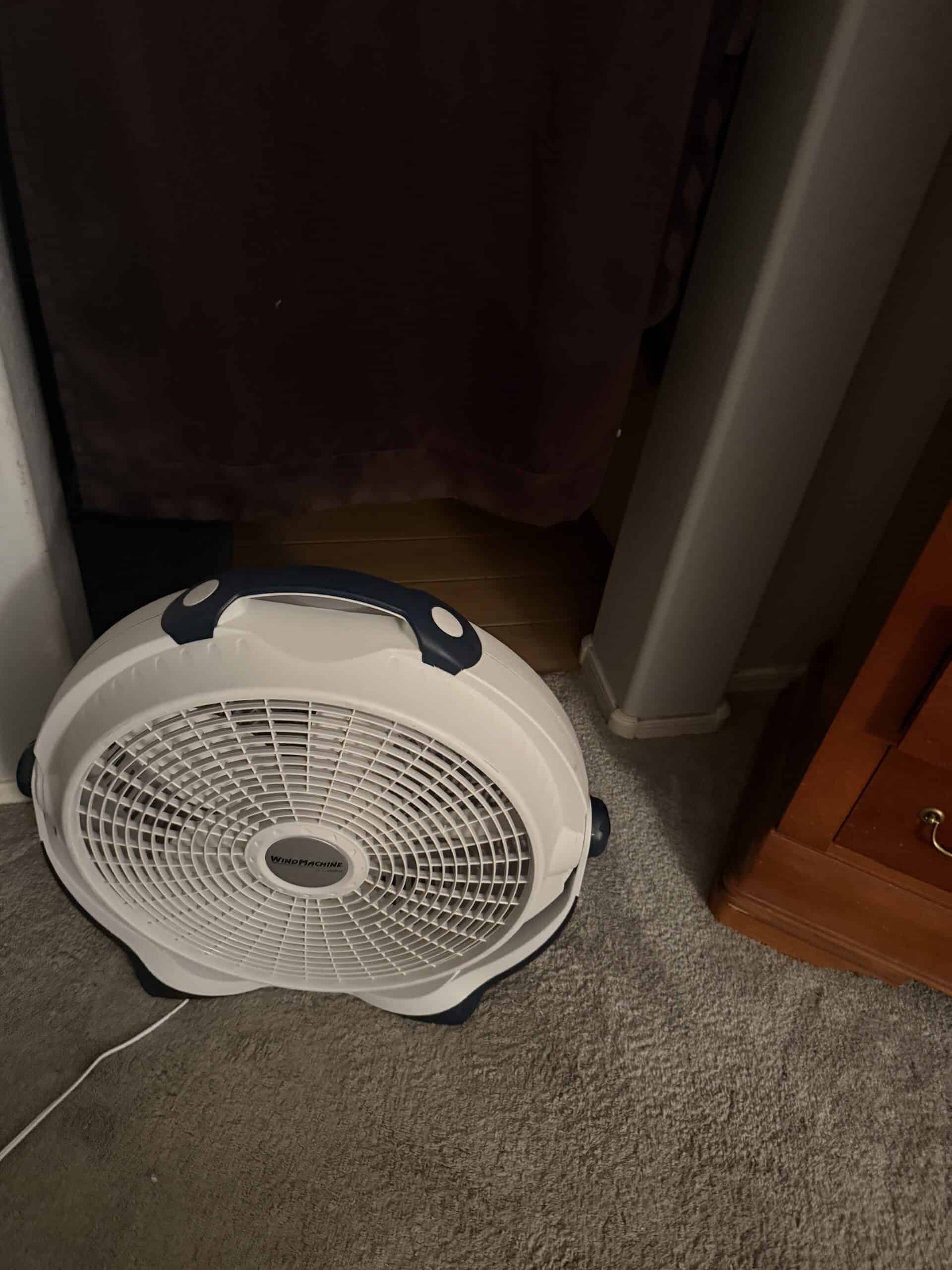
My own setup is four layers. Blackout curtains stay closed throughout the home for the whole summer. A room air conditioner runs in the bedroom. A ceiling fan turns overhead, and a bedside fan moves air directly across the bed.
That combination is not overkill in a desert summer, it is what makes the room usable. Each piece does something the others cannot. The curtains stop the room heating up during the day, so the air conditioning is maintaining a temperature rather than fighting to reach one. The fans mean the air conditioning does not have to run as cold to feel cool, because moving air changes how the same temperature feels on skin.
The layer I would give up last is the window coverings, which is not where most people start. They cost the least, they need no power, and they prevent the problem rather than treating it. Everything downstream works better because of them.
My experience covers one bedroom in a dry desert climate with this specific combination. It does not cover humid climates, where removing moisture matters more than moving air, or whole-home systems, which I have not run.
1. Blackout and Thermal Window Coverings
Why It Stands Out
The first layer and the highest return. Sunlight through glass is the largest heat source in most bedrooms, and stopping it at the window is far easier than removing it afterwards. Thermal-lined panels add resistance to conducted heat on top of blocking light.
Worth Knowing
Coverage decides performance. Panels sized to the window leak around every edge, and heat travels around a curtain more readily than through it, so buying panels wider and longer than the frame matters more than the fabric rating does.
Right for every hot-climate bedroom, before anything else. Skip it only where the window is permanently shaded.
2. The Window Air Conditioner
Why It Stands Out
A window unit exhausts heat directly outside, which makes it considerably more efficient than a portable of the same rating. For a single bedroom it is the practical way to actually lower the temperature rather than just move air around.
Worth Knowing
Sizing is everything, and oversizing is as bad as undersizing. A unit too large cools quickly, shuts off before it has removed humidity, and leaves a cold clammy room. Installation also needs a suitable window and, above ground level, a support bracket.
Right for bedrooms where a window installation is permitted. Skip it in rentals that forbid window units.
3. The Portable Air Conditioner
Why It Stands Out
Where a window unit cannot be fitted, a portable is the alternative. It rolls between rooms, needs only a window vent kit, and installs without brackets or landlord conversations.
Worth Knowing
Single-hose portables draw conditioned room air into the exhaust and push it outside, creating negative pressure that pulls warm air in from elsewhere in the home. Dual-hose models avoid most of that and cost more. Either way, expect less cooling per rated BTU than a window unit delivers.
Right for rentals and rooms without suitable windows. Skip it if a window unit is an option.
4. The Ceiling Fan
Why It Stands Out
A ceiling fan circulates the whole room rather than aiming at one spot, which evens out temperature and helps everything else work. It also runs on a fraction of the power an air conditioner uses, so it can stay on when the compressor cycles off.
Worth Knowing
Fans cool people, not rooms, so running one in an empty bedroom adds motor heat and nothing else. Blade height matters too, and a fan too close to the ceiling moves noticeably less air than one on a downrod.
Right for bedrooms with adequate ceiling height. Skip it in rentals where installation is not permitted.
5. The Bedside Fan
Why It Stands Out
A fan aimed across the bed does something a ceiling fan does not: it moves air directly over skin, which is what makes a given temperature feel cooler. It is also the cheapest item here and the easiest to reposition night to night.
Worth Knowing
Air blowing directly on your face dries eyes and throat, so angling it across rather than at you works better. Noise varies enormously between models, and a fan is running all night beside your head, so the sound profile matters more than the airflow rating. Options are compared in bedside fans for sleep.
Right for every hot-climate bedroom. Skip it only if a ceiling fan already moves air across the bed.
6. Cooling Bedding
Why It Stands Out
Breathable sheets, a cooling blanket, and a cooling pillow reduce heat trapped against your body, which is the last layer between you and the room. In a room already cooled and ventilated, this is what closes the remaining gap.
Worth Knowing
Bedding cannot fix a hot room. Cooling materials move heat away from you and need somewhere to send it, so in a warm still room they saturate quickly and stop feeling cool. Treat this as the finishing layer rather than the solution.
Right once the room itself is under control. Skip it as a first purchase in a genuinely hot bedroom.
Bedroom Cooling Layers at a Glance
| Layer | What it does | Running cost | Priority |
|---|---|---|---|
| Window coverings | Stops heat entering | None | First |
| Window air conditioner | Removes heat and humidity | High | Second |
| Portable air conditioner | Same, less efficiently | High | Second, if no window unit |
| Ceiling fan | Circulates the room | Very low | Third |
| Bedside fan | Moves air over skin | Very low | Third |
| Cooling bedding | Reduces trapped heat | None | Last |
How to Build the Setup
Start with the window
Cover the glass before buying anything that plugs in. Heat blocked at the window never has to be removed, and it is the only layer with no running cost at all.
Size the air conditioner to the room
Match capacity to floor area, adjusted upward for heavy sun, high ceilings, or poor insulation. Oversizing produces a cold clammy room because the unit shuts off before dehumidifying, which is a worse outcome than a slightly undersized unit running steadily.
Add air movement last, and use it most
Fans let you run the air conditioning warmer for the same felt comfort, which is where the running cost savings appear. A ceiling fan and a bedside fan together cover circulation and direct airflow.
Check what else is heating the room
Electronics, chargers, and lighting all add heat to a closed bedroom. In a room you are fighting to cool, unplugging what is not needed overnight is free and measurable.
Air Conditioning vs Fans
What each actually does
An air conditioner removes heat and moisture from the room, lowering the measured temperature. A fan moves air, which changes how that temperature feels without changing the number. Only one of them cools a room, and only one of them costs very little to run.
Why you want both
Fans let the air conditioning work less hard for the same comfort. Running the unit a few degrees warmer with air moving feels similar to a colder still room, at meaningfully lower cost, and the fan keeps working when the compressor cycles off.
Common Mistakes to Avoid
Buying cooling bedding first
It is the cheapest thing to try and the last layer that matters. In a hot room, cooling materials saturate within minutes and you are back where you started.
Oversizing the air conditioner
Bigger is not safer. An oversized unit short-cycles, never dehumidifies properly, and produces a room that is cold and damp rather than comfortable.
Running fans in an empty room
Fans cool people. A fan running in an unoccupied bedroom adds a small amount of motor heat and achieves nothing, so schedule them around when you are actually in there.
Opening windows during the day
In peak summer, outdoor air is hotter than indoor air for most of the day, and a few hours of open windows undoes a morning of keeping the room sealed. More on that in keeping a bedroom cool in summer. Anything hung around the bed raises the same question, and whether bed canopies trap heat covers the canopy case.
Recommended Reading
- cooling blankets as the final layer
- pillows for hot sleepers
- why heat wakes you overnight
- sheets that breathe in summer
- fan styles compared
Related: bedding for hot and humid climates.
Frequently Asked Questions
What is the most effective way to cool a bedroom in a hot climate?
Blocking solar gain at the window first, then air conditioning sized to the room, then air movement across the bed. The layers work together, and the cheapest one contributes the most.
Do I need both a ceiling fan and a bedside fan?
They do different jobs. A ceiling fan circulates the whole room and evens out temperature, while a bedside fan moves air directly across your skin. Running both is common in hot climates and neither replaces the other.
Will a fan alone cool my bedroom?
No. Fans move air and make a given temperature feel cooler, but they do not remove heat from the room. In extreme heat, air movement alone is not enough to make a room sleepable.
Window unit or portable air conditioner?
Window units are meaningfully more efficient because they exhaust heat directly outside. Portables are the answer when a window installation is not possible, and dual-hose models perform considerably better than single-hose ones.
How much does cooling bedding help?
At the margin, and only once the room is under control. Cooling materials move heat away from your body and need somewhere to put it, so in a hot room they saturate quickly and the effect stops.
Does a dehumidifier help in a hot bedroom?
In humid climates yes, since removing moisture makes a given temperature feel cooler. In dry desert conditions there is nothing useful to remove, and the unit adds noise and a little heat for no benefit.
Should I keep curtains closed all day in summer?
On sun-facing windows in a hot climate, many people do and accept the darkness. It is a genuine tradeoff between daylight and room temperature, and in peak summer the temperature difference is substantial.
